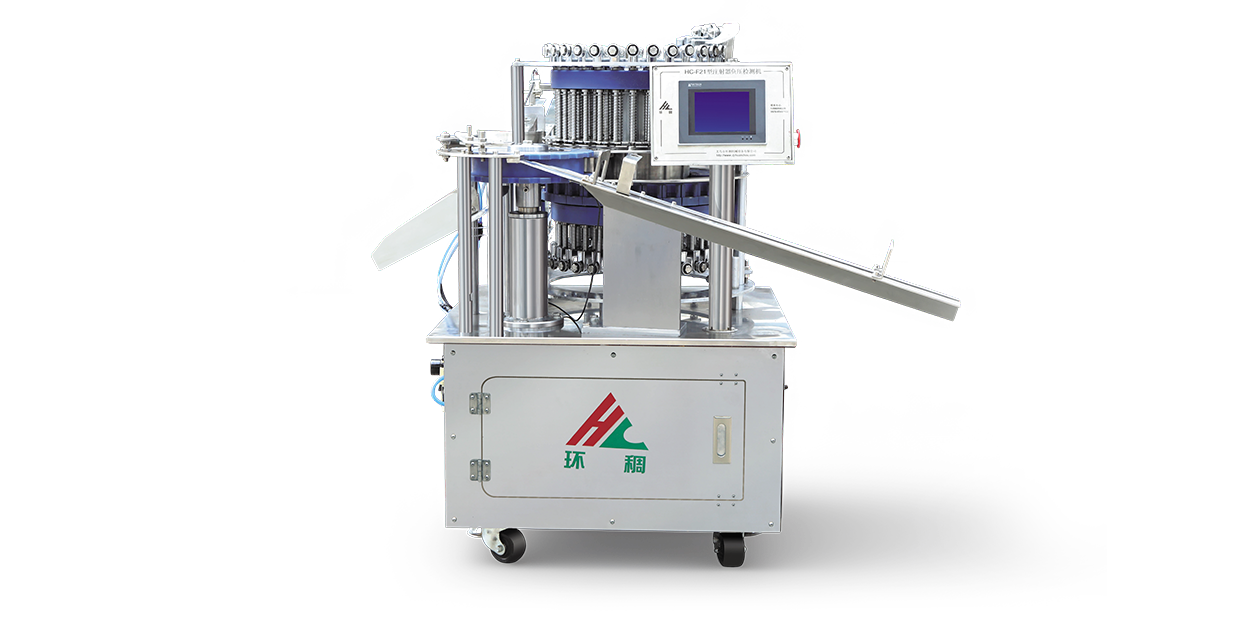
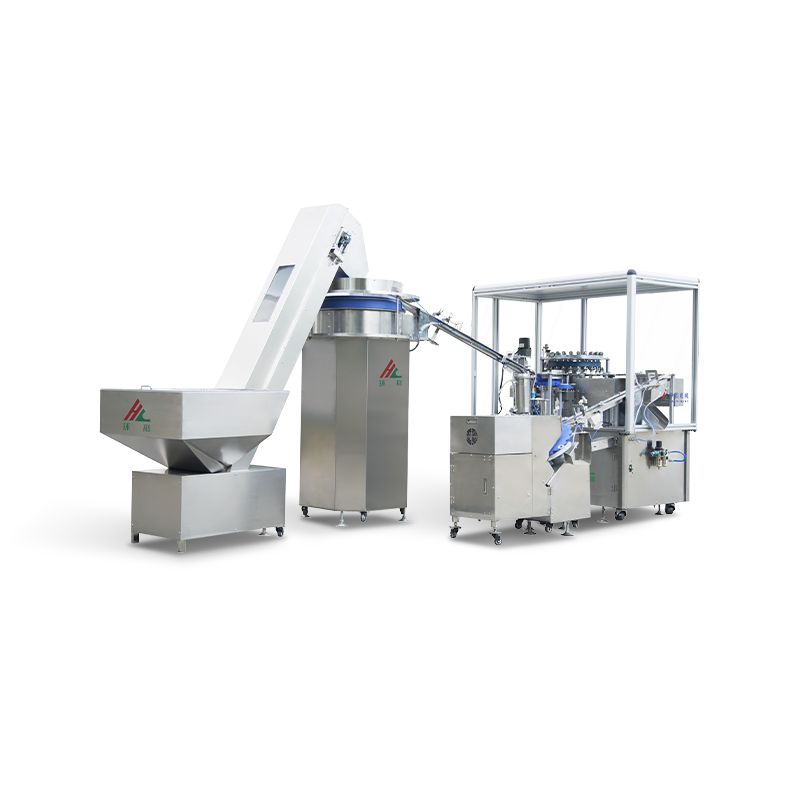
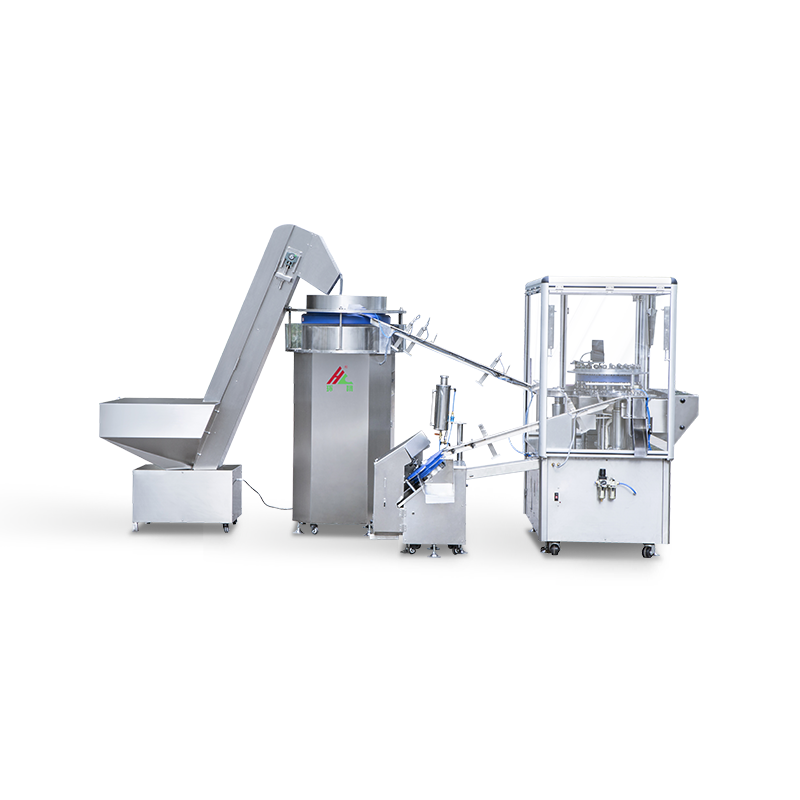
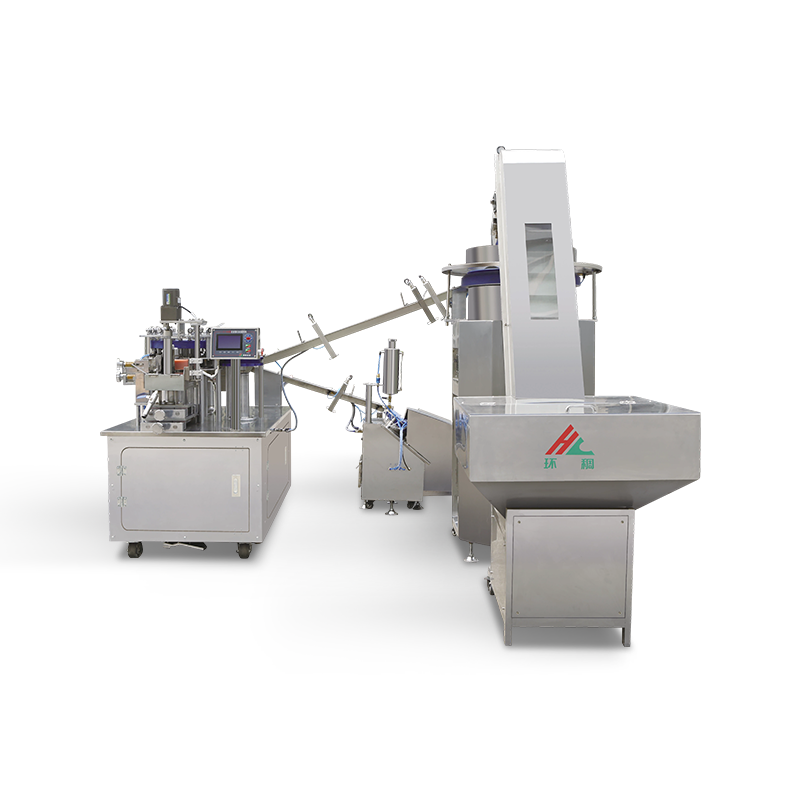
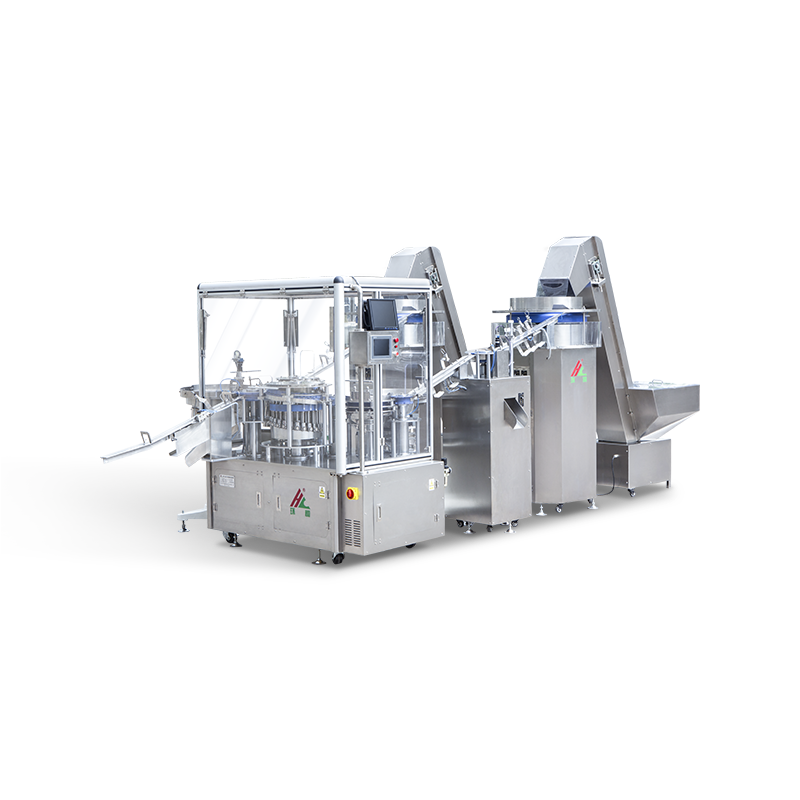
The Syringe Negative-Pressure Airtightness Tester (HC-F21) is an automated quality inspection device specifically designed to test the sealing performance of assembled syringes. Using the principle of negative pressure detection, it determines whether there is any leakage in the fit between the syringe barrel, rubber stopper, and plunger, automatically rejecting products with air leaks or poor sealing. This makes it a critical quality control step for ensuring the safety and reliability of syringe products.
The detection principle works by placing the syringe to be tested inside a sealed testing chamber, using a vacuum pump to extract air from the chamber and create a negative pressure environment, then monitoring the pressure change curve inside the chamber in real time. If the syringe is properly sealed — meaning the rubber stopper forms an effective seal against the inner wall of the barrel — the chamber pressure remains relatively stable. If there are defects such as gaps, scratches, or improperly seated rubber stoppers, air will enter or escape through the leak point, causing abnormal fluctuations in the pressure curve. The detection system automatically judges whether the product passes based on this data and sorts out defective units, eliminating the need for manual visual inspection of each unit and offering far greater accuracy and consistency than traditional manual sampling methods.
The machine uses a PLC programmable control system, allowing detection pressure thresholds and testing time parameters to be set according to different syringe specifications and sealing structures, accommodating luer slip, luer lock, eccentric tip, and other syringe types. It runs stably with fast detection speed and can be integrated with a syringe assembly machine for real-time in-line testing of every unit immediately after assembly, or used as a standalone station for sampling or full inspection.
In practical applications, the negative pressure airtightness tester is widely used in the production of disposable sterile syringes, pre-filled syringes, insulin pen syringes, and other medical devices with strict sealing requirements. For medical device manufacturers, any leakage issue not only affects the accuracy of medication dosage but also poses a contamination risk. As a result, this equipment plays an irreplaceable role in pre-shipment quality control and is an important testing tool for companies building a comprehensive medical device quality management system and passing relevant certification audits.
Purchasing and usage tips: When selecting this equipment, companies should set appropriate detection pressure and pass/fail criteria based on their specific product's sealing structure (such as rubber stopper type and barrel material) to avoid excessively high or low false detection rates. It is recommended to integrate this device with the assembly machine for full in-line inspection coverage, further reducing the risk of leaking defective products entering the market and enhancing product quality reputation and market competitiveness.


 English