

 中文简体
Walk the length of a modern syringe line and the number that decides whether the shift is profitable is rarely the headline speed printed on the datasheet. It is the number of times a person has to reach into the process. Every reach-in is a chance for a drop...
READ MORE
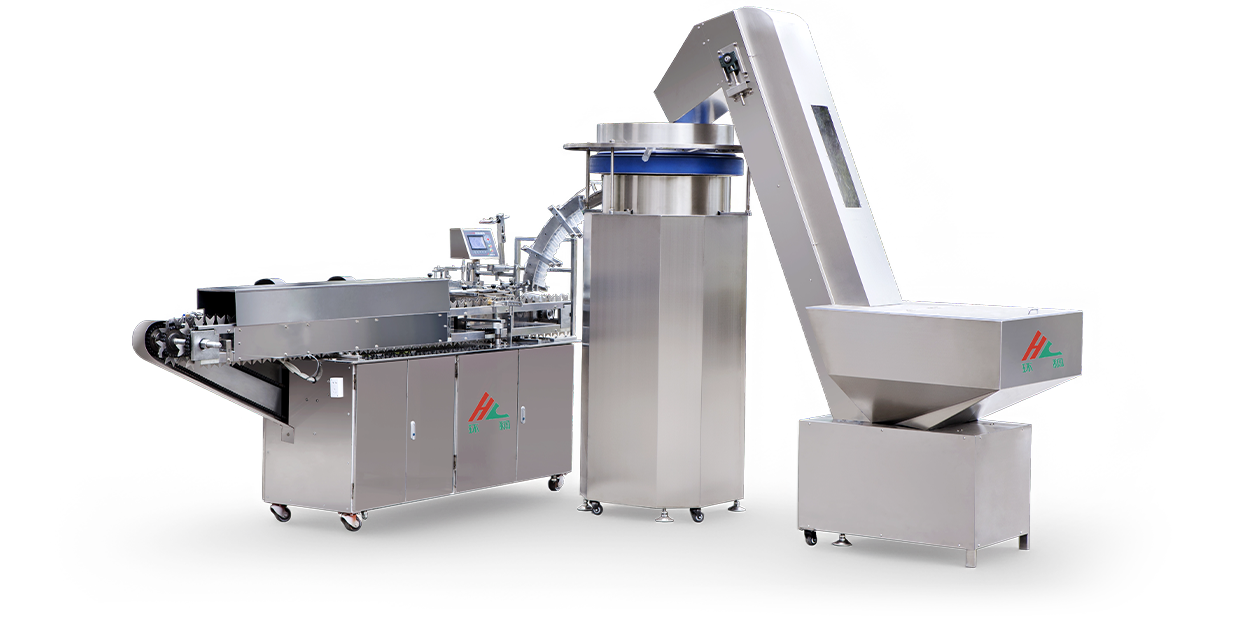
HSY-108
Syringe Screen Printing Machine
Introduction
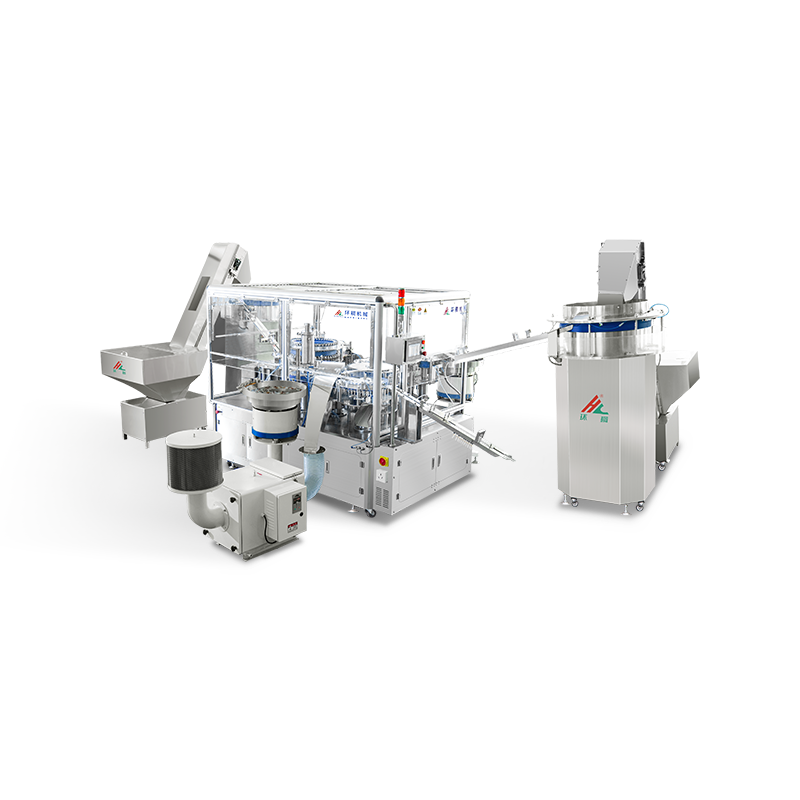
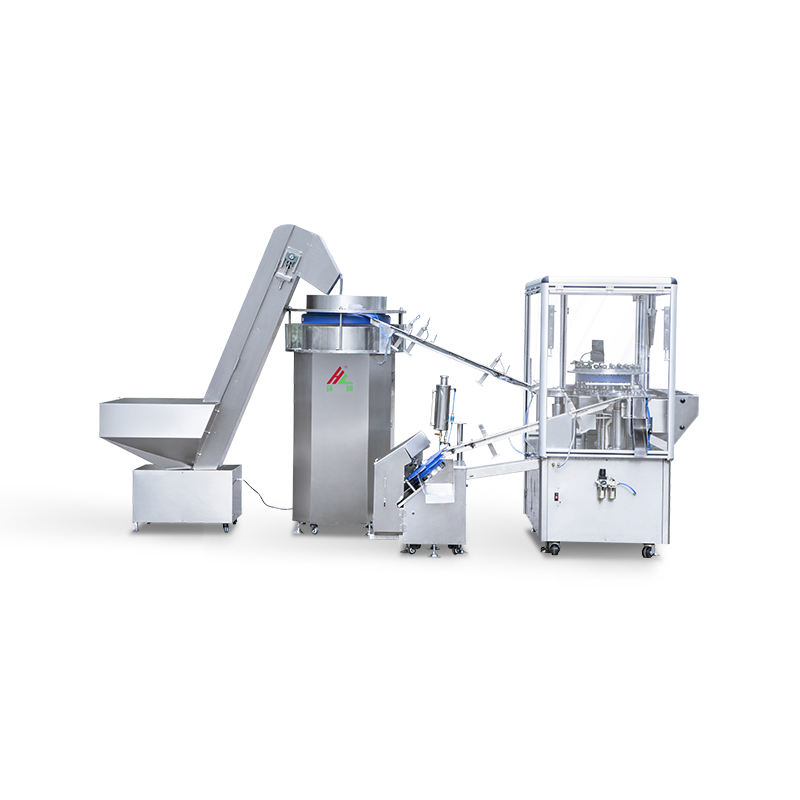
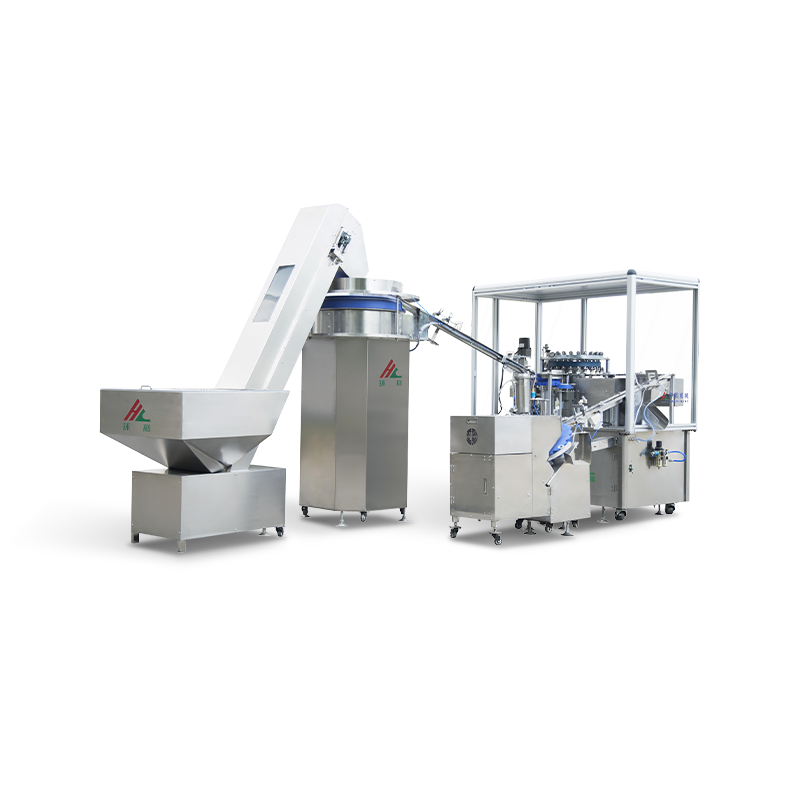
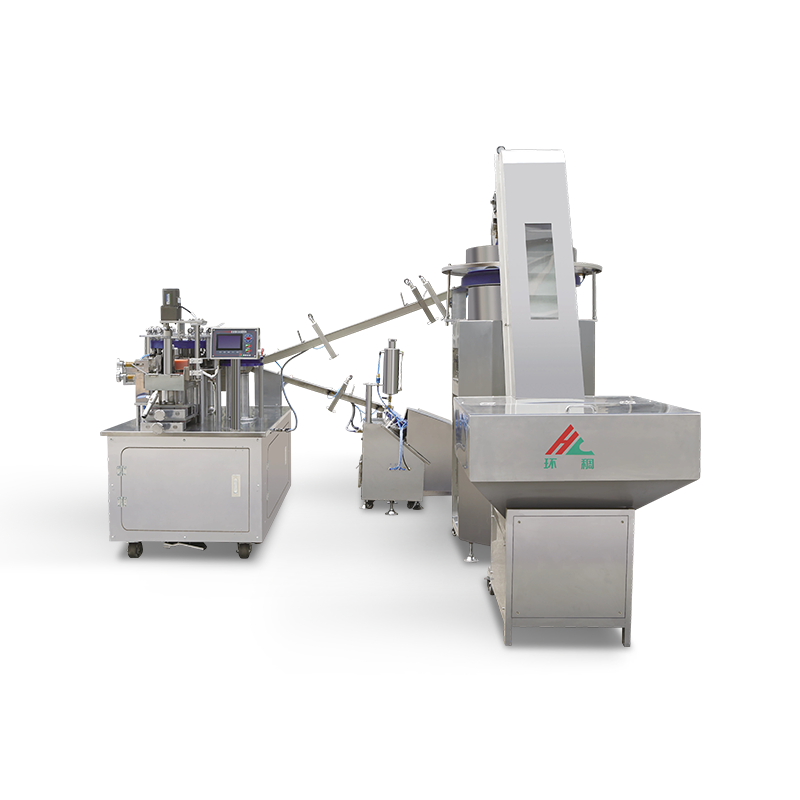
The Syringe Screen Printing Machine (HSY-108) is a traditional screen printing device offered by Huanchou Machinery, mainly used to print graduation lines, brand logos, warning text, and other graphics or text onto the surface of syringe barrels, measuring cups, caps, and other plastic components. Compared with roller printing equipment, the main advantage of screen printing lies in its ability to achieve multi-color overprinting, complex pattern printing, and even coverage over larger surface areas, making it especially suitable for customers with customized design requirements or those who need multiple color markings on the same product.
The machine works on the principle of pairing a screen plate with a scraper (squeegee): ink passes through the hollow pattern on the screen and is evenly transferred onto the product surface under the pressure of the scraper. The printed layer thickness is controllable, edges are sharp and clear, and color saturation is high — even fine, small-sized graduation numbers remain clearly legible. The machine is equipped with adjustable positioning fixtures that accommodate syringes and accessories of different sizes and shapes. Operators can quickly switch between different printing contents by changing the screen plate, meeting flexible production needs for multiple product varieties in small batches.
The transmission and control system of the HSY-108 uses variable-frequency speed control combined with photoelectric positioning technology, ensuring precise print placement and high repeat positioning accuracy, effectively reducing defect rates caused by print misalignment. The machine is also equipped with an automatic drying unit — after printing, products pass through a drying process that allows the ink to cure and adhere quickly, preventing smudging or fading during subsequent handling and assembly.
In terms of applications, beyond standard graduation line printing on disposable syringe barrels, the screen printing machine is also widely used for surface marking on other plastic medical consumables such as medical measuring cups, medicine bottle caps, and catheter connectors. Any plastic product manufacturer requiring clear, wear-resistant, multi-color graphics or text can use this equipment for standardized, large-scale printing operations. For customers planning customized packaging or differentiated brand visual designs, the flexibility offered by the screen printing process is also an important complement that roller printing equipment cannot fully replace.
Purchasing and usage tips: For markings involving multi-color overprinting or more complex pattern designs, screen printing is generally the preferred technology. During routine use, attention should be paid to cleaning and properly storing the screen plate, avoiding dried ink clogging the mesh holes and affecting print quality. Regularly checking scraper pressure and screen tension can effectively extend the screen plate's service life and maintain stable print quality output.
Technical Parameters
| Producing Range | 1-2ml | 3-5ml | 10-20ml | 30ml | 50ml/60ml |
| Producing Speed | 50-60pcs/min | 60-80pcs/min | 60-70pcs/min | 50-60pcs/min | 50-60pcs/min |
| Rated Volt | 220V/50HZ | ||||
| Product Size | 3000x650x1500mm | ||||
| Power | 4kw | ||||
| Weight | 670kg | ||||
Company
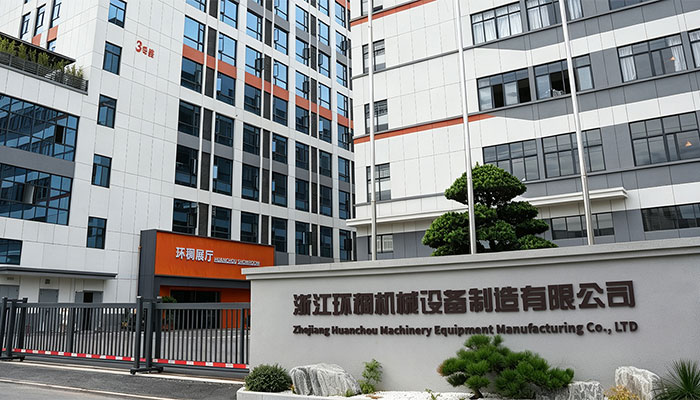
Zhejiang Huanchou Machinery Equipment Co.,Ltd.
Founded in 2008 and recognized as a National High-Tech Enterprise, Zhejiang Huanchou Mechanical Equipment Manufacturing Co., Ltd. specializes in R&D and manufacturing of automation equipment for disposable medical devices. Zhejiang Huanchou Mechanical Equipment Manufacturing Co., Ltd is a China Syringe Screen Printing Machine Manufacturer and Syringe Screen Printing Machine Supplier, our core products include automatic syringe assembly machines, self-destruct syringe assembly machines, automatic pad printing machines, and automatic syringe rolling printing machines.
With a dedicated R&D team of 23 professionals—nearly 40% of our total workforce—and ISO9001 certification, Huanchou serves clients across Europe, America, the Middle East, and Southeast Asia. Our new 23-mu manufacturing facility, designed to produce 1,000 syringe assembly line machines annually, is scheduled for full operation by the end of 2026, with an estimated annual output exceeding RMB 300 million.
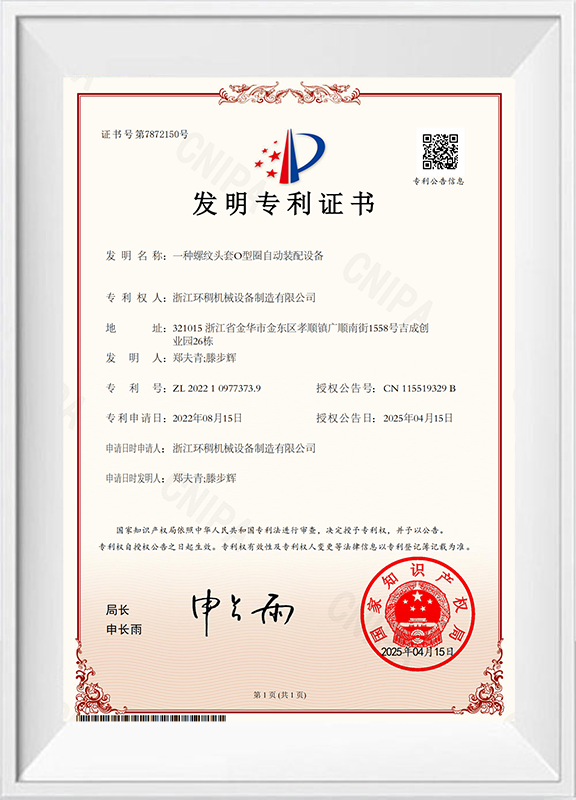
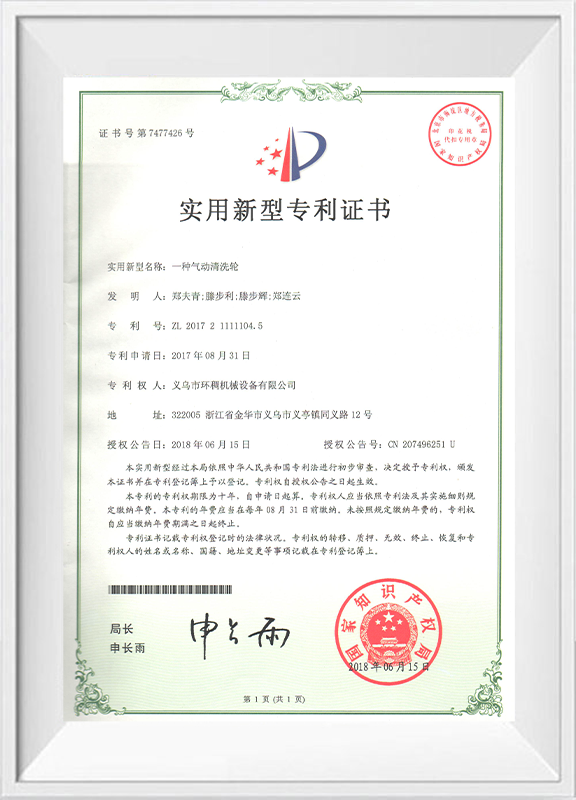
Certificate Of Honor
News
-
-
A line that runs four syringe formats will lose more time to changeover than to running. Walk the floor at shift change and the pattern is familiar: the printing station sits idle waiting for format parts, the assembly station runs one product at full speed, ...
READ MORE -
A syringe line that runs three safety-cover variants, two prefilled formats, and a printed barrel for a different customer can lose more output during changeovers than during steady running. The practical fix is not simply a faster machine. It is a custom aut...
READ MORE
Message Feedback
Syringe Screen Printing Machine Industry knowledge
Bolun Press manufactures the HSY-108 Syringe Screen Printing Machine, the screen printing station in our disposable medical device automation range. It transfers graduation lines, brand logos, warning text and multi-colour graphics onto moulded syringe barrels, measuring cups, bottle caps and catheter connectors. Within our line-up it is the machine we offer when a printed part needs several colours, a large covered area or a heavier, more saturated ink layer than roller printing normally delivers.
As a Syringe Screen Printing Machine manufacturer, we build the HSY-108 around a screen plate and squeegee pair: ink passes through the open mesh pattern and is pressed onto the part surface at a controlled layer thickness. Adjustable positioning fixtures hold barrels and accessories of different sizes and shapes, and the print design changes with the screen plate rather than with the fixture.
- Print content: graduation scales and numerals, brand and logo marks, warning and instruction text, decorative multi-colour panels.
- Typical parts: 1 ml to 60 ml syringe barrels, medical measuring cups, medicine bottle caps, catheter connectors and comparable moulded components.
- Drive and control: variable-frequency speed control with photoelectric positioning for print placement.
- Finishing: an integrated automatic drying unit cures the ink after printing so the mark resists smudging during handling and assembly.
Screen Printing Compared with Roller Printing
Screen printing and roller printing solve different marking problems, and many of our customers run both on the same site. Roller printing stays the faster route for a single-colour graduation scale at very high output; screen printing earns its place where the artwork carries several colours, a solid block of colour, or text that must remain legible at small character heights.
| Printing requirement | HSY-108 screen printing | Roller printing |
|---|---|---|
| Single-colour scale at maximum output | Stable and repeatable, but slower per piece | Preferred where cycle rate drives the line |
| Multi-colour overprinting | Sequential colour printing on one platform | Limited colour capability |
| Large solid areas and high ink deposit | Full coverage with saturated colour | Thin, line-oriented deposit |
| Frequent artwork changes, small batches | Change handled through the screen plate | Tooling change on roller or plate |
| Fine numerals and sharp edges | Crisp edges, legible small graduation numbers | Fine lines, lighter film |
Rated Capacity by Barrel Size
Rated output depends on the part geometry the fixtures are set for. The figures below are the working points we quote for the HSY-108 when a single print station runs one colour on a matched barrel size.
| Produces range | Rated speed |
|---|---|
| 1–2 ml | 50–60 pcs/min |
| 3–5 ml | 60–80 pcs/min |
| 10–20 ml | 60–70 pcs/min |
| 30 ml | 50–60 pcs/min |
| 50/60 ml | 50–60 pcs/min |
Machine data: rated voltage 220 V / 50 Hz, power 4 kW, overall size 3000 × 650 × 1500 mm, weight 670 kg.
Multi-colour artwork adds print and drying stages per part, so the line rate for those jobs is set with the artwork in hand rather than from the single-colour table.
Registration, Ink Film and Drying
Print placement is held by photoelectric positioning working with the variable-frequency drive, which keeps the registration between the graduation scale and the barrel features consistent from part to part. Because the squeegee presses ink through the mesh, film thickness is set mechanically, and the edges of each numeral stay sharp even where the printed scale is small.
Two settings carry most of the print quality in daily production: squeegee pressure and screen tension. We set both during commissioning against the approved printed sample, and both are checked again at changeover so that line width and colour density do not drift between batches.
Configuration and Changeover
- Fixtures: positioning fixtures are built to your barrel flange and body geometry, and one machine can carry several fixture sets for different volumes.
- Screen plates: one plate per print design and colour; artwork changes are made by swapping plates rather than rebuilding the machine.
- Colour sequence: multi-colour work is printed colour by colour, with drying between stages where the ink system requires it.
- Drying: the integrated drying unit is matched to the ink type and to the rate at which parts leave the print station.
- Scope: we confirm fixture sets, screen plates and wear-part stock with the order so the first production run matches your released artwork.
Installation, Safety and Line Integration
The machine runs on a 220 V / 50 Hz supply and draws 4 kW, with a base footprint of roughly three metres by 0.65 m and a 670 kg frame. It needs a level floor, working clearance at the print head and screen frame for changeover, and access to the drying section for cleaning and ink adjustment.
Where solvent-based inks are used, the drying stage is planned with local ventilation in the room. Guarding is arranged around the squeegee stroke and the drying section, with the operator controls and emergency stop positioned at the load and unload point. We cover screen handling, plate cleaning and squeegee setting during installation and operator training, because those three routines determine how long a plate lasts in production.
Our Range Around the HSY-108
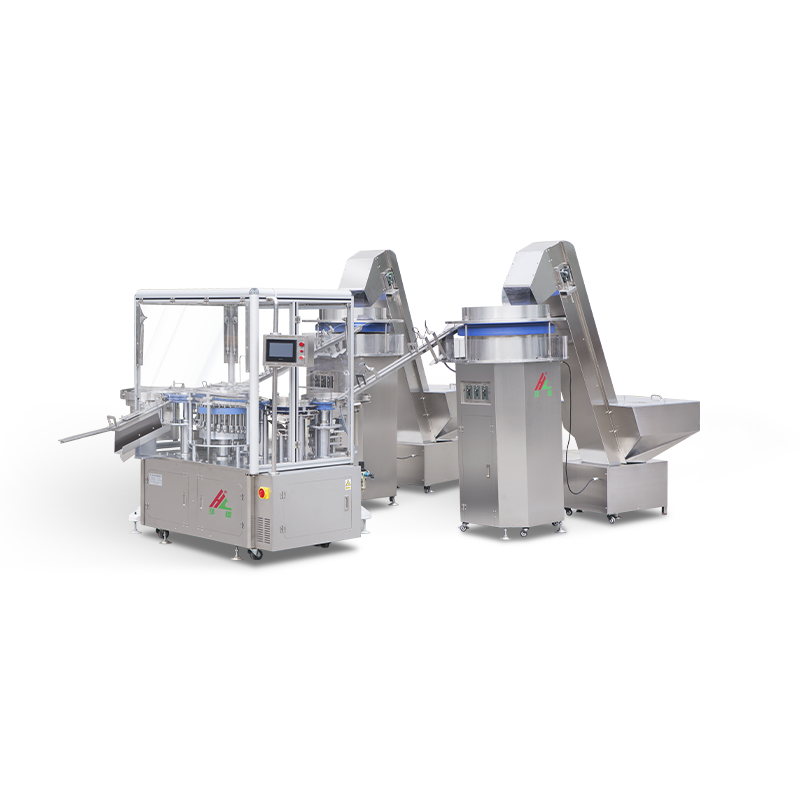
The HSY-108 sits alongside the printing, assembly and packaging equipment we manufacture for disposable syringe production, so a marking requirement can be planned together with the stations upstream and downstream of it.
- Syringe Printing Machines Manufacturer — roller and pad printing platforms, including safety-cover and high-speed variants, for single-colour scales and high-volume decoration.
- Syringe assembly machines — the HC-020 family, including safety-cover, high-speed, oil-injection and pre-filled configurations.
- Syringe Printing & Assembly Machines Manufacturer — combined and integrated lines that print and assemble in one flow.
- Blister packaging machines for downstream packing of the finished device.
- Syringe Machine Components & Accessories Manufacturer — the HSY-108, airtightness testers, centrifuge and stock bins, embossing seals and printing rubber rollers.
Quality Control and Acceptance
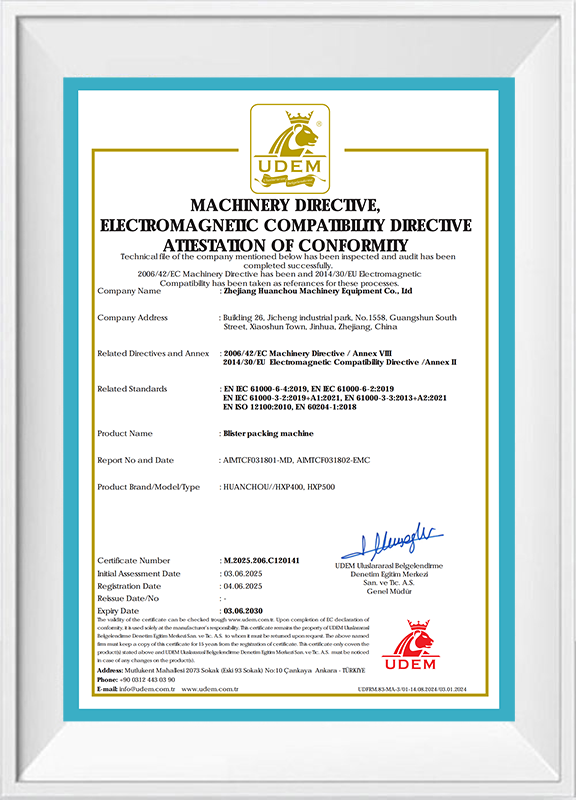
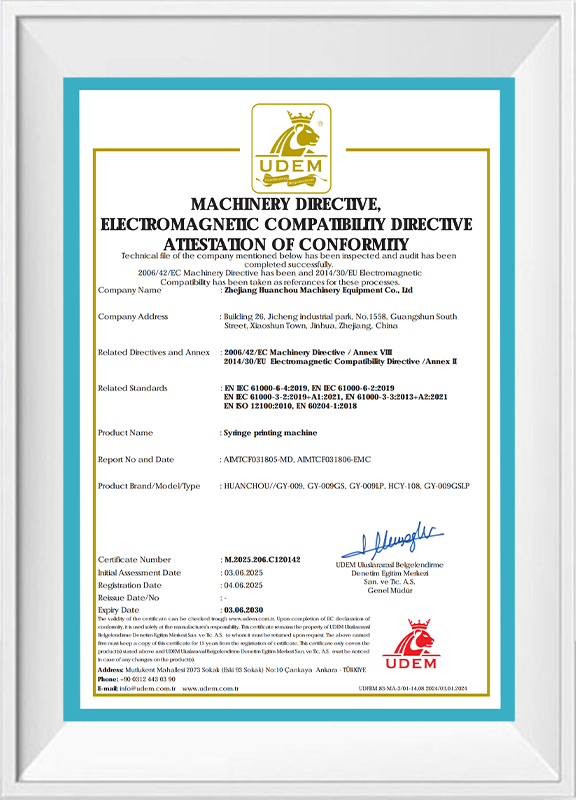
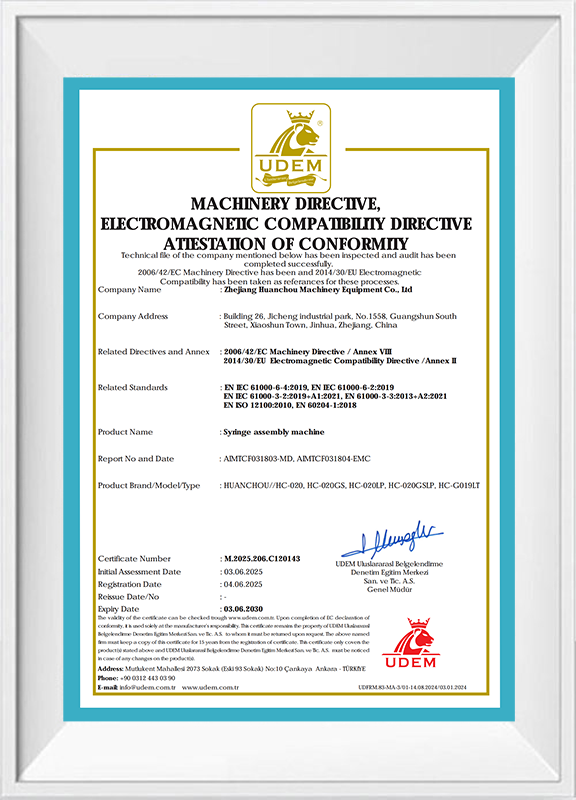
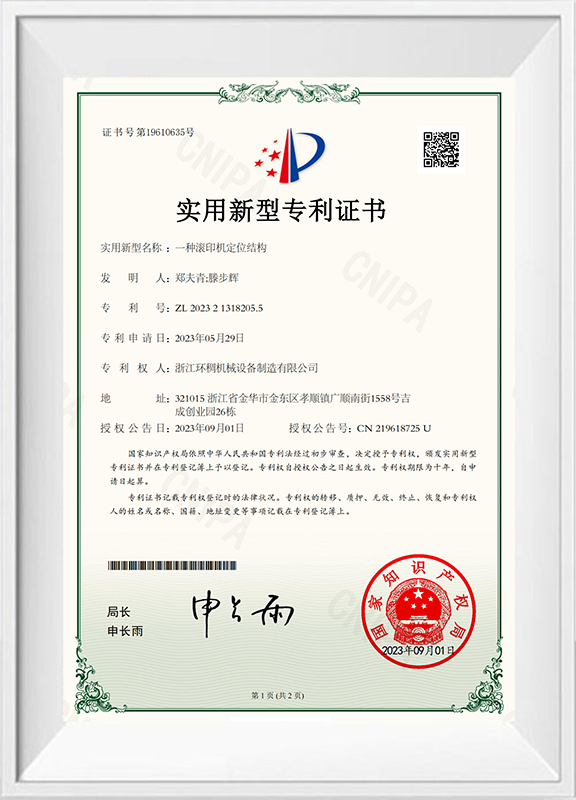
Bolun Press works to an ISO9001 quality system and holds CE certification for its printing and assembly equipment, together with National High-Tech Enterprise recognition. Our engineering team numbers 23 specialists, close to 40% of the workforce, and the patented mechanisms behind our printing and feeding systems are developed in-house at our production base in Jindong District, Jinhua, Zhejiang, China.
Acceptance of a screen printed part is settled on the printed sample: registration of the graduation scale against the barrel features, legibility of the smallest numeral, colour match to the approved artwork, ink adhesion after drying, and stability of that result across a full shift. Those criteria are agreed before the machine is built, and they become the reference used at commissioning.
Maintenance, Spares and Screen Care
- Clean the screen plate after every run and store it flat; dried ink in the mesh is the most common cause of missing or broken print detail.
- Check squeegee edge condition and pressure at each changeover, and replace the squeegee when the edge rounds or nicks.
- Verify screen tension periodically; a slack plate distorts registration and thickens the ink film.
- Keep spare screen plates, squeegees and fixture inserts at the line so an artwork or size change does not stop production.
- Documentation, spare-parts lists and operator training are issued with the machine, and remote technical support is available for settings and fault finding.
Information We Use to Configure Your Solution
We prepare a configuration and quotation from a small set of production facts. The clearer these are at the start, the more precisely the fixtures, drying stage and plate supply can be specified.
- Part drawings or samples, moulded material, and the nominal volumes to be printed.
- Artwork files, number of colours, and the height of the smallest character that must stay legible.
- Required output per shift, batch sizes and how often designs or sizes change.
- Ink system and cure requirements, including any restriction on solvents in the plant.
- Line layout, infeed and outfeed arrangement with the neighbouring assembly or packing station.
- Acceptance criteria, destination, voltage supply and required documentation.
Frequently Asked Questions
What can the HSY-108 print on?
It is built for surface marking on plastic medical consumables: syringe barrels from 1 ml to 60 ml, measuring cups, medicine bottle caps, catheter connectors and similar moulded parts. The fixtures are made for your part geometry, so the machine can run more than one size once the corresponding fixture set is supplied.
Can it produce multi-colour graduation scales?
Yes. Multi-colour work is printed colour by colour on the same platform, and the number of print and drying stages is fixed by the artwork. That sequential approach is what allows complex patterns and larger covered areas that a single-pass roller printer cannot produce.
How fast does it run?
Rated speed is 50–60 pcs/min for 1–2 ml and 30–60 ml parts, 60–80 pcs/min for 3–5 ml parts and 60–70 pcs/min for 10–20 ml parts, based on one colour and a matched fixture set. Jobs with several colours run slower because each part passes additional print and drying stages.
What utilities and floor space are needed?
A 220 V / 50 Hz supply rated for 4 kW, and a level floor area around the 3000 × 650 × 1500 mm base with clearance for loading, changeover and access to the drying section. The machine weighs 670 kg.
How is print registration kept stable through a shift?
Photoelectric positioning works with the variable-frequency drive to hold placement part to part, while the positioning fixtures keep the barrel in the same attitude at every cycle. Registration is maintained in production by checking squeegee pressure and screen tension at changeover, and by replacing worn squeegees before the print edge degrades.
Who supports installation and operator training?
Our engineers handle commissioning, set the working parameters against the approved printed sample, and train operators on plate handling, cleaning and squeegee adjustment. Remote technical support continues after handover, and spare screens, squeegees and fixture parts are supplied from the same factory.

 OEM/DOM Syringe Screen Printing Machine Manufacturer
Copyright ©
Zhejiang Huanchou Machinery Equipment Co.,Ltd.
All Rights Reserved.