

 中文简体
-
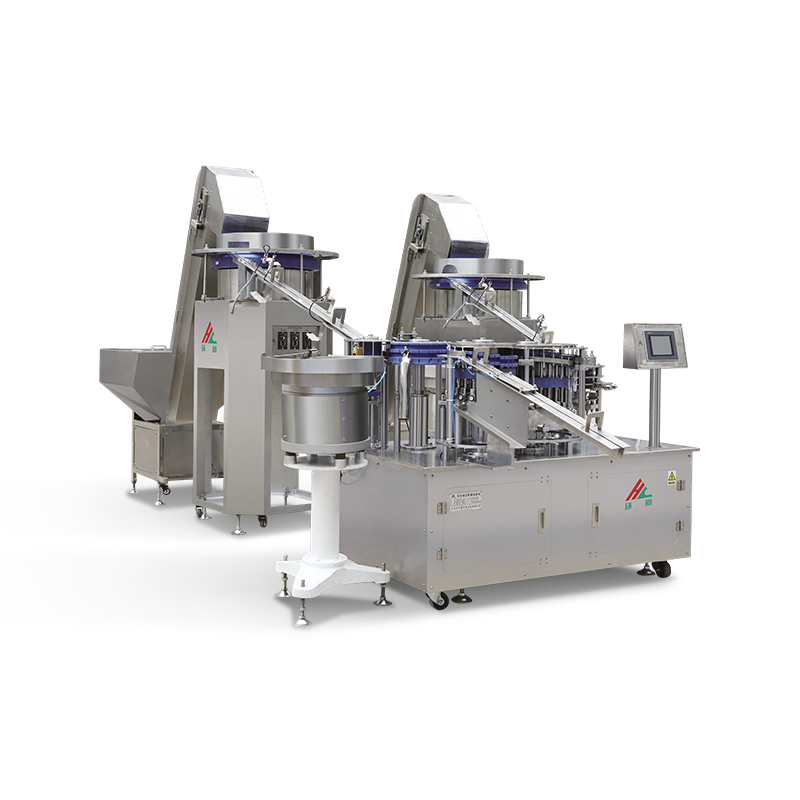
HC-020
Syringe Assembly Machine -
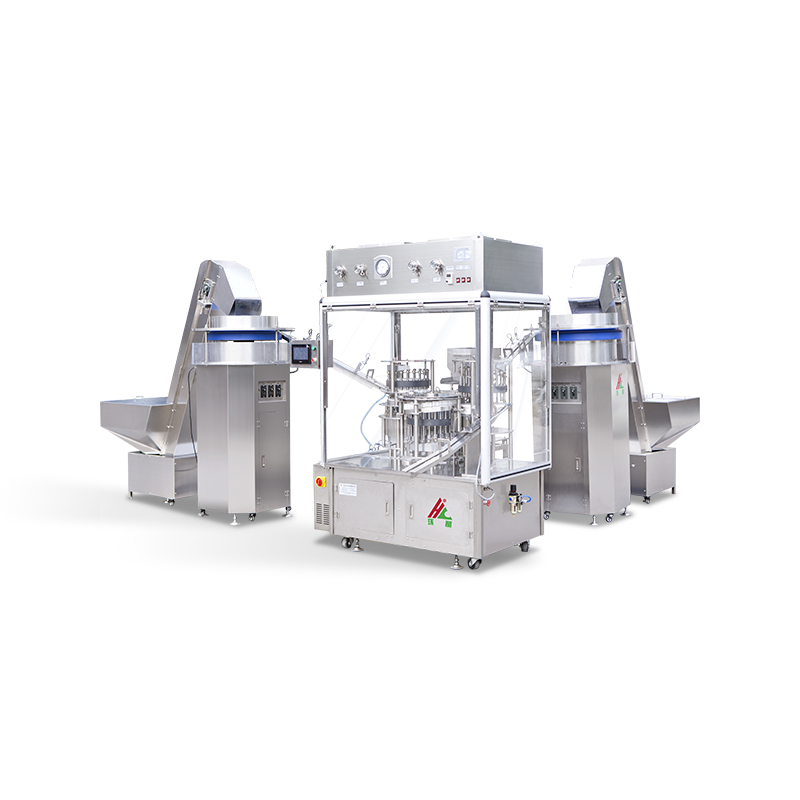
HC-CG022
Pre-Filled Syringe Assembly Machine

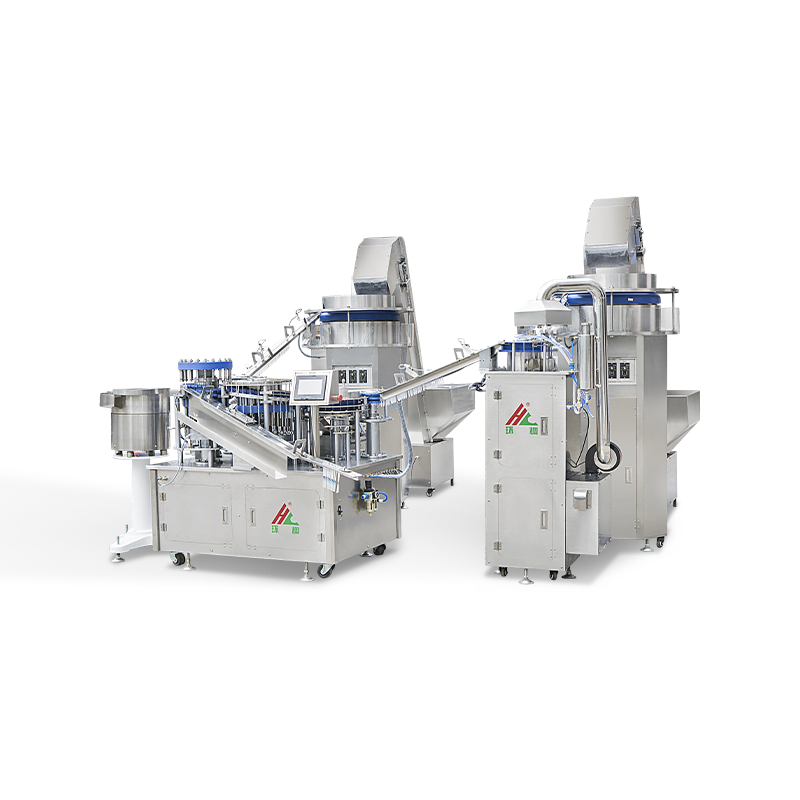
Syringe Assembly Machines can complete the automatic feeding and assembly of all syringe components, including syringe barrels, plungers, rubber stoppers, needles, and other accessories. They support the assembly of luer slip, luer lock and eccentric tip type syringes, and can also assemble various types of self-destructing syringes and safety syringes. The equipment adopts Mitsubishi variable frequency speed control, microcomputer control, and photoelectric monitoring systems to realize automatic stopping when materials are unavailable and automatic feeding when replenishment is required. The product-contacting components are manufactured with SUS304 stainless steel, MC nylon, and FDA-certified food-grade conveyor belts. The overall machine appearance is designed according to the special process requirements of cleanroom environments, ensuring no contamination to products or clean areas, and enabling 24-hour continuous normal production.
Company
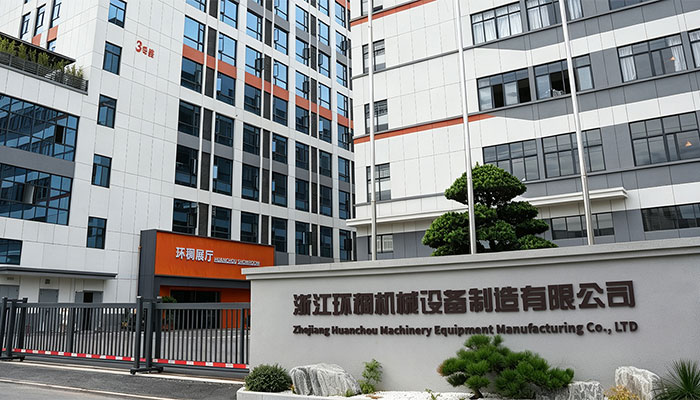
Zhejiang Huanchou Machinery Equipment Co.,Ltd.
Founded in 2008 and recognized as a National High-Tech Enterprise, Zhejiang Huanchou Mechanical Equipment Manufacturing Co., Ltd. specializes in R&D and manufacturing of automation equipment for disposable medical devices. Zhejiang Huanchou Mechanical Equipment Manufacturing Co., Ltd is a China Syringe Assembly Machines Manufacturer and Syringe Assembly Machines Factory, our core products include automatic syringe assembly machines, self-destruct syringe assembly machines, automatic pad printing machines, and automatic syringe rolling printing machines.
With a dedicated R&D team of 23 professionals—nearly 40% of our total workforce—and ISO9001 certification, Huanchou serves clients across Europe, America, the Middle East, and Southeast Asia. Our new 23-mu manufacturing facility, designed to produce 1,000 syringe assembly line machines annually, is scheduled for full operation by the end of 2026, with an estimated annual output exceeding RMB 300 million.
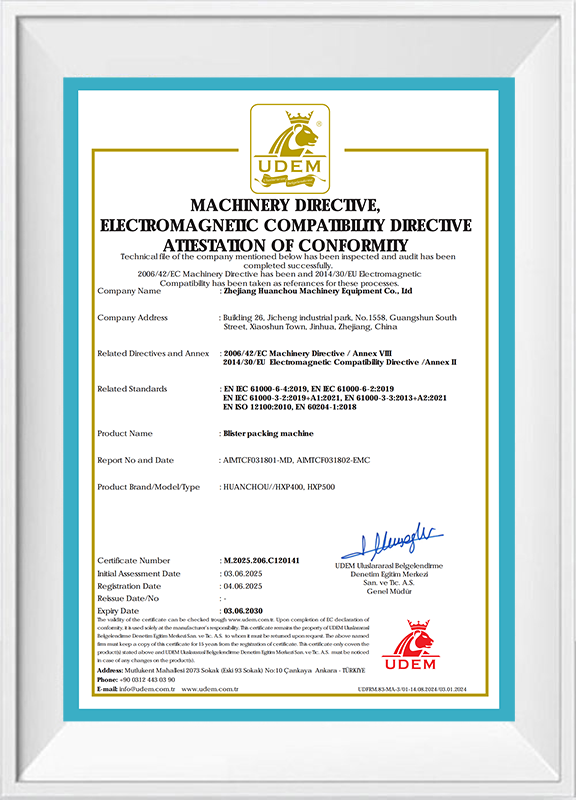
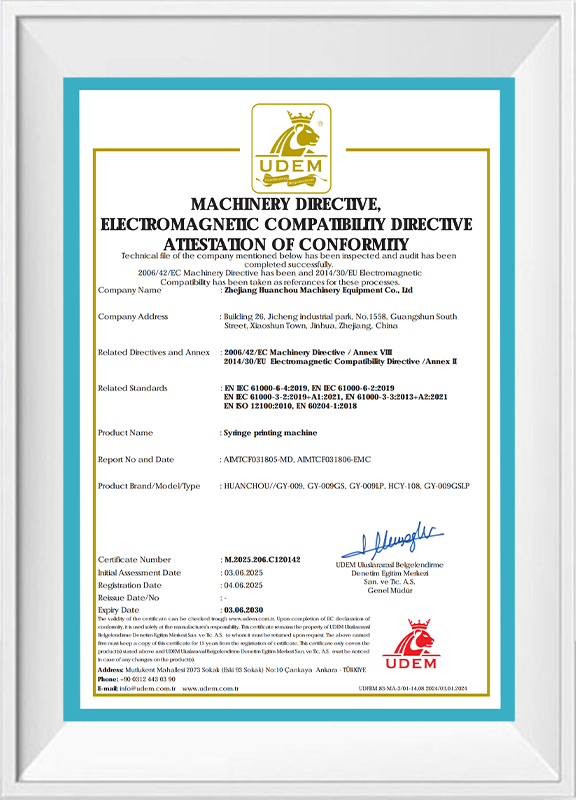
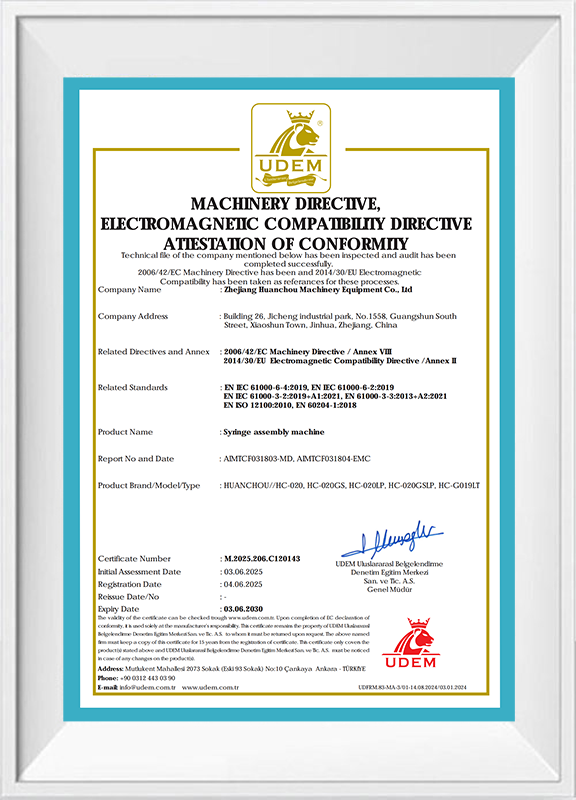
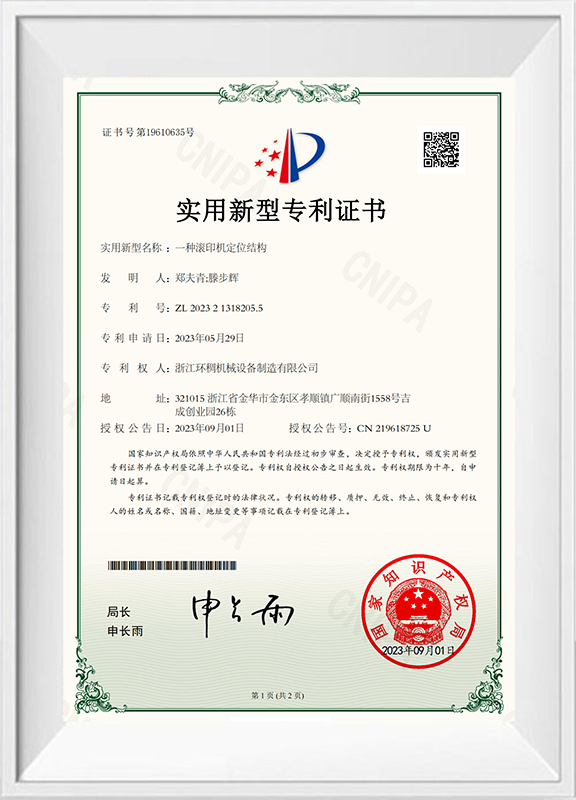
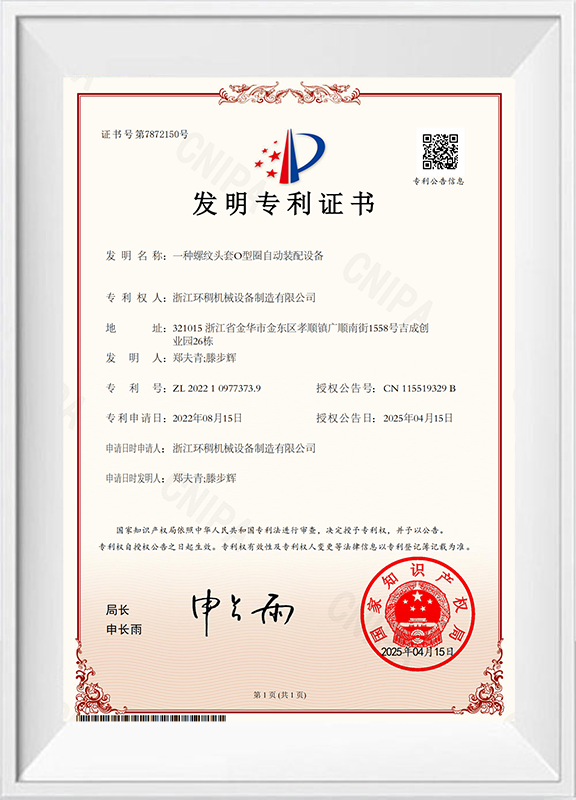
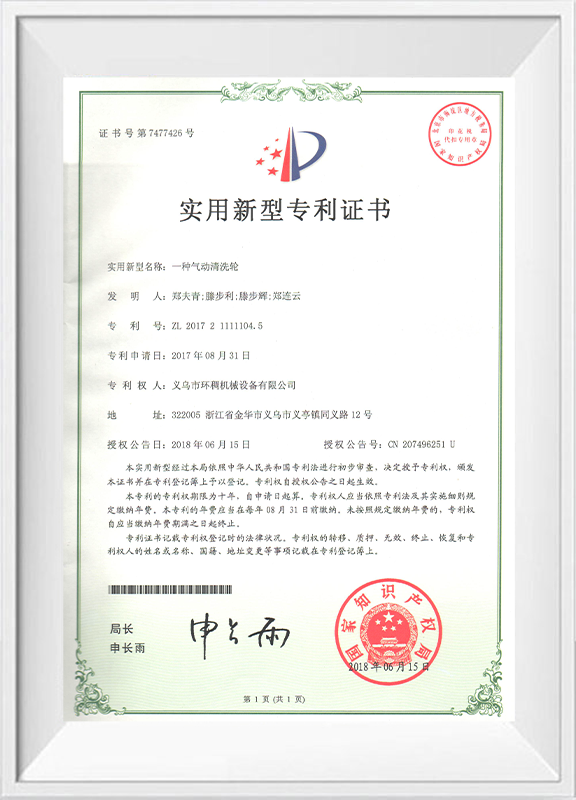
Certificate Of Honor
News
-
Walk the length of a modern syringe line and the number that decides whether the shift is profitable is rarely the headline speed printed on the datasheet. It is the number of tim...
READ MORE -
A line that runs four syringe formats will lose more time to changeover than to running. Walk the floor at shift change and the pattern is familiar: the printing station sits idle...
READ MORE -
A syringe line that runs three safety-cover variants, two prefilled formats, and a printed barrel for a different customer can lose more output during changeovers than during stea...
READ MORE -
Specialized automation for unique industries is rarely a catalog purchase. In medical disposables, the “unique” part is usually a syringe variant that behaves differently on the l...
READ MORE
Message Feedback
Syringe Assembly Machines Industry knowledge
Bolun Press designs and manufactures automatic syringe assembly machines for disposable syringe production. Our HC-020 platform carries out barrel feeding and orientation, rubber stopper insertion, plunger assembly, needle fitting and outlet inspection on one rotary assembly table, with models covering 1 ml to 60 ml formats. As a Syringe Assembly Machines Manufacturer, we match feeder tooling, station timing and inspection logic to the moulded components a plant actually receives.
The range covers luer slip, luer lock and eccentric tip bodies, plus self-destructing and safety syringe variants, and extends into oil-injection and pre-filled configurations. Guarded and open-frame versions share the same assembly sequence, so a producer can standardise on one station layout across several lines and add CE-marked enclosures where the plant layout or operator access requires them.
Models in the Syringe Assembly Range
HC-020 Syringe Assembly Machine — economy platform without an integrated cover, intended for lines that already run external safety fencing. Handles the full 1–60 ml span and keeps the complete assembly sequence and automatic control set.
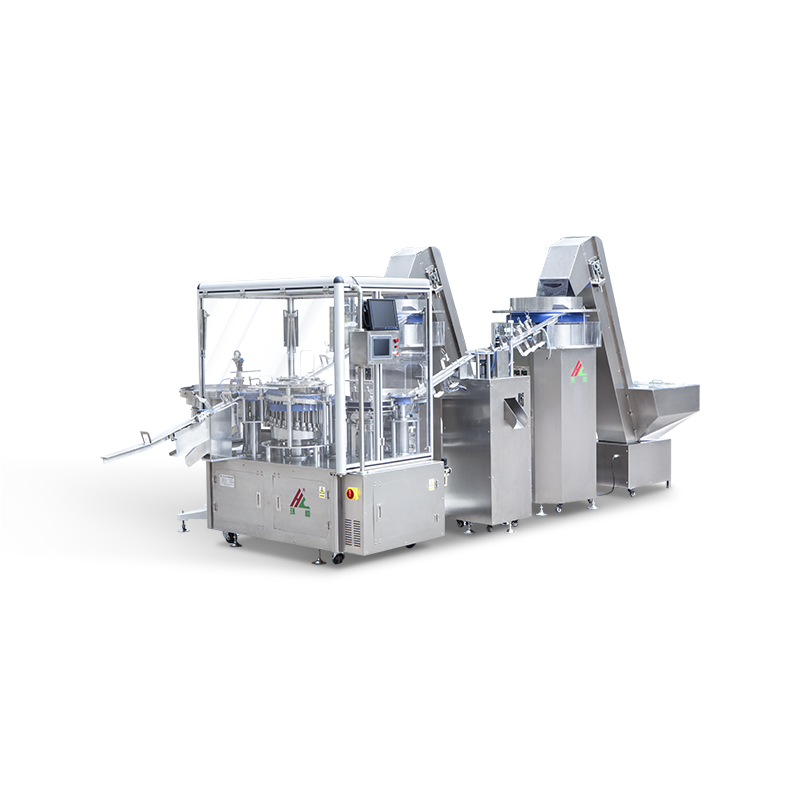
HC-020-LP Syringe Assembly Machine with Safety Cover — the same station logic inside a guarded frame; the machine stops automatically when the cover is opened. Suited to 1–30 ml production where operators need frequent access to feeders and the rotary table.
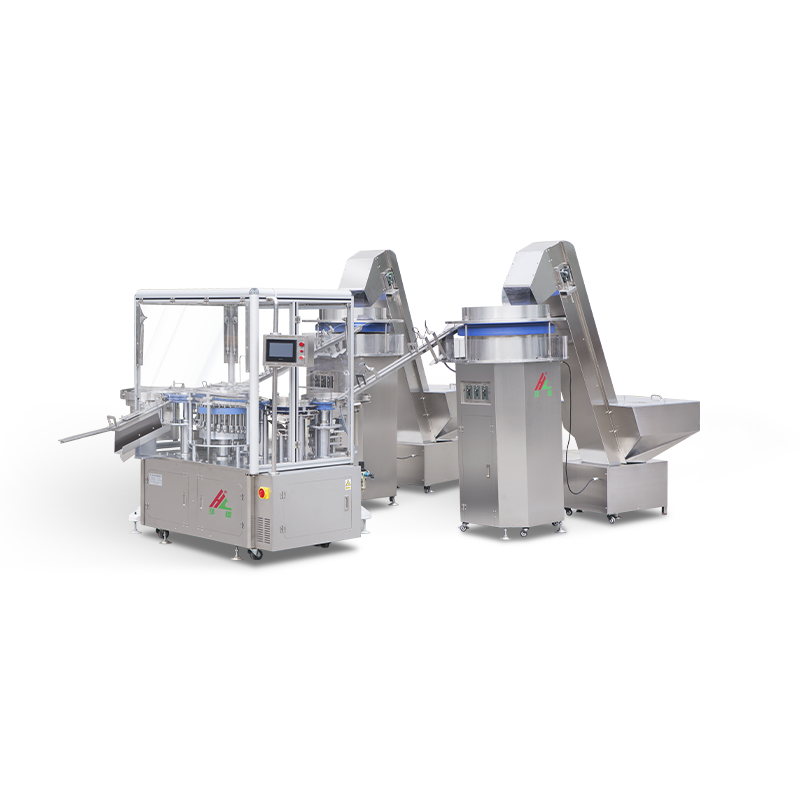
HC-020-GSLP High Speed Syringe Assembly Machine with Safety Cover — tuned for small-barrel volume work, reaching 220–240 pcs/min in the 3–5 ml band with guarded operation and outlet rejection of incomplete assemblies.
HC-020-PY Syringe Assembly Machine with Oil Injection — adds a controlled oil-spraying station that lubricates the inner barrel wall before stopper insertion, keeping plunger glide force consistent on dry syringes.
HC-CG022 Pre-Filled Syringe Assembly Machine — configured for pre-filled syringe formats, where barrel, stopper and plunger-rod handling and cleanliness control differ from dry-syringe assembly.
Matching a Machine to Your Syringe and Line
| Model | Syringe range | Output | Guarding | Typical fit |
|---|---|---|---|---|
| HC-020 | 1–60 ml | 140–240 pcs/min by size | Open frame, external fence | Multi-size dry syringe lines already enclosed |
| HC-020-LP | 1–30 ml | 140–240 pcs/min by size | Integrated safety cover | General production with frequent operator access |
| HC-020-GSLP | 1–30 ml | Up to 240 pcs/min at 3–5 ml | Integrated safety cover | High-volume 1–10 ml output targets |
| HC-020-PY | Confirmed against barrel drawing | Set at configuration | Cover or open frame | Siliconised barrels, controlled glide force |
| HC-CG022 | Pre-filled formats | Set at configuration | Guarded frame | Pre-filled syringe assembly and closing |
Station Sequence and Assembly Logic
Barrels, rubber stoppers, plungers and needles load into separate centrifugal vibrating bowls, are sorted, then travel along linear feeder tracks to the assembly rotary table. Stations run in fixed order: barrel positioning, stopper insertion, plunger rotary assembly and needle press-fit, followed by outlet inspection that rejects parts missing a needle, stopper or plunger before automatic discharge.
- Feeder tooling sized to the barrel flange, stopper geometry and needle hub of your components.
- Rotary-table station timing set from the moulded-part tolerance window, not from nominal drawings alone.
- Outlet inspection with reject verification, so incomplete assemblies leave the line in a defined reject path.
- Self-destruct and safety syringe mechanisms adapted through dedicated station hardware on the same base platform.
Speed by Syringe Size
| Barrel size | Assembly speed | Notes |
|---|---|---|
| 1–2 ml | 200–220 pcs/min | Small-barrel feeder tracks, high station count |
| 3–5 ml | 220–240 pcs/min | Highest output band on the guarded models |
| 10 ml | 180–200 pcs/min | Larger pitch on the rotary table |
| 20 ml | 160–180 pcs/min | Stopper and plunger insertion force reviewed |
| 30 ml | 140–160 pcs/min | Guarded model upper limit |
| 50–60 ml | 140–160 pcs/min | Open-frame HC-020 platform |
Machine data across the series: 220 V / 50 Hz supply, 3 kW installed power, 0.4–0.6 MPa dry compressed air, footprint 4650 × 2630 × 2150 mm for the standard frame and 3050 × 4000 × 2150 mm for the 50–60 ml layout, with unit weight around 1500–1530 kg.
Materials and Cleanroom Construction
All product-contact parts are manufactured in SUS304 stainless steel and MC nylon, and conveyor belts are FDA-certified food-grade material. Frames and covers receive anti-corrosion treatment, and welding joints are ground smooth and flat so residue cannot collect at seams. The whole machine is laid out for cleanroom production and is built for 24-hour continuous running under normal operating conditions.
- Precision gear transmission for low-noise running at high station speed.
- Smooth line covers and a reasonable layout that allow cleaning between batches.
- Guarded versions with interlocked safety covers that stop the machine when opened, built to CE safety practice.
Controls, Sensor Monitoring and Line Interfaces
Drive and control use Mitsubishi variable-frequency speed control with a PLC and microcomputer coordinated system, the architecture our engineers moved to in place of earlier circuit-board control. Photoelectric sensors monitor material status and station actions in real time, so the machine stops when a bowl or track runs empty and restarts automatically once components are replenished. The operator interface keeps parameter adjustment straightforward, and ordinary operators can run the machine after short training.
Where a line also prints barrels or packs finished syringes, we align discharge height, transfer direction and buffer capacity with the adjoining unit, including our Syringe Printing-Assembly Integrated Machine where printing and assembly are combined on one frame.
Quality Control and Acceptance
Syringe assembly machines carry CE certification, and our quality system is certified to ISO9001, with production governed by lean management disciplines across the workshop. We hold National High-Tech Enterprise status, and our engineering work is protected by 47 patents covering assembly, feeding, oil-spraying and printing mechanisms. A dedicated R&D team of 23 specialists makes up close to 40 per cent of the workforce.
- Assembly trials run with your barrels, stoppers, plungers and needles before shipment.
- Outlet inspection logic checked station by station, including deliberate reject tests.
- Qualification rate and running stability reviewed over a continuous run.
- Documentation, guarding verification and CE evidence issued with the machine.
Installation, Commissioning and Maintenance
Installation requires a level floor, the 220 V / 50 Hz supply, dry compressed air at 0.4–0.6 MPa, and a cleanroom environment matching the machine's construction. Our engineers handle mechanical setting, feeder tuning, control parameter loading and a production run with your components, then train operators and maintenance staff on the line. Remote assistance stays available afterwards, supported by full-cycle service from pre-sales specification through after-sales response.
Size changeover is managed through format sets and change parts on the feeders and assembly stations, with parameters recalled at the interface. Consumable and wear items are held as spare parts so a line can return to production without waiting on a full subassembly. The new manufacturing base, sized for 1,000 syringe assembly line machines a year, strengthens our capacity to build and deliver this equipment to customers in Europe, the Americas, the Middle East and Southeast Asia.
Information We Use to Configure Your Solution
- Syringe drawings and nominal volumes, including tip style: luer slip, luer lock or eccentric.
- Moulded component drawings and tolerance windows for barrel, stopper, plunger and needle hub.
- Whether the product is standard, self-destructing, safety or pre-filled, and any oil-injection requirement.
- Target output, shift pattern and preferred barrel size band for capacity sizing.
- Guarding preference: open frame with external fencing or integrated safety cover.
- Upstream and downstream equipment, cleanroom class, available floor space and utilities.
- Reject handling, inspection records and any line data you need collected.
Frequently Asked Questions
What syringe sizes can your assembly machines handle?
The HC-020 open-frame machine covers 1 ml to 60 ml, while the guarded HC-020-LP and HC-020-GSLP models are configured for 1 ml to 30 ml. Output falls as barrel size rises, from 220–240 pcs/min in the 3–5 ml band to 140–160 pcs/min at 30 ml.
Can the same machine assemble safety and self-destruct syringes?
Yes. The platform supports luer slip, luer lock and eccentric tip bodies and is adapted for various self-destructing and safety syringe designs through dedicated station hardware and feeder tooling.
Which model should we choose: HC-020, HC-020-LP or HC-020-GSLP?
The HC-020 is the economy build for plants that already run external safety fencing and need 50–60 ml capability. HC-020-LP adds an interlocked safety cover for 1–30 ml production, and HC-020-GSLP is the high-speed variant for small-barrel volume work. See the High Speed Syringe Assembly Machine with Safety Cover for the guarded high-output configuration.
What materials touch the syringe components?
Product-contact parts are SUS304 stainless steel and MC nylon, with FDA-certified food-grade conveyor belts. The machine receives anti-corrosion treatment, seams are smoothed, and the construction is laid out for cleanroom operation.
How is a size changeover carried out?
Change parts are fitted to the vibrating bowls, linear tracks and assembly stations for the new barrel format, then the matching parameter set is recalled at the control interface. We validate the changeover during commissioning so your team can repeat it in production.
What is needed to prepare a proposal?
Send the syringe drawing, component drawings with tolerances, product type, target output and shift pattern, guarding preference and available floor space. We return a configuration with station layout, feeder tooling scope, utilities, acceptance plan and delivery scope for your project.

 Syringe Assembly Machines Manufacturer
Syringe Assembly Machines Factory
Copyright ©
Zhejiang Huanchou Machinery Equipment Co.,Ltd.
All Rights Reserved.