

 中文简体

Specialized Automation for Unique Industries: Syringe Line Planning Guide
Date:11 18, 2026
Content
- 1 Specialized Automation for Unique Industries: The Short Answer
- 2 What Makes a Syringe Automation Project Unique
- 3 Start with the Syringe, Not the Machine Frame
- 4 Printing, Assembly, or Both: Choose the Process Boundary First
- 5 Safety Covers and High-Speed Assembly Change the Risk Profile
- 6 Prefilled Syringes and Oil-Injection Variants Demand a Different Conversation
- 7 Where Specialized Automation Effort Usually Concentrates
- 8 Packaging Is Part of the Automation Story
- 9 The Small Parts That Decide Uptime
- 10 Procurement Questions That Separate a Supplier from a Partner
- 11 Factory Acceptance, Validation, and the Cost of Change
- 12 Why Huanchou Fits Niche Syringe Automation Programs
- 13 FAQ: Specialized Automation for Unique Industries
- 13.1 What does specialized automation for unique industries mean in syringe production?
- 13.2 Should a buyer choose a separate printing machine or an integrated printing and assembly machine?
- 13.3 How many variants can one syringe assembly line handle?
- 13.4 What should be tested before shipment?
- 13.5 How should spare parts and accessories be selected?
- 13.6 What is the most common specification mistake?
- 14 Next Step: Define the Variant, Then the Line
Specialized automation for unique industries is rarely a catalog purchase. In medical disposables, the “unique” part is usually a syringe variant that behaves differently on the line: a safety cover that changes handling, a prefilled barrel that cannot tolerate ordinary transfer, a printing step that must be synchronized with assembly, or a packaging format that creates a bottleneck downstream. The practical conclusion is straightforward: define the product variant and its process risks before comparing machine frames. A standard assembly machine can be the right base, but only after feeding, orientation, inspection, and changeover requirements are clear.
That is especially true for buyers comparing a specialized automation manufacturer with a general equipment supplier. The machine may look similar in a brochure, yet the difference often sits in tooling, part handling, print registration, reject logic, and how easily the line can be cleaned and reset. This guide explains where those differences matter, how to frame a specification, and what to ask before placing an order.
Specialized Automation for Unique Industries: The Short Answer
The short answer is that specialized automation earns its cost when a product variant creates process risk that a standard line cannot absorb economically. For syringe production, that risk may appear as a safety cover that must be oriented without scratching, a prefilled barrel that needs gentler handling, a print position that must hold registration through assembly, or a packaging step that must keep pace with a high-speed upstream process.
A standard machine is not automatically the wrong choice. Many mature syringe families can run well on a well-configured standard platform. The problem appears when the buyer treats “standard” as a synonym for “no engineering.” In practice, even a standard assembly machine needs a defined infeed, a stable orientation method, a reject strategy, and a spare-parts plan. The real decision is whether those details can be handled with modest tooling changes or whether they require a purpose-built process sequence.
For a medical device manufacturer, the financial question is not simply machine price. It is the cost of unstable yield, excessive manual intervention, long changeover, repeated validation, and slow spare-parts response. A specialized automation supplier should be able to explain how the machine handles the variant, not just quote a speed figure. That explanation should cover product contact materials, sensor placement, jam recovery, print inspection, and the boundary between automatic and manual work.
Buyers also need to separate three roles in the supply chain. A manufacturer builds and controls the machine design. A supplier may integrate equipment or provide regional support. A wholesaler may handle components or accessories. Those roles are not interchangeable. For a production line, the most useful partner is the one that can connect product requirements to mechanical decisions and remain accountable for fit, function, and documentation.
What Makes a Syringe Automation Project Unique
A syringe is a simple object in the hand and a demanding object on an automated line. The barrel is thin-walled, the flange can be sensitive to pressure, the plunger may need precise insertion, and the print area may sit close to features that affect orientation. When a safety cover, a prefilled barrel, or an oil-injection step is added, the number of handling decisions rises quickly.
Uniqueness in this context does not mean novelty for its own sake. It means the product has a feature that changes the process window. A safety syringe may need a controlled cover feed and a verified lock position. A prefilled syringe may need a stable nest and a gentle transfer that avoids bubbles or barrel damage. A printed syringe may need registration marks, UV or solvent compatibility, and a check that the print survives downstream handling.
The table below is a planning aid. It shows how common variant signals translate into automation decisions. It is not a machine specification, because the final design still depends on part drawings, samples, output targets, and the quality standard the buyer must meet.
| Variant signal | What it changes | What to specify |
|---|---|---|
| Safety cover or shield | Feeding, orientation, scratch risk, and lock verification | Cover geometry, nest design, sensor checks, and reject criteria |
| Prefilled barrel | Handling forces, bubble risk, nest stability, and downstream transfer | Barrel support, transfer method, fill-related interfaces, and inspection points |
| Oil-injection step | Sequence timing, dosing interface, and contamination control | Injection position, dose verification, waste handling, and cleaning access |
| Print on barrel or flange | Registration, ink or laser method, cure time, and print inspection | Print area, artwork tolerance, adhesion check, and reject logic |
| Blister packaging format | Line balance, product transfer, forming, sealing, and changeover | Pack format, material, output match, and format-change procedure |
| Component wear or fit | Uptime, print quality, and maintenance interval | Spare-part list, replacement interval, and adjustment method |
Notice that most rows are not about the machine frame. They are about interfaces. The most expensive surprises often occur where two good subsystems meet: the feeder and the nest, the printer and the assembly transfer, the packer and the upstream buffer. A specialized automation project should map those interfaces early and assign responsibility for each one.
Start with the Syringe, Not the Machine Frame
A practical specification starts with a small set of product questions. They are simple to ask and often reveal whether the project needs a focused variant line or a more flexible platform. The answers also help a supplier decide which existing modules can be reused and which need new tooling.
- What are the exact barrel, plunger, flange, and cap dimensions, including tolerances that affect handling?
- Which feature controls orientation, and can that feature be detected reliably at line speed?
- Does the print need to align with a feature, a gauge, or a downstream assembly step?
- Will the line run one variant continuously, or switch among several variants in a week?
- Which defects must be rejected automatically, and which can be sampled?
These questions prevent a common error: buying a machine for the average product and then discovering that the actual product family is wider than expected. A line that handles three similar barrels may be a good fit for a modular assembly machine with quick-change nests. A line that handles radically different safety covers may need separate feeding modules and a more deliberate changeover procedure.
It also helps to send samples, not only drawings. A supplier can measure a drawing, but samples show how the part behaves in a bowl feeder, on a conveyor, and under a sensor. Small differences in mold shrinkage, surface finish, or assembly memory can change the feeding method. For a specialized automation manufacturer, sample testing is not a formality. It is the first real engineering step.
Printing, Assembly, or Both: Choose the Process Boundary First
One of the most useful early decisions is where to place the process boundary. Some factories separate printing and assembly because the two processes have different skills, maintenance routines, and quality checks. Others combine them to reduce handling and work-in-progress. Neither choice is universally better. The right boundary depends on product flow, reject cost, and how tightly the print must match the assembled part.
When Printing Deserves Its Own Machine
A dedicated syringe printing machine can be a sensible choice when print quality dominates the process. If the artwork is complex, the ink needs controlled curing, or the print must be inspected at high resolution, a focused printing platform gives the operator a clearer view of the process. It also keeps print-related maintenance away from assembly tooling. Automatic syringe roller printing machines are often used where the cylindrical surface and registration are central concerns.
The trade-off is additional handling. Printed parts may need to be collected, transported, and fed again into assembly. Each transfer adds a chance for damage, contamination, or mix-up. If the product is difficult to orient or the print area is easily scratched, that extra handling may cost more than the flexibility it provides.
When Assembly Is the Constraint
If the main bottleneck is plunger insertion, safety-cover placement, or cap fitting, a dedicated assembly machine may be the better anchor. The machine can be designed around the part nest and the assembly sequence, with printing added only if the print step is simple enough to integrate without disturbing the rhythm. Buyers should ask how the machine recovers from a jam and whether a reject at one station removes the part fully from the stream.
Assembly lines also need a clear definition of “fully seated.” A sensor that only detects presence may pass a partially inserted plunger. A force or position check may be more appropriate. The specification should state the acceptance method, not just the station function.
When Integration Removes Handling Risk
For some syringe families, the strongest case is an integrated printing and assembly platform. The part stays in one nest or transfer system, which can reduce orientation steps and manual collection. Integration is especially useful when the print must be synchronized with a downstream operation or when the printed surface must not be touched after curing.
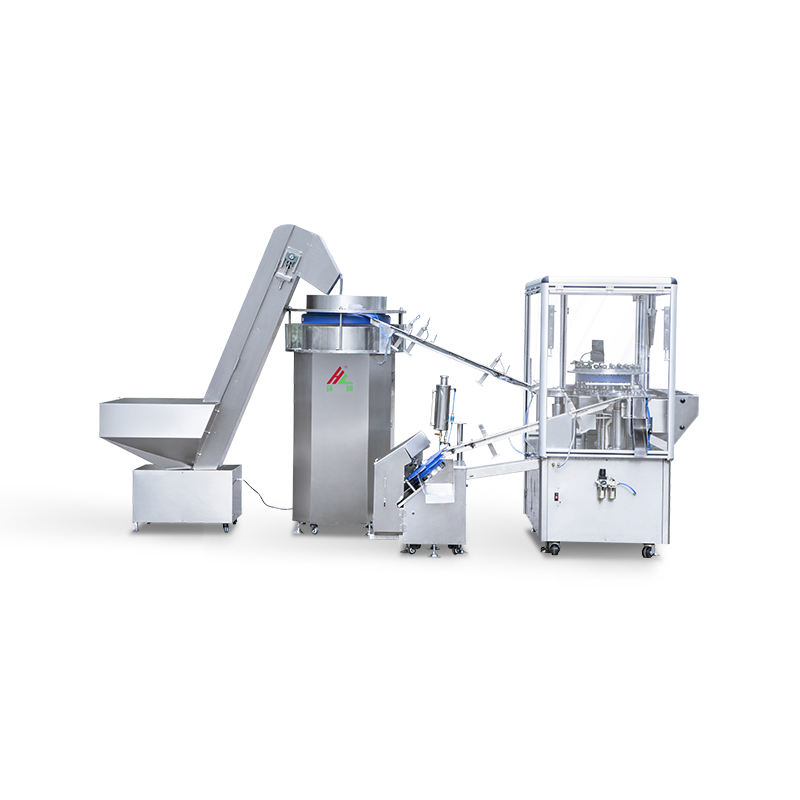
Huanchou builds a syringe printing and assembly integrated machine for buyers who want printing and assembly connected in one production flow. The value is not simply fewer machines. It is fewer transfers, a shared reject strategy, and one accountable process window from print to assembly. That does not remove the need for validation. It changes where the critical checks sit.
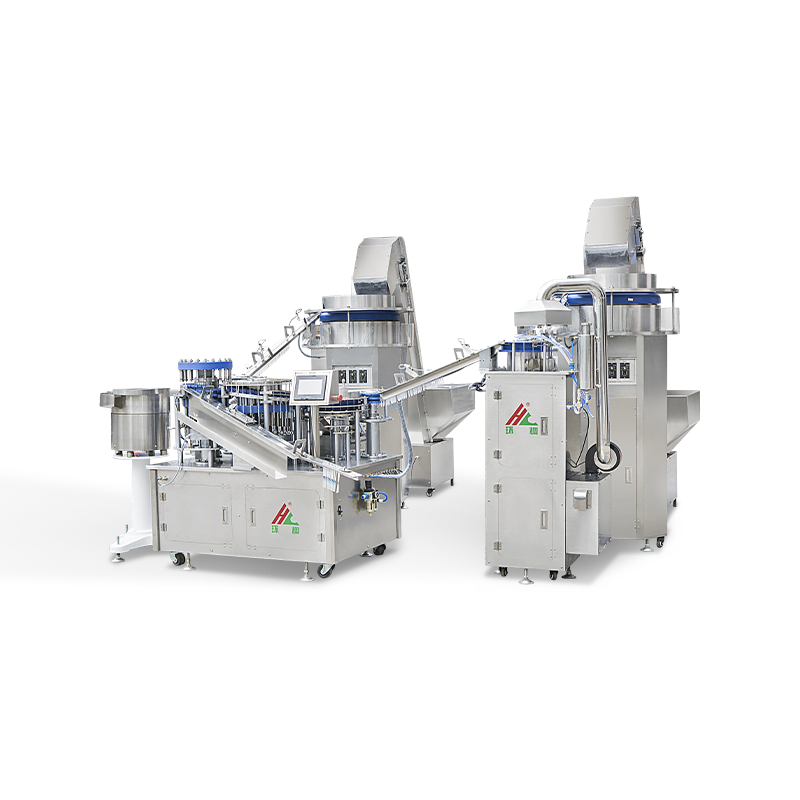
 Syringe Printing and Assembly Integrated MachineCombines roller printing, visual and inner-wall inspection, silicone oil spraying, and 1–50 mL syringe assembly in connected units with independent PLCs for maintenance isolation.View Product →
Before choosing an integrated platform, confirm that a stoppage in printing does not force a long assembly shutdown, and that a reject in assembly does not leave printed parts stranded. Buffer design, reject routing, and restart logic matter as much as the main mechanism.
Safety Covers and High-Speed Assembly Change the Risk Profile
Safety syringe variants are a good example of why specialized automation needs more than a faster cam. A safety cover adds a part that must be fed, oriented, placed, and checked. If the cover is scratched or deformed during feeding, the defect may not appear until final inspection. If the cover is not fully seated, the downstream test may fail or, worse, the product may pass with a marginal lock.
At higher speeds, the risk window narrows. The machine has less time to correct a part that arrives slightly rotated, and the reject system must keep up with the line. That is why high-speed syringe assembly with a safety cover should be specified around stability first and output second. A quoted cycle rate is only meaningful if the line can hold it with the buyer’s actual parts and quality criteria.
Huanchou offers a high-speed syringe assembly machine with safety cover for this type of program. Buyers should use the quotation process to define cover feed method, orientation check, insertion force, lock verification, and the treatment of rejected assemblies. It is also worth asking whether the same platform can handle a second cover design with a tooling change, because safety syringe families often evolve.
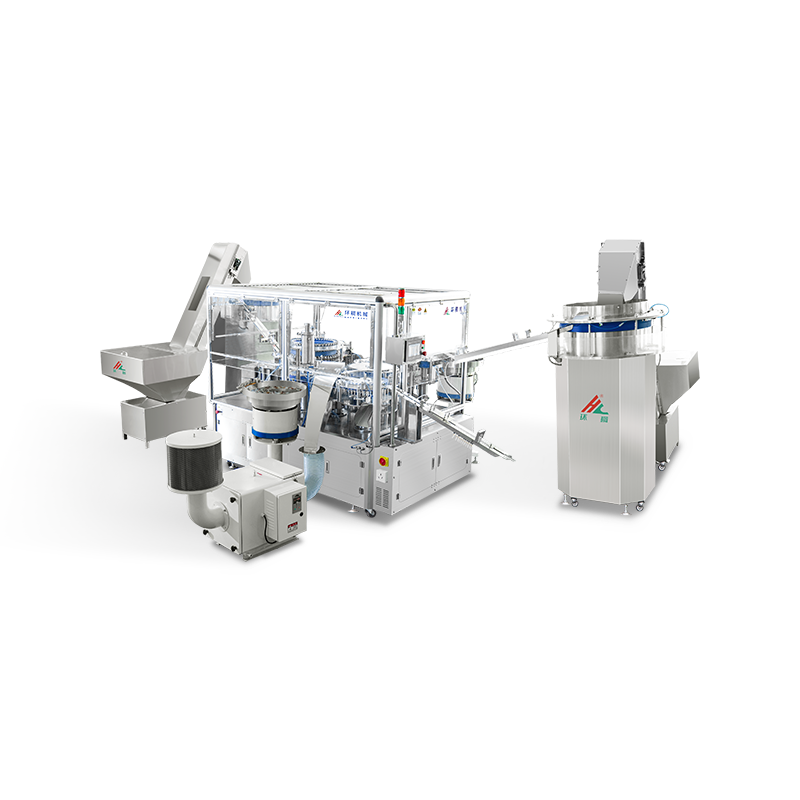
High-Speed Syringe Assembly Machine with Safety CoverAutomates 1–30 mL syringe assembly with outlet inspection and interlocked safety cover; review format-dependent speed, reject handling, and changeover assumptions before selection.View Product →
Do not accept “high speed” as a stand-alone claim. Ask for the assumed part quality, the reject rate used in the calculation, the maintenance interval, and the changeover time. Those numbers reveal more about production fit than a headline speed figure.
Prefilled Syringes and Oil-Injection Variants Demand a Different Conversation
Prefilled syringe assembly is less about pressing parts together and more about protecting the product through every transfer. The barrel may already contain a liquid or a sensitive formulation, so the machine must avoid excessive shock, unstable nesting, and unnecessary contact near the flange or tip. Even when the automation scope stops before filling, the assembly machine still needs to respect the constraints that filling creates.
The same principle applies to oil-injection variants. Adding an oil-injection step changes the sequence, introduces a dosing interface, and creates new cleaning and waste questions. The machine builder and the process owner need to agree on where the injection occurs, how dose verification is handled, and what happens to a partially processed part after a stop.
Huanchou builds a prefilled syringe assembly machine for programs where the prefilled format drives handling and nest design. A useful RFQ should state whether the barrel arrives filled or empty, how the plunger is presented, and which surfaces must remain untouched. If the answer is “we are not sure yet,” the project should include a sample trial before the final layout is fixed.
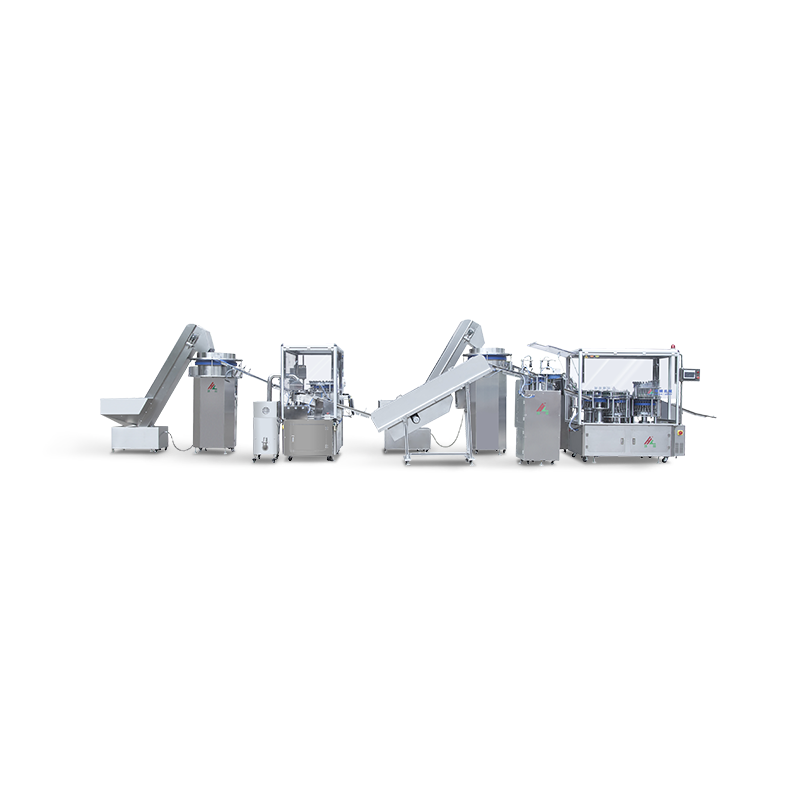
Pre-Filled Syringe Assembly Machine for 3–10 mL FormatsAutomates barrel, stopper, and plunger assembly for 3–10 mL Luer-lock PFS using independent vibratory bowls and PLC monitoring; check cleaning access and format changeover.View Product →
Oil-injection programs also deserve a separate review of cleaning access. Injection hardware, drip trays, and guards can make the line safer, but they can also create hidden pockets that slow maintenance. A specialized automation supplier should be willing to show how the operator reaches the relevant areas without dismantling the whole transfer system.
Where Specialized Automation Effort Usually Concentrates
Most specialized syringe projects do not fail because the main mechanism is impossible. They fail because planning attention is spread too thinly across the interfaces. The chart below is an illustrative planning view, not a machine performance rating. It shows where buyers and builders often need the most detailed agreement before the design is frozen.
The first bar is deliberately the longest. If the product definition is vague, every downstream decision becomes a guess. Feeding, orientation, print registration, and reject logic all depend on the part family. A buyer who can provide stable drawings and representative samples early will usually get a more reliable quotation and a shorter commissioning period.
The middle bars point to the value of integrated thinking. Print and assembly synchronization is rarely solved by adding a sensor at the end. It is solved by deciding where the part is held, when the print is cured, and how a rejected part leaves the stream. Huanchou’s product range covers printing, assembly, combined machines, and related accessories, which makes it easier to discuss those interfaces as one production flow rather than isolated equipment.
The lower bars are not low-risk. Packaging and component wear may receive less attention during concept design, but they often decide long-term uptime. A blister packaging machine that cannot match the upstream rhythm will create buffers and manual handling. A worn embossing seal or rubber roller can quietly reduce print quality until rejects appear. The planning chart is a reminder to distribute attention according to production consequence, not according to which subsystem is easiest to discuss.
Packaging Is Part of the Automation Story
It is tempting to treat packaging as a separate purchase. In practice, packaging is where many syringe lines reveal whether the upstream design is balanced. A fully automatic blister packing machine can only perform well if the incoming product is oriented, counted, and presented consistently. If the assembly line releases parts in uneven bursts, the packer will either wait or accumulate product in a way that creates handling risk.
For unique industries, packaging format is often part of the product identity. A hospital may require a specific blister layout, a clinical trial may need a small batch with clear traceability, and an export market may have its own labeling and pack configuration. These are not cosmetic details. They affect changeover, tooling, and the amount of manual intervention between assembly and packing.
When reviewing a packaging step, connect it to the upstream line. Ask how the buffer is sized, how a downstream stop is communicated, and how partially filled blisters are cleared. Also ask how format changeover is verified. A packer that runs well on one format but takes a long time to reset can become the hidden constraint in a multi-variant factory.
The Small Parts That Decide Uptime
In specialized automation, small parts are not minor. A print pad, embossing seal, rubber roller, centrifugal feeder, or airtightness tester can determine whether the line runs predictably. Buyers often focus on the main machine and treat components as consumables to be sourced later. That approach works until a replacement part changes print quality or a feeder no longer handles a new barrel mold.
Take printing accessories as an example. An embossing seal or rubber roller for a syringe pad printing machine must match the artwork, the ink system, and the part surface. A replacement that is dimensionally close but mechanically different may produce acceptable samples and then drift during a long run. The same is true for a negative-pressure airtightness tester. If the test fixture does not match the syringe tip and flange, the result may be inconsistent even when the instrument itself is working correctly.
This is where a manufacturer’s involvement matters. A component supplier or wholesaler can provide a part number, but the machine builder should still confirm fit, adjustment, and expected wear. For specialized lines, the spare-parts list should be organized by function: feed, print, assemble, inspect, and pack. That makes it easier to train maintenance staff and to set replacement intervals based on production hours rather than on breakdowns.
Huanchou supplies syringe machine components and accessories alongside its main equipment, including centrifugal feeders and stock bins, embossing seals, rubber rollers, and testing equipment. Buyers should use the spare-parts discussion to ask which parts are wear items, which require calibration, and which can be replaced without repeating a full line validation.
Procurement Questions That Separate a Supplier from a Partner
Procurement for specialized automation should not begin with a price comparison across identical-looking quotations. It should begin with a normalized scope. Otherwise, one supplier may quote a machine with manual loading, another may include automatic feeding, and a third may exclude printing inspection. The cheapest quotation may simply contain the least scope.
Use the following questions to compare responses on the same basis:
- Which product variants were assumed, and what happens if the variant family expands?
- Which functions are automatic, which are manual, and where does the operator intervene?
- What is the reject strategy at each station, and how are rejected parts removed?
- Which quality checks are included, and are they presence checks or functional checks?
- What is the changeover procedure, expected time, and required tools?
- Which spare parts are recommended for the first year, and which are wear items?
- What documentation is provided for operation, maintenance, and validation support?
- How is the machine tested before shipment, and who signs the acceptance criteria?
These questions also reveal the supplier’s engineering discipline. A manufacturer that can answer them clearly is more likely to have a structured design process. A supplier that answers only with speed and price may be relying on a generic platform. That is not automatically disqualifying, but it should prompt a deeper review of sample testing and acceptance criteria.
For international buyers, logistics and support belong in the same comparison. Ask how documentation is handled, how spare parts are packed, and who provides remote guidance during commissioning. A wholesaler may be convenient for common components, but the machine builder should remain the authority on fit and function. Clear role division prevents finger-pointing when a part fails.
Factory Acceptance, Validation, and the Cost of Change
Factory acceptance testing is the best opportunity to discover a mismatch before the machine reaches the buyer’s plant. For a specialized syringe line, the test should use production-representative parts, not hand-picked samples that hide natural variation. The acceptance criteria should cover stable running, reject accuracy, print registration, assembly checks, and changeover if multiple variants are in scope.
Validation requirements vary by market and product class. Even when formal validation is not the machine builder’s responsibility, the equipment should support it. That means clear parameter records, defined set points, accessible sensors, and documentation that matches the delivered configuration. If a buyer needs installation qualification, operational qualification, or performance qualification support, that expectation should be stated in the RFQ rather than added after shipment.
Change is another cost that is often underestimated. A small artwork change may require a new print pad or seal. A new barrel mold may alter feeding orientation. A new safety cover may need a different nest. A supplier that treats change as a normal engineering event will usually be easier to work with than one that treats every request as a new machine project. The difference appears in response time, documentation, and willingness to test a revised sample.
Why Huanchou Fits Niche Syringe Automation Programs
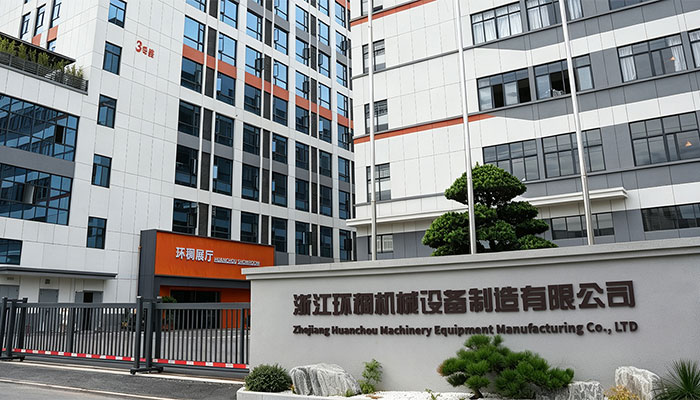
Zhejiang Huanchou Machinery Equipment Co., Ltd. has focused on automated equipment for disposable medical products since 2008. The company moved to its current Yiwu site in 2011 and has built its product range around syringe printing, syringe assembly, printing and assembly integration, blister packaging, and related machine components and accessories. That focus is useful for buyers who need a specialized automation manufacturer rather than a general-purpose machinery supplier.
Huanchou holds CE and ISO9001 certification and has been recognized as a high-tech enterprise and a Zhejiang high-growth technology-based small and medium enterprise. Its sales network covers most Chinese provinces and extends to Europe, the Americas, Russia, Southeast Asia, and countries along the Belt and Road. The company reports a 15,000 square meter production base, more than 200 partners, and exports to more than 50 countries. For a niche syringe program, those references are most useful when they are matched with the specific variant, output target, and acceptance standard.
The practical fit is strongest when the buyer can describe the product family and the process boundary. Huanchou can then discuss whether a dedicated printing machine, an assembly machine, an integrated platform, or a packaging step is the right starting point. The goal is not to sell the largest line. It is to match the automation to the variant and keep the interfaces manageable.
Explore Huanchou
Review the company background and discuss a syringe automation project with the team. About Huanchou and contact the manufacturer.
FAQ: Specialized Automation for Unique Industries
What does specialized automation for unique industries mean in syringe production?
It means designing the line around a specific product variant and its process risks. A safety syringe, a prefilled syringe, an oil-injection variant, or a printed syringe may all use similar basic motions, but they place different demands on feeding, orientation, inspection, and changeover. Specialized automation addresses those demands directly instead of relying on manual correction.
Should a buyer choose a separate printing machine or an integrated printing and assembly machine?
Choose a separate printing machine when print quality, ink control, or inspection is the dominant concern and the extra handling can be managed safely. Choose an integrated machine when print registration must be synchronized with assembly or when extra transfers would damage the printed surface. The decision should be based on product flow and reject cost, not on machine count alone.
How many variants can one syringe assembly line handle?
The number depends on how different the variants are. Similar barrels with minor print changes may share a platform with tooling changes. A new safety cover, a different barrel diameter, or a prefilled format may require a separate feeding module or nest design. The RFQ should state the current family and the expected future family so the changeover strategy can be planned.
What should be tested before shipment?
Test with production-representative parts and define acceptance criteria for stable running, reject accuracy, print registration, assembly checks, and changeover. Include jam recovery and restart behavior, because those conditions reveal whether the line is practical for daily production. If validation support is required, include it in the scope before the factory acceptance test.
How should spare parts and accessories be selected?
Organize spare parts by function: feed, print, assemble, inspect, and pack. Identify wear items such as seals, rollers, and pads, and confirm which replacements require calibration or print adjustment. A component supplier or wholesaler may provide common parts, but the machine builder should confirm fit and function for critical items.
What is the most common specification mistake?
The most common mistake is specifying the machine before the product variant is fully defined. When samples, tolerances, and acceptance methods are unclear, the supplier must make assumptions. Those assumptions often surface during commissioning as feeding problems, print drift, or reject errors. Define the product first, then set the machine scope.
Next Step: Define the Variant, Then the Line
The fastest way to move a specialized automation project forward is to prepare a short product brief. Include drawings, samples, the variant family, expected output, quality checks, changeover expectations, and the packaging format. Then ask the supplier to explain how the proposed line handles those points. A good response will discuss feeding, orientation, print registration, reject routing, and spare parts in plain terms.
For syringe programs, that conversation should also cover the process boundary. Will printing and assembly run as separate steps or as an integrated flow? Will safety covers be verified mechanically or by sensor? Will prefilled handling be tested with the actual barrel? These are not details for the final week of the project. They are the decisions that determine whether the line fits the product or merely fits the brochure.
Recommended Articles
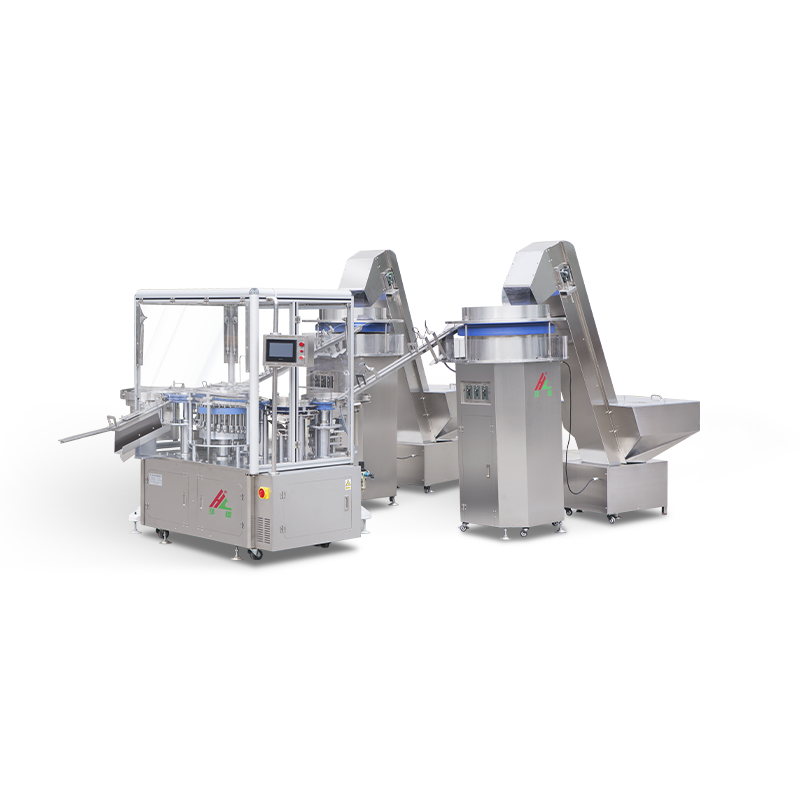
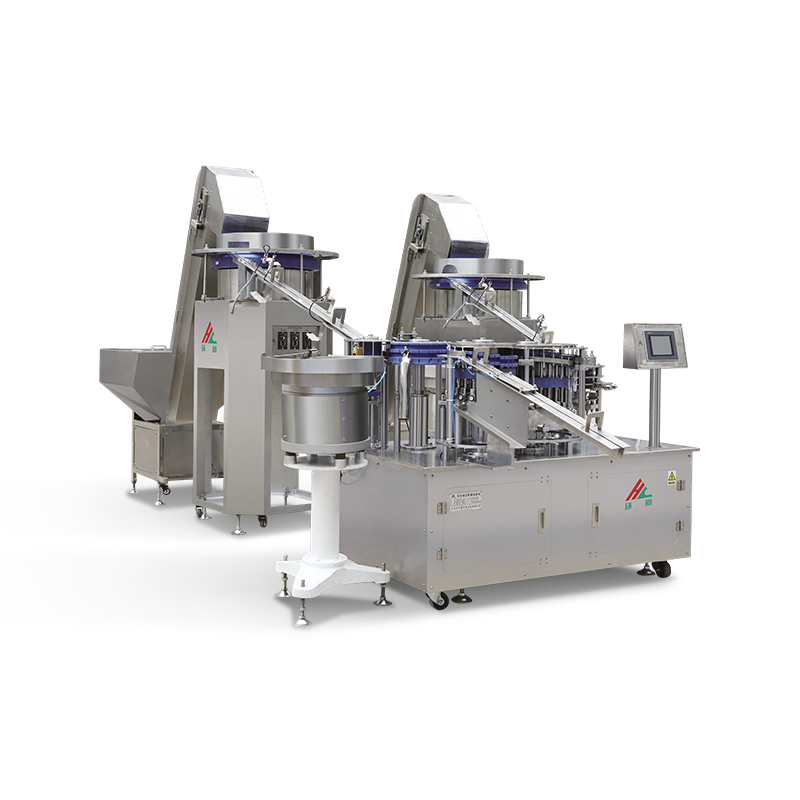

 Medical Device Automation Equipment Manufacturer
Syringe Assembly Machine Factory
Copyright ©
Zhejiang Huanchou Machinery Equipment Co.,Ltd.
All Rights Reserved.