

 English
 中文简体

Syringe Printing Machines Factory in China: Buyer Guide
Date:11 05, 2026
Content
- 1 What to Settle Before Contacting a Syringe Printing Machines Factory in China
- 2 Automatic Syringe Printer: What Actually Changes When Printing Is Automated
- 3 High Speed Syringe Printing Machine With Safety Cover: Speed, Guarding and Stable Output
- 4 Syringe Printing and Assembly Machines: When Combining the Two Steps Makes Sense
- 5 Selecting a Syringe Printing and Assembly Machines Factory in China
- 6 Medical Blister Packaging Machines: Closing the Line After Printing and Assembly
- 7 What to Check at a Blister Packaging Machines Factory in China
- 8 Scale Legibility, Ink Adhesion and Tolerance on Printed Syringes
- 9 Inspection Across Printing, Assembly and Packing Stations
- 10 Safety Covers, Interlocks and Operator Protection on Printing Lines
- 11 Evaluating a China Syringe Printing Machines Manufacturer, Supplier and Exporter
- 12 Export Planning, Spare Parts and Long-Term Support for Overseas Buyers
- 13 About Zhejiang Huanchou Mechanical Equipment Manufacturing
- 14 Explore Related Equipment Pages
- 15 Frequently Asked Questions About Syringe Printing Machines
- 15.1 Q1. What should I ask a Syringe Printing Machines manufacturer in China before ordering?
- 15.2 Q2. Is a high speed syringe printing machine with safety cover suitable for every plant?
- 15.3 Q3. Should I buy Syringe Printing and Assembly Machines as one line or separately?
- 15.4 Q4. What should I check on Medical Blister Packaging Machines from a China factory?
When a syringe barrel leaves the printing station with a scale that sits a fraction of a millimeter off, the problem rarely stays at the printer. It shows up later as a rejected batch, a customer complaint about dose marks, or a line that stops every twenty minutes because barrels will not stay oriented. The practical answer for buyers comparing a syringe printing machines factory in China is straightforward: pick the supplier that can print on your own barrels, hold the scale position steadily, and connect cleanly to your assembly and packing steps, instead of choosing on rated speed alone.
This guide is written for factory owners, project engineers and sourcing managers who are planning a new line or upgrading a manual one. It covers the automatic syringe printer, the case for combining printing and assembly, the role of a safety cover on a high speed syringe printing machine, and the medical blister packaging machines that close the line. Where we mention standards, we name them so your team can check them. Where we use ratings to make a comparison readable, we label them as illustrative planning ratings and not as survey data.
What to Settle Before Contacting a Syringe Printing Machines Factory in China
Most quotation delays come from missing information on the buyer side, not from the supplier. A China syringe printing machines factory can only propose a sensible configuration when it knows the barrel material, the diameter range, the scale layout and the output you expect. Gathering these facts first shortens the conversation and makes quotations easier to compare.
Product facts the supplier will ask for
- Syringe sizes and designs: Luer slip, Luer lock, auto-disable or insulin types, with drawings if possible.
- Barrel material and color, since clear and tinted plastics behave differently under printing and vision checks.
- What must be printed: graduation scale, volume numbers, brand name, batch or lot information.
- Expected annual volume and how many syringe sizes will share the line.
- Downstream steps: assembly, inspection, blister or pouch packing, sterilization.
Standards that frame the product
Sterile single-use hypodermic syringes fall under ISO 7886-1, which includes requirements for graduated scales, so printing is a regulated feature and not only a branding choice. Auto-disable syringes are covered by ISO 7886-3. Your quality system is likely built on ISO 13485, and packaging for terminally sterilized medical devices is addressed in ISO 11607. Knowing which of these apply to you helps the supplier explain how its equipment supports your compliance work.
A short written brief covering the points above is often more useful than a long call. It also gives you a record to compare against when quotations arrive, so differences in assumptions become visible early. Suppliers who ask good follow-up questions about your barrels and your packaging are usually the ones who have run into these issues before.
Prepare a one-page brief with syringe types, barrel material, print content, volume and downstream steps before requesting any quotation.
Automatic Syringe Printer: What Actually Changes When Printing Is Automated
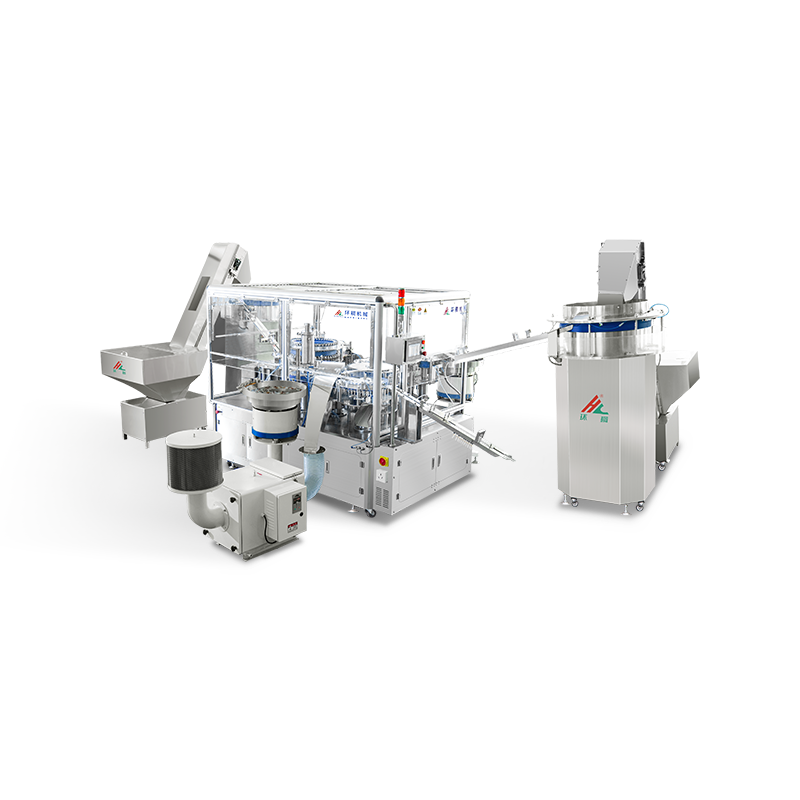
An automatic syringe printer takes over the three jobs that cause most variation in manual or semi-automatic printing: loading and orienting the barrel, applying the print under steady conditions, and removing the printed barrel without smudging. When these jobs are handled by the machine, the result no longer depends on how carefully an operator positions each part.
Pad printing is the common method for syringe scales because it reproduces fine lines and small text from an etched plate. Rolling printing is used where a continuous wrap-around mark is needed. A Syringe Printing Machines manufacturer in China will usually offer one or both, and the right choice depends on your scale layout and barrel range.
| Main functional areas of an automatic syringe printer and what to verify in each. | ||
| Area | What it does | What to verify |
| Barrel feeding | Sorts and presents barrels to the print station | Jam rate on your own barrels |
| Orientation control | Holds the barrel at a fixed angle for printing | Scale position relative to the barrel seam and flange |
| Print unit | Transfers ink to the barrel surface | Line sharpness, ink coverage and pad wear |
| Drying or curing | Sets the ink before handling | Adhesion after a rub test |
| Discharge and counting | Removes finished barrels and logs counts | Smudging on exit and counter accuracy |
One detail that often gets missed is the transition between printing and the next step. If printed barrels fall into a bin or travel on a belt before the ink has set, the surface can mark. Ask the supplier how long printed barrels remain untouched, and how the machine handles that on your barrel material.
A second detail is changeover. Moving from a 1 ml to a 10 ml syringe changes the fixture, the plate and often the orientation settings. A factory that has built many changeover sets can usually explain which parts are swapped, how long the work takes and how the new settings are verified.
An automatic syringe printer reduces variation by controlling feeding, orientation and ink transfer, so test those three areas first.
High Speed Syringe Printing Machine With Safety Cover: Speed, Guarding and Stable Output
A high speed syringe printing machine with safety cover brings two requirements together: steady throughput and protection for the people around the machine. A cover that keeps hands away from moving parts also keeps dust and stray debris off the print area, which supports print quality as a side benefit. When you review a high speed syringe printing machine with safety cover factory in China, treat the cover as part of the machine design and not as an accessory added at the end.
Speed has a cost in stability. As cycle time shortens, the margin for barrel orientation, ink transfer and discharge becomes smaller. A machine that runs steadily at a moderate rate may produce more good barrels per shift than one pushed to its maximum and stopped frequently for jams. That is why we suggest asking for a demonstrated run at your target rate, with the count of stoppages recorded.
The next chart looks at where line stoppages tend to come from in three printing setups. It is an illustrative planning chart based on typical process differences, not measured data from any specific plant.
The chart suggests that barrel orientation drops as a share of stoppages once fixtures and covers are designed around the barrel, which matches what operators report when guiding parts are improved. Ink and pad handling stays a steady share across setups because it depends on process discipline, such as ink viscosity checks and scheduled pad replacement.
The integrated line shows a larger share of waiting on neighbors. That is not a flaw in the idea, only a reminder that once printing and assembly are linked, a pause in one station is felt by the other. Buffer lengths and clear alarm messages help your team see which station caused a stop. For a syringe printing machine manufacturer in China, the useful question is how the machine reports and clears these events.
Use the chart as a prompt for your own trial. During a demonstration, record stoppages by cause for one hour of running, and compare the pattern with what you see here. If the pattern differs strongly, ask the supplier to explain the reason, since the answer often reveals how well the machine was configured for your barrels.
Judge a high speed printer by its stable running rate on your barrels and by how clearly it reports each stoppage.
Syringe Printing and Assembly Machines: When Combining the Two Steps Makes Sense
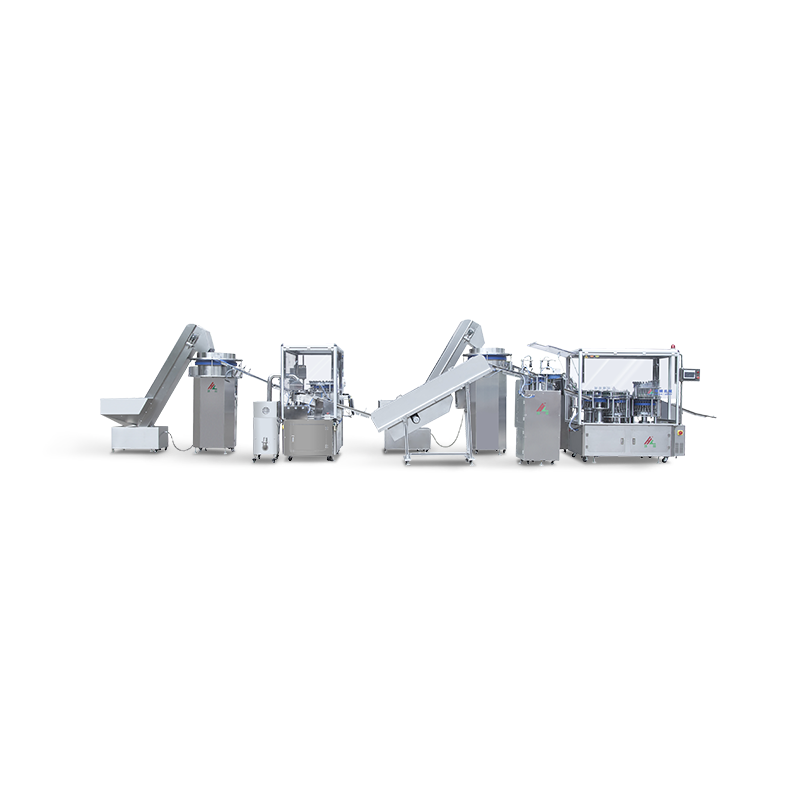
Syringe printing and assembly machines can be bought as separate units or as a combined line. Separate machines give you flexibility and easier maintenance, while a combined line reduces handling between steps and keeps barrel orientation under control from print to assembly. The better choice depends on your volume, your product range and how much floor space you can allocate.
Orientation is the hidden benefit of combining. A barrel that is printed and then dropped into a bin loses its orientation, and a later station must find it again. In a combined line, the barrel can stay held through printing and into assembly, which removes one re-orientation step and one chance for scratches.
Before reading the next chart, note that it positions six approaches on two illustrative scales, throughput potential and process consistency. The positions come from general design differences and are meant to support discussion, not to rank products.
The scatter shows a diagonal trend: as you move from hand-fed to automatic and integrated setups, both throughput potential and process consistency tend to rise together. The two automatic printing methods sit close to each other, because pad printing and rolling printing mainly differ in how they suit your scale layout, not in overall maturity.
The high speed printer with safety cover and the integrated line occupy the upper right area, but they also ask more from the buyer. Faster machines need stable components, planned maintenance and trained technicians. If your barrels vary or your team is still building experience, an automatic printer at a moderate rate may be the safer first step.
For a Syringe Printing and Assembly Machines manufacturer in China, this kind of positioning is a useful conversation starter. Ask which of the six positions the supplier recommends for your project and why, then compare the answer with your volume and staffing plan. A thoughtful answer usually refers to your barrels, not to a generic brochure.
Combine printing and assembly when volume is stable and orientation control matters, and keep them separate when flexibility and easy maintenance come first.
Selecting a Syringe Printing and Assembly Machines Factory in China
A supplier that builds both printing and assembly equipment can design the hand-off between them, which is where many line problems begin. When you compare a China Syringe Printing and Assembly Machines factory with a supplier that sells only one part of the line, look at how each describes the interface: barrel holding method, transfer height, signal exchange and buffer length.
What a capable supplier can show you
- Reference lines that include both printing and assembly stations, with photos or a visit option.
- A clear explanation of how barrel orientation is maintained between stations.
- A written list of changeover parts for each syringe size you plan to produce.
- An engineering team that can discuss design changes, not only sales terms.
What to ask about the hand-off
Ask how printed barrels travel to the assembly feeder, how long the ink has to set, and what happens when assembly stops while printing continues. The answers reveal whether the line was designed as one system or assembled from separate machines. Also ask whether the control system shows alarms from both sections on one screen, since a single clear screen saves time during troubleshooting.
Wholesalers and distributors moving toward local production often value this single-supplier approach, because one party is responsible for the whole interface. It also simplifies training, as operators learn one control style across the line.
Ask a printing and assembly supplier to explain the hand-off between stations, since that is where line problems commonly start.
Medical Blister Packaging Machines: Closing the Line After Printing and Assembly
After printing and assembly, the syringe still has to be protected for sterilization, transport and storage. Medical blister packaging machines form a plastic cavity, place the product, and seal a lid material over it, creating a package that can be sterilized and later opened cleanly. Choosing between blister, pouch or other formats depends on your product, your market and your sterilization method.
ISO 11607 describes requirements for packaging of terminally sterilized medical devices, including materials, sterile barrier systems and validation of forming and sealing processes. That standard is a useful reference when you discuss packaging with a Blister Packaging Machines manufacturer in China, because it frames what the machine must control: forming, sealing and the consistency of both.
Why packaging belongs in the same plan
Packaging choices feed back to printing and assembly. A blister cavity sets a limit on barrel length and shape, and the loading step expects barrels to arrive in a known orientation. If your printed barrels reach the packaging station in random positions, the loading mechanism must correct them, which adds a point of failure.
It also helps to match the pace of the stations. A packaging machine that runs faster than the upstream line will wait most of the time, while a slower one will force the line to stop or build large buffers. Match their rates during planning and check the buffer design with your supplier.
Plan the blister packaging step together with printing and assembly so barrel orientation and line rates stay matched.
What to Check at a Blister Packaging Machines Factory in China
A visit to a Blister Packaging Machines factory in China is most useful when you arrive with a short checklist. The goal is to see how the machine forms the cavity, loads the product and seals the lid, and then to look at the test samples with a critical eye. Three areas deserve most of your attention: forming, sealing and inspection.
| Key checks for medical blister packaging machines during a factory visit. | ||
| Stage | What to observe | Useful reference |
| Forming | Cavity depth, wall thickness consistency, corner quality | Material supplier data and your product drawings |
| Loading | Product placement and orientation | Trial with your printed syringes |
| Sealing | Seal width, temperature and pressure control | ISO 11607-2 process validation |
| Seal testing | Peel strength and leak checks on samples | ASTM F88, F1929 and F2096 methods |
| Coding and cutting | Lot code legibility and clean cut edges | Your labeling requirements |
Seal quality is the center of the discussion. Peel strength tests such as ASTM F88 and leak tests such as dye penetration (ASTM F1929) and bubble emission (ASTM F2096) are widely used methods, and a supplier familiar with them can explain how its settings relate to test results. Ask to see test records from earlier projects and to run samples through your own test lab.
Material choice also matters. Forming film, lid material and sterilization method must be compatible, and the packaging line should be tried with the exact materials you plan to use. If your sterilization process involves ethylene oxide or radiation, tell the supplier early so material and sealing recommendations can reflect it.
Run blister samples with your own printed syringes and packaging materials, then test seal strength and leaks in your own laboratory.
Scale Legibility, Ink Adhesion and Tolerance on Printed Syringes
Printed marks on a syringe have a job to do. They tell the user how much liquid is in the barrel, so legibility and position accuracy matter as much as appearance. ISO 7886-1 sets requirements for the graduated scale, and many buyers also apply their own internal limits for line width, spacing and alignment.
Position and alignment
The scale must start and end in the right place relative to the barrel's features. A small shift along the barrel axis changes how the reading relates to the actual volume, and a rotation around the barrel changes how easily the scale can be read. Ask the supplier how the machine controls both, and how the setting is checked at the start of a shift.
Ink adhesion and chemical resistance
Ink has to survive handling, packing, sterilization and contact with common wipes. Run a rub test and a sterilization trial on printed samples before approving the setup. Inks react differently on different plastics, so the test should use your own barrels and the exact ink you plan to buy.
Daily checks that keep print stable
- Check the ink viscosity and top up or replace it as the process requires.
- Inspect pad condition and replace it when edges show wear.
- Compare a sample barrel against an approved master at the start of each shift.
- Clean the plate and fixtures on a fixed schedule.
- Record the settings used so the next shift starts from the same point.
These routines sound simple, and that is the point. Print stability on an automatic syringe printer comes from steady habits as much as from the machine, so ask your supplier to include a recommended routine in the manual and in operator training.
Verify scale position, ink adhesion and sterilization resistance on your own barrels, and support them with a daily check routine.
Inspection Across Printing, Assembly and Packing Stations
A defect caught at the printing station costs one barrel, while the same defect found after packing may cost a whole carton and an investigation. Placing checks at several points along the line is a practical way to find problems close to where they start. Vision systems, presence sensors and force monitoring are common tools, and each one covers a different type of fault.
The following chart compares two approaches in an illustrative way. It shows how much of the total defect population is caught as products move through five stages, with in-line checks at each stage versus operator spot checks.
The upper area shows that in-line checks catch a large share of defects early, near the stage where they occur, so the lower area of spot checks is noticeably smaller for most of the line. Both lines converge at the final audit because anything still present will be found there, but by then more product is affected.
For a buyer working with a supplier of printing and assembly equipment, the practical message is to ask which checks are built in and which can be added later. A vision camera at the print exit, a presence sensor at assembly and a sealing monitor at the packing station give a layered picture without making the line complicated.
The chart is illustrative, so use your own data when you have it. Track where defects are first found in your plant for a month, then decide which station would benefit most from an added check. Many teams discover that one station accounts for a large share of the early findings, and that is the natural place to start.
Place inspection at several stations and use your own defect records to decide where an added check helps most.
Safety Covers, Interlocks and Operator Protection on Printing Lines
Guarding is a design topic that should be discussed during the first technical meeting, not during installation. A safety cover protects operators from moving parts, and its design influences how easily feeders are loaded, how quickly jams are cleared and how clean the print area stays. A cover that is hard to open tends to be left open, so access design matters.
General machinery safety principles are described in ISO 12100, and ISO 13849 covers safety-related parts of control systems. If your machine is destined for Europe, CE conformity and the technical file are part of the supply conversation. Other regions have their own requirements, so share your destination country with the supplier at the start.
Features worth asking about
- Interlocked doors or covers that stop motion when opened.
- Clear emergency stop locations that operators can reach from normal working positions.
- Transparent cover panels that allow visual monitoring without opening the cover.
- Easy-clean surfaces and removable guards for routine maintenance.
- Warning labels and manuals in a language your operators read.
Ask the supplier to walk you through a typical jam clearance with the cover in place. The steps should be short and safe, and they should not require the operator to defeat an interlock. If the procedure looks awkward in the demonstration, it will look worse on a busy night shift.
Review the safety cover design together with access for loading and jam clearing, so operators can work comfortably without bypassing guards.
Evaluating a China Syringe Printing Machines Manufacturer, Supplier and Exporter
Whether you call the company a manufacturer, supplier or exporter, what matters is whether it can build, deliver and support the machine you need. A structured evaluation protects your project from decisions based on a single impressive demonstration or a well-designed brochure.
| A practical checklist for comparing syringe printing and packaging equipment suppliers. | ||
| Area | Question to ask | Good sign |
| Experience | Which syringe types have you printed and assembled? | Specific examples with photos and sample barrels |
| Engineering | Who designs fixtures and control software? | An in-house team that joins technical calls |
| Quality system | Which certifications does the factory hold? | A certified quality system and audit access |
| Trials | Can you run my components before shipment? | A written trial plan with recorded results |
| Support | How are overseas installation and repairs handled? | A defined process and a spare parts recommendation |
Documentation is the quiet differentiator. Ask for a sample manual, wiring diagrams, a spare parts list and a maintenance schedule before you order. A supplier who shares these readily is usually prepared for the long term relationship that a production line requires.
Reference calls are also valuable. Where the supplier can introduce an existing customer, ask about installation, training and the first months of running. The answers tell you more about day-to-day support than any presentation could.
Compare suppliers on experience, engineering depth, quality system, trials and support, and ask for documentation before you order.
Export Planning, Spare Parts and Long-Term Support for Overseas Buyers
Buying a production line from overseas adds a few practical tasks that are easy to underestimate. Shipping, customs paperwork, installation scheduling and spare parts planning all affect when the line reaches stable production. Treating them as part of the project plan from the first meeting avoids delays that have nothing to do with machine quality.
Spare parts and consumables
Printing machines use pads, plates, ink and cleaning materials, and these wear items should be available locally or kept in stock. Ask for a recommended spare parts list at the time of order, including items that wear out in normal operation. Holding a small stock of key parts prevents short stoppages from becoming long ones.
Installation and training
Agree who installs the equipment, how long the engineers stay and what training covers. Operators need practical routines for loading, cleaning and basic troubleshooting, while technicians need deeper knowledge of adjustment and maintenance. A handover checklist signed by both sides closes this stage clearly.
Remote support
Remote diagnosis through photos, video and control system logs can solve many questions quickly, although some issues still need a visit. Ask how the supplier handles time zone differences and what information it asks for when a problem is reported. Clear reporting habits on both sides shorten the path from problem to fix.
- Confirm destination region requirements for electrical supply and machine safety.
- Agree the factory acceptance test plan and the shipping schedule in writing.
- Prepare the building, utilities and floor space before the machine arrives.
- Order wear parts and consumables with the machine.
- Schedule training for operators and maintenance staff during commissioning.
Include shipping, installation, training, spare parts and remote support in the project plan from the first meeting.
About Zhejiang Huanchou Mechanical Equipment Manufacturing
Founded in 2008 and recognized as a National High-Tech Enterprise, Zhejiang Huanchou Mechanical Equipment Manufacturing Co., Ltd. specializes in R&D and manufacturing of automation equipment for disposable medical devices. Zhejiang Huanchou Mechanical Equipment Manufacturing Co., Ltd is a China medical device automation equipment manufacturer and syringe assembly machine factory, and its core products include automatic syringe assembly machines, self-destruct syringe assembly machines, automatic pad printing machines, and automatic syringe rolling printing machines.
With a dedicated R&D team of 23 professionals, nearly 40% of the total workforce, and ISO9001 certification, Huanchou serves clients across Europe, America, the Middle East, and Southeast Asia. Its new 23-mu manufacturing facility, designed to produce 1,000 syringe assembly line machines annually, is scheduled for full operation by the end of 2026, with an estimated annual output exceeding RMB 300 million.
The gauge below shows the company-reported share of R&D staff in the workforce. It is drawn from the company profile, so it reflects company-reported information and not an independent survey.
The gauge shows that engineering holds a large share of the team, which is relevant for buyers who need fixtures, control settings or printing parameters adjusted for their own barrels. A strong R&D share can support design discussions during the quotation stage and software or tooling updates after delivery.
For a buyer comparing a China Syringe Printing and Assembly Machines supplier, this structure suggests that technical questions can be taken up by engineers who work on the equipment itself. It does not replace your own evaluation, so request references, a factory visit and a trial with your components. The planned new facility also points to growing capacity, which can be useful when several lines are needed over a period of time.
Use the company profile as a starting point, then confirm engineering depth through a factory visit and a trial on your own barrels.
Explore Related Equipment Pages
These topics connect directly to the discussion above. Replace the link addresses with your own website pages before publishing.
Frequently Asked Questions About Syringe Printing Machines
Q1. What should I ask a Syringe Printing Machines manufacturer in China before ordering?
Ask for a trial print on your own barrels, a list of changeover parts for each syringe size, and a description of how scale position is controlled. Request the manual and spare parts list in advance so you can judge documentation quality before you commit.
Q2. Is a high speed syringe printing machine with safety cover suitable for every plant?
It suits plants with stable barrel quality, trained technicians and a planned maintenance routine. If your barrels vary or your team is still building experience, a moderate running rate with a well-designed cover may give steadier output, so test the rate you actually plan to run.
Q3. Should I buy Syringe Printing and Assembly Machines as one line or separately?
A combined line reduces handling and keeps barrel orientation under control, while separate machines offer flexibility and simpler maintenance. Choose based on your volume, product range and floor space, and ask the supplier to explain the hand-off between stations either way.
Q4. What should I check on Medical Blister Packaging Machines from a China factory?
Check forming quality, product loading, seal consistency and coding, then test seal strength and leaks on samples made with your own materials. Referring to ISO 11607 and the related ASTM test methods helps both sides discuss results in the same terms.

 Medical Device Automation Equipment Manufacturer
Syringe Assembly Machine Factory
Copyright ©
Zhejiang Huanchou Machinery Equipment Co.,Ltd.
All Rights Reserved.