

 中文简体

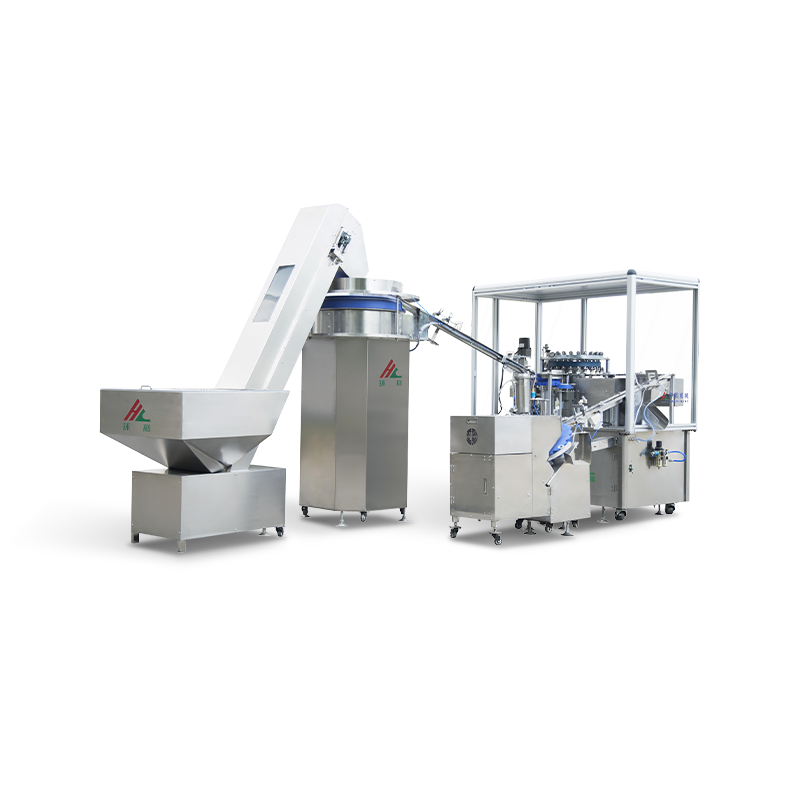
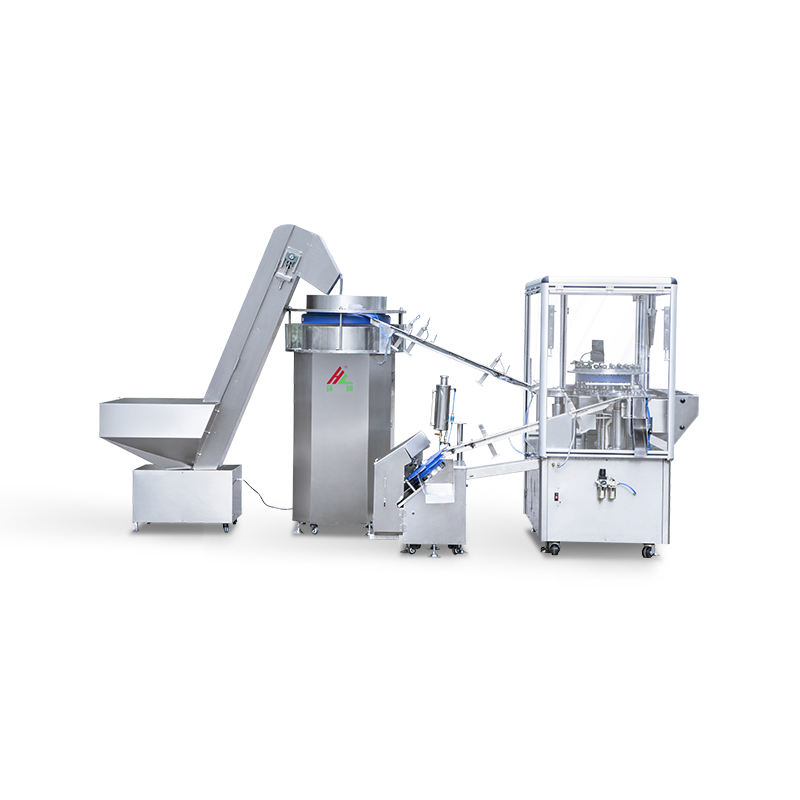
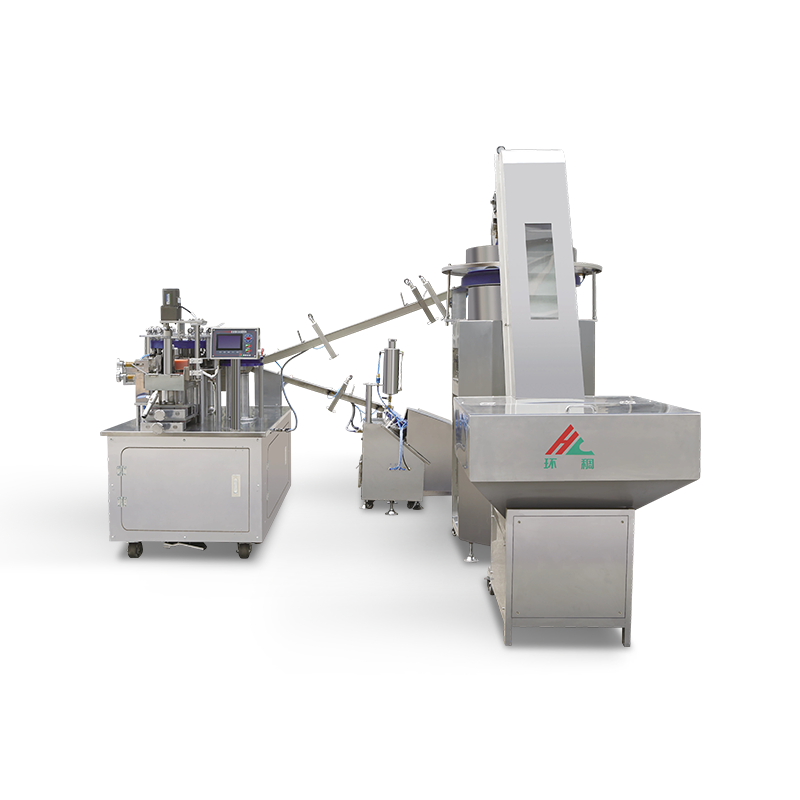
The syringe printing machine adopts the principle of embossing seal and rubber wheel rolling transfer for printing. It prints the logo and scale lines on the outer surface of the syringe.
The equipment is driven by a variable frequency speed controller, which is energy-efficient and highly efficient. The printing efficiency is more than 2.5 times that of traditional screen printing. The positioning is precise, and the product qualification rate is as high as 99%.
An automatic silicone oil spraying system is equipped, which can complete the silicone oil spraying process simultaneously during printing. The entire machine is controlled by a PLC system, which operates stably and reliably. It supports 24-hour continuous production and is suitable for the clean room environment of medical consumable production enterprises.
Company
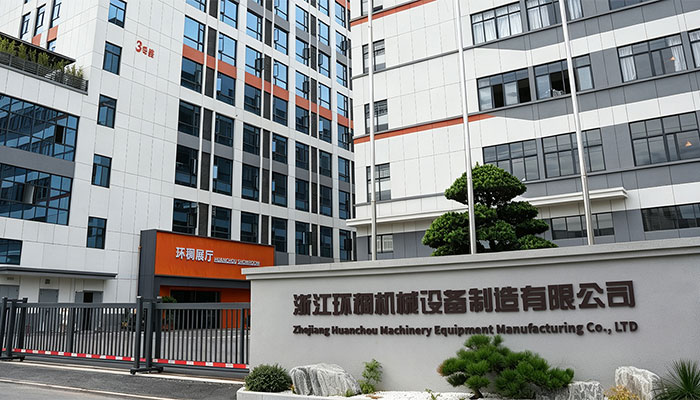
Zhejiang Huanchou Machinery Equipment Co.,Ltd.
Founded in 2008 and recognized as a National High-Tech Enterprise, Zhejiang Huanchou Mechanical Equipment Manufacturing Co., Ltd. specializes in R&D and manufacturing of automation equipment for disposable medical devices. Zhejiang Huanchou Mechanical Equipment Manufacturing Co., Ltd is a China Syringe Printing Machines Manufacturer and Automatic Syringe Printer Factory, our core products include automatic syringe assembly machines, self-destruct syringe assembly machines, automatic pad printing machines, and automatic syringe rolling printing machines.
With a dedicated R&D team of 23 professionals—nearly 40% of our total workforce—and ISO9001 certification, Huanchou serves clients across Europe, America, the Middle East, and Southeast Asia. Our new 23-mu manufacturing facility, designed to produce 1,000 syringe assembly line machines annually, is scheduled for full operation by the end of 2026, with an estimated annual output exceeding RMB 300 million.
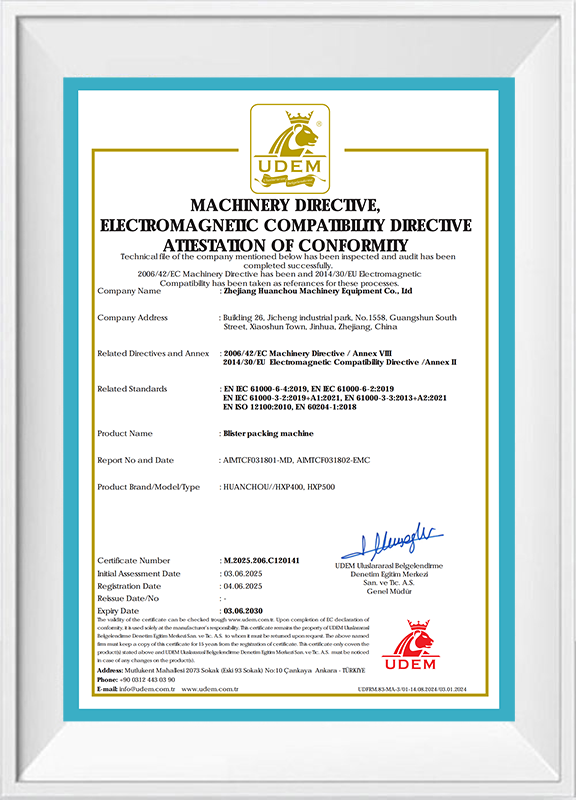
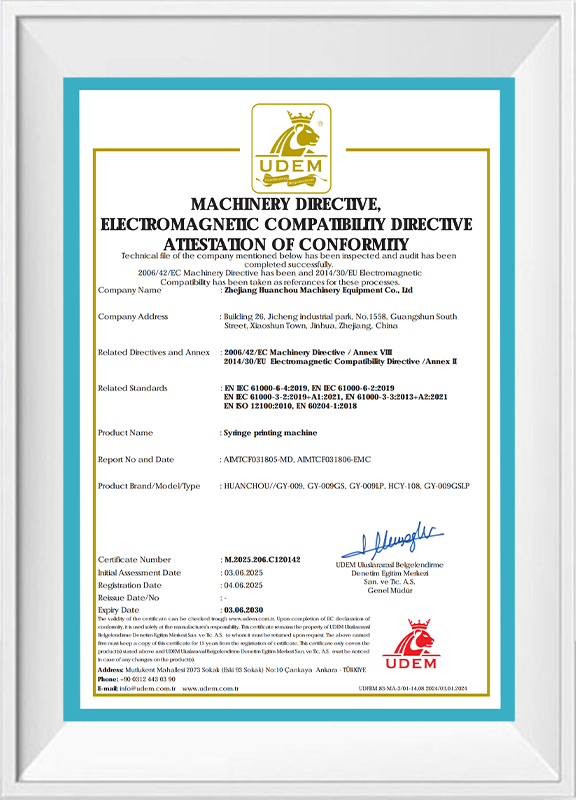
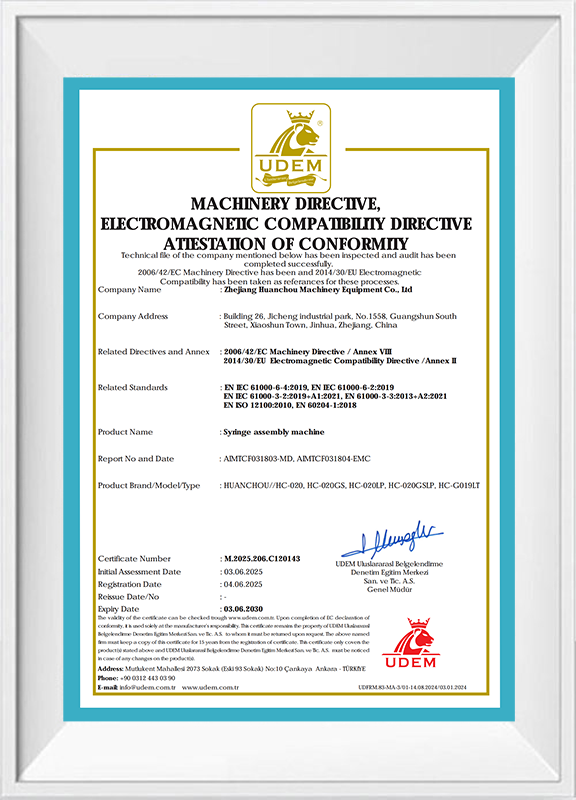
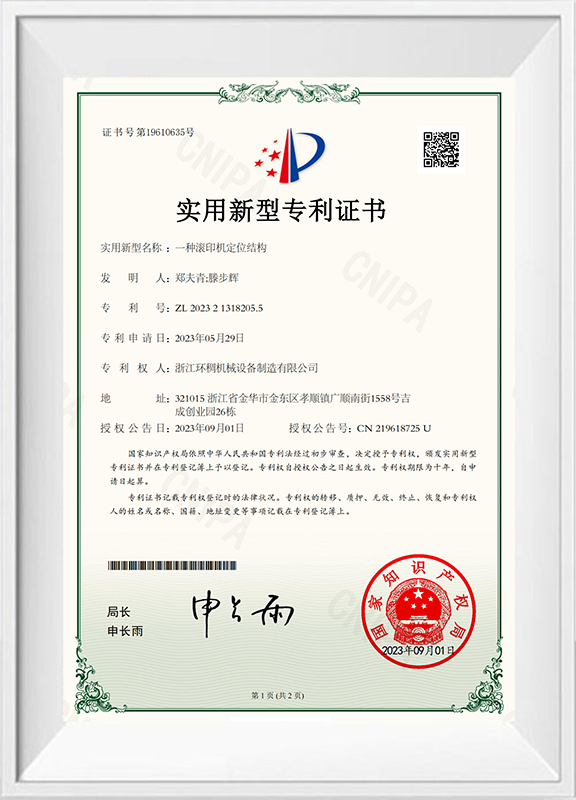
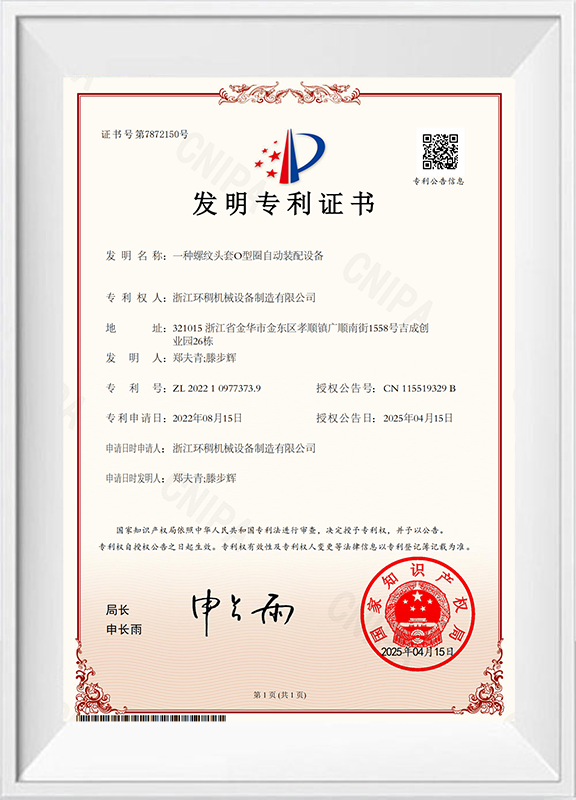
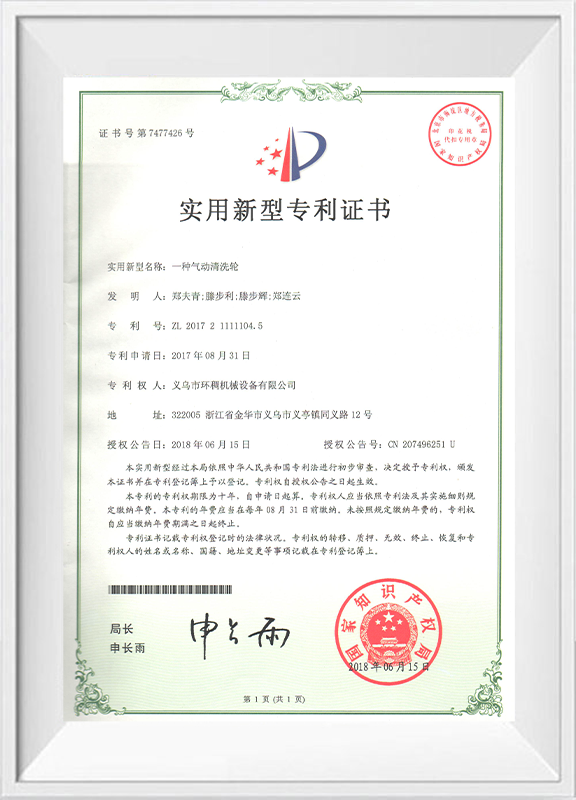
Certificate Of Honor
News
-
Walk the length of a modern syringe line and the number that decides whether the shift is profitable is rarely the headline speed printed on the datasheet. It is the number of tim...
READ MORE -
A line that runs four syringe formats will lose more time to changeover than to running. Walk the floor at shift change and the pattern is familiar: the printing station sits idle...
READ MORE -
A syringe line that runs three safety-cover variants, two prefilled formats, and a printed barrel for a different customer can lose more output during changeovers than during stea...
READ MORE -
Specialized automation for unique industries is rarely a catalog purchase. In medical disposables, the “unique” part is usually a syringe variant that behaves differently on the l...
READ MORE
Message Feedback
Syringe Printing Machines Industry knowledge
Bolun Press manufactures automatic syringe printing machines for disposable syringe production lines. The GY-009 platform transfers ink from an engraved steel stamp through a rubber roller onto the barrel surface, printing logos and graduation scales and curing the ink in line before discharge. Barrels from 1 ml to 150 ml are covered across the range — Luer slip, Luer lock and eccentric tip mouldings — with centrifugal bowl feeding, mandrel-based positioning and PLC control of the whole sequence.
Our Syringe Printing Machines Manufacturer range is built around three configurations of the same platform, so a line can be specified for maximum output, for lower investment where external guarding already exists, or for combined printing and inner-wall oiling. Machines are assembled and tested at our factory in Zhejiang, China, with the printing head, feeding system and control cabinet built and run as one unit before shipment.
- Printed content: brand logo, capacity markings, graduation scale, orientation marks.
- Barrel types: Luer slip, Luer lock and eccentric tip, 1 ml to 150 ml across the range.
- Line position: after moulding and inspection, before assembly or blister packaging.
- Operating mode: continuous 24-hour production in cleanroom environments.
The GY-009 Range: Three Configurations
Each model uses the same rolling transfer principle and the same gear-driven, variable-frequency transport, so print quality behaviour is consistent across the range. The differences sit in the safety enclosure, the barrel size window, the speed envelope and whether inner-wall silicone oiling is integrated into the printing cycle.
| Configuration | Enclosure | Barrel range | Published speed | Qualification rate | Best fit |
|---|---|---|---|---|---|
| GY-009-GSLP High Speed Syringe Printing Machine with Safety Cover |
Interlocked safety cover, CE | 1–50 ml in the published speed table | 140–330 pcs/min by size | ≥99.9% | High-volume lines; circulating ink supply reduces evaporation and skinning |
| GY-009-LP Syringe Printing Machine with Safety Cover |
Interlocked safety cover, CE | 1–60 ml | 140–240 pcs/min by size | 99% | Mid-volume production; drum silicone roller with steel stamp |
| GY-009 Automatic Syringe Roller Printing Machine |
Open frame for lines with existing external guarding | 1–60 ml | 140–240 pcs/min by size | 99% | Economical printing with integrated silicone oil spraying after printing |
All three share a 3000 × 2700 × 2150 mm footprint, a 5 kW rated supply at 220 V/50 Hz, and 0.4–0.6 MPa compressed air. Machine weight is 1030 kg for the GSLP and GY-009, and 1060 kg for the LP. Where a project needs the higher speed envelope, we quote the High Speed Syringe Printing Machine with Safety Cover with its size-by-size speed table attached to the proposal.
Print Registration, Ink Curing and Repeatability
Registration is the whole job on a syringe barrel: a scale that sits slightly out of position becomes a rejected batch downstream. Barrels are held on precision mandrels by fixtures at the rotary table, and our patented printing positioning mechanism plus graduation-line detection keep each impression in the same angular position relative to the tip and flange.
- Curing: a drying system cures the ink after the printing station to fix adhesion before discharge.
- Ink supply: the high-speed model uses a fully automatic circulating ink supply instead of an open tray, cutting evaporation waste and preventing ink skinning.
- Surface preparation: corona discharge and dust removal sub-systems are part of our patented barrel-treatment work, applied where the print specification calls for it.
- Verification: qualification rate is stated per model and confirmed on your own barrels during run-off.
Feeding, PLC Control and Line Integration
A centrifugal automatic feeding system sorts barrels and delivers them to the rotary table without manual loading. Photoelectric sensors track material status in real time, so the machine stops when the feed track empties and restarts automatically once barrels are replenished — a pattern that keeps a night shift running without an operator parked at the infeed.
- Control platform: PLC programmable logic controller with adjustable operating parameters and a simple operator interface.
- Drive: variable frequency speed controller with precision-machined gear transmission for smooth, low-noise running in cleanrooms.
- Discharge: printed barrels leave on a conveyor belt into collection or straight into the next machine.
- Combined lines: where printing and assembly run as one unit, we supply the Syringe Printing-Assembly Integrated Machine instead of two separate stations.
Consumables, Tooling and Changeover
The printing head is built from a drum-type silicone roller and an engraved steel stamp, with uniform contact pressure and low wear. That combination reduces ink consumption and extends the roller replacement cycle, which is where most of the long-run operating cost sits.
- Steel stamps engraved to your artwork, scale and logo.
- Drum silicone and rubber rollers, inking mechanisms and etching-wheel adjustment parts.
- Pneumatic cleaning wheels and roller cleaning mechanisms to hold print quality between shifts.
- Size changeover through mandrel and feed-tray parts; our patented roller-printer feeding assembly uses two card-slot specifications on the feed tray so small-batch switching is quick.
Replacement rollers, seals and feed parts are supplied from our syringe machine components and accessories programme, so a consumable order does not need to travel through a full machine quotation.
Installation, Utilities and Operator Safety
- Floor standing: single unit on a level floor, 3000 × 2700 × 2150 mm, roughly one tonne; no pit required.
- Utilities: 220 V/50 Hz, 5 kW, clean dry air at 0.4–0.6 MPa; the supply arrangement for the destination is confirmed at configuration stage.
- Safety: cover models stop automatically when the guard is opened, protecting operators during repair and maintenance; the open-frame GY-009 is intended for lines already fitted with external protection.
- Cleanroom fit: compact structure, low-noise transmission and smooth surfaces suited to medical consumable production rooms.
Quality Control and Acceptance
Machines are built under an ISO9001 quality system, and our syringe printing machines carry CE certification. Assembly, wiring and printing trials are completed before dispatch, and the acceptance record follows the machine.
- Run-off on customer-supplied barrels where samples are available.
- Print position, scale clarity, ink adhesion after curing and discharge condition checked against the approved sample.
- Output verified at the size-specific speed stated for the model ordered.
- Documentation pack with operating instructions, spare-parts list and electrical drawings.
Information We Use to Configure Your Solution
A configuration is fixed once we know the barrel, the print and the line. The matrix below is what our engineers work from; anything not yet decided can be marked as open and settled during the technical review.
| Project input | What we need | What it determines |
|---|---|---|
| Barrel specification | Capacity, tip type (Luer slip / Luer lock / eccentric), drawing or sample | Mandrels, feed tray, model and size window |
| Print requirement | Artwork, scale layout, print area, ink reference | Steel stamp engraving and ink system |
| Output target | Required pieces per minute and shift pattern | Model selection: GSLP, LP or GY-009 |
| Line position | Upstream and downstream equipment, conveyor height, available floor space | Interfaces, discharge arrangement, stand-alone or integrated line |
| Site services | Voltage, frequency, air supply, cleanroom class | Electrical build and installation scope |
| Compliance and handover | Guarding requirement, documentation language, training needs | Safety enclosure choice, document pack, commissioning plan |
Maintenance, Spares and Service Support
Service follows the machine from installation onward: commissioning on site, operator training, remote assistance and a stocked spares route for rollers, stamps and feed parts. Daily attention is limited to roller cleaning, ink supply checks and the pneumatic circuit; the printing head, drive train and PLC cabinet stay closed during normal production.
- Wear parts identified in the manual with replacement intervals based on running hours.
- Roller and stamp replacement without dismantling the printing head.
- Remote diagnosis of PLC, sensor and drive faults.
Frequently Asked Questions
Which syringe sizes can your machines print?
The GY-009 range covers 1 ml to 150 ml barrels in Luer slip, Luer lock and eccentric tip versions. The LP and open GY-009 configurations are published for 1–60 ml, while the high-speed GSLP lists speed data from 1 ml to 50 ml. Barrel drawing or sample confirms the feed tray and mandrel set.
What output can we plan for?
Speed depends on barrel size, not only on the model. The high-speed GSLP runs 300–330 pcs/min at 1–5 ml and 140–160 pcs/min at 50 ml; the LP and GY-009 run 140–240 pcs/min across their size window. Printing is roughly 2.5 times faster than conventional screen printing on the same barrel.
Is silicone oiling included?
Inner-wall silicone oil spraying is integrated into the GY-009 roller printing machine, with controllable spray quantity and uniform atomisation, so lubrication is completed in the printing cycle instead of on a separate machine. Where lubrication happens elsewhere in the line, the printing function runs independently.
Do the machines stop automatically when the feed runs out?
Yes. Photoelectric sensors monitor material status and the PLC stops the machine when no barrels are present, then restarts after replenishment. This allows unattended stretches of production and protects the printing head from running dry on barrels.
Can a printing machine be added to an existing assembly line?
It can be placed ahead of assembly or packaging with matching conveyor height and discharge arrangement. Where a single unit is preferred, we build printing and assembly into one frame as an integrated machine. Line layout, available space and downstream equipment determine which route we propose.

 Syringe Printing Machines Manufacturer
Automatic Syringe Printer Factory
Copyright ©
Zhejiang Huanchou Machinery Equipment Co.,Ltd.
All Rights Reserved.