

 中文简体
Walk the length of a modern syringe line and the number that decides whether the shift is profitable is rarely the headline speed printed on the datasheet. It is the number of times a person has to reach into the process. Every reach-in is a chance for a drop...
READ MORE
GY-009-GSLP
High Speed Syringe Printing Machine with Safety Cover

Introduction
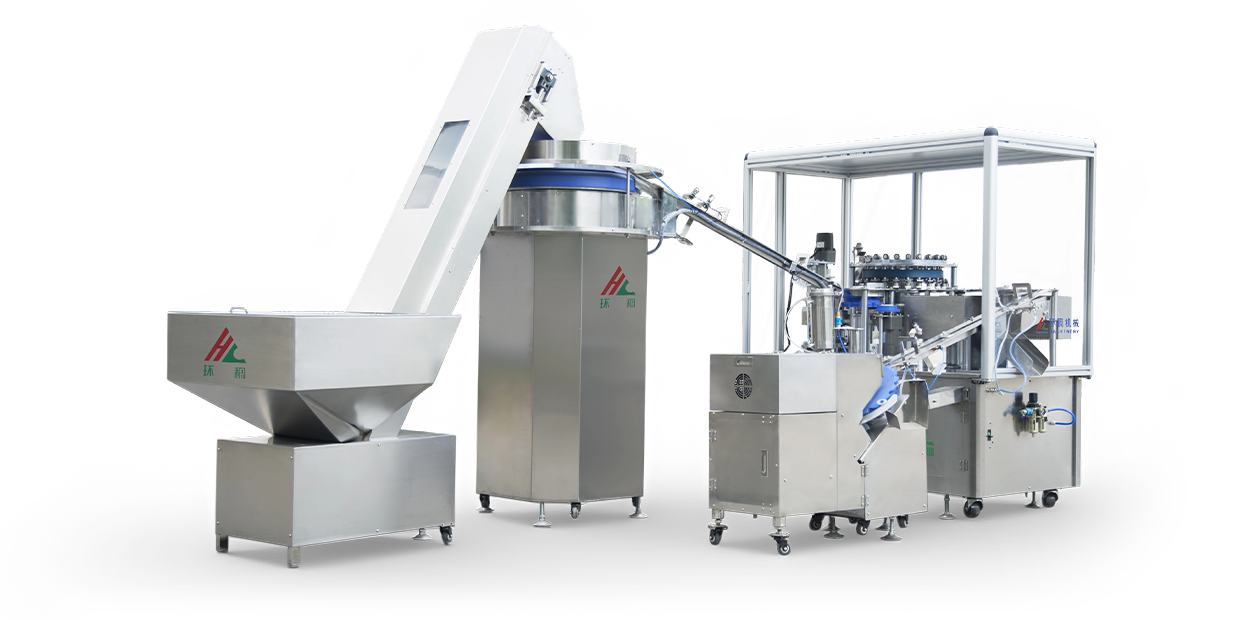
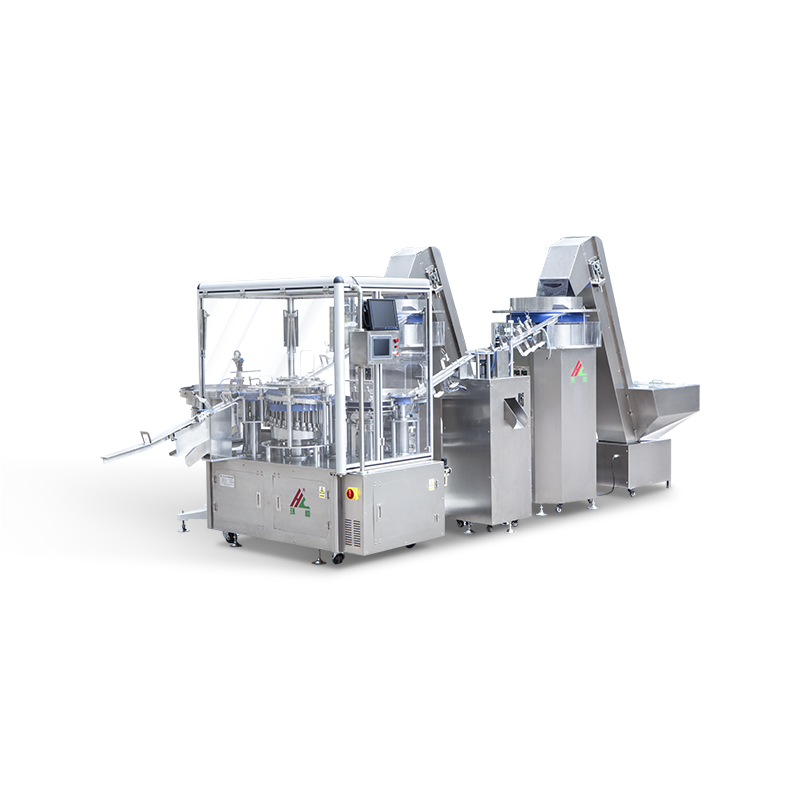
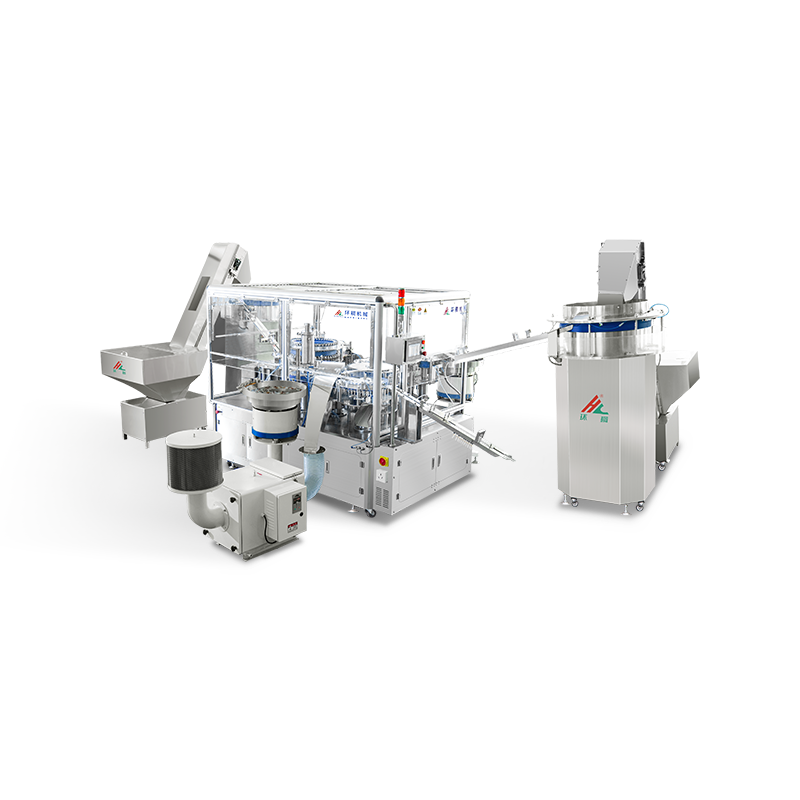
High Speed Syringe Printing Machine with Safety Cover adopts the rolling transfer printing principle, combining a steel stamp and rubber roller to print on the surface of syringe barrels. It is suitable for various syringe specifications from 1ml to 150ml, including Luer slip, Luer lock, and eccentric tip syringe types.
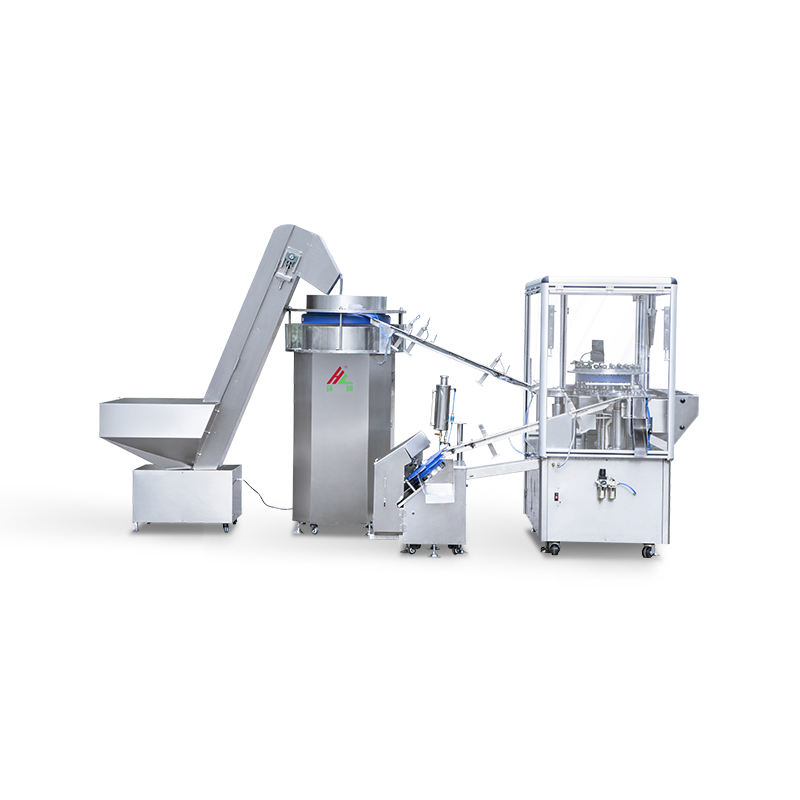
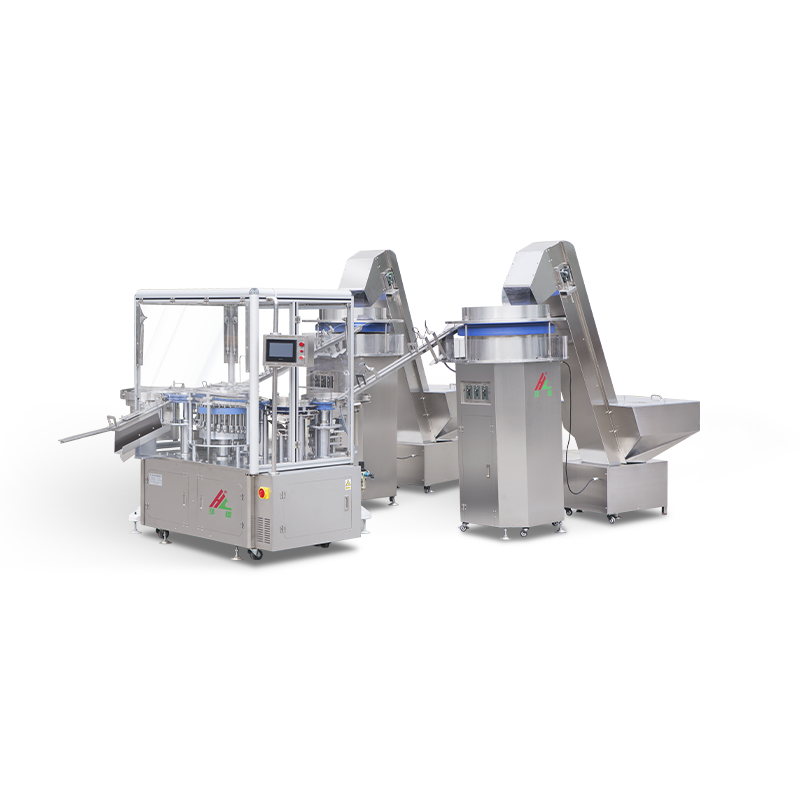
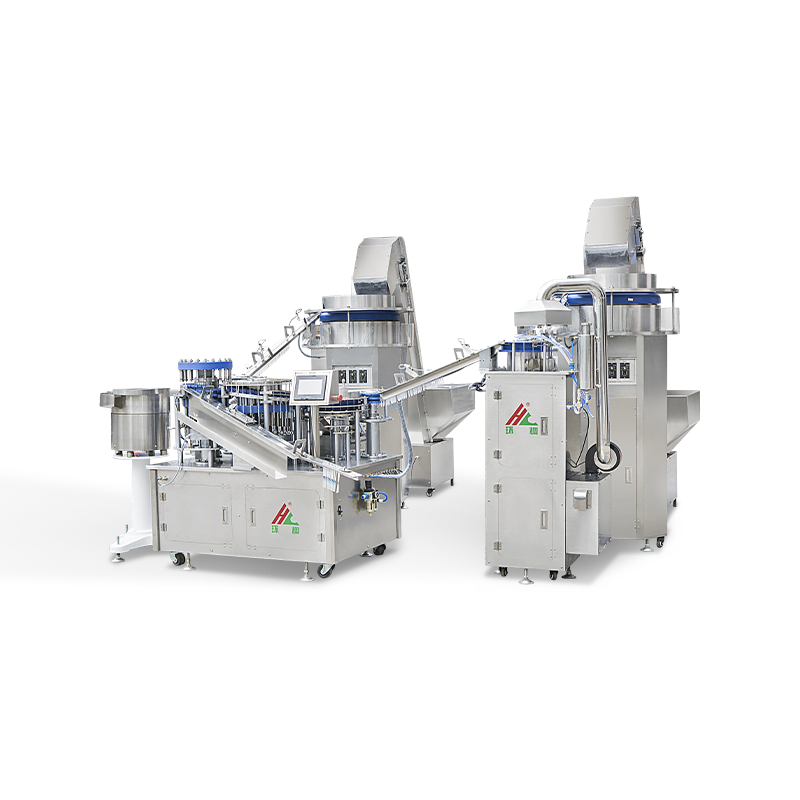
The syringe barrels are sorted by a centrifugal automatic feeding system and delivered to the machine rotary table. They are accurately positioned and fixed on the mandrel by precision fixtures. After completing Logo and graduation scale printing, the ink is cured through the drying system, and the finished products are automatically discharged onto the conveyor belt.
The newly developed fully automatic circulating ink supply system, compared with traditional open ink trays, effectively reduces ink evaporation waste and prevents ink from drying and forming a skin. It maintains machine cleanliness and reduces consumable costs.
Driven by a variable frequency speed control system, the gear transmission operates smoothly with low noise. The maximum printing speed can reach 350 syringes per minute, and the production efficiency is more than 2.5 times higher than traditional screen printing. The machine features precise positioning, with a product qualification rate of ≥99.9%.
The entire machine adopts a PLC programmable logic controller, combined with photoelectric sensors to track material status in real time. It achieves a fully automatic operation mode with automatic stop when materials are unavailable and automatic restart after material replenishment, ensuring stable and reliable operation.
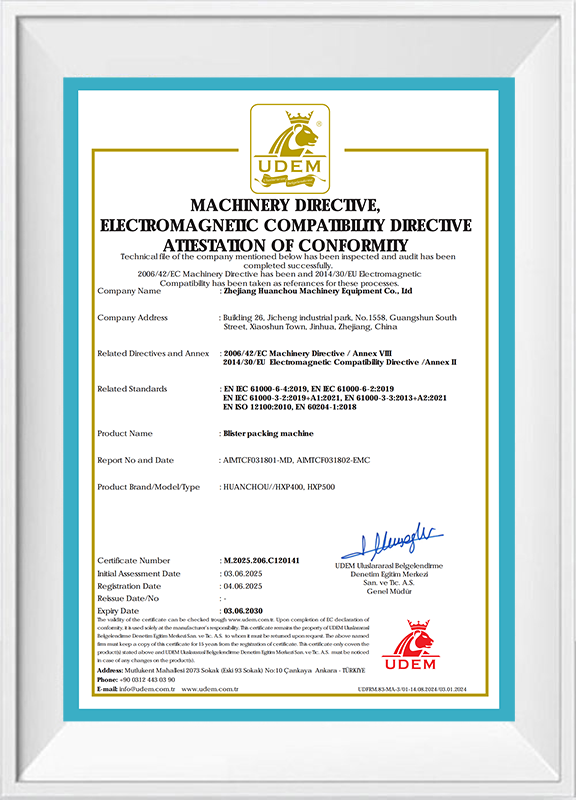
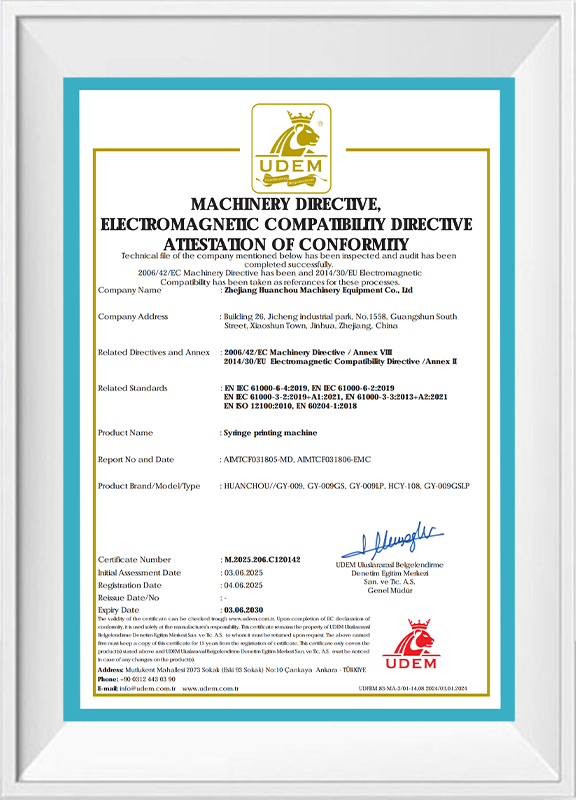
Equipped with a safety protective cover, the machine automatically stops when the cover is opened. It complies with CE safety certification standards, making equipment repair and maintenance safer and effectively ensuring operator safety.
Technical Parameters
| Printing Range | 1ml | 2-3ml | 5ml | 10ml | 20ml | 50ml |
| Printing Speed | 300-330pcs/min | 300-330pcs/min | 300-330pcs/min | 240-260pcs/min | 220-240pcs/min | 140-160pcs/min |
| Rated Volt | 220V/50HZ | |||||
| Equipment Size | 3000x2700x2150mm | |||||
| Power | 5kw | |||||
| Weight | 1030kg | |||||
| Air Pressure | 0.4-0.6MPa | |||||
Company
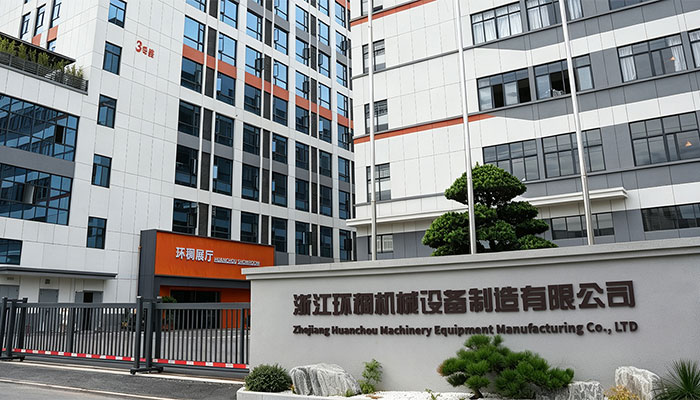
Zhejiang Huanchou Machinery Equipment Co.,Ltd.
Founded in 2008 and recognized as a National High-Tech Enterprise, Zhejiang Huanchou Mechanical Equipment Manufacturing Co., Ltd. specializes in R&D and manufacturing of automation equipment for disposable medical devices. Zhejiang Huanchou Mechanical Equipment Manufacturing Co., Ltd is a China High Speed Syringe Printing Machine with Safety Cover Manufacturer and High Speed Syringe Printing Machine with Safety Cover Supplier, our core products include automatic syringe assembly machines, self-destruct syringe assembly machines, automatic pad printing machines, and automatic syringe rolling printing machines.
With a dedicated R&D team of 23 professionals—nearly 40% of our total workforce—and ISO9001 certification, Huanchou serves clients across Europe, America, the Middle East, and Southeast Asia. Our new 23-mu manufacturing facility, designed to produce 1,000 syringe assembly line machines annually, is scheduled for full operation by the end of 2026, with an estimated annual output exceeding RMB 300 million.
Certificate Of Honor
News
-
-
A line that runs four syringe formats will lose more time to changeover than to running. Walk the floor at shift change and the pattern is familiar: the printing station sits idle waiting for format parts, the assembly station runs one product at full speed, ...
READ MORE -
A syringe line that runs three safety-cover variants, two prefilled formats, and a printed barrel for a different customer can lose more output during changeovers than during steady running. The practical fix is not simply a faster machine. It is a custom aut...
READ MORE
Message Feedback
High Speed Syringe Printing Machine with Safety Cover Industry knowledge
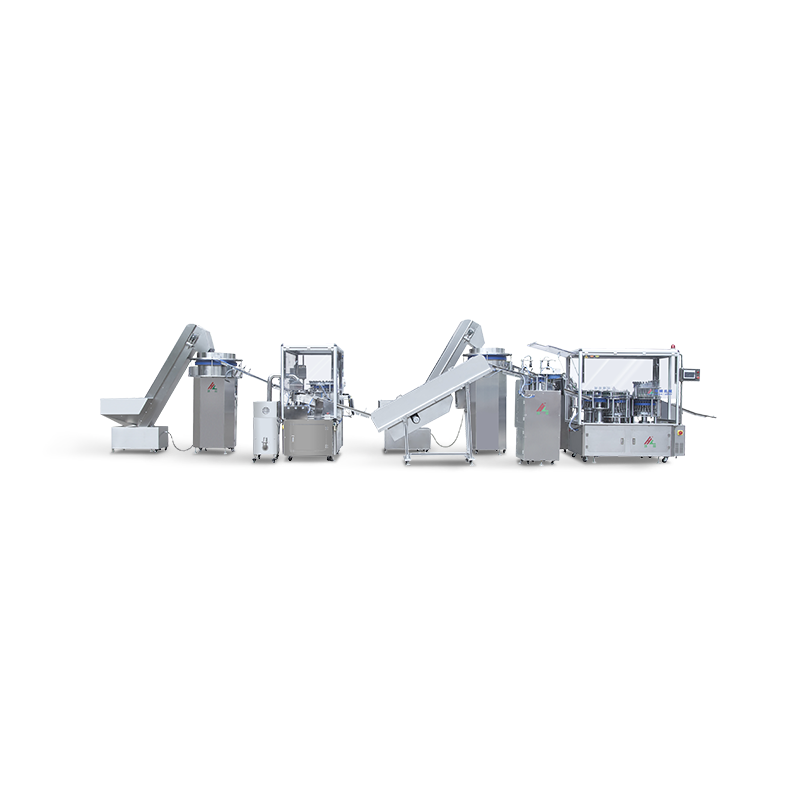
Bolun Press is a High Speed Syringe Printing Machine with Safety Cover manufacturer, building model GY-009-GSLP for disposable syringe lines that print graduation scales and logo marks directly onto the barrel. Rolling transfer printing, centrifugal barrel feeding and PLC sequencing let one machine serve 1 ml to 150 ml barrels, including Luer slip, Luer lock and eccentric tip bodies, at rates up to 350 pieces per minute. We supply the printer as a standalone station or as the printing unit inside a combined printing and assembly line, with mandrels, fixtures and wear parts produced in our own works.
Rolling Transfer Printing on the Barrel Surface
The image is carried by a steel stamp and transferred to a rubber roller, which prints onto the barrel as the barrel rotates on its mandrel. Because the barrel supplies the rolling motion, the graduation scale wraps the circumference in one continuous pass, and logo and scale are applied at the same station before the ink enters the drying system. Barrels are bulk-loaded, sorted by the centrifugal automatic feeding system and delivered to the machine rotary table.
- Precision fixtures locate each barrel on its mandrel at the print angle, so scale start position repeats from part to part.
- Logo and graduation scale print in a single index of the rotary table.
- Ink is cured in the drying system before the barrel leaves the table.
- Finished barrels discharge automatically onto the outfeed conveyor for the next operation.
Speed, Barrel Format and Working Point
Rated speed falls as barrel size increases: a larger barrel means longer rolling contact, a heavier part on the mandrel and more distance needed in the drying system. The published figures below are the rated production speeds for each format, while the 350 pcs/min maximum applies to the smallest barrels running with a steadily loaded feeder. On comparable formats the rolling process runs at more than 2.5 times the output of traditional screen printing.
| Barrel format | Rated printing speed | Indicative hourly output | Running note |
|---|---|---|---|
| 1 ml | 300–330 pcs/min | 18,000–19,800 pcs/h | Smallest mandrel set; feeder stability sets the real output |
| 2–3 ml | 300–330 pcs/min | 18,000–19,800 pcs/h | Mandrel and fixture set defined by the barrel drawing |
| 5 ml | 300–330 pcs/min | 18,000–19,800 pcs/h | High-volume format; continuous running needs a loaded centrifugal bowl |
| 10 ml | 240–260 pcs/min | 14,400–15,600 pcs/h | Longer rolling contact; scale position verified at the print station |
| 20 ml | 220–240 pcs/min | 13,200–14,400 pcs/h | Heavier barrel; fixture clamping and drying distance set at commissioning |
| 50 ml (and larger bodies to 150 ml) | 140–160 pcs/min | 8,400–9,600 pcs/h | Largest rated format; outfeed handling sized to the downstream line |
GY-009-GSLP Specification at a Glance
| Parameter | GY-009-GSLP |
|---|---|
| Printing principle | Rolling transfer printing with steel stamp and rubber roller |
| Barrel range | 1 ml – 150 ml |
| Syringe types | Luer slip, Luer lock, eccentric tip |
| Maximum speed | Up to 350 pcs/min on small formats |
| Control | PLC with photoelectric material tracking; automatic stop when starved, automatic restart on replenishment |
| Ink supply | Fully automatic circulating ink supply instead of open trays |
| Drive | Variable frequency speed control, gear transmission |
| Safety | Full protective cover with interlock; CE certified syringe printing machine |
| Rated voltage | 220 V / 50 Hz |
| Installed power | 5 kW |
| Air supply | 0.4 – 0.6 MPa |
| Dimensions | 3000 × 2700 × 2150 mm |
| Weight | 1030 kg |
Ink Supply, Drying and Print Consistency
The circulating ink system replaces the open ink tray used on older roller printers. Ink is kept moving in a closed circuit, which limits evaporation loss, prevents the ink from drying and skinning on the surface, keeps the print area cleaner and reduces consumable cost over a shift. Ink is cured in the drying system immediately after the print station, so barrels reach the outfeed conveyor ready for inspection or assembly.
Under rated conditions the machine holds a product qualification rate of ≥99.9%. The variables that govern that figure are practical and controllable: ink viscosity in the circuit, rubber roller and steel stamp condition, mandrel and fixture seating, drying settings, and the cleanliness of the barrel surface entering the feeder.
Safety Cover, Interlock and Operator Protection
The rotary table, transfer station and drying zone sit inside a full protective cover. Opening the cover stops the machine through the interlock, which protects operators during print inspection, fixture checks and cleaning; production resumes after the cover is closed and the cycle is reset. Our syringe printing machines hold CE certification, and the guarding layout is designed so routine maintenance points remain reachable without defeating the interlock.
Configuration, Changeover and Line Integration
Format set
Mandrel, locating fixture and feeder card slots matched to each barrel in the mix, from 1 ml bodies through 150 ml formats.
Infeed and outfeed
Centrifugal bowl loading with an automatic discharge conveyor, set to the transfer height and direction of the next machine.
Ink and drying
Circulating ink circuit and drying system configured around the ink type, colour and cure requirement of the artwork.
Line interface
PLC signals for upstream and downstream equipment so the printer can act as the printing station of a printing and assembly line.
The printer sits in our Syringe Printing Machines Manufacturer range alongside the Syringe Printing Machine with Safety Cover, which shares the same guarded layout at lower output. Where the line also assembles barrels, plungers and needles, the same printing head is built into combined printing and assembly configurations.
Installation, Utilities and Site Requirements
- Rated supply 220 V / 50 Hz with 5 kW installed power; site voltage and frequency are fixed during configuration.
- Clean, dry compressed air at 0.4 – 0.6 MPa, with the regulator set at the machine inlet.
- Floor space for a 3000 × 2700 × 2150 mm footprint and 1030 kg machine weight, with leveling allowance and lifting access.
- Ventilation at the print and drying zone where solvent-based inks and cleaning solvents are used.
- Stable ambient conditions and a clean barrel supply, since dust on the barrel surface shows up directly in the printed scale.
Acceptance, Documentation and Manufacturing Backing
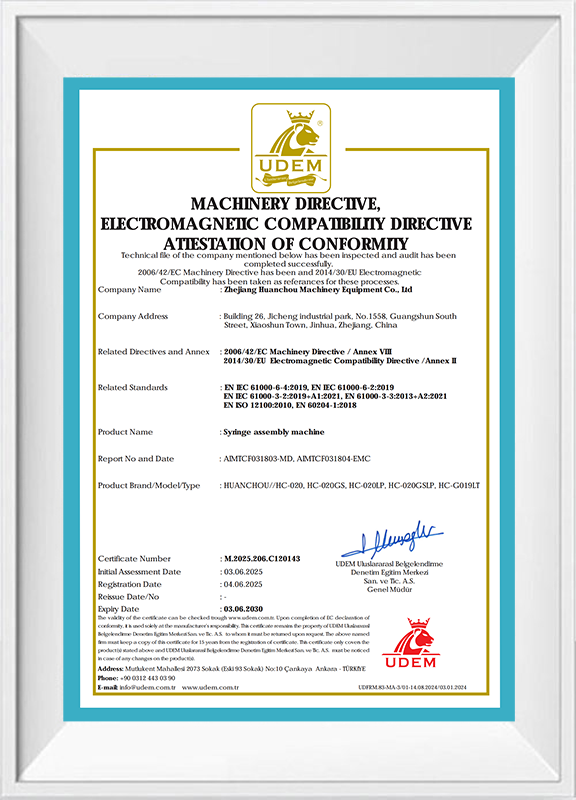
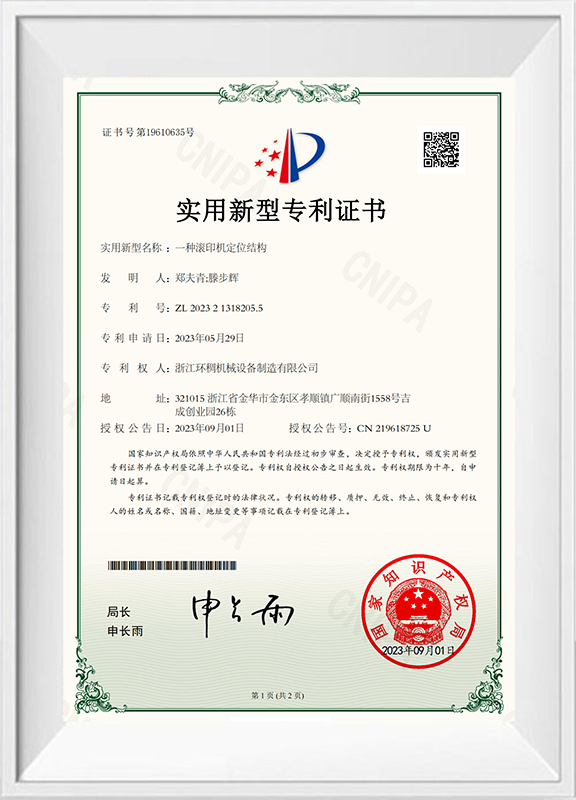
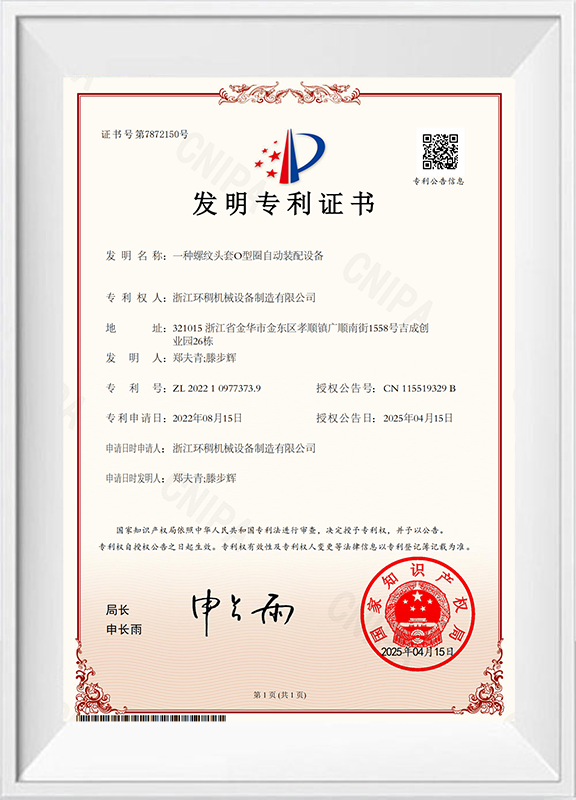
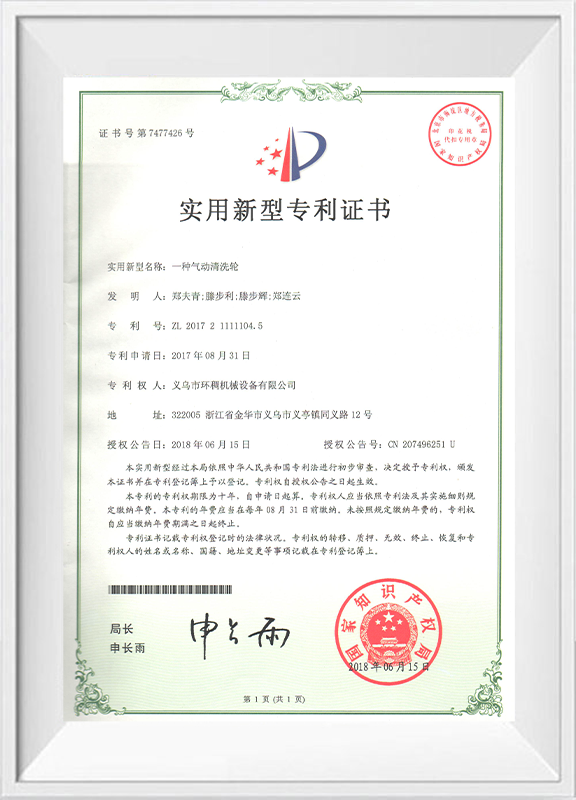
We run the machine with your barrels and artwork before shipment and agree the acceptance sample with you: scale start position, line width, ink adhesion after drying, cycle speed and interlock response. Bolun Press works to an ISO 9001 quality system, our syringe printing machines carry CE certification, and our engineering team holds patents covering printing positioning, feeding and roller cleaning mechanisms on syringe printers. Operation and maintenance documentation, the wear-parts list and operator training are handed over with the machine.
Maintenance, Wear Parts and Serviceability
Wear is concentrated in a small number of items, which keeps planned downtime short: the rubber roller, the steel stamp, fixtures and mandrels, the feeder card slots, photoelectric sensors and conveyor belting. Daily attention covers roller cleaning, ink circulation and viscosity, fixture seating and an interlock function check. Replacement rollers, embossing seals and related hardware come from our own Syringe Machine Components & Accessories Manufacturer range, so spare parts stay matched to the machine build.
Information We Use to Configure Your Solution
- Barrel drawing or sample: diameter, length, flange, tip type and volume range, including every format in the production mix.
- Artwork files for logo and graduation scale, with print area and scale division requirements.
- Ink type, colour and cure requirement, plus any existing ink specification used on the line.
- Target output per shift and the required working point in pcs/min for each format.
- Upstream and downstream equipment, conveyor heights and the handoff sequence.
- Site supply voltage, compressed air quality, available floor area and access route.
- Safety and compliance requirements for the destination market, and the acceptance criteria you will run at factory testing.
Frequently Asked Questions
Which syringe sizes can the GY-009-GSLP print?
The machine covers 1 ml to 150 ml barrels, including Luer slip, Luer lock and eccentric tip types, and prints logo and graduation scale in one pass on the rotary table. Mandrels, fixtures and feeder card slots are supplied for each format in your mix.
What output can we expect on a 10 ml barrel?
The rated speed for 10 ml barrels is 240–260 pcs/min, or roughly 14,400–15,600 pieces per hour. Small formats reach 300–330 pcs/min with a maximum of 350 pcs/min; sustained output depends on keeping the centrifugal feeder loaded and on the drying setting your ink requires.
What happens if the safety cover is opened during production?
The interlocked cover stops the machine immediately, so print inspection, fixture changes and cleaning can be carried out safely. Production restarts once the cover is closed and the cycle is reset. The guarding arrangement is part of the CE certification held for our syringe printing machines.
Can the printer run inline with a syringe assembly machine?
Yes. The printer is built as a standalone unit or as the printing station of a combined printing and assembly line, with PLC signals and an outfeed conveyor set to the height and direction of the next machine. Barrels printed with logo and scale then move directly into assembly without manual handling.
How is print quality verified before shipment?
We run your barrels and artwork on the machine and agree the acceptance sample with you, checking scale position, line width, ink adhesion after drying, cycle speed and interlock response. Under rated conditions the machine holds a product qualification rate of ≥99.9%.
What do you need from us to prepare a proposal?
A barrel drawing or sample for every format, artwork for logo and scale, ink requirement, target output per format, the surrounding line layout, site utilities and destination market. With those inputs we confirm the configuration, the format sets and the acceptance procedure in the quotation.

 OEM/DOM High Speed Syringe Printing Machine with Safety Cover Manufacturer
Copyright ©
Zhejiang Huanchou Machinery Equipment Co.,Ltd.
All Rights Reserved.