

 中文简体

The Future of Robotics in Industry: What It Means for Syringe Production Lines
Date:11 23, 2026
Content
- 1 What the next wave of industrial robots actually changes
- 2 Why medical device production is the proving ground
- 3 The Future of Robotics in Industry: Five Shifts That Matter on a Real Line
- 4 Where a robot earns its place, and where it does not
- 5 The payback math that actually decides projects
- 6 Buying well: manufacturer, wholesaler, or integrator
- 7 Seven failure modes that sink automation projects
- 8 Frequently asked questions
- 8.1 What does the future of robotics in industry mean for a mid-sized syringe plant?
- 8.2 Will robots replace assembly operators?
- 8.3 What payback period is realistic?
- 8.4 Can we retrofit a cell onto existing machines?
- 8.5 How much does certification actually tell us?
- 8.6 What should a factory acceptance test include?
- 8.7 How many formats should one machine handle?
- 8.8 How do we compare a manufacturer's quote with a wholesaler's quote?
- 8.9 Where does inline inspection fit?
- 8.10 What should the purchase order include?
- 9 What to do in the next ninety days
A line that runs four syringe formats will lose more time to changeover than to running. Walk the floor at shift change and the pattern is familiar: the printing station sits idle waiting for format parts, the assembly station runs one product at full speed, and two or three operators hand-feed trays between them. That gap, not the top speed of any single machine, is where the next decade of industrial automation will be decided.
So here is the conclusion first: the future of robotics in industry is not a lights-out factory with humanoid arms at every station. It is a growing set of short, task-specific robotic cells that load, orient, transfer, inspect and pack, bolted onto the fixed process stations that already do the precise work. The robot does not print the scale on a barrel or control the force that seats a plunger. It carries the part to the station that does, and it does so without getting tired at hour nine of a shift.
That distinction matters commercially. If you are planning capacity for the next five years, you are not choosing between people and robots. You are choosing how much flexibility you want to buy, how much validation work you can absorb, and how quickly you need to switch formats when a customer changes an order.
Four things follow from that thesis, and the rest of this article expands on each of them:
- Flexible automation grows at the edges of a line, not in the middle of it.
- Inspection is becoming the reason to automate, not a side benefit.
- Changeover time is now a design specification, not an afterthought.
- Traceability data is a deliverable you should write into the purchase order.
Robots rarely beat a purpose-built station at the core process. They win at everything around it, which is where most lost minutes actually live.
What the next wave of industrial robots actually changes
Picture a syringe assembly area today. A roller printing machine marks the scale at high speed. An assembly station seats the gasket and plunger with controlled force. A negative pressure tester checks seal integrity. Each machine is excellent at one job and terrible at being re-configured for a different barrel diameter.
The robotics wave does not replace those stations. It inserts flexibility between them. A small six-axis arm with a vacuum gripper can pull barrels from a bulk hopper, orient them, present them to the printer, then hand them to the assembly infeed at a consistent pitch. When the format changes, you swap the gripper and load a new recipe. No re-plumbing of the whole line.
That is why the practical story of industrial robotics over the next ten years looks incremental rather than dramatic. New plants will be designed with robotic transfer from day one. Existing plants will retrofit one cell at a time, usually starting where labor is hardest to recruit or where a manual step creates the most scrap.
It helps to see this as a maturity ladder rather than a single purchase decision. Most factories sit somewhere in the middle and move up one rung at a time.
| Level | What it looks like on a syringe line | Typical trigger to move up | Main risk if rushed |
|---|---|---|---|
| 1. Manual or semi-automatic | Operators load trays by hand; printing and assembly run as separate islands | Labor turnover, inconsistent output between shifts | Buying speed you cannot feed |
| 2. Single-format fixed automation | Dedicated machines linked by conveyors, one product size | A second format enters the catalogue | Changeover measured in hours |
| 3. Recipe-driven fixed automation | Format parts and servo recipes allow two to four sizes | Order sizes shrink, delivery windows tighten | Format parts not labelled or stocked |
| 4. Fixed stations with robotic transfer | Arms handle loading, orientation, transfer and packing between proven stations | Labor scarcity plus a need for inline inspection | Gripper design treated as an afterthought |
| 5. Orchestrated line with traceability | One recipe controls stations and cells; every unit carries a data record | Customer audits require unit-level records | Data collected but never used |
Most buyers who contact a medical device automation supplier today are moving from level two to level three, or from level three to level four. Very few jump straight to level five, and the ones who try usually regret it, because orchestration software exposes every weakness in the mechanical line underneath it.
The realistic robotics roadmap is one cell at a time, attached to stations that already prove they can hold tolerance.
Why medical device production is the proving ground
Consumer electronics gets the headlines, but single-use medical devices are where flexible automation is tested hardest. A syringe is a deceptively simple object: barrel, plunger, gasket, scale markings, sometimes a needle, sometimes a safety cover. Every one of those features has a specification attached, and the specification has to be demonstrated, not just achieved.
Three conditions make this sector different from general manufacturing.
Small parts, tight windows
Insertion force when seating a gasket usually has a defined window, and that window is narrow enough that a jammed part can damage the barrel before anyone notices. Print registration on the scale is measured in fractions of a millimetre because the printed scale is a functional marking, not decoration. A robot handling these parts needs repeatability in the same order of magnitude as the process itself, plus force sensing or compliance so it fails softly when something goes wrong.
Traceability is part of the product
When a customer audits a supplier, they want to know which machine made a batch, which parameters were active, and what the inspection results were. That pushes automation toward data capture at every station. A robotic cell that transfers parts without logging them creates a blind spot in the record, and blind spots are what auditors find first.
Validation cost is real cost
Installation qualification, operational qualification and performance qualification take time and documentation. A cell that is cheap to buy but hard to validate is expensive overall. This is why experienced buyers ask about documentation packages before they ask about price, and why a supplier with a documented quality system is worth more than a supplier with a lower quotation.
There is a fourth condition that is less talked about: labor. Cleanroom assembly work is repetitive, requires gowning discipline, and is hard to staff in shifts. Plants that once treated automation as a cost project now treat it as a staffing strategy.
In medical device manufacturing, the automation decision is a validation decision as much as an engineering one, so documentation quality belongs in the comparison spreadsheet.
The Future of Robotics in Industry: Five Shifts That Matter on a Real Line
Strip away the conference keynote language and five changes are actually reshaping how factories buy automation. Each one shows up as a concrete line item in a specification or a purchase order.
1. Task-level automation replaces line-level replacement
Ten years ago, automation projects were sold as whole lines. Today, a plant manager is more likely to ask for one cell that solves one stubborn problem: unloading a printing machine, feeding an assembly station, or presenting parts to a test fixture. Smaller scope means smaller capital exposure and faster payback, and it lets a plant learn before committing again.
2. Inspection moves inline
The strongest financial case for a robotic cell often comes from inspection, not handling. If an arm presents every barrel to a camera at a fixed distance and angle, you get consistent images, and consistent images make automated defect detection practical. Handling and quality control become the same investment.
3. Changeover time becomes a design specification
Buyers increasingly ask for a documented changeover time between formats, with a format parts list and a numbered sequence. A machine that runs 400 pieces per minute but needs six hours to change format is a machine for one customer, not a business.
4. Retrofit-friendly architecture
New cells are designed to sit beside existing equipment rather than replace it. That means standard interfaces, modest footprints, and safety guarding that can be added without rebuilding the room. Suppliers who understand this design their machines with accessible infeed and outfeed points.
5. Data becomes a deliverable
Recipe management, alarm history, and per-unit records are now expected in the quotation. The practical question is not whether a machine can produce data, but whether the data format matches what the customer's quality system can accept.
To make the trade-offs visible, the chart below compares where automation effort tends to pay back on a syringe line. The weights are an illustrative planning model used to structure a discussion with a supplier, not measured market data, and every plant will weight them differently depending on format count and order size.
The pattern in the chart matches what most plants find when they measure. Assembly consistency and jam reduction usually deliver the first visible gain, because a jam costs more than the seconds it takes to clear. Inline inspection comes second, partly because it converts scrap from a month-end surprise into a shift-level number.
The printing to assembly handoff is where a small robotic cell is easiest to justify, since the two stations often run at different rhythms and a buffer with an arm smooths the mismatch. Changeover improvements tend to be undervalued in the business case because the benefit is spread across planning, inventory, and sales responsiveness rather than showing up on one machine's counter.
End of line packing scores lowest here only because it is usually the least constrained step in a syringe plant. It becomes a priority when carton sizes multiply or when the packing area is the last place still running three shifts of manual labor. A supplier who can talk through all five rows with you, rather than pushing a single product, is usually the one worth shortlisting.
Score your own line against these five areas before you request quotations, because the highest-scoring row is where the first cell should go.
Where a robot earns its place, and where it does not
The most expensive mistake in automation planning is applying a robot to a job that a cam mechanism does better. A fixed station with a servo indexer will always beat an arm on pure cycle time for a single, unchanging motion. The robot's advantage is variability: different part sizes, different orientations, different downstream destinations.
The table below sets out how that logic plays out across the main stages of syringe production. It is a starting point for a technical conversation, not a rule book, because the right answer depends on your format count and volume mix.
| Production stage | Usual best fit for the core process | Where robotic handling adds value | What to verify with the supplier |
|---|---|---|---|
| Barrel printing and scale marking | Dedicated roller or screen printing machine | Loading, orientation, and transfer to the next stage | Print position repeatability, ink cure, registration tolerance |
| Assembly of barrel, plunger and gasket | Purpose-built assembly station with force control | Feeding, orienting, and buffering between stations | Insertion force window, cycle time, jam recovery sequence |
| Oil injection and prefilled variants | Filling station with dose control | Nest handling and stopper placement | Dose accuracy, bubble control, stopper seating depth |
| Airtightness and functional testing | Negative pressure tester with reject gate | Part presentation and reject segregation | Test pressure, dwell time, reject logging format |
| Blister packaging | Form-fill-seal blister machine | Tray loading, product placement, transfer to cartoning | Forming temperature, seal integrity, cavity count |
| Cartoning and palletizing | Robotic cell in most cases | Gripper changeover, pattern building, line balancing | Payload, reach, gripper change time, safety enclosure |
Read the table from right to left when you are writing a specification. The "what to verify" column is where quotations quietly differ. Two suppliers can quote the same nominal speed, but one will state a print registration tolerance and a documented jam recovery sequence while the other will not. Ask for the numbers in writing, and ask what happens to in-process parts when a jam occurs.
A second practical rule: if a stage already holds tolerance reliably at your required rate, do not automate it. Automate the transfer into it and the transfer out of it. Replacing a proven station with a robot for the sake of a modern look is how projects lose money.
Automate the transfer, keep the proven station, and put the tolerance numbers in the contract before you sign it.
The payback math that actually decides projects
Almost every automation project is approved or rejected on a single spreadsheet, and that spreadsheet is usually wrong in the same three ways. It counts labor savings generously, it ignores validation effort, and it treats changeover as a fixed cost rather than an annual one.
A cleaner structure is to compute a monthly net benefit and divide the installed cost by it. Net benefit is labor saved plus scrap avoided plus output gained, minus consumables, maintenance, and the cost of the floor space the cell occupies. Installed cost should include the cell, guarding, grippers, format parts, installation, training, documentation and a contingency line.
The lines that get underestimated most often are listed below. None of them are exotic, but together they can move a payback estimate by a year.
| Cost line | How it usually gets missed | How to size it |
|---|---|---|
| Validation and documentation | Treated as part of commissioning | Ask the supplier for a protocol template and estimate internal review hours |
| Format parts and grippers | Quoted for one format only | Price a complete set for every SKU you plan to run in three years |
| Changeover labor | Ignored because it is spread across the year | Measure current changeover in minutes, multiply by occurrences and labor rate |
| Spare parts stocking | Assumed to be covered by warranty | Request a recommended spare list with lead times and unit prices |
| Utility and environmental fit | Discovered during installation | Check air quality, power capacity, and cleanroom classification early |
| Training and ramp-up | Treated as a one-day handover | Plan for supervised production until the cell holds rated output |
One more factor deserves attention: the cost of a stop. In a syringe plant, an unplanned stop is not only lost output. It can mean parts held in a buffer, partial batches that need disposition, and paperwork. A cell that is easy to recover from a fault, with clear restart steps and no risk of crushed parts, is worth more than a slightly faster cell that requires a technician every time a barrel arrives sideways.
Be sceptical of payback figures under a year that come with no assumptions attached. Ask which labor rate was used, whether scrap reduction was counted twice, and whether the quotation covers a complete working cell or just the arm.
A payback number without assumptions is marketing; a payback number with assumptions is a decision tool.
Buying well: manufacturer, wholesaler, or integrator
The supply side of this market has three broad shapes, and they behave differently when something goes wrong. A manufacturer designs and builds the equipment and usually knows why a particular station was dimensioned the way it was. A wholesaler or trading company sources equipment and can be efficient for standard items, but depth of technical support varies widely. An integrator assembles cells from third-party robots and stations, and its value depends entirely on the quality of the interfaces it writes.
None of these is automatically better. What matters is fit. If you are buying a syringe printing and assembly line and expect to run three formats, you want a supplier who can show you the format parts, the recipe screens, and the changeover sequence. If you are buying a single auxiliary item, a wholesaler may be entirely adequate.
Practical questions that separate a real manufacturer from a reseller:
- Can you show the drawing set and the bill of materials for the station?
- Which components are standard purchased items and which are made in-house?
- What is the documented changeover time, and what does the format parts list include?
- Which certifications apply to this specific model, and what is the scope of the quality system certificate?
- What spare parts do you recommend stocking, and what are the lead times?
- Who supports the machine after handover, in what language, and within what response time?
- Can you support installation qualification and operational qualification documentation?
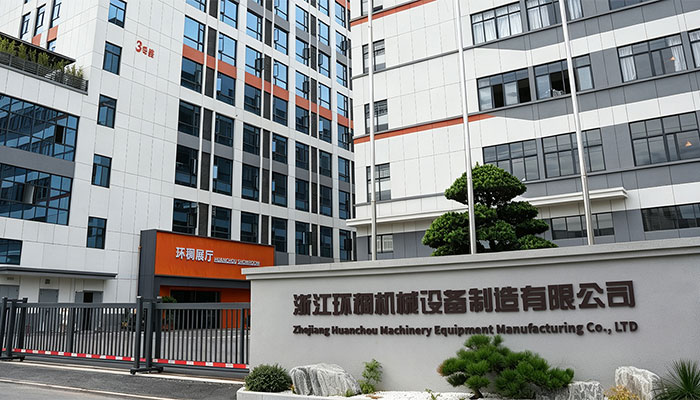
For buyers sourcing across borders, the certification question deserves care. CE marking and an ISO 9001 quality system are useful signals, but the scope matters. Ask which product families are covered, and ask to see the declaration rather than a logo on a brochure. A supplier with a 15,000 square metre production base, a long export record, and a documented quality system is easier to audit than one that only sends photographs.
Three integration paths worth shortlisting
Most upgrades in this sector follow one of three patterns, and each maps to a different class of equipment. The first is a focused assembly cell where the handling and the seating operation are designed together, which is often the fastest route to fewer jams and steadier output.
 HC-020 Automatic Syringe Assembly MachineAutomatic feeding and precision assembly for 1–60 ml syringes, including stopper insertion, plunger assembly and needle pressing; economical version for external-fenced lines.View Product →
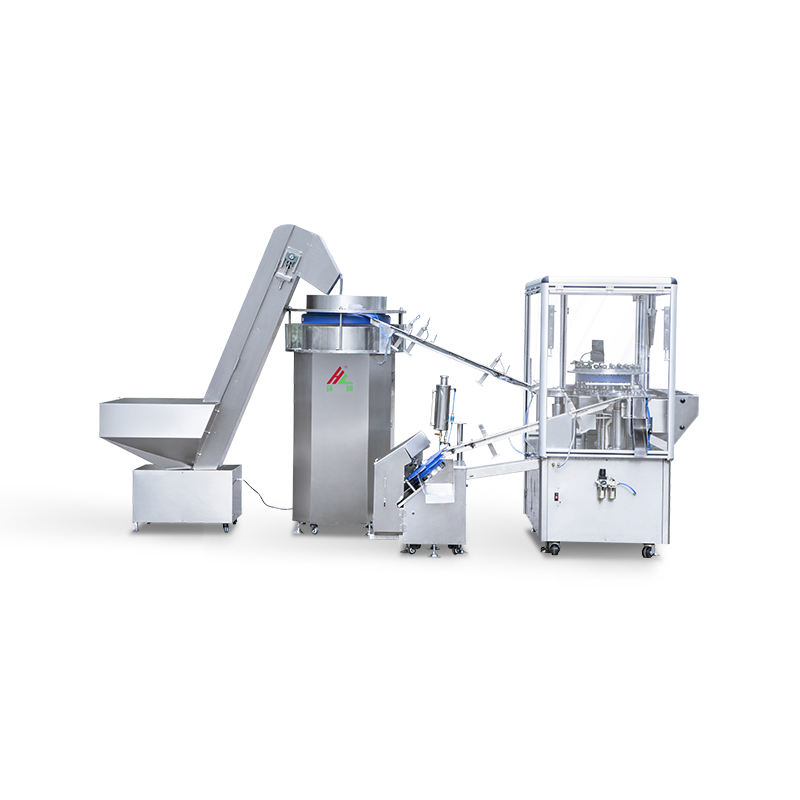
The second is combining printing and assembly into one linked machine, which removes the buffer and the manual tray handling between two stages that always seem to run at different rhythms.
Syringe Printing and Assembly Integrated LineCombines roller printing, visual inspection and automatic assembly for 1–50 ml syringes, with independent PLC units and direct connection to packaging.View Product →
The third is packaging, where a dedicated blister line is usually the right core process and the robotic element belongs at loading and transfer. It is the stage most often deferred and most often regretted later, because packaging formats multiply faster than product formats.
HXP400 Automatic Blister Packing MachineThermoform-fill-seal line for deep medical device trays, forming, sealing, printing and die-cutting in one pass; suited to syringe and kit packaging.View Product →
Whichever path you take, insist on a factory acceptance test with your own material and your own acceptance criteria. Run at rated speed for a defined period, count jams rather than ignoring them, and test a format change with the clock running. What you learn in that room is cheaper than what you learn in your own cleanroom.
Useful next steps on this site:
See the manufacturing base and production capability Read the buyer guide for syringe assembly automationJudge a supplier by the documents it can produce on request, not by the speed printed in its brochure.
Seven failure modes that sink automation projects
Most failed projects do not fail because the robot was wrong. They fail because the surrounding assumptions were. These are the patterns worth guarding against.
- Scope creep during design. A cell that starts as a loading arm and ends as a full line rebuild will miss its budget and its timeline. Freeze the scope, then change it deliberately with a cost impact.
- No format parts discipline. Grippers and change parts stored loose, unlabelled, and without part numbers cost hours at every changeover. Treat them as controlled tooling.
- Unrealistic output targets. Rated speed measured on a demo stand with perfect parts is not the same as sustained output with real incoming variation. Ask for the basis of the number.
- Compressed air and power quality. Small grippers are sensitive to pressure fluctuation. Check supply stability before blaming the cell.
- Validation left to the end. If the documentation package was never specified, it will not appear at commissioning. Write the requirement into the order.
- Thin spare parts planning. A single custom gripper with a long lead time can idle a cell for weeks. Stock the wear items.
- No operator ownership. Cells that operators helped specify get looked after. Cells imposed on a shift get worked around.
There is a common thread here: the mechanical design is usually the easy part, and the operating discipline around it decides the outcome. A modest machine with clear procedures and stocked spares will outperform a sophisticated one with neither.
Design the procedures and the spare parts list in the same meeting as the mechanics, because that is when they are still cheap to change.
Frequently asked questions
What does the future of robotics in industry mean for a mid-sized syringe plant?
In practice it means adding capacity in modules rather than rebuilding. A mid-sized plant typically starts with one cell that removes a manual handoff between printing and assembly, then adds inline inspection, then reviews packaging. Each step is justified on its own numbers, and the line keeps running during the transition.
Will robots replace assembly operators?
On specific tasks, yes, particularly repetitive loading and transfer. On the wider line, the more common outcome is that the same headcount runs more output, and the skill mix shifts toward setup, inspection and maintenance. Plants that plan retraining alongside the capital request report far fewer problems at handover.
What payback period is realistic?
It depends heavily on shift pattern and format count. A single-format plant running three shifts generally sees faster payback than a plant with many small orders, where changeover dominates. Build the case from your own measured changeover time, scrap rate and labor cost rather than accepting a supplier's headline figure.
Can we retrofit a cell onto existing machines?
Usually yes, if the existing machine has an accessible infeed and outfeed and a stable cycle. The constraint is rarely the robot; it is whether the older station can signal its state clearly enough for the cell to synchronise. Ask for a site survey before accepting a quotation.
How much does certification actually tell us?
CE marking and ISO 9001 certification indicate that a management system and conformity process exist. They do not guarantee a specific machine meets your process requirements. Ask for the certificate scope and the declaration applicable to the model you are buying, and verify tolerances during acceptance testing.
What should a factory acceptance test include?
Run your own material, at rated speed, for a defined period long enough to expose a jam pattern. Record jam counts and recovery times. Perform a full format change with the clock running and confirm the documented time is achievable. Verify print registration, insertion force and any functional test results against the agreed numbers, and confirm the spare parts and documentation handover list.
How many formats should one machine handle?
There is no universal number, but changeover time matters more than format count. A machine handling four formats with a thirty-minute changeover is often more useful than one handling two formats with a four-hour changeover. Ask for the changeover sequence in writing and watch it performed.
How do we compare a manufacturer's quote with a wholesaler's quote?
Normalise both to a complete working cell: guarding, grippers, format parts, installation, training, documentation, and a spare parts starter kit. Quotations that look cheaper often exclude exactly these lines. Then compare support terms and response times, because those determine the cost of the first serious fault.
Where does inline inspection fit?
Inspection is easiest to integrate where a robot already presents the part at a fixed position. That combination gives consistent lighting and distance, which makes automated defect detection far more reliable. Start with the defect that costs the most in scrap or complaints, not with the one that is technically most interesting.
What should the purchase order include?
Acceptance criteria with numbers, the changeover time you expect, the format parts list, a documentation package list, training days, warranty terms, spare parts recommendations with prices, and a support response commitment. Written into the order, these items are enforceable. Left to goodwill, they are not.
The most valuable page in an automation purchase order is the acceptance criteria page, because it is the one everyone has to agree on before money moves.
What to do in the next ninety days
If the argument in this article holds, the practical response is not to commission a study of the entire plant. It is to measure three things this quarter and let the numbers choose the project.
First, measure changeover. Pick your most frequent format change and time it honestly, including the walk to fetch parts and the first good piece. Second, measure jams. Count them per shift for a month and record how long recovery takes. Third, measure scrap by station, not by plant, so you know which step is generating rework.
Those three numbers will tell you whether your next investment belongs in a linked printing and assembly machine, an assembly cell with better feeding, an inspection station, or packaging. They will also give you something more valuable than a brochure: a baseline you can hold a supplier to.
The future of robotics in industry will arrive in most factories as a sequence of modest, well-documented cells, each one solving a problem someone measured first. The plants that benefit most will not be the ones that bought the most arms. They will be the ones that knew exactly where their minutes were going before they spent anything.
Measure changeover, jams and station-level scrap first; the automation decision becomes obvious once those three numbers are on one page.
Recommended Articles

 Medical Device Automation Equipment Manufacturer
Syringe Assembly Machine Factory
Copyright ©
Zhejiang Huanchou Machinery Equipment Co.,Ltd.
All Rights Reserved.