

 中文简体
Walk the length of a modern syringe line and the number that decides whether the shift is profitable is rarely the headline speed printed on the datasheet. It is the number of times a person has to reach into the process. Every reach-in is a chance for a drop...
READ MORE
HC-020
Syringe Assembly Machine
Introduction
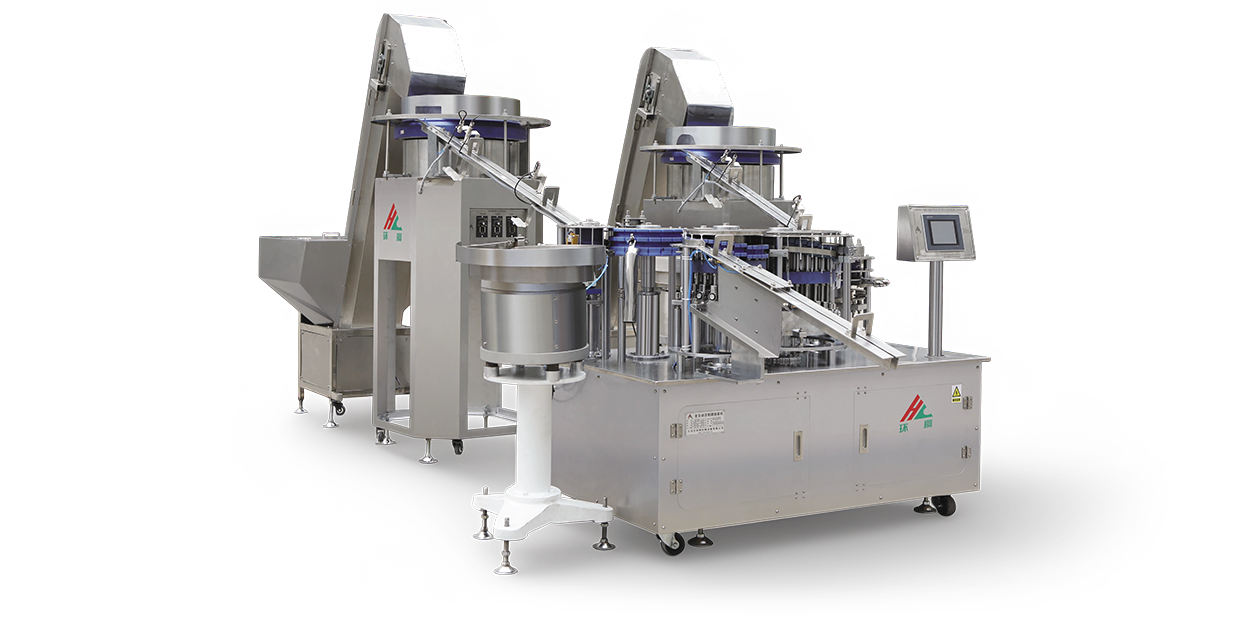
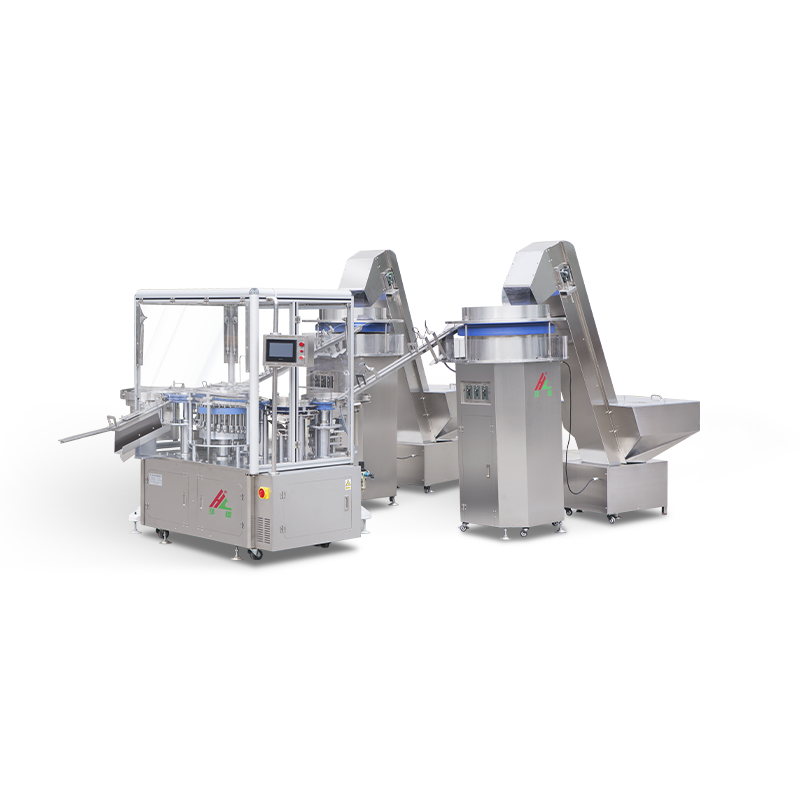
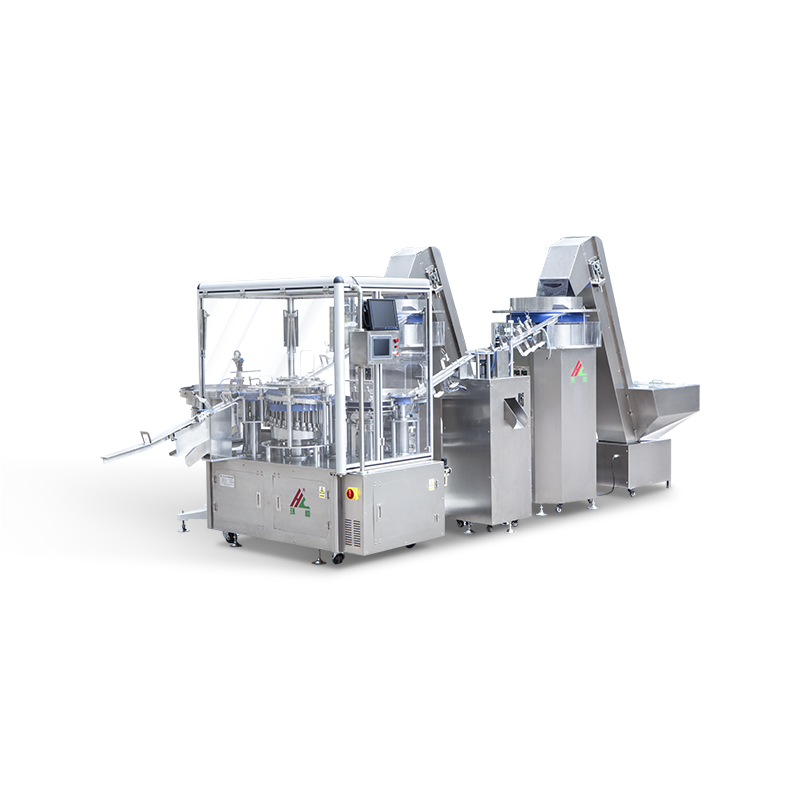
Syringe Assembly Machine is a fully automatic syringe assembly machine of the HC-020 series. It is specially designed to complete the automatic feeding and precision assembly of all syringe components, including syringe barrels, plungers, rubber stoppers, and needles. It supports various syringe types, including luer slip, luer lock, and eccentric tip syringes, and is suitable for the full range of products from 1ml to 60ml.
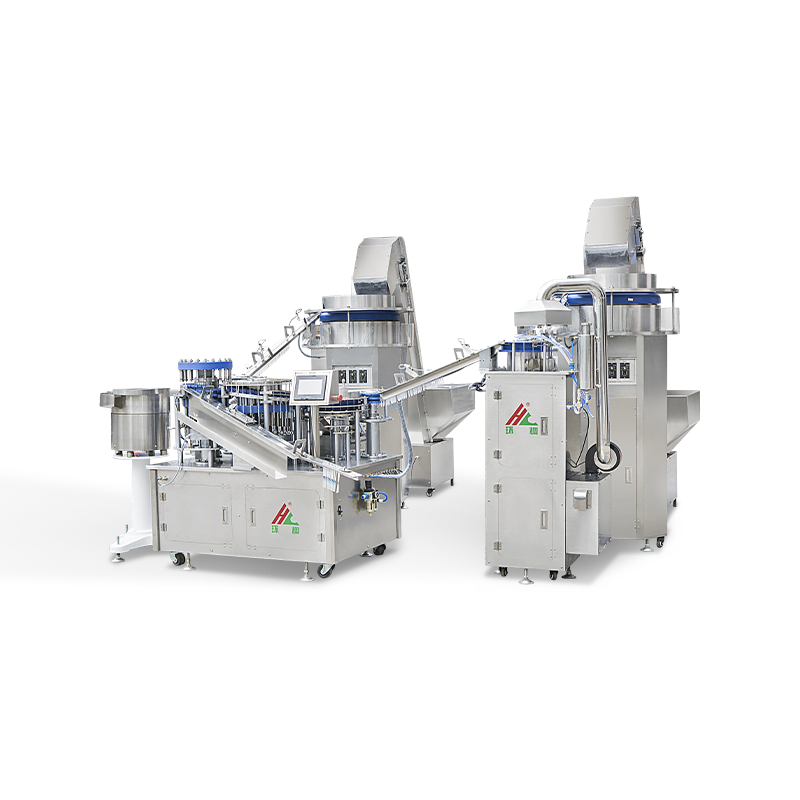
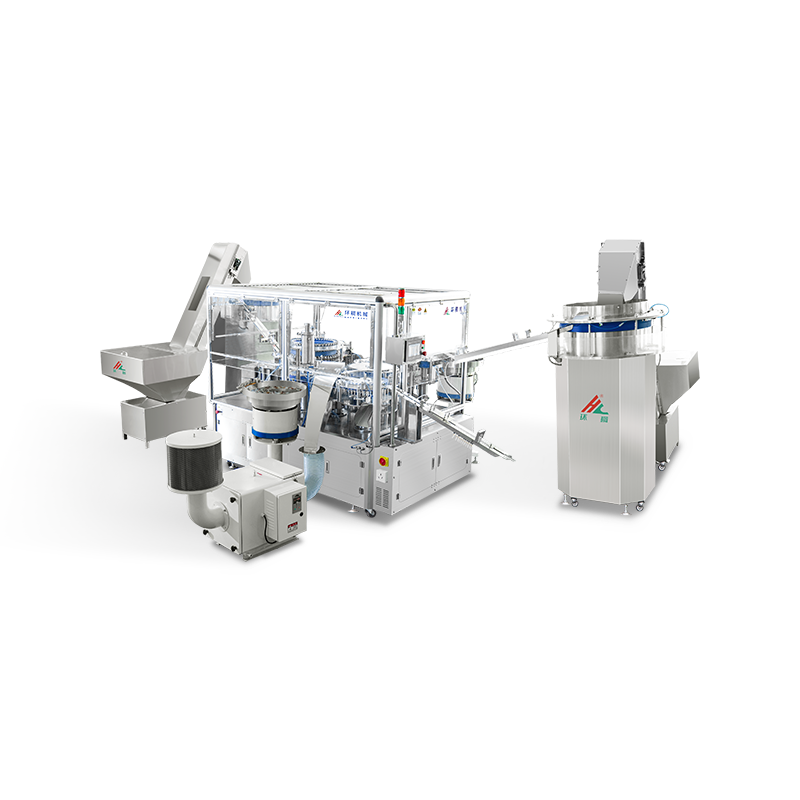
All components are automatically fed and sorted through vibrating bowls, then accurately transferred into the assembly rotary table through conveying tracks. The machine sequentially completes syringe barrel positioning, rubber stopper insertion, plunger rotary assembly, and needle pressing assembly. After assembly, finished products are automatically discharged through the outlet, achieving fully automated operation throughout the entire process.
The entire machine adopts a Mitsubishi inverter and microcomputer coordinated control system, combined with multiple photoelectric sensors to monitor the material status and operation actions of each station in real time. It realizes automatic shutdown when materials are unavailable and automatic restart after material replenishment, ensuring continuous and stable equipment operation.
The product-contact components are manufactured from SUS304 stainless steel and MC nylon, while the conveyor belt adopts FDA-certified food-grade materials. The entire machine undergoes anti-corrosion and rust-prevention treatment. All connecting parts are smooth and flat, preventing contamination of products and cleanroom environments.
The entire machine is designed according to the special process requirements of cleanroom production, featuring smooth lines and a reasonable layout. It can operate continuously for 24 hours under normal production conditions without frequent maintenance.
The precision gear transmission system ensures stable operation with low noise. The equipment features a simple and intuitive operation interface with convenient parameter adjustment. Ordinary operators can operate the machine after simple training, while maintaining a high product qualification rate.
This machine is configured as an economical version without a safety protective cover, suitable for production lines equipped with existing external safety fences. While maintaining complete assembly functions and automatic control performance, it effectively reduces equipment purchase costs and is suitable for the full range of 1ml to 60ml syringes.
Technical Parameters
| Assemble Range | 1-2ml | 3-5ml | 10-20ml | 30ml | 50-60ml |
| Assemble Speed | 200-220pcs/min | 220-240pcs/min | 180-200pcs/min | 160-180pcs/min | 140-160pcs/min |
| Rated Volt | 220V/50HZ | ||||
| Equipment Size | 4650x2630x2150mm 3050x4000x2150mm | ||||
| Power | 3kw | ||||
| Weight | 1500kg | ||||
| Air Pressure | 0.4-0.6MPa | ||||
Company
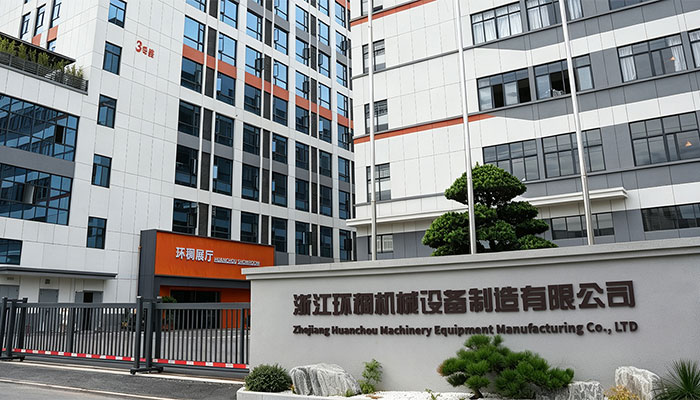
Zhejiang Huanchou Machinery Equipment Co.,Ltd.
Founded in 2008 and recognized as a National High-Tech Enterprise, Zhejiang Huanchou Mechanical Equipment Manufacturing Co., Ltd. specializes in R&D and manufacturing of automation equipment for disposable medical devices. Zhejiang Huanchou Mechanical Equipment Manufacturing Co., Ltd is a China Syringe Assembly Machine Manufacturer and Syringe Assembly Machine Supplier, our core products include automatic syringe assembly machines, self-destruct syringe assembly machines, automatic pad printing machines, and automatic syringe rolling printing machines.
With a dedicated R&D team of 23 professionals—nearly 40% of our total workforce—and ISO9001 certification, Huanchou serves clients across Europe, America, the Middle East, and Southeast Asia. Our new 23-mu manufacturing facility, designed to produce 1,000 syringe assembly line machines annually, is scheduled for full operation by the end of 2026, with an estimated annual output exceeding RMB 300 million.
Certificate Of Honor
News
-
-
A line that runs four syringe formats will lose more time to changeover than to running. Walk the floor at shift change and the pattern is familiar: the printing station sits idle waiting for format parts, the assembly station runs one product at full speed, ...
READ MORE -
A syringe line that runs three safety-cover variants, two prefilled formats, and a printed barrel for a different customer can lose more output during changeovers than during steady running. The practical fix is not simply a faster machine. It is a custom aut...
READ MORE
Message Feedback
Syringe Assembly Machine Industry knowledge
Bolun Press manufactures fully automatic assembly equipment for disposable medical devices, and the HC-020 Syringe Assembly Machine is the core of that range. As a Syringe Assembly Machine manufacturer in China, we supply the standard HC-020 alongside safety-cover, high-speed, oil-injection, pre-filled and printing-assembly configurations to syringe producers in Europe, the Americas, the Middle East and Southeast Asia.
The HC-020 assembles barrels, plungers, rubber stoppers and needles into finished syringes on a single rotary platform, with every component fed, oriented and monitored automatically. It runs luer slip, luer lock and eccentric tip designs across the 1 ml to 60 ml range, so one platform covers the volumes most disposable syringe lines put into production.
How the HC-020 Builds a Syringe
Barrels, plungers, stoppers and needles are loaded into vibrating bowls, sorted by orientation, and transferred along conveying tracks into the assembly rotary table. Each index of the table moves the syringe body through a fixed sequence of operations, so the assembly state is known at every station.
- Barrel positioning — the barrel is seated and squared to the tooling before any component is inserted.
- Stopper insertion — the rubber stopper is placed into the barrel bore at the controlled depth.
- Plunger rotary assembly — the plunger is threaded and driven home by rotation rather than simple push-fit.
- Needle press-fit — the needle hub is pressed onto the tip with the clamping mechanism holding the barrel steady.
- Automatic discharge — assembled syringes leave through the outlet, with no manual unload step in normal running.
Multiple photoelectric sensors watch material presence and station action in real time. If a bowl or track runs empty, the machine stops automatically; once components are replenished, it restarts without operator intervention on the cycle.
Output by Syringe Size
Assembly speed is tied to barrel volume, because stroke length and component mass change the time each station needs. The figures below are the rated speeds of the HC-020 build at each size band.
| Syringe size | Assembly speed | Typical production fit |
|---|---|---|
| 1–2 ml | 200–220 pcs/min | Low-volume dosing syringes, insulin-format barrels |
| 3–5 ml | 220–240 pcs/min | General-purpose 2-piece and 3-piece syringes, highest throughput band |
| 10–20 ml | 180–200 pcs/min | Aspiration, irrigation and procedure kits |
| 30 ml | 160–180 pcs/min | Wound irrigation, feeding and large-volume dosing |
| 50–60 ml | 140–160 pcs/min | High-volume irrigation and fluid-handling syringes |
Configurations in the HC-020 Family
Every variant shares the same feeding, assembly and control architecture. What changes is the guarding, the station set and whether printing or filling operations are brought onto the same platform.
| Model | Build | Where it fits |
|---|---|---|
| HC-020 | Standard, no integral safety cover | Lines already protected by external safety fencing; lowest capital outlay with full assembly scope |
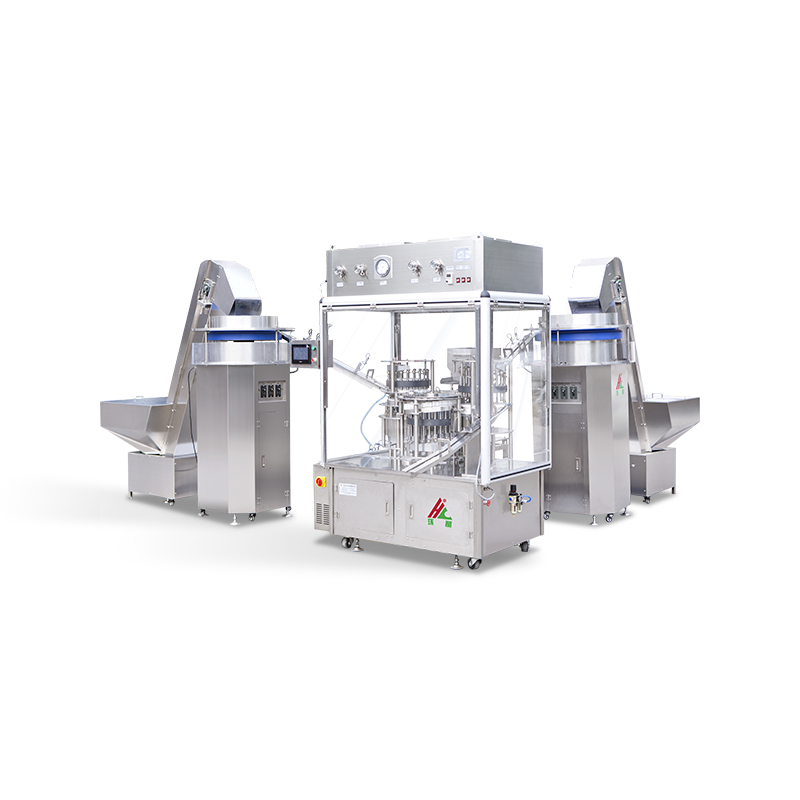
| Syringe Assembly Machine with Safety Cover | HC-020-LP, integrated guarding | Standalone cells where guarding belongs to the machine, not the building |
| HC-020-GSLP | High-speed build with safety cover | High-volume campaigns where cycle time is the constraint |
| Syringe Assembly Machine with Oil Injection | HC-020-PY, oil-injection station added | Barrels that need bore lubrication before the plunger is driven in |
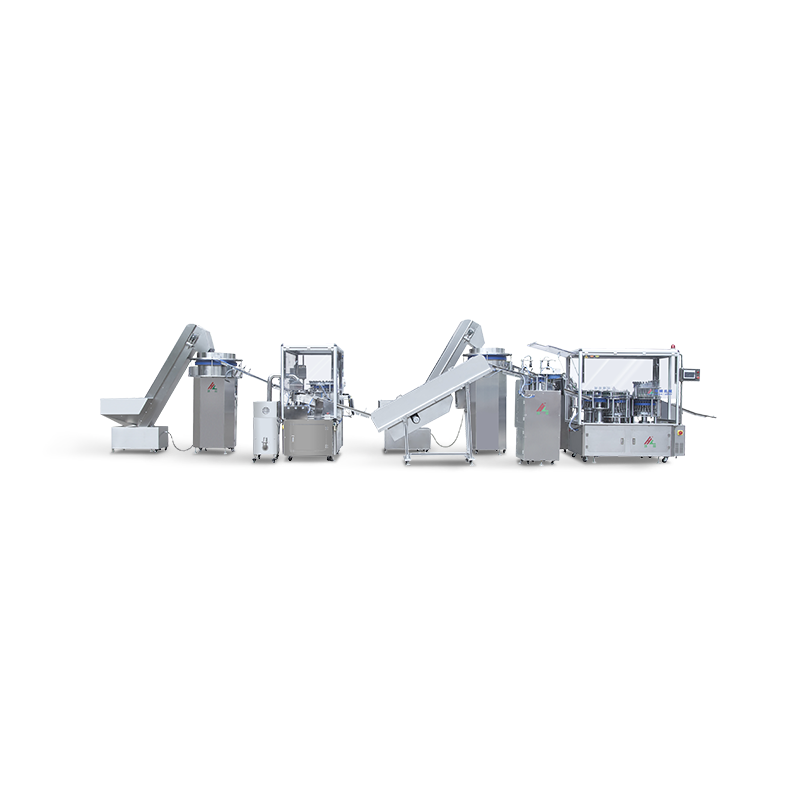
| HC-G019-LT / HC-GZ017 | Printing and assembly combined | Lines that want scale printing and assembly in one continuous pass |
For pre-filled formats we supply a dedicated platform, and the filling interface, stopper geometry and closure system are confirmed against your container before the station set is fixed. Pre-Filled Syringe Assembly Machine covers that configuration.
Materials, Cleanroom Construction and Contamination Control
The machine is built to run inside cleanroom production rather than be adapted to it afterwards. Product-contact components are made from SUS304 stainless steel and MC nylon, and the conveyor belt uses FDA-certified food-grade material.
- Anti-corrosion and rust-prevention treatment across the frame and exposed steelwork.
- Smooth, flush connecting parts so there are no ledges where dust or product debris can collect.
- Clean lines and a rational layout that leave the machine accessible for wiping and inspection.
- Precision gear transmission for stable running and low noise over long shifts.
- Continuous 24-hour operation under normal production conditions, without frequent maintenance stops.
Control System and Line Integration
A Mitsubishi inverter and microcomputer coordinated control system governs the drive train and the station sequence. Operators set the working parameters from a straightforward interface, and a size change is handled through parameter adjustment together with the tooling set for that barrel.
Guarding choice affects layout more than it affects output. The standard HC-020 is deliberately supplied without an integral safety cover so it can sit inside an existing external fence and keep capital cost down, while the LP and GSLP builds carry their own guarding for standalone installation. Where the machine joins a printing unit or a blister packaging line, we configure the infeed and outfeed handover around the conveyor heights and transfer points of your existing equipment.
Utilities and Installation Data
| Parameter | Specification |
|---|---|
| Assembly range | 1–60 ml; luer slip, luer lock and eccentric tip syringes |
| Assembly speed | 140–240 pcs/min across the size bands |
| Rated voltage | 220 V / 50 Hz standard build |
| Installed power | 3 kW |
| Air pressure | 0.4–0.6 MPa |
| Equipment size | 4650 × 2630 × 2150 mm or 3050 × 4000 × 2150 mm depending on build |
| Weight | 1500 kg |
A level, vibration-free floor, a compressed-air drop at the specified pressure and a cleanroom-grade power supply are the three site conditions that matter most. For destinations outside the 220 V / 50 Hz standard, we confirm the electrical specification before the order is released so the machine arrives ready for your supply.
Quality Control, Acceptance and Compliance
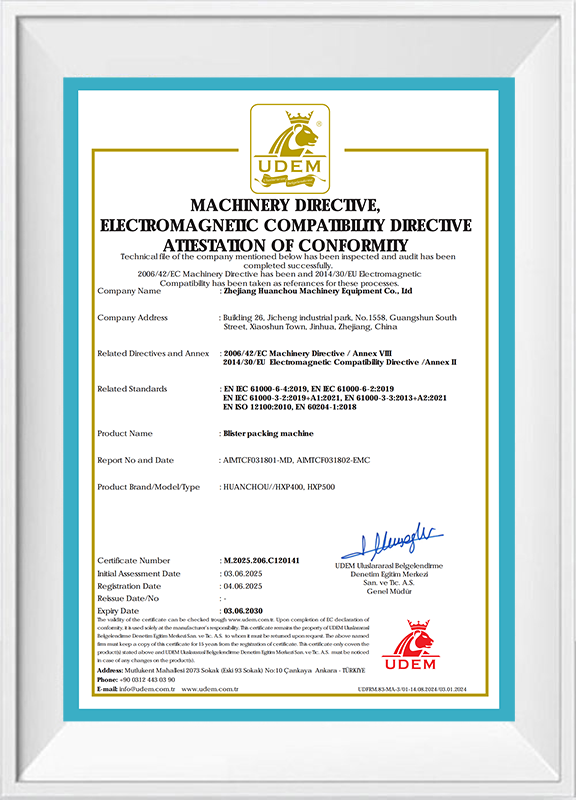
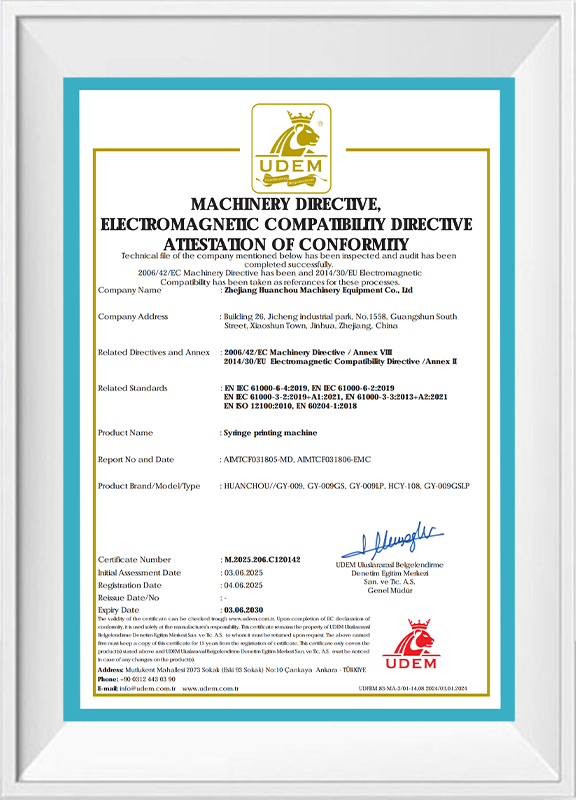
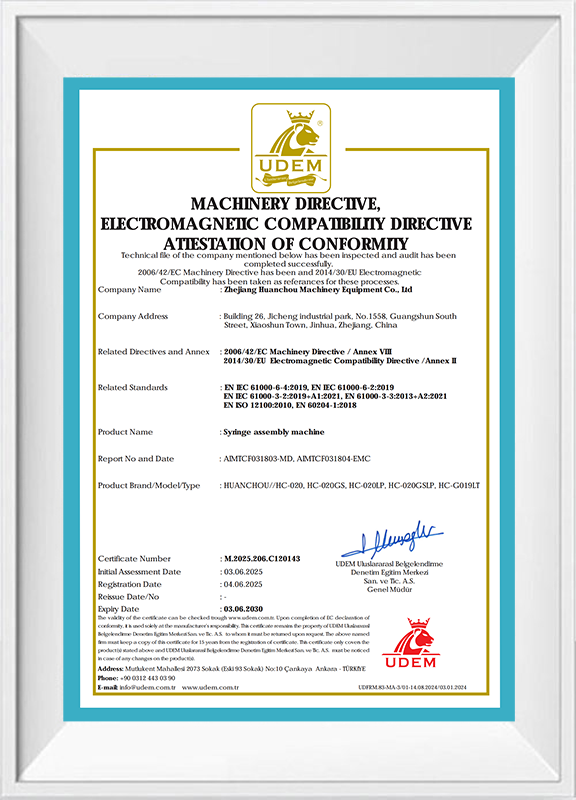
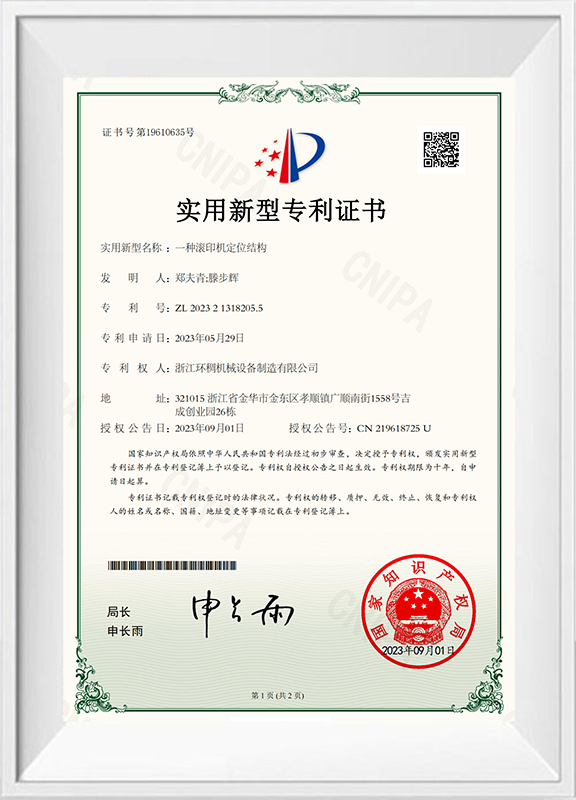
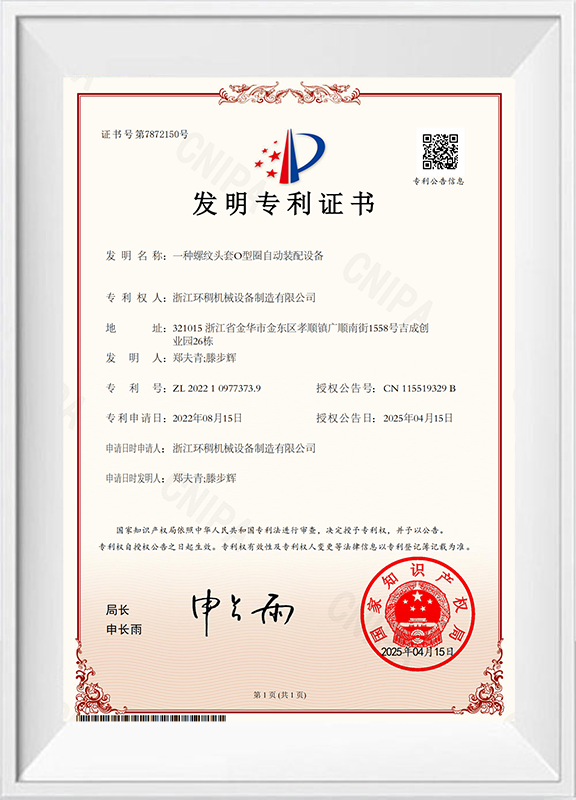
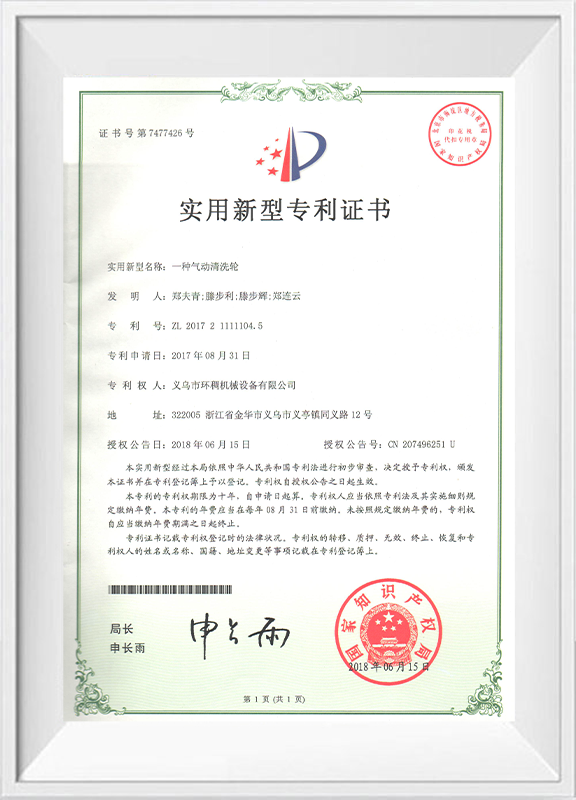
Syringe assembly machines from our works carry CE certification, and our quality system is certified to ISO9001. Our patent portfolio covers the mechanisms that decide assembly quality on this platform, including the needle clamping mechanism for syringe assemblies, the two-in-one turntable structure for the assembly device, the automatic assembly machine for O-rings on threaded heads, and the oil-spraying device for syringe cylinders.
Acceptance concentrates on the functions the machine actually controls: barrel orientation at the seating station, stopper insertion depth, plunger engagement through the rotary assembly station, needle press-fit integrity, and clean discharge without jams. We run the machine on components from the project before shipment and record the settings used, so the same parameters can be reproduced on your floor.
Maintenance, Changeover and Operator Support
The gear-driven transmission and the sensor-monitored stations keep routine attention focused on the feeding system rather than the assembly head. Bowl tooling and conveying tracks are the parts that see the most wear, and they are accessible without dismantling the rotary table.
- Operator training at installation, pitched at the level of a standard line operator rather than a specialist technician.
- Remote assistance for parameter questions and fault diagnosis once the machine is in production.
- Spare-part supply for feeding tooling, sensors and station components.
- Documentation covering installation, station sequence, parameter settings and maintenance intervals.
Information We Use to Configure Your Solution
A quotation that holds up in production starts from the syringe itself. These are the inputs we work from when specifying an HC-020 build.
- Product data — nominal volume, tip type, barrel and plunger material, stopper and needle hub drawings, and whether a printed scale is required.
- Output target — required pieces per minute, shift pattern and annual volume, so the size band and build are matched to the real working point.
- Line context — upstream moulding or printing, downstream blister packaging, conveyor heights and transfer points.
- Site conditions — cleanroom class, available floor area, power supply and frequency, compressed-air capacity.
- Guarding policy — whether the machine sits inside existing fencing or must carry its own safety cover.
- Samples — barrels, stoppers, plungers and needles for trial assembly, plus any destination documentation and language requirements.
Frequently Asked Questions
Which syringe sizes and tip types does the HC-020 handle?
The machine covers 1 ml to 60 ml barrels and assembles luer slip, luer lock and eccentric tip designs. Because speed is tied to volume, the same platform runs 200–220 pcs/min at 1–2 ml and 140–160 pcs/min at 50–60 ml.
Do we need the safety-cover version or the standard build?
If the machine will sit inside an existing external safety fence, the standard HC-020 gives full assembly and automatic control at lower cost. Where the machine stands alone, the LP or GSLP build with integrated guarding is the correct specification.
Can the assembly machine be connected to printing or packaging equipment?
Yes. We supply printing-assembly combined platforms and configure infeed and outfeed handover to blister packaging lines. The conveyor heights and transfer points of your existing equipment are part of the configuration discussion.
What happens when a feeding bowl runs empty?
Photoelectric sensors monitor material status at each station. The machine stops automatically when components are unavailable and restarts after replenishment, so a starved bowl does not produce incomplete syringes.
How is the machine prepared before shipment?
The build is assembled and run on project components at our works, with the station settings recorded. Installation, operator training and remote technical assistance follow on site and through the production ramp-up.
What do you need from us to prepare a proposal?
Send the syringe drawings or samples, the target output and shift pattern, the available floor area and utilities, and the guarding arrangement on your line. With those inputs we specify the model, station set and tooling for your volume band and return a configured quotation.

 OEM/DOM Syringe Assembly Machine Manufacturer
Copyright ©
Zhejiang Huanchou Machinery Equipment Co.,Ltd.
All Rights Reserved.