

 中文简体
Walk the length of a modern syringe line and the number that decides whether the shift is profitable is rarely the headline speed printed on the datasheet. It is the number of times a person has to reach into the process. Every reach-in is a chance for a drop...
READ MORE
Home / Product / Syringe Assembly Machines / High Speed Syringe Assembly Machine (with Safety Cover)
HC-020-GSLP
High Speed Syringe Assembly Machine (with Safety Cover)

Introduction
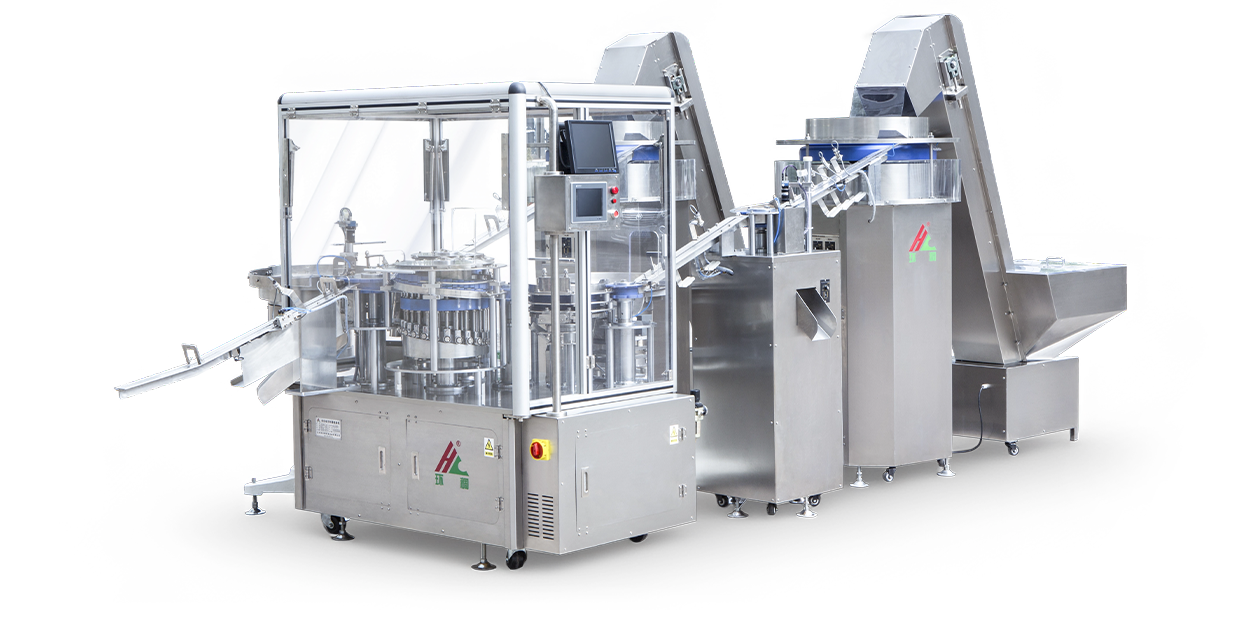
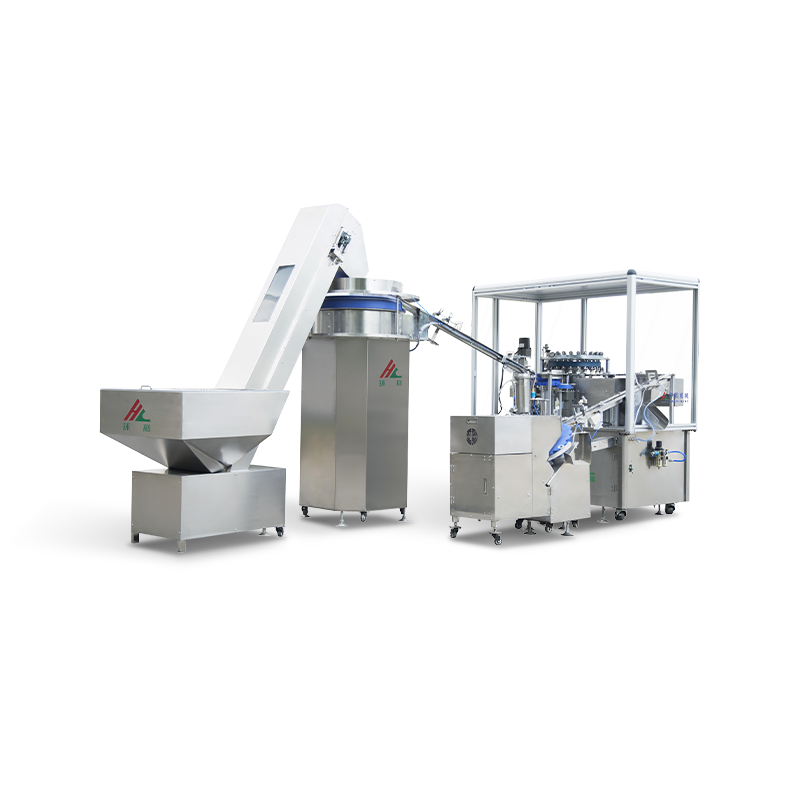
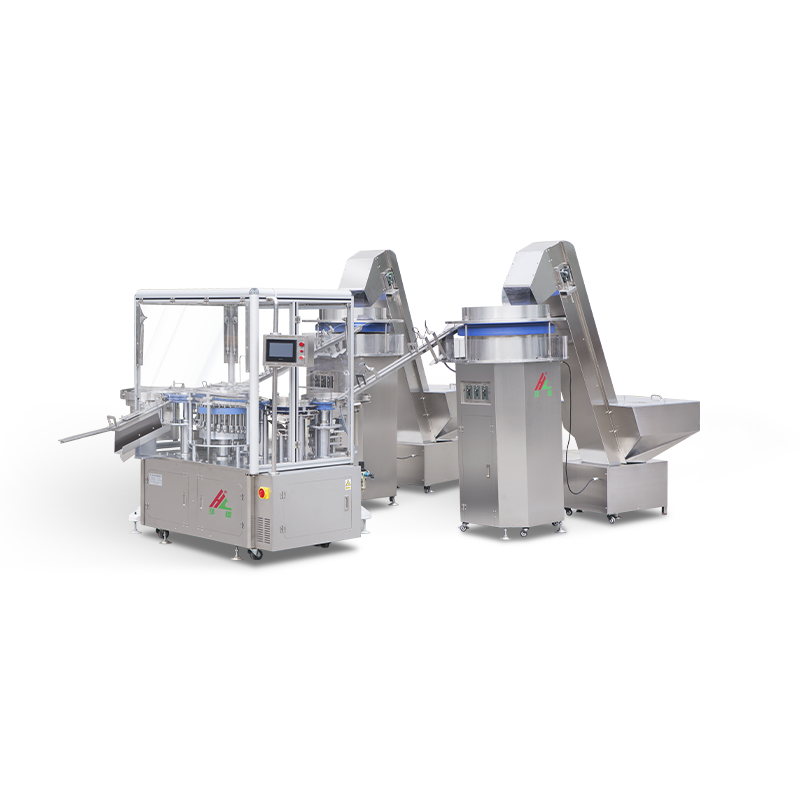
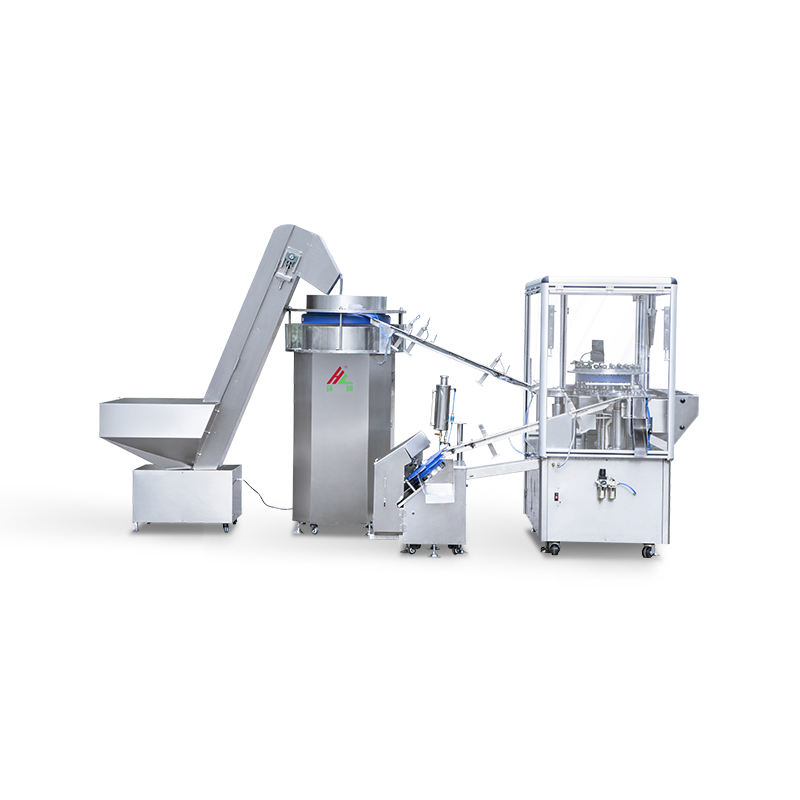
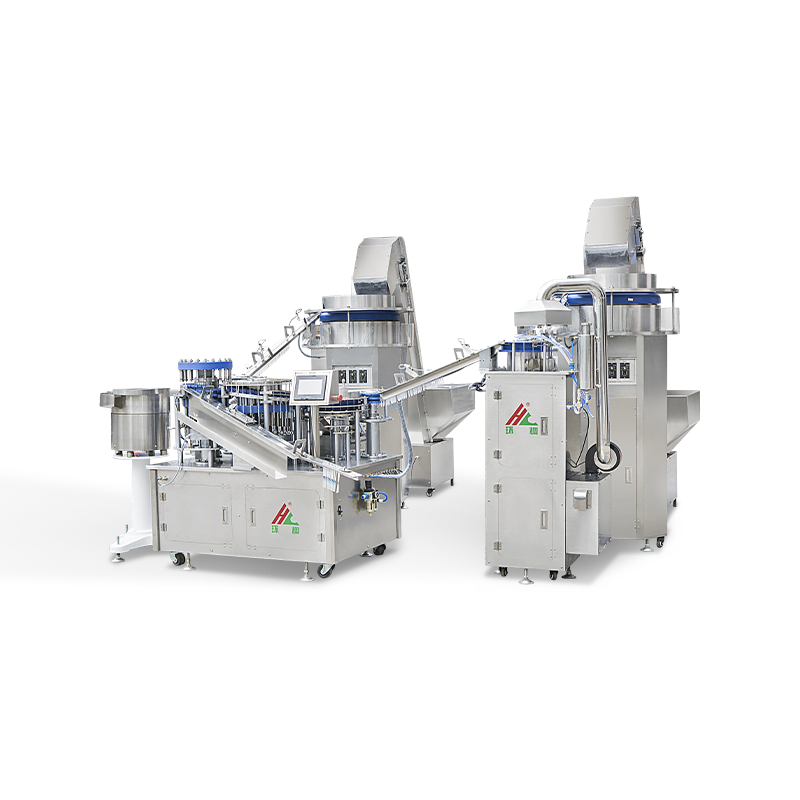
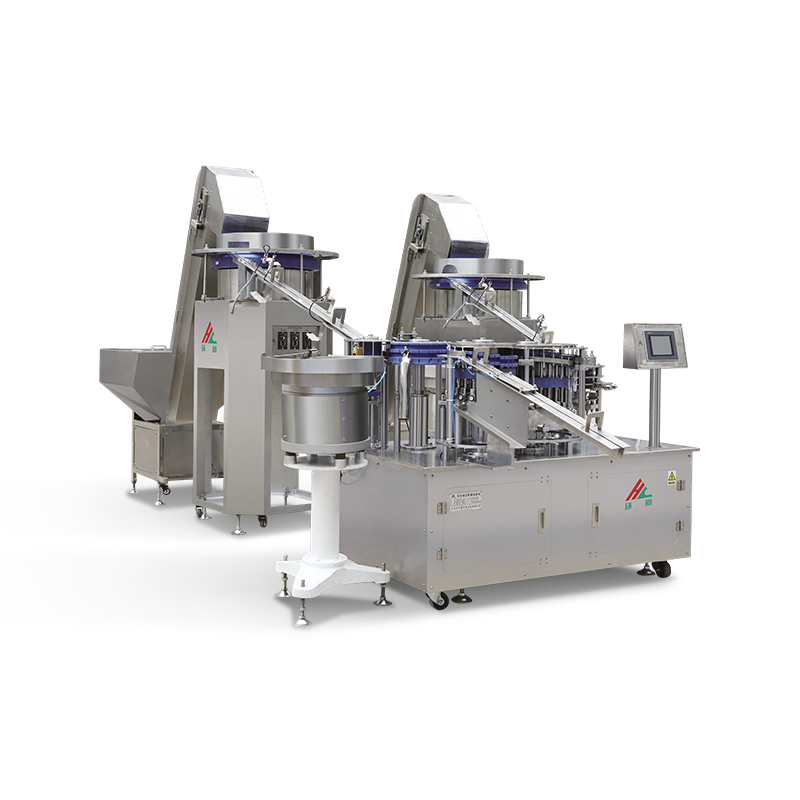
High-Speed Syringe Assembly Machine with Safety Cover can complete the automatic feeding and assembly of all syringe components, including syringe barrels, plungers, rubber stoppers, and needles. It supports various syringe specifications, including Luer slip, Luer lock, and eccentric tip syringes, and can also be adapted for various types of self-destruct syringes and safety syringes.
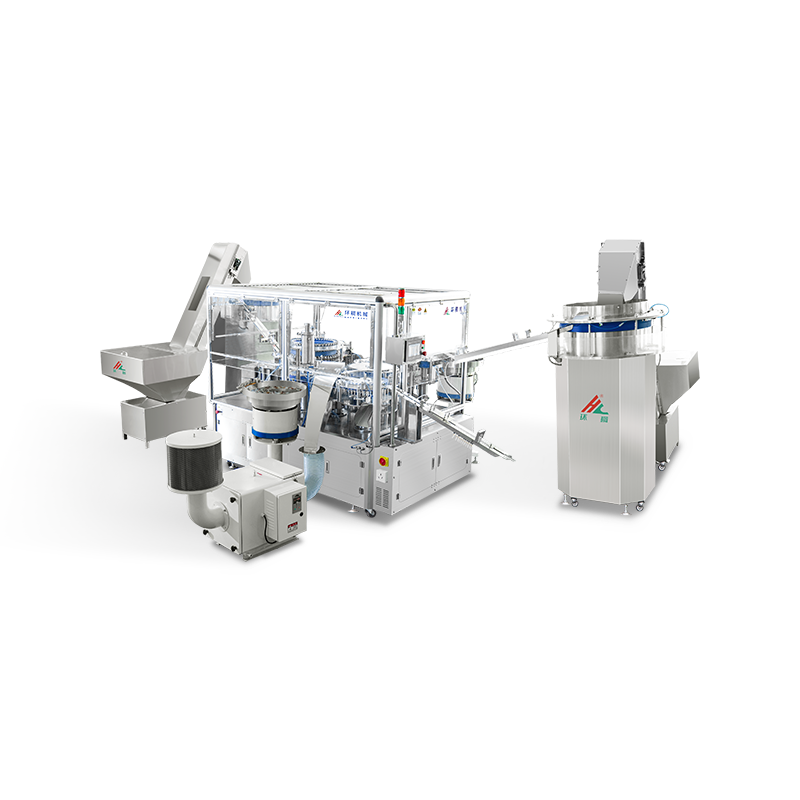
All components are automatically fed and sorted through centrifugal vibrating bowls, then conveyed to the assembly rotary table station through linear feeders. The machine sequentially completes syringe barrel positioning, rubber stopper insertion, plunger assembly, and needle installation. After assembly, the outlet inspection system automatically detects and rejects defective products without needles, rubber stoppers, or plungers.
By applying the latest high-speed assembly technology, the machine achieves ultra-high-speed operation with extremely high precision and stable assembly quality. The assembly speed can reach 300–330 syringes per minute (depending on specifications), significantly improving production efficiency.
The entire machine adopts a Mitsubishi variable frequency speed control drive, combined with a PLC control system and photoelectric sensors to monitor the material status of each station in real time. It realizes a fully automatic operation mode with automatic stop when no materials are available and automatic restart after material replenishment, ensuring stable and reliable operation.
All product-contact components are manufactured from SUS304 stainless steel, MC nylon, and FDA-certified food-grade conveyor belts. The entire machine undergoes anti-corrosion treatment. All welding joints are smooth and flat, with an attractive appearance, preventing contamination of products and cleanroom environments.
The entire machine is designed according to the special process requirements of cleanroom production. It can operate continuously for 24 hours under normal production conditions. The gear transmission system runs smoothly with low noise. The operation interface is simple and intuitive, with a high product qualification rate.
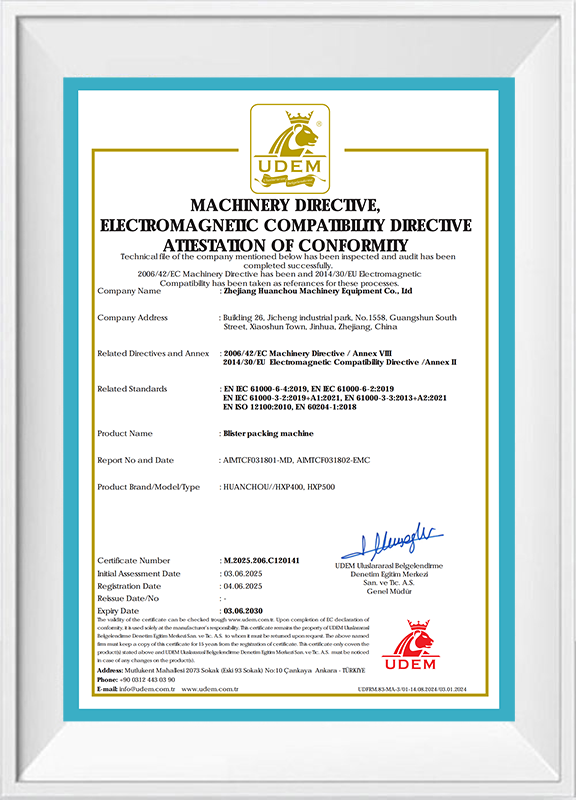
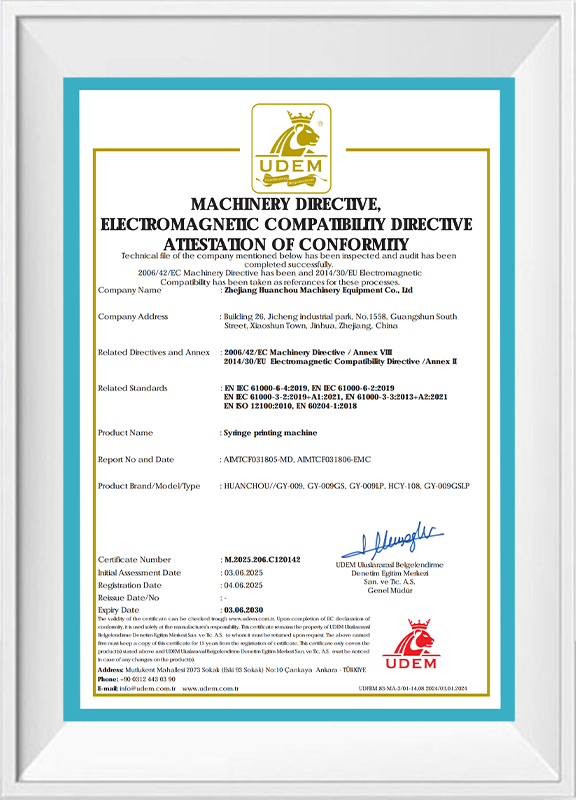
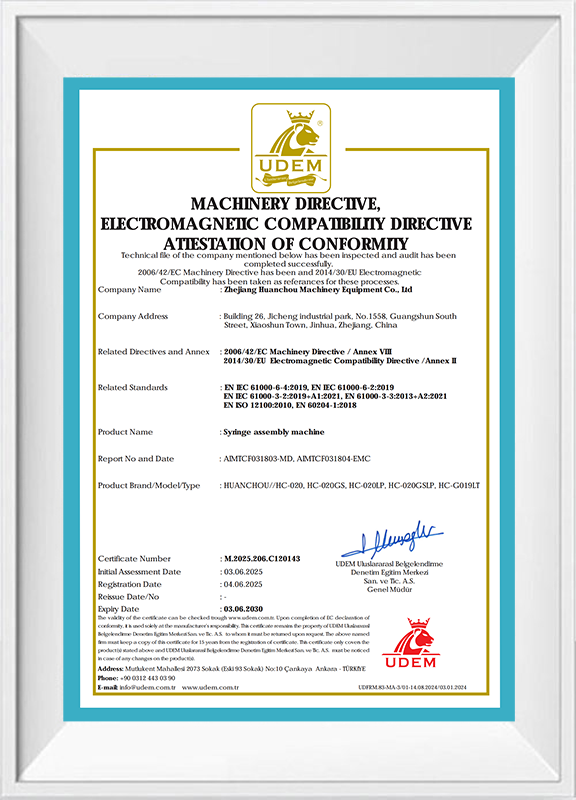
Equipped with a safety protective cover, the machine automatically stops when the cover is opened. It complies with CE safety certification standards, making equipment repair and maintenance safer and effectively ensuring operator safety.
Technical Parameters
| Assemble Range | 1-2ml | 3-5ml | 10ml | 20ml | 30ml |
| Assemble Speed | 200-220pcs/min | 220-240pcs/min | 180-200pcs/min | 160-180pcs/min | 140-160pcs/min |
| Rated Volt | 220V/50HZ | ||||
| Equipment Size | 4650x2630x2150mm | ||||
| Power | 3kw | ||||
| Weight | 1530kg | ||||
| Air Pressure | 0.4-0.6MPa | ||||
Company
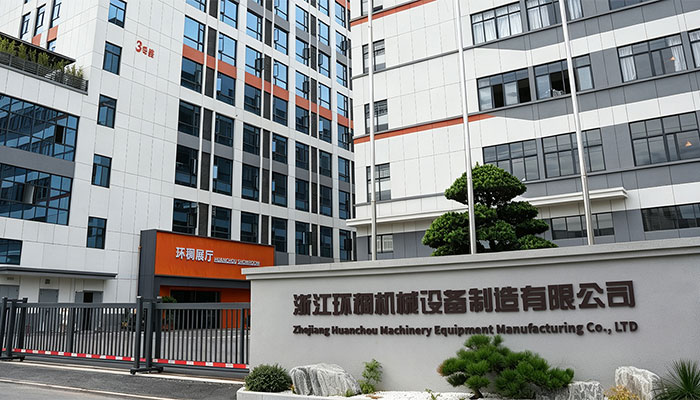
Zhejiang Huanchou Machinery Equipment Co.,Ltd.
Founded in 2008 and recognized as a National High-Tech Enterprise, Zhejiang Huanchou Mechanical Equipment Manufacturing Co., Ltd. specializes in R&D and manufacturing of automation equipment for disposable medical devices. Zhejiang Huanchou Mechanical Equipment Manufacturing Co., Ltd is a China High Speed Syringe Assembly Machine (with Safety Cover) Manufacturer and High Speed Syringe Assembly Machine (with Safety Cover) Supplier, our core products include automatic syringe assembly machines, self-destruct syringe assembly machines, automatic pad printing machines, and automatic syringe rolling printing machines.
With a dedicated R&D team of 23 professionals—nearly 40% of our total workforce—and ISO9001 certification, Huanchou serves clients across Europe, America, the Middle East, and Southeast Asia. Our new 23-mu manufacturing facility, designed to produce 1,000 syringe assembly line machines annually, is scheduled for full operation by the end of 2026, with an estimated annual output exceeding RMB 300 million.
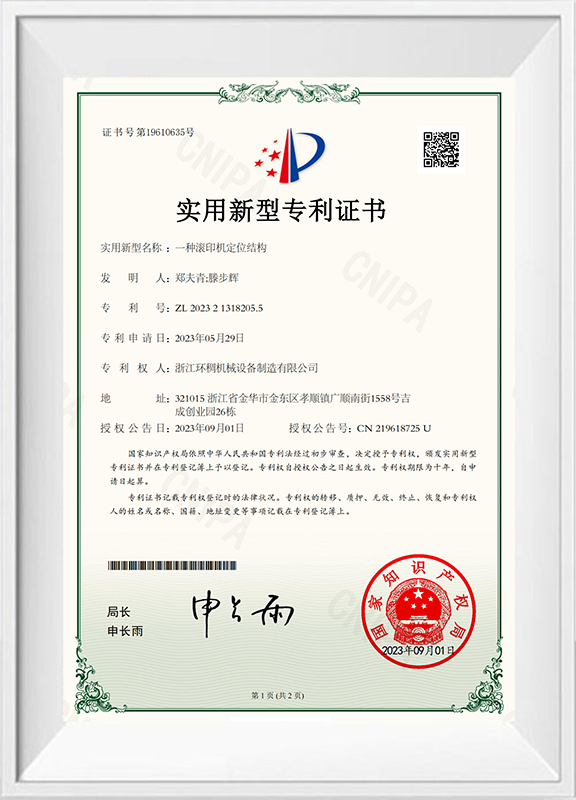
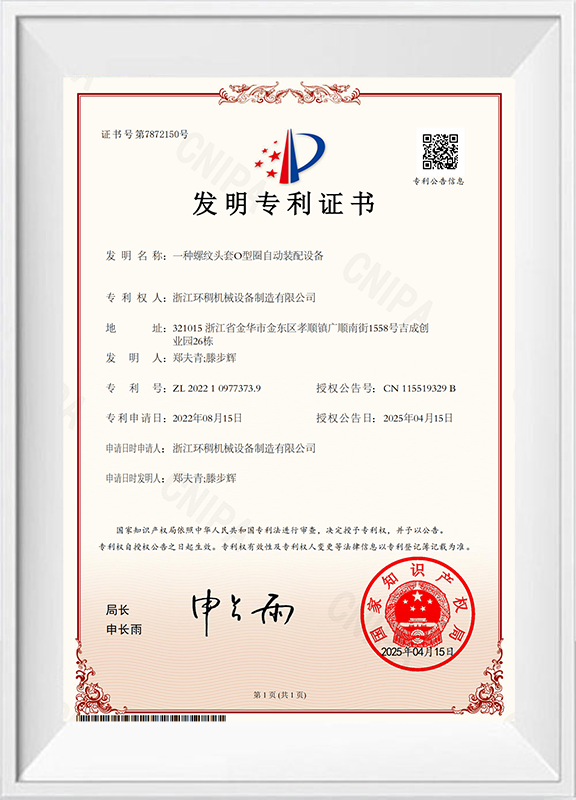
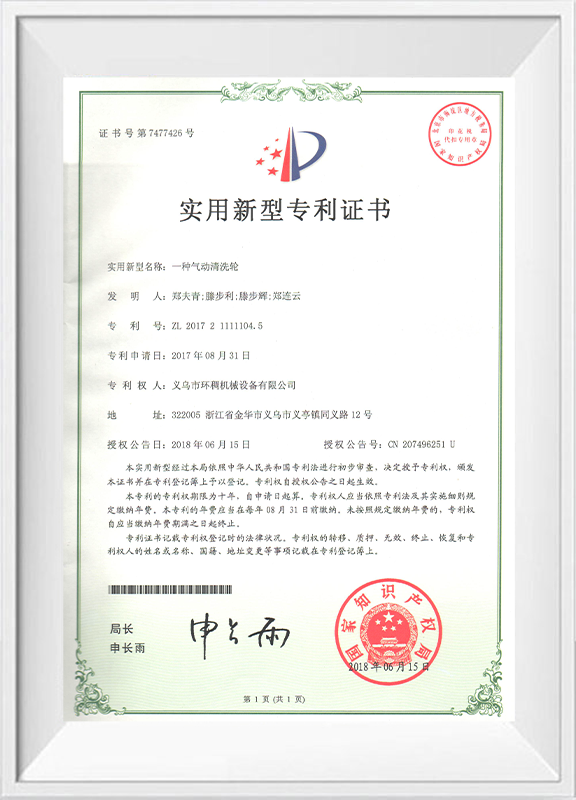
Certificate Of Honor
News
-
-
A line that runs four syringe formats will lose more time to changeover than to running. Walk the floor at shift change and the pattern is familiar: the printing station sits idle waiting for format parts, the assembly station runs one product at full speed, ...
READ MORE -
A syringe line that runs three safety-cover variants, two prefilled formats, and a printed barrel for a different customer can lose more output during changeovers than during steady running. The practical fix is not simply a faster machine. It is a custom aut...
READ MORE
Message Feedback
High Speed Syringe Assembly Machine (with Safety Cover) Industry knowledge
Bolun Press manufactures the HC-020-GSLP High Speed Syringe Assembly Machine (with Safety Cover) for disposable syringe production from 1 ml to 30 ml. Barrels, rubber stoppers, plungers and needles are fed from centrifugal bowls, assembled on a rotary table and inspected before discharge, so a single machine carries the syringe from loose components to a completed, checked part. As a High Speed Syringe Assembly Machine (with Safety Cover) manufacturer in China, we build the platform around your barrel drawing, output target and downstream line interface.
Luer slip, Luer lock and eccentric tip bodies run on the same base frame, and the platform is adapted for self-destruct and safety syringe designs. Format changes are handled through tooling and feeder configuration rather than a different machine concept, which keeps spares, training and maintenance consistent across a multi-size plant.
Component Set and Feeding Principle
Every syringe component is loaded in bulk. Centrifugal vibrating bowls orient each part, linear feeders transfer it to the assembly rotary table, and the stations work in fixed sequence so the barrel never leaves its nest until the syringe is complete.
- Barrels: positioned in the table nest, tip orientation maintained for needle fitting.
- Rubber stoppers: sorted and inserted into the barrel bore ahead of the plunger.
- Plungers: assembled into the barrel with the stopper seated.
- Needles: installed on the tip for Luer and eccentric configurations.
- Rejects: syringes missing a needle, stopper or plunger are detected at the outlet and ejected automatically.
Output by Syringe Size
Rated speed falls as format grows, because larger barrels, longer strokes and heavier stoppers lengthen each index. The figures below are the assembly speeds we quote for each assemble range.
| Assemble Range | Assemble Speed | Typical Line Fit |
|---|---|---|
| 1–2 ml | 200–220 pcs/min | High-volume small-format insulin and tuberculin lines |
| 3–5 ml | 220–240 pcs/min | General-purpose medical syringe production |
| 10 ml | 180–200 pcs/min | Standard vaccination and infusion syringes |
| 20 ml | 160–180 pcs/min | Larger-bore syringes, longer plunger strokes |
| 30 ml | 140–160 pcs/min | Irrigation and high-volume syringe formats |
Where a plant runs several sizes, we plan feeder sets and changeover tooling together so the same frame serves the whole range without duplicated capital.
Footprint, Utilities and Installation
- Rated voltage: 220 V / 50 Hz, 3 kW installed power.
- Air supply: 0.4–0.6 MPa clean, dry compressed air.
- Dimensions: 4650 × 2630 × 2150 mm, 1530 kg — plan fork-lift access and a level floor at the installation point.
- Environment: the build follows cleanroom production requirements, so the machine sits inside the controlled area rather than in a separate plant room.
- Operation: designed to run continuously for 24 hours under normal production conditions.
Contact Materials, Cleanroom Build and Operator Safety
All product-contact parts are made from SUS304 stainless steel, MC nylon and FDA-certified food-grade conveyor belting. The frame is anti-corrosion treated, and welding joints are dressed smooth and flat so surfaces stay cleanable and do not trap particles in the cleanroom.
The safety cover is interlocked: opening the guard stops the machine, which makes access for adjustment, cleaning and maintenance safer. The platform is built to CE safety certification standards, alongside our ISO9001 quality system. Gear transmission keeps running noise low, and the operator interface is kept simple for shift work.
Controls and Line Integration
Drive control is Mitsubishi variable-frequency, governed by a PLC with photoelectric sensors monitoring material status at each station. When a feeder runs empty the machine stops automatically and restarts once components are replenished, which protects the assembly sequence during unattended stretches.
- Station-level sensing reports the material condition behind each stop, shortening fault finding.
- The reject path at the outlet separates incomplete syringes from good production.
- Handshake signals with upstream Syringe Printing & Assembly Machines Manufacturer lines or downstream packaging are defined during configuration.
- Where printing and assembly run as one line, we quote integrated configurations so the buffer, transfer and inspection points are designed together.
Configuration Options We Quote
Tip style: Luer slip, Luer lock and eccentric tip bodies, each with matching needle-fit tooling.
Safety syringe variants: adaptation for self-destruct and safety syringe mechanisms where the drawing allows automatic assembly.
Auxiliary equipment: feeding, airtightness testing and line components from our Syringe Machine Components & Accessories Manufacturer range to close out the inspection and handling stages.
Quality Control, Acceptance and Handover
Machines are built in our own workshop under ISO9001 process control and run with your components before shipment, so the assembly sequence, reject logic and guard interlocks are proven on real parts. Assembly and test records follow the machine, and CE documentation supports the safety file.
- Component trials on customer-supplied barrels, stoppers, plungers and needles during acceptance.
- Installation, operator training and remote technical assistance as part of project handover.
- Spare-part identification for wear items such as feeder tracks and assembly tooling, so replacements can be ordered by position.
Information We Use to Configure Your Solution
- Syringe drawing with nominal volume, tip type, barrel length and component tolerances.
- Component samples or specifications: barrel resin, stopper compound, plunger and needle gauge.
- Required output per shift and the sizes the line must cover, now and in planned extensions.
- Upstream and downstream interfaces, including printing, inspection and packaging equipment.
- Plant utilities at the installation point and the cleanroom class of the production area.
- Documentation, training and acceptance requirements for the handover package.
Our Syringe Production Range
- Syringe Assembly Machines Manufacturer — the wider assembly family, from standard and guarded assembly machines to oil-injection and pre-filled syringe platforms.
- Printing and assembly combined configurations for plants that print the graduation and assemble on one line.
- Blister packaging and testing equipment for the finishing and inspection stages of a syringe line.
Frequently Asked Questions
Which syringe sizes can the HC-020-GSLP assemble?
The machine covers 1–2 ml, 3–5 ml, 10 ml, 20 ml and 30 ml assemble ranges, with rated speeds from 240 pcs/min at 3–5 ml down to 140–160 pcs/min at 30 ml. Each format uses its own feeder and tooling set inside the same base frame.
Can it handle Luer lock, Luer slip and safety syringe designs?
Yes. Luer slip, Luer lock and eccentric tip barrels are all supported, and the platform is adapted for several self-destruct and safety syringe types. Send the syringe drawing with the enquiry so the needle-fit and stopper stations are tooled for that geometry.
What happens to a syringe missing a needle, stopper or plunger?
The outlet inspection system checks each assembled syringe and automatically rejects units without a needle, rubber stopper or plunger, so incomplete parts do not reach the packaging stage.
What utilities and space does the machine need?
Plan for 220 V / 50 Hz supply at 3 kW installed power, 0.4–0.6 MPa clean dry air and a floor area of 4650 × 2630 mm; overall height is 2150 mm and machine weight is 1530 kg. Service access for feeders and the guarded assembly area should be included in the layout.
How is the safety cover controlled during production?
The cover is interlocked, so the machine stops as soon as the guard is opened and can be restarted after the intervention is complete. The build follows CE safety certification standards, and smooth, anti-corrosion surfaces on the guard and contact parts keep cleanroom cleaning straightforward.

 OEM/DOM High Speed Syringe Assembly Machine (with Safety Cover) Manufacturer
Copyright ©
Zhejiang Huanchou Machinery Equipment Co.,Ltd.
All Rights Reserved.