

 中文简体

Custom Automation Systems That Reduce Downtime in Mixed-Model Syringe Production
Date:11 18, 2026
Content
- 1 Why Mixed-Model Syringe Production Creates Hidden Downtime
- 2 How Custom Automation Systems Reduce Downtime in Mixed-Model Production
- 3 A Practical Downtime Audit Before You Specify Custom Automation
- 4 Equipment-Level Choices for Mixed-Model Syringe Lines
- 5 Changeover Discipline, Training, and Supplier Support
- 6 FAQ: Custom Automation Systems and Mixed-Model Downtime
- 6.1 What does mixed-model production mean for a syringe line?
- 6.2 How do custom automation systems reduce downtime during a format change?
- 6.3 Do we need a fully custom line, or can modular equipment work?
- 6.4 What should we measure before choosing a supplier?
- 6.5 How does operator training affect mixed-model downtime?
- 6.6 Can custom automation handle safety-cover and prefilled variants on the same line?
- 7 Next Step: Review Your Line With Huanchou
A syringe line that runs three safety-cover variants, two prefilled formats, and a printed barrel for a different customer can lose more output during changeovers than during steady running. The practical fix is not simply a faster machine. It is a custom automation system designed around mixed-model production, with recipe-driven settings, error-proofed fixtures, and changeover logic that shorten the time between models.
That distinction matters for medical device automation buyers because downtime in mixed-model production is rarely one large event. It is a series of small, repeatable losses: parameter resets, first-article checks, jam recovery, line clearance, and waiting for the right components. Custom automation systems reduce downtime by targeting those repeatable losses one by one, rather than chasing a higher cycle rate that only helps during stable running.
Why Mixed-Model Syringe Production Creates Hidden Downtime
Mixed-model production means more than one product family shares the same line. On a syringe line, that can mean a standard assembly model followed by a safety-cover model, a prefilled syringe format, or a version with oil injection. The printed barrel may also change: different scale markings, different customer copy, or a different print position. Each change looks small on paper. On the shop floor, each one can trigger a new setup sheet, a new fixture, a new recipe, and a new first-article approval.
Lines built around a single dominant model often hide these losses. The line may run well for hours, then lose time in a cluster when the next model arrives. Operators may compensate with experience: adjusting a guide by feel, re-entering a few servo values, or testing several parts before production restarts. Those workarounds keep output moving, but they also make downtime harder to see and harder to remove. A custom automation system makes the changeover state visible and repeatable.
There are three layers to control. The mechanical layer includes tooling, fixtures, and format parts. The control layer includes recipes, servo positions, and print parameters. The quality layer includes first-article inspection, error-proofing, and line clearance. If any layer depends on memory rather than a defined setting, the changeover will vary from shift to shift. That variation is where mixed-model downtime grows.
The chart below is not a measured benchmark for every plant; it is a planning view of where mixed-model syringe lines often lose time. Use it to challenge assumptions during a downtime audit.
For syringe printing and assembly, the largest gains often come from linking print and assembly data so the barrel copy and the assembly configuration change together. That reduces the trial-and-error period after a changeover. Quick-change tooling and error-proofing also shorten the time between the last good part of one model and the first approved part of the next. A supplier that understands syringe formats can help map these losses before a machine specification is fixed.
How Custom Automation Systems Reduce Downtime in Mixed-Model Production
The conclusion is straightforward: custom automation reduces mixed-model downtime by making the changeover state explicit, repeatable, and recoverable. Speed matters, but only after the line can move from one model to the next without re-learning the setup each time. The mechanisms below are practical places to ask questions when comparing a custom automation supplier.
Recipe management and parameter recall
A recipe should store more than a product name. For a syringe line, it can include servo positions, print registration offsets, assembly stroke values, inspection thresholds, and packaging format settings. When the operator selects a model, the machine should recall the approved values and show a clear confirmation. This reduces the risk of a skipped parameter and shortens the time spent searching through notes. It also gives maintenance a baseline when a jam or drift occurs.
Quick-change tooling and modular fixtures
Format parts should be located, keyed, and marked so they cannot be installed in the wrong position. Quick-release clamps and modular fixtures can reduce the mechanical part of changeover, but the bigger benefit is repeatability. If a guide returns to the same position every time, the first part after changeover is more likely to be close to specification. That shortens the trial-and-error loop and protects the quality approval step.
Error-proofing by SKU
Mixed-model production creates a simple risk: the right machine setting with the wrong component. Error-proofing can use mechanical keys, sensor checks, recipe-linked interlocks, or operator prompts. The goal is not to add complexity; it is to stop a safety-cover part from entering a standard assembly recipe, or a prefilled format from running with the wrong handling logic. Good error-proofing catches the mismatch before scrap is produced.
Guided jam recovery and operator guidance
Jams are part of high-speed assembly, but recovery time varies widely. A custom automation system can show the last known position, suggest the likely cause, and guide the operator through a safe clearing sequence. It can also record which station jammed and which model was running. That data turns a recurring nuisance into a design input. For mixed-model lines, recovery guidance should be model-aware, because the same symptom may have different causes on a safety-cover variant and a prefilled variant.
Changeover sequence and first-article inspection
The changeover sequence should be documented as standard work, not left to individual preference. A practical sequence covers line clearance, format-part change, recipe recall, dry-run verification, first-article inspection, and release to production. First-article inspection should be fast but specific: print position, assembly fit, safety-cover engagement, oil dose if applicable, and airtightness where required. The point is to approve the new model with evidence, not with a hopeful sample.
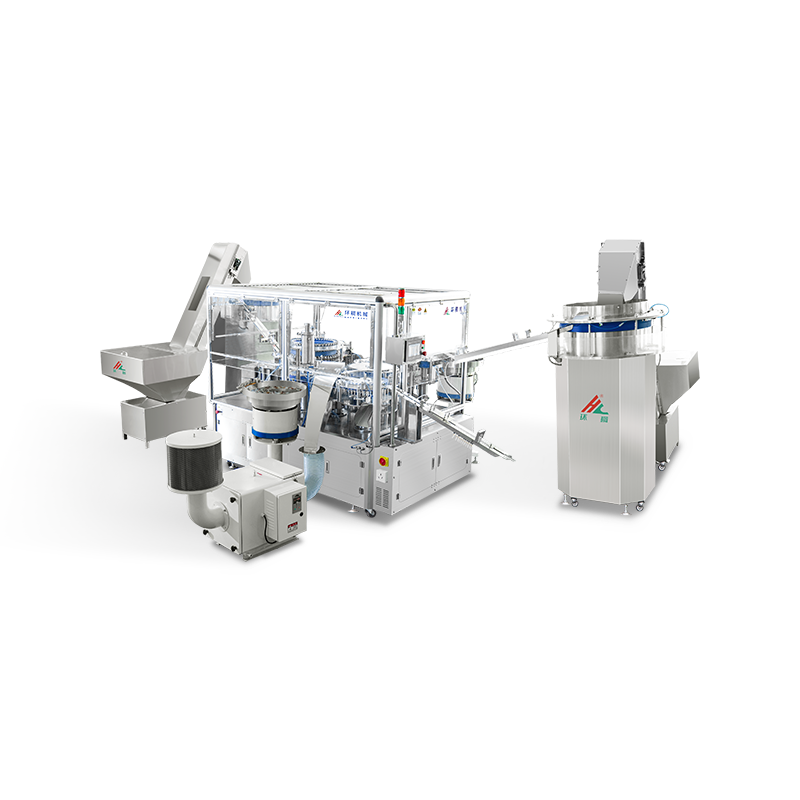
 Syringe Printing and Assembly Integrated MachineIntegrated PLC-controlled printing, inspection and assembly line that links print and assembly recipes to reduce handoff losses in mixed-model syringe production.View Product →
An integrated printing and assembly route is one example of reducing handoff losses. When printing and assembly are separated, a change in barrel copy can create a queue of printed parts waiting for the correct assembly recipe. An integrated machine can link the print job and the assembly recipe so the two change together, which is useful when mixed-model production includes customer-specific print copy.
Changeover data recording closes the loop. If the line logs start and end times, model, operator, and reason for delay, the team can see whether the next improvement should target tooling, training, or component supply. Without that record, downtime discussions stay in opinion. With it, the automation roadmap becomes a series of measurable decisions.
A Practical Downtime Audit Before You Specify Custom Automation
Before requesting a quote, run a short downtime audit on the existing line. The goal is not to produce a perfect study. It is to separate repeatable losses from one-off events, and to identify where a custom automation system can intervene. A useful audit covers four steps: define model families, log events with start and stop times, separate internal from external causes, and calculate the repeatable loss per changeover.
Define model families by the changes that actually affect the line: print copy, safety cover, prefilled format, oil injection, and packaging format. Then log at least ten changeovers. Record the time from last good part of the previous model to first approved part of the next model. Break that time into preparation, mechanical change, recipe change, first-article inspection, and ramp-up. This level of detail usually reveals that the longest delay is not the tooling change itself, but the waiting and verification around it.
The table maps common downtime sources to automation responses. It is a starting point for a specification discussion, not a substitute for line data.
| Downtime source | What it looks like on the line | Custom automation response |
|---|---|---|
| Changeover preparation | Tools, format parts, and setup sheets are gathered after the last batch. | Quick-change tooling, staged carts, and model-specific setup lists. |
| Parameter reset | Operators re-enter servo values or print offsets from notes. | Recipe management with approved values and access control. |
| First-article inspection | Several samples are checked by trial and error. | Guided inspection points and recipe-linked limits. |
| Jam recovery | Operators clear a station without a clear sequence. | Model-aware recovery guidance and event logging. |
| Component waiting | The line waits for the right safety cover or barrel stock. | Line-side kanban, sensor checks, and recipe interlocks. |
| Line clearance | Previous model parts remain at stations or in buffers. | Clearance checklists and controlled buffer run-down. |
The audit output should rank losses by frequency and recovery time. A frequent ten-minute loss can matter more than an occasional one-hour event. It should also identify which losses are internal to the machine and which are external, such as component supply or quality approval. When the team discusses the project with a manufacturer, this ranking keeps the conversation focused on the changeover steps that actually consume capacity. It also helps a supplier propose a proportionate scope instead of adding features that do not address the bottleneck.
Equipment-Level Choices for Mixed-Model Syringe Lines
Equipment choices should follow the downtime audit. A line that changes print copy frequently has different needs from a line that changes assembly variants frequently. The sections below outline where to look, using syringe printing, assembly, printing-assembly integration, blister packaging, and test accessories as examples.
Printing equipment and print-copy changes
For syringe printing, the practical question is how the machine handles a new print copy. A recipe should store registration, print pressure, and speed settings for each job. Quick-change print tooling and clear marking on rollers or screens can reduce setup time. If the line runs multiple print positions, error-proofing should prevent the wrong print unit from being selected. The goal is to make a print change a controlled recipe event, not a manual re-tuning exercise.
Assembly variants: safety cover, prefilled, and oil injection
Assembly is where mixed-model complexity often concentrates. A safety-cover variant may need different handling, orientation, and force limits from a standard syringe. A prefilled format may need different nesting and inspection logic. An oil-injection variant adds a dosing step that must be verified. A custom assembly system should separate common motions from variant-specific motions, so the changeover focuses on the parts that truly differ. That approach can reduce both setup time and the risk of running a variant with the wrong parameters.
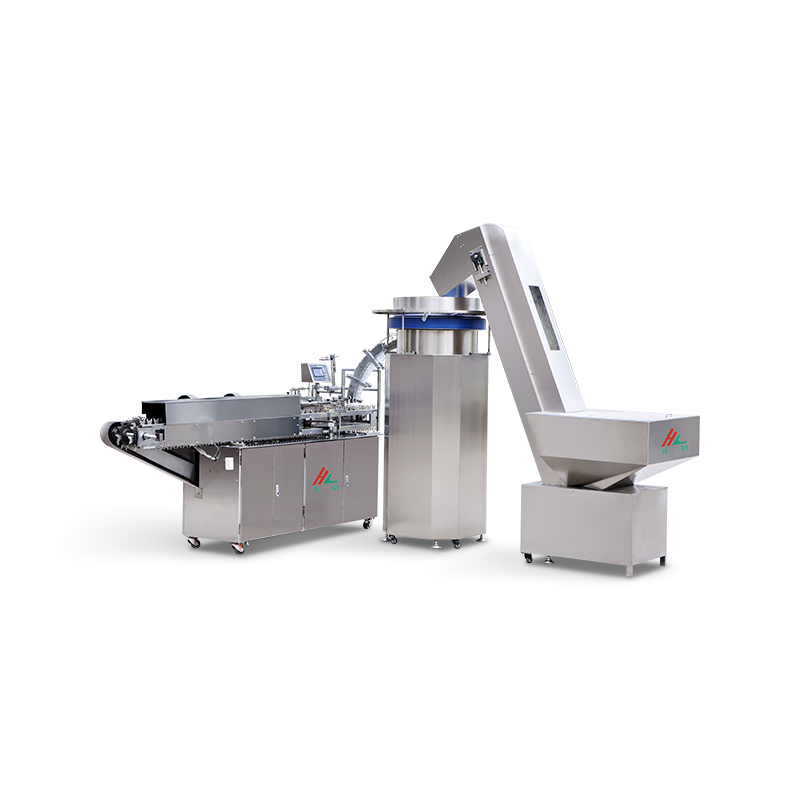
High-Speed Syringe Assembly Machine with Safety CoverAutomatic rotary-table assembly for safety-cover syringes, with outlet inspection and predictable setup for mixed-model production.View Product →
A high-speed assembly platform configured for safety-cover syringes is relevant when that variant is a regular part of the mix, not an occasional order. The value is not only speed; it is the ability to hold a defined setup for that variant and return to it predictably. Buyers should still confirm format-part change steps, first-article requirements, and how the recipe is protected from unauthorized edits.
Printing and assembly integration
Integration can remove a transfer and a separate setup decision. If printing and assembly are separate, a print job change may create work-in-process that must be consumed before the assembly changeover can finish. An integrated route can synchronize the two, but it also requires clear changeover logic so a print change does not become an assembly stoppage. This is a good area to ask for a factory acceptance test that includes at least two model changes, not just a steady-state run.
Blister packaging as a separate changeover point
Packaging is often treated as a downstream step, but it can be a major mixed-model downtime point. Blister format changes may involve forming tools, sealing parameters, and carton formats. A fully automatic blister packing machine should be evaluated on format change time, recipe storage, and how it handles a partial batch. If the packaging line runs ahead of assembly, buffer logic matters; if it runs behind, changeover coordination matters.
Fully Automatic Blister Packing Machine for Medical TraysThermoform-fill-seal machine with PLC recipes and quick format changeover for deep medical trays, supporting packaging-line coordination.View Product →
For medical device production, packaging changeover also has a quality dimension. Line clearance, label control, and first-article approval should be part of the changeover sequence. A packaging machine that stores recipes but lacks a clear clearance step can still create downtime and compliance risk. The practical test is to walk through a complete format change with the supplier and time each step.
Components and test accessories
Small accessories can create large stoppages when they are treated as an afterthought. A negative-pressure airtightness tester, a centrifuge and stock bin, or a replacement rubber roller for a pad-printing machine may not be the main machine, but a missing or worn part can stop a mixed-model line. Buyers should ask which parts are model-specific, which are shared, and what spares should be held on site. A manufacturer with a broad component range can often help consolidate spare-part planning, but the line audit should still define the critical items.
Changeover Discipline, Training, and Supplier Support
Custom automation does not remove the need for discipline. It makes discipline easier to repeat. A practical changeover standard should name the steps, the tools, the inspection points, and the person responsible for release. Operators should be trained on the recipe screen, the error-proofing prompts, and the safe recovery sequence. Maintenance should know which settings are locked and which can be adjusted within approved limits.
Training should use the actual model mix. A session that only runs one product does not test the changeover logic. A better approach is to practice two or three representative changes, including a safety-cover variant and a prefilled variant, and record the time. The first practice run may be slow. The third run should show whether the sequence is teaching itself or still depending on a specialist.
Supplier support matters after installation. Ask how the manufacturer handles spare parts, recipe backups, and remote troubleshooting. Ask whether a local wholesaler or distributor holds critical components, and how quickly a wear part can be replaced. For a medical equipment automation supplier, the handover should include a clear list of model-specific format parts, recommended spares, and the acceptance tests used for each model. A factory acceptance test that includes mixed-model changeovers is more informative than a steady-state demonstration.
Finally, keep the downtime log alive after the project. The same categories used before the purchase can be used after installation to verify improvement. If changeover time falls but jam recovery rises, the next project should target recovery rather than adding more changeover features. This keeps the automation roadmap tied to actual losses.
FAQ: Custom Automation Systems and Mixed-Model Downtime
What does mixed-model production mean for a syringe line?
It means the same line runs more than one syringe family or configuration, such as standard assembly, safety-cover assembly, prefilled syringes, oil-injection versions, or different printed barrel copy. The downtime challenge is not only the physical change; it is the recipe, inspection, and clearance work that surrounds the change.
How do custom automation systems reduce downtime during a format change?
They reduce downtime by storing approved settings, guiding the changeover sequence, error-proofing the model selection, and shortening first-article approval. The strongest systems also record changeover time and jam events, so the team can see which step still needs work. The aim is a repeatable change, not a heroic one.
Do we need a fully custom line, or can modular equipment work?
Modular equipment can work well when the model differences are understood and the interfaces are defined. A fully custom line may be justified when the product mix requires unusual handling or when several process steps must be synchronized. The decision should come from the downtime audit, not from a preference for custom or standard equipment.
What should we measure before choosing a supplier?
Measure the time from last good part to first approved part for several model changes. Break that time into preparation, mechanical change, recipe change, inspection, and ramp-up. Also record the frequency and recovery time of jams. This gives a supplier a factual brief and gives the buyer a way to compare proposals.
How does operator training affect mixed-model downtime?
Training affects how quickly the operator finds the right recipe, confirms the format parts, and recovers from a jam. A trained operator follows the standard sequence; an untrained operator improvises. The difference usually shows up in first-article time and in repeated small stops, not in the machine's rated speed.
Can custom automation handle safety-cover and prefilled variants on the same line?
It can be designed to handle them when the differences are defined early. The line may need separate format parts, different inspection logic, and clear recipe separation. The practical question is whether the changeover steps can be completed with the available skills and spares. A supplier should demonstrate at least two variant changes during acceptance.
Next Step: Review Your Line With Huanchou
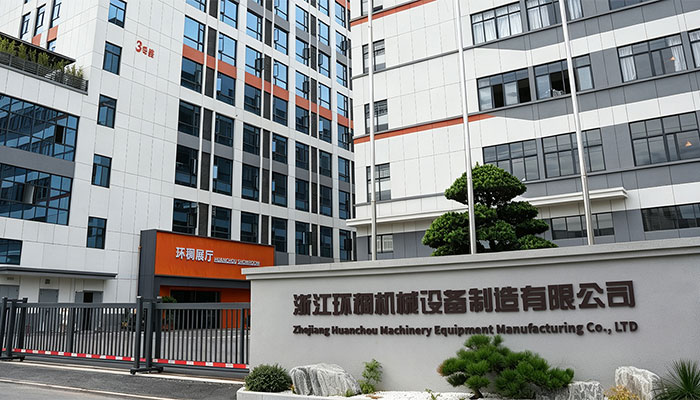
Zhejiang Huanchou Machinery Equipment Co., Ltd. has focused on disposable medical device automation since 2008. Its product range includes syringe printing machines, syringe assembly machines, printing and assembly integrated machines, blister packaging machines, and syringe machine components and accessories. The company operates a 15,000-square-meter production base, holds CE and ISO9001 certification, and exports to more than 50 countries. For a mixed-model syringe project, the useful first conversation is about the model mix, the changeover steps, and the downtime data behind them.
If you are preparing a specification, contact Huanchou to discuss your model mix and changeover requirements. You can also learn more about the manufacturer and its medical equipment automation background.
Bring a simple changeover log and a list of format differences. That is enough to start a practical discussion about where custom automation can reduce downtime without overcomplicating the line.
Recommended Articles
 Medical Device Automation Equipment Manufacturer
Syringe Assembly Machine Factory
Copyright ©
Zhejiang Huanchou Machinery Equipment Co.,Ltd.
All Rights Reserved.