

 中文简体
-
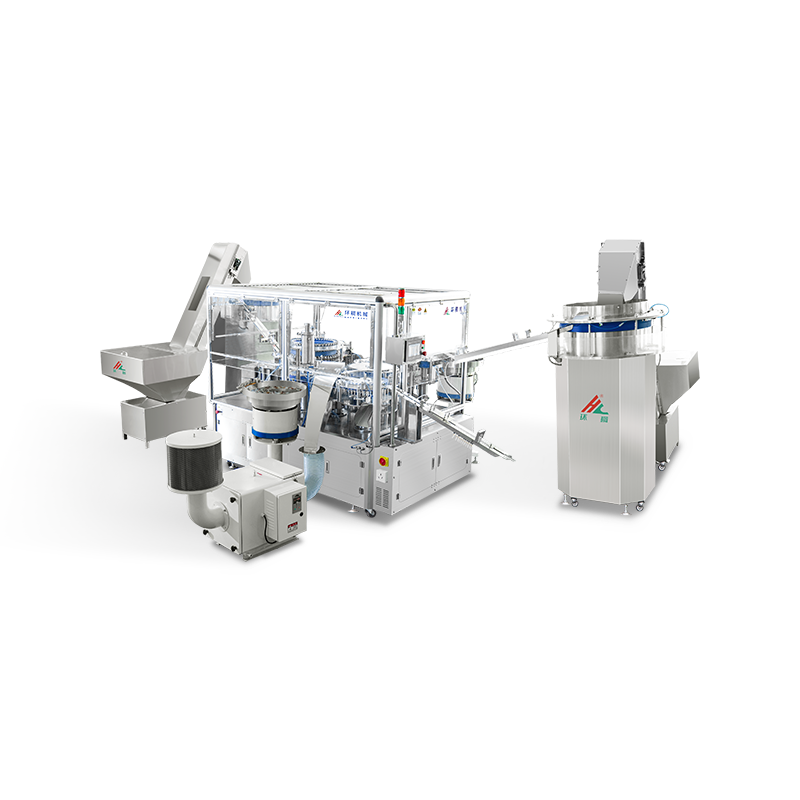
HC-G019-LT
Syringe Printing-Assembly Machine

Syringe Printing & Assembly Machines integrate the two major processes of syringe printing and assembly into the same equipment or production line system, achieving fully automated operation from syringe barrel printing to finished product assembly. This significantly reduces intermediate transfer procedures, saves labor costs, lowers the risk of product contamination, and minimizes the required equipment installation space. The printing machine, inspection system, and assembly machine are each controlled by independent PLC systems, allowing coordinated operation as well as separate maintenance. They are suitable for modern medical consumables production workshops with high requirements for space utilization and cleanliness.
Company
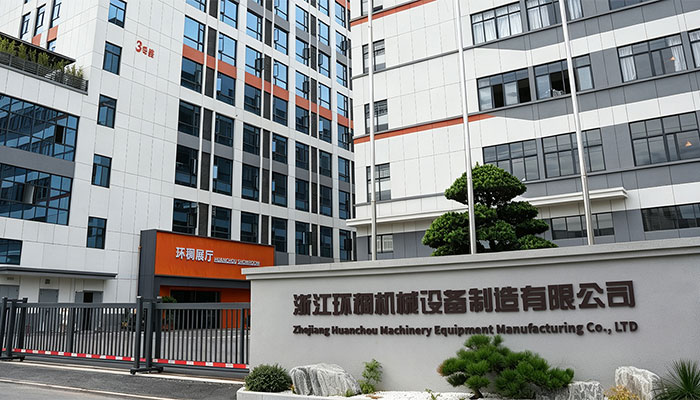
Zhejiang Huanchou Machinery Equipment Co.,Ltd.
Founded in 2008 and recognized as a National High-Tech Enterprise, Zhejiang Huanchou Mechanical Equipment Manufacturing Co., Ltd. specializes in R&D and manufacturing of automation equipment for disposable medical devices. Zhejiang Huanchou Mechanical Equipment Manufacturing Co., Ltd is a China Syringe Printing & Assembly Machines Manufacturer and Syringe Printing & Assembly Machines Factory, our core products include automatic syringe assembly machines, self-destruct syringe assembly machines, automatic pad printing machines, and automatic syringe rolling printing machines.
With a dedicated R&D team of 23 professionals—nearly 40% of our total workforce—and ISO9001 certification, Huanchou serves clients across Europe, America, the Middle East, and Southeast Asia. Our new 23-mu manufacturing facility, designed to produce 1,000 syringe assembly line machines annually, is scheduled for full operation by the end of 2026, with an estimated annual output exceeding RMB 300 million.
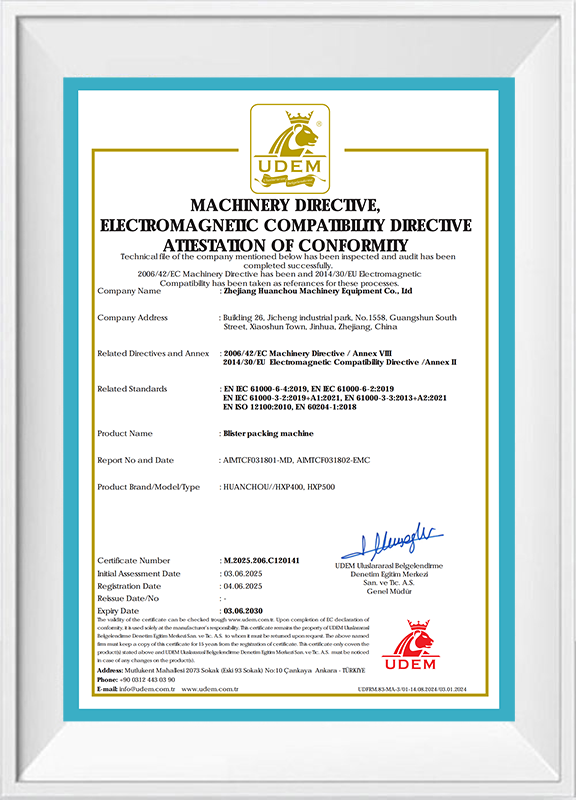
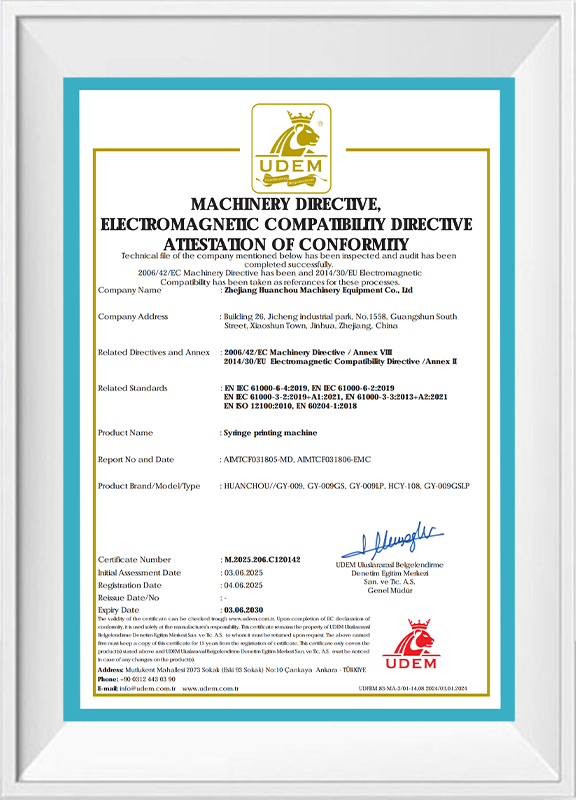
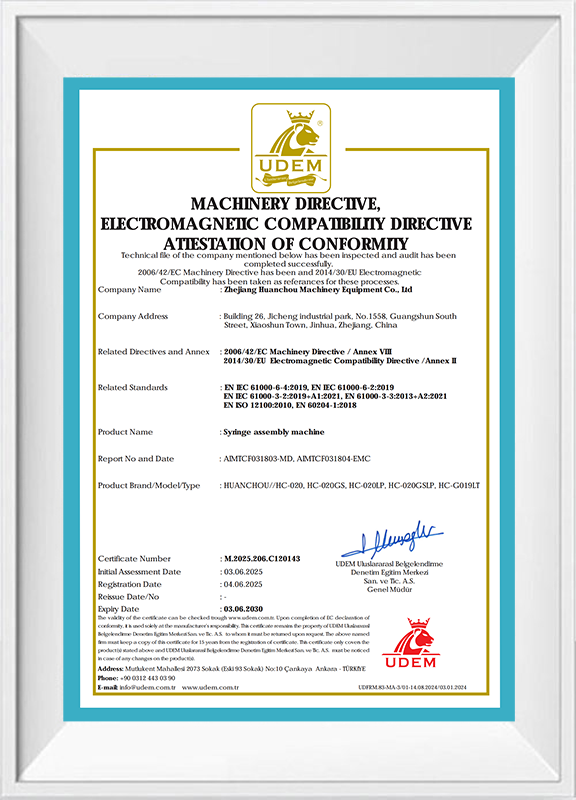
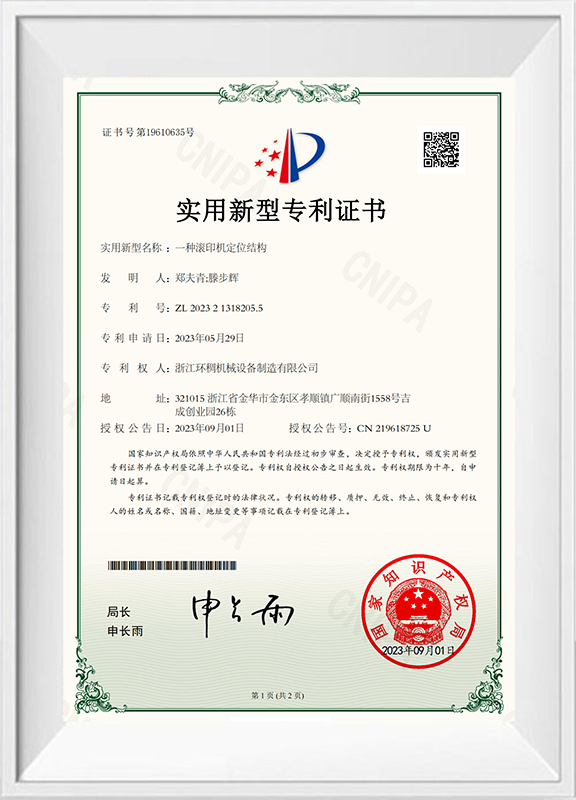
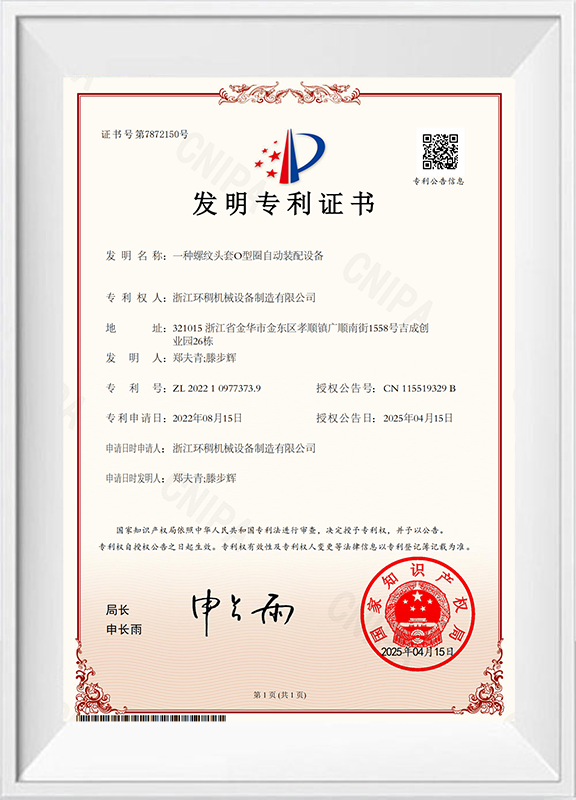
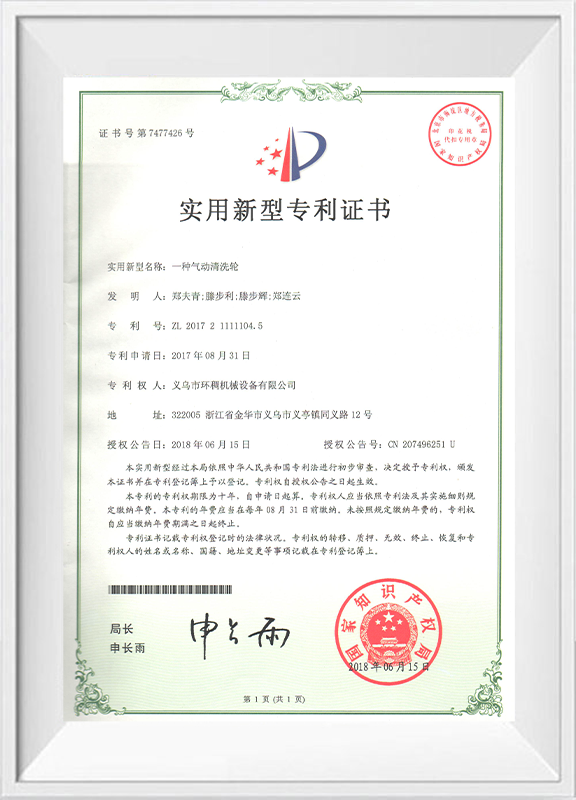
Certificate Of Honor
News
-
Walk the length of a modern syringe line and the number that decides whether the shift is profitable is rarely the headline speed printed on the datasheet. It is the number of tim...
READ MORE -
A line that runs four syringe formats will lose more time to changeover than to running. Walk the floor at shift change and the pattern is familiar: the printing station sits idle...
READ MORE -
A syringe line that runs three safety-cover variants, two prefilled formats, and a printed barrel for a different customer can lose more output during changeovers than during stea...
READ MORE -
Specialized automation for unique industries is rarely a catalog purchase. In medical disposables, the “unique” part is usually a syringe variant that behaves differently on the l...
READ MORE
Message Feedback
Syringe Printing & Assembly Machines Industry knowledge
Zhejiang Huanchou Machinery Equipment Co., Ltd. designs and builds integrated syringe printing and assembly equipment at our production base in Jinhua, Zhejiang. We have manufactured automation for disposable medical devices since 2008, and this range combines graduation-line printing, in-process inspection and component assembly on a single frame or across a synchronized multi-unit line.
As a Syringe Printing & Assembly Machines Manufacturer, we build two integrated configurations alongside our stand-alone printing machines, stand-alone assembly machines and blister packaging equipment, so a line can be matched to output target, cleanroom layout and inspection depth.
Two Integrated Configurations on the Same Process Sequence
Both machines run the same core sequence: barrels feed automatically, logos and graduation lines are printed, silicone oil is sprayed into the barrel, and the rubber stopper, plunger and needle are assembled. The difference lies in how those steps are distributed across frames and how much verification runs in-line.
| Configuration | Process architecture | Size range | In-line verification | Typical fit |
|---|---|---|---|---|
| HC-G019-LT printing-assembly machine | Feeding, printing, oil spraying and assembly on one frame under a single PLC | 1 ml to 50 ml, six size steps | PLC rejection of missing stopper, plunger or needle; optional visual inspection | Compact layouts; consolidating transfers between printing and assembly |
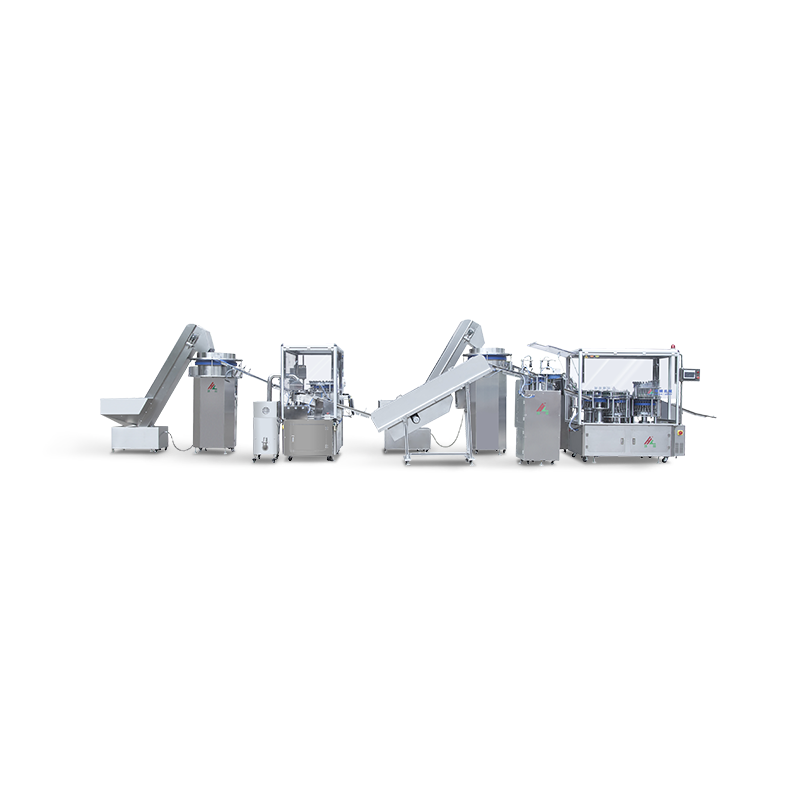
| HC-GZ017 printing-assembly integrated machine | Three units — roller printer, vision system, assembly machine — linked by photoelectric sensors, each with its own PLC | 1 ml to 50 ml, six size steps | Print inspection, inner-wall inspection, outlet assembly check | High-volume lines requiring print verification and low loss from a single unit stoppage |
HC-G019-LT: Printing and Assembly on One Frame
The Syringe Printing-Assembly Machine HC-G019-LT completes feeding, printing, silicone oil spraying and assembly in one enclosure. It runs Luer slip, Luer lock and eccentric tip barrels, and the circulating ink system keeps ink in motion to limit waste and solidification during short interruptions.
- Six size steps — 1 ml, 2–3 ml, 5 ml, 10 ml, 20 ml and 50 ml — at 320–370 pcs/min for the smaller formats, 300–340 pcs/min at 10 ml, 240–280 pcs/min at 20 ml and 140–180 pcs/min at 50 ml.
- Automatic removal of syringes without a rubber stopper, plunger or needle; an optional visual inspection system adds a further defect screen.
- Safety cover interlocked to an emergency stop, so the machine halts when the cover is opened and maintenance access stays controlled.
- Smaller installation footprint and fewer material transfers between the printing and assembly stages.
HC-GZ017: Modular Line with In-Line Vision
The HC-GZ017 Syringe Printing-Assembly Integrated Machine divides the process into three units joined by photoelectric detection: an automatic roller printing machine, a visual inspection system and an automatic assembly machine. Each unit carries its own PLC, so a module under maintenance can be isolated while the other two continue to produce.
- Print inspection removes misprinted barrels before assembly; inner-wall inspection rejects foreign material, yellow spots and black spots inside the barrel.
- Coordinated stop logic — a material-shortage signal from any unit stops the whole line, preventing empty stations and uncontrolled accumulation.
- Assembly outlet check rejects finished syringes without a needle, stopper or plunger before discharge.
- Finished-product discharge can be coupled to a blister packaging machine, extending automation from printing through to packaging.
- Unified operator interface across the three modules, with low-noise gear transmission for stable long runs.
Output by Barrel Size
Capacity is governed by barrel diameter, print station cycle time and the number of assembly stations engaged. The figures below are the working points we configure against; the size step and target output for a project are fixed together at the proposal stage.
| Nominal barrel size | HC-G019-LT output | HC-GZ017 output |
|---|---|---|
| 1 ml | 320–370 pcs/min | 300–330 pcs/min |
| 2–3 ml | 320–370 pcs/min | 300–330 pcs/min |
| 5 ml | 320–370 pcs/min | 300–330 pcs/min |
| 10 ml | 300–340 pcs/min | 240–260 pcs/min |
| 20 ml | 240–280 pcs/min | 220–240 pcs/min |
| 50 ml | 140–180 pcs/min | 140–160 pcs/min |
Utilities and Installation
- Rated supply 220 V / 50 Hz; 9 kW installed power on the HC-G019-LT and 7 kW on the HC-GZ017.
- Clean, dry compressed air at 0.4–0.6 MPa for both configurations.
- Footprint 6600 × 2570 × 2250 mm (HC-G019-LT, 2000 kg) and 8890 × 2490 × 2150 mm (HC-GZ017, 2730 kg).
- Layout planning covers barrel feeder position, ink and silicone oil access, reject bins and the discharge interface to packaging.
Product-Contact Materials, Cleanroom Build and Safety
On the integrated line, product-contact parts are made in SUS304 stainless steel and MC nylon, and the conveyor belt uses FDA-certified food-grade material. Frames receive anti-corrosion and rust-prevention treatment, and welds and connections are finished smooth and flush so the barrel path and cleanroom surfaces do not trap residue.
- Full-line safety covers with cover-open stop function, built to CE safety certification standards.
- Line design and manufacture to cleanroom standards for continuous operation.
- Guarding, emergency-stop behaviour and maintenance access points reviewed against your room layout before shipment.
Controls, Inspection and Downstream Integration
Each module is programmed around the print content, the reject criteria and the handshake with neighbouring equipment. That architecture is what allows the printing machine, inspection system and assembly machine to run as one line without losing independent serviceability.
- Independent PLC per unit with coordinated start, stop and fault display on the shared interface.
- Vision inspection specified as an option on the HC-G019-LT and as a standard unit on the HC-GZ017.
- Discharge designed to align with blister packaging for a continuous printing-to-packaging flow.
- Changeover between barrel formats handled by matching feed, printing and assembly elements to the confirmed size step.
Information We Use to Configure Your Solution
A quote is prepared from the working point rather than from a catalogue number. The following inputs let us fix the model, station count and interface scope before manufacture begins.
- Barrel sizes and tip type — Luer slip, Luer lock or eccentric — including the primary volume that will carry most production hours.
- Barrel and plunger material, moulded dimensions and any supplier-specific geometry at the flange or nozzle.
- Print content: logo, graduation lines, colour count and required print position tolerance.
- Target output and shift pattern, with peak demand separated from average demand.
- Reject criteria, including whether inner-wall inspection or full print verification is mandatory.
- Cleanroom class, available floor area and the position of upstream moulding and downstream packaging.
- Utilities on site — voltage, frequency, air quality and capacity — plus the packaging machine interface.
- Documentation language, operator training needs and the acceptance criteria agreed with your project team.
Quality Control, Acceptance and Support
Manufacturing runs under an ISO9001 quality system, and CE certification is held for our syringe printing machines, syringe assembly machines and blister packing machines. Our R&D team of 23 engineers, close to 40% of the workforce, holds 47 patents across printing, feeding and assembly mechanisms — the engineering base behind the integrated configurations.
- Acceptance items and documentation scope agreed before shipment, covering output at each size step and reject behaviour.
- Installation, operator training and remote assistance from our service engineers, with rapid response for line stoppages.
- Wear and change parts — rubber rollers, embossing seals and printing components — supplied through our Syringe Machine Components & Accessories range.
- Customization requests handled by the same engineering group that builds the standard machines, from feed formats to inspection scope.
Frequently Asked Questions
What syringe sizes can Huanchou printing-assembly machines run?
Both configurations cover 1 ml, 2–3 ml, 5 ml, 10 ml, 20 ml and 50 ml barrels in Luer slip, Luer lock and eccentric tip versions. The machine is built around the size steps confirmed for your product family.
What distinguishes the HC-G019-LT from the HC-GZ017?
The HC-G019-LT performs printing, oil spraying and assembly on a single frame with an optional vision system. The HC-GZ017 separates printing, vision inspection and assembly into three PLC-controlled units linked by photoelectric sensors, adding print and inner-wall inspection as part of the line.
Does a unit stoppage on the integrated line halt production entirely?
No. Each of the three units on the HC-GZ017 runs independently, so one can be serviced while the others continue. A material-shortage signal from any unit does stop the whole line, which prevents empty stations and disordered accumulation.
What utilities must be available on site?
Both machines run on 220 V / 50 Hz and 0.4–0.6 MPa clean dry air. Installed power is 9 kW for the HC-G019-LT and 7 kW for the HC-GZ017, with floor space of roughly 6.6 m and 8.9 m length respectively.
Can the line connect to our packaging equipment?
The finished-product discharge of the HC-GZ017 can be coupled directly to a blister packaging machine, giving a continuous flow from barrel printing through to packed product. The interface position is fixed during layout planning.
What support is provided after installation?
Our service engineers handle installation and operator training, and provide remote assistance with rapid response when a line issue arises. Replacement rollers, seals and printing parts are supplied from our components range as wear items.

 Syringe Printing & Assembly Machines Manufacturer
Syringe Printing & Assembly Machines Factory
Copyright ©
Zhejiang Huanchou Machinery Equipment Co.,Ltd.
All Rights Reserved.