中文简体
-
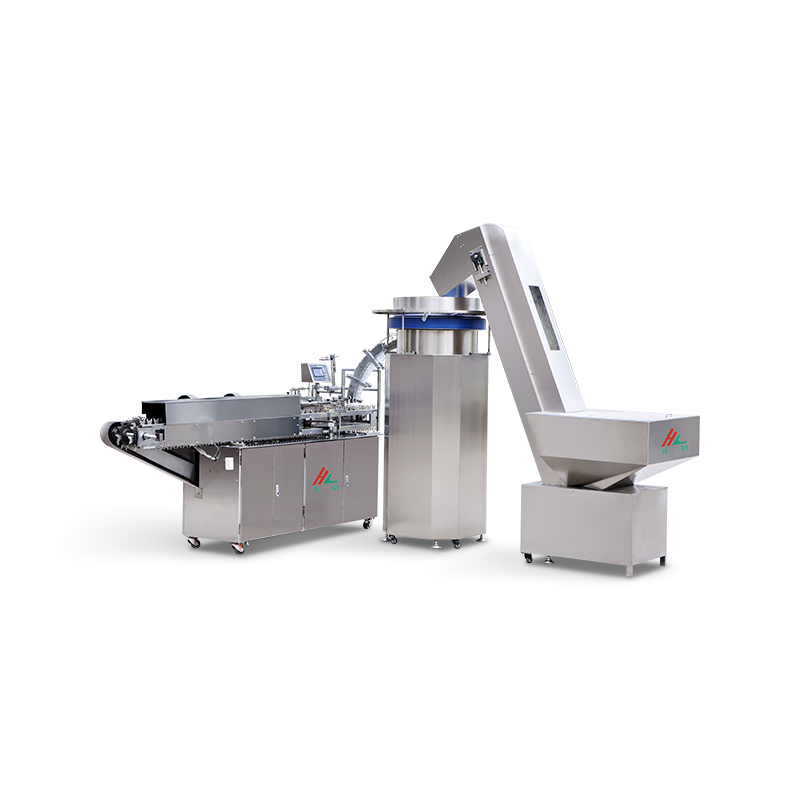
HSY-108
Syringe Screen Printing Machine

The Syringe Machine Components & Accessories range encompasses the auxiliary equipment and critical consumables required for syringe printing and assembly lines. This includes functional modules such as automatic silicone oil sprayers, centrifugal feed hoppers, negative-pressure leak testers, and screen printing machines, alongside printing consumables like steel stamps, rubber rollers, inks, and squeegees. Automatic silicone oil sprayers apply silicone oil to the inner walls of syringe barrels, minimizing manual intervention and ensuring uniform lubrication. Centrifugal feed hoppers utilize centrifugal sorting and feeding principles to automatically align and continuously supply bulk components—such as barrels, rubber stoppers, plungers, and needles—thereby ensuring the stable, continuous operation of the main production equipment. Negative-pressure leak testers verify the seal integrity of assembled syringes, rejecting defective units to guarantee compliance with medical device standards. Screen printing machines employ traditional screen printing technology to meet diverse customer requirements for specific printing effects.
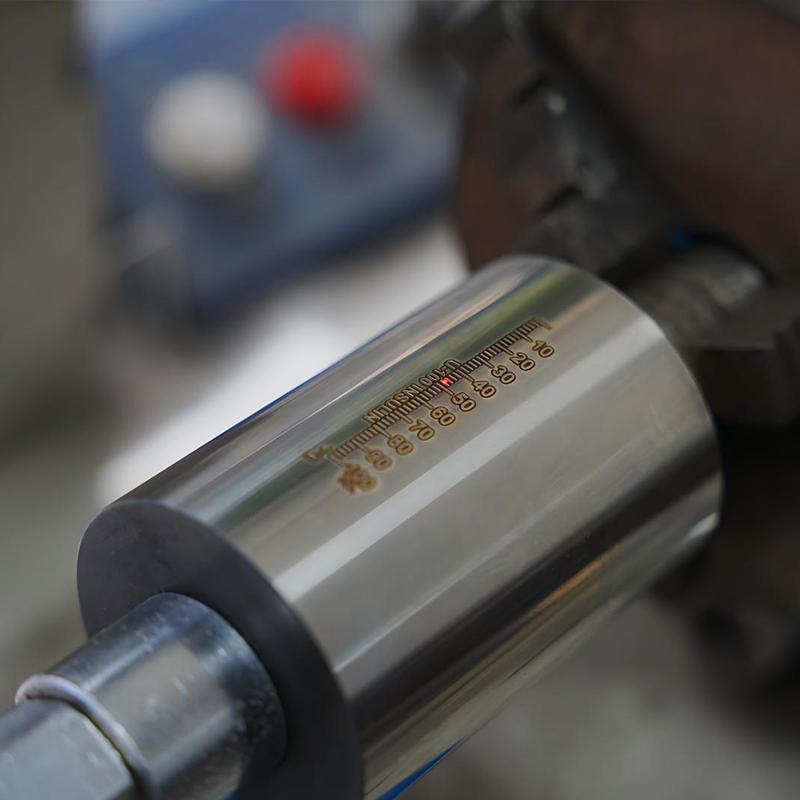
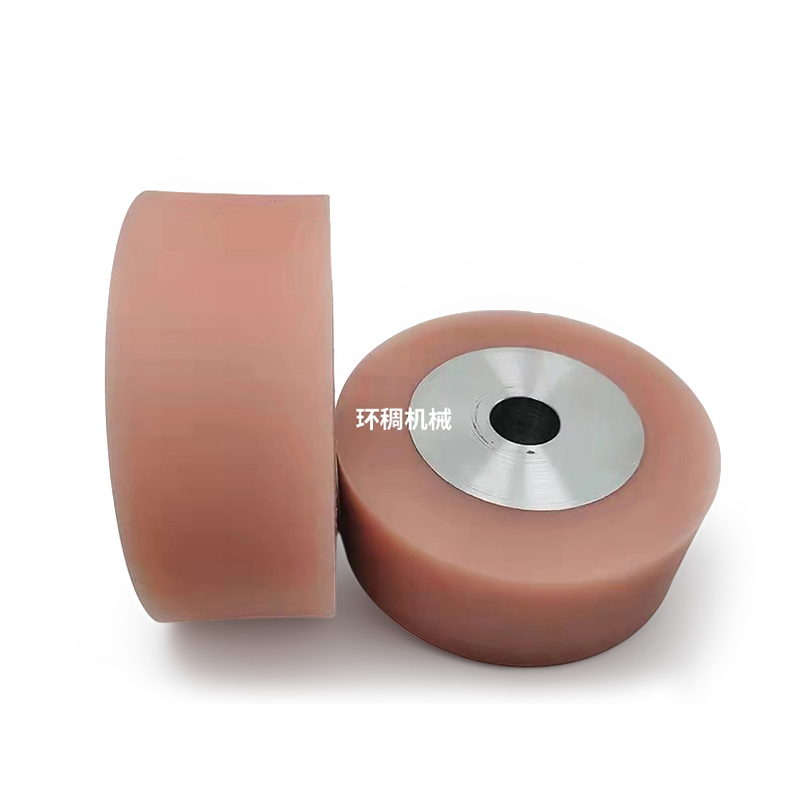
Steel stamps and rubber rollers serve as core consumables for roll-printing equipment; manufactured from high-quality alloy steel and silicone, they offer precise positioning and stable wear resistance. The accompanying inks and squeegees undergo rigorous selection to ensure print clarity and high product yield. These functional modules and accessories are fully compatible with various series of Huanchou syringe printing, assembly, and packaging equipment, satisfying diverse customer needs for customized and precision-configured production lines.
Company
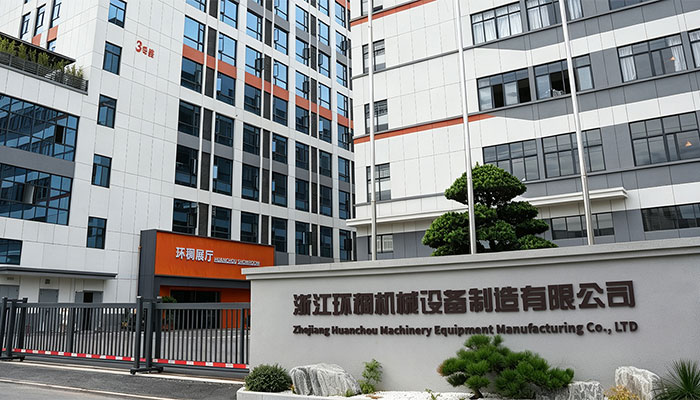
Zhejiang Huanchou Machinery Equipment Co.,Ltd.
Founded in 2008 and recognized as a National High-Tech Enterprise, Zhejiang Huanchou Mechanical Equipment Manufacturing Co., Ltd. specializes in R&D and manufacturing of automation equipment for disposable medical devices. Zhejiang Huanchou Mechanical Equipment Manufacturing Co., Ltd is a China Syringe Machine Components & Accessories Manufacturer and Syringe Machine Components & Accessories Factory, our core products include automatic syringe assembly machines, self-destruct syringe assembly machines, automatic pad printing machines, and automatic syringe rolling printing machines.
With a dedicated R&D team of 23 professionals—nearly 40% of our total workforce—and ISO9001 certification, Huanchou serves clients across Europe, America, the Middle East, and Southeast Asia. Our new 23-mu manufacturing facility, designed to produce 1,000 syringe assembly line machines annually, is scheduled for full operation by the end of 2026, with an estimated annual output exceeding RMB 300 million.
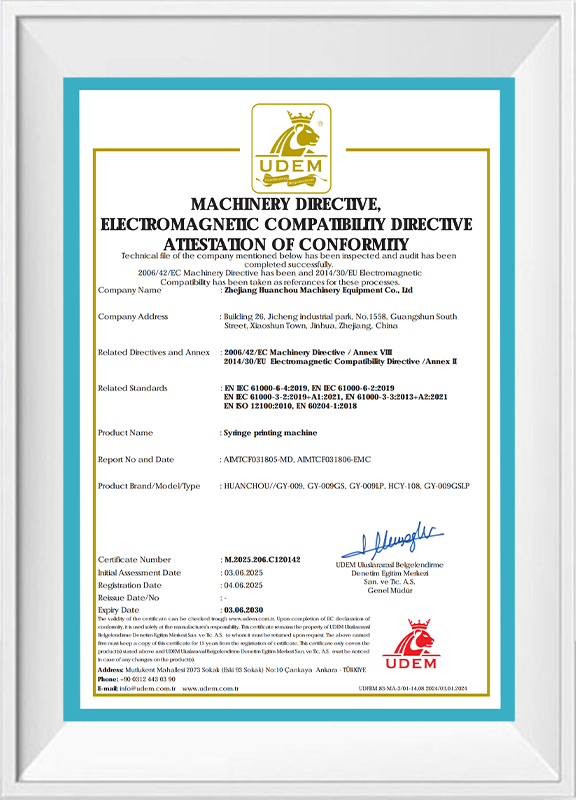
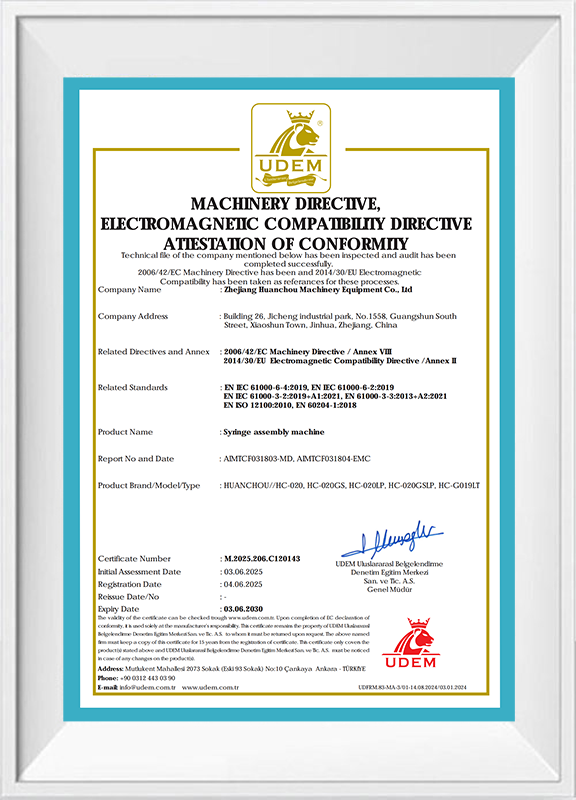
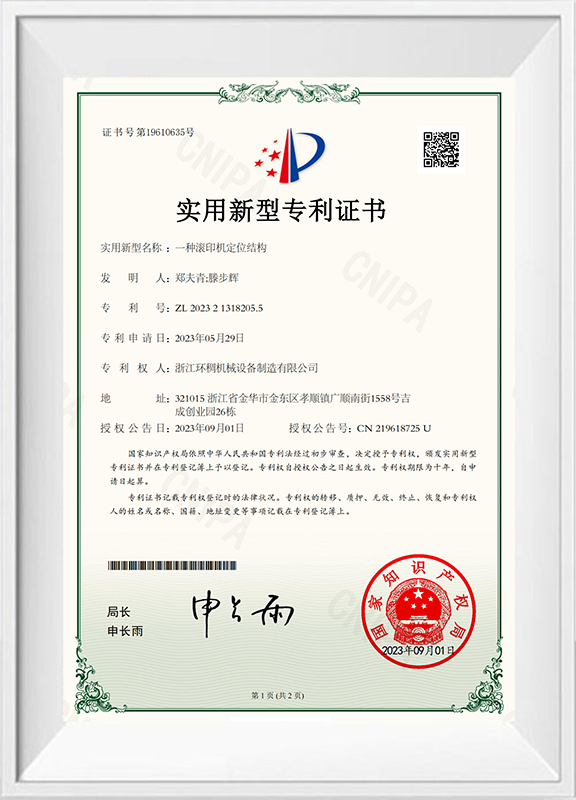
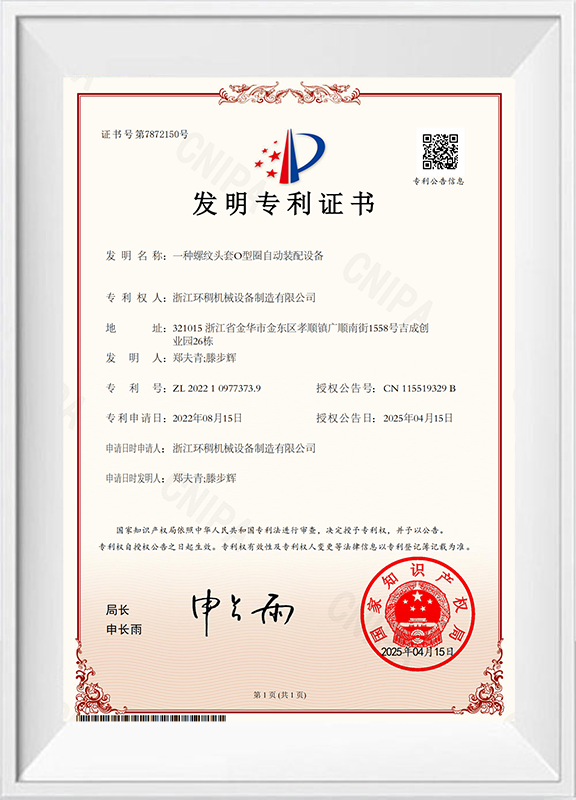
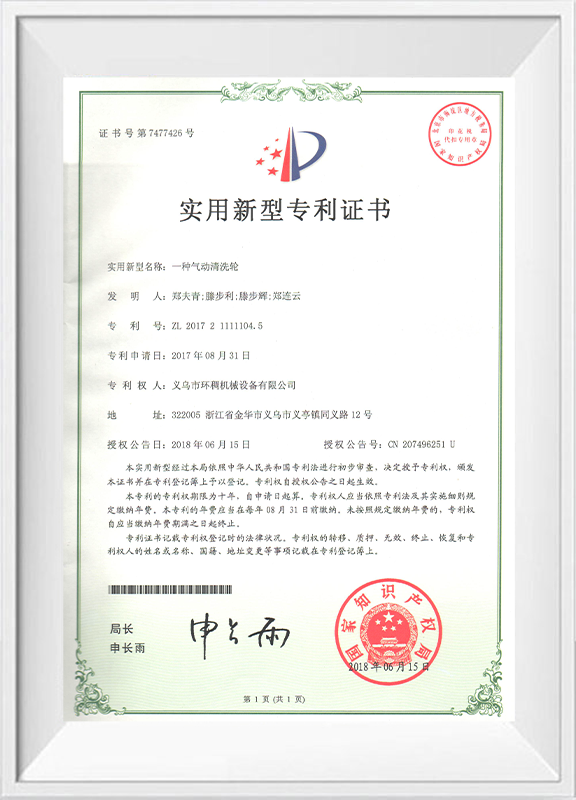
Certificate Of Honor
News
-
Walk the length of a modern syringe line and the number that decides whether the shift is profitable is rarely the headline speed printed on the datasheet. It is the number of tim...
READ MORE -
A line that runs four syringe formats will lose more time to changeover than to running. Walk the floor at shift change and the pattern is familiar: the printing station sits idle...
READ MORE -
A syringe line that runs three safety-cover variants, two prefilled formats, and a printed barrel for a different customer can lose more output during changeovers than during stea...
READ MORE -
Specialized automation for unique industries is rarely a catalog purchase. In medical disposables, the “unique” part is usually a syringe variant that behaves differently on the l...
READ MORE
Message Feedback
Syringe Machine Components & Accessories Industry knowledge
Bolun Press manufactures the modules, tooling and wear parts that keep a syringe printing and assembly line at rate: automatic silicone oil spraying units, centrifugal feed hoppers, negative-pressure airtightness testers, a dedicated screen printing station, and the steel stamps, silicone rollers, inks and squeegees that printing stations consume shift after shift. Every item in this range is built to the same infeed, transfer and control interfaces as our Syringe Printing Machines Manufacturer and Syringe Assembly Machines Manufacturer lines, so a module can be added to a running line or specified from the start of a new project.
Our role as a Syringe Machine Components & Accessories Manufacturer is to make the small, exact operations inside a line repeatable without an operator standing over them: lubricate the barrel, align and feed the components, print the graduation, test the seal. Functional modules run in-line with the main machines, while consumables are the parts that define print quality and are replaced on a known wear cycle.
Functional Modules for Lubrication, Feeding and Inspection
HC-P024 Automatic Silicone Oil Spraying Machine
A precision nozzle set and pressure-regulated atomising circuit apply a controlled film of silicone oil to barrel inner walls and plunger surfaces. Spray time, atomisation pressure and spray position are set on the touchscreen, and photoelectric sensors stop the unit when the feed runs empty and restart it once material is replenished. Wetted parts are stainless steel and food-grade material, and the unit is built for continuous operation in a cleanroom.
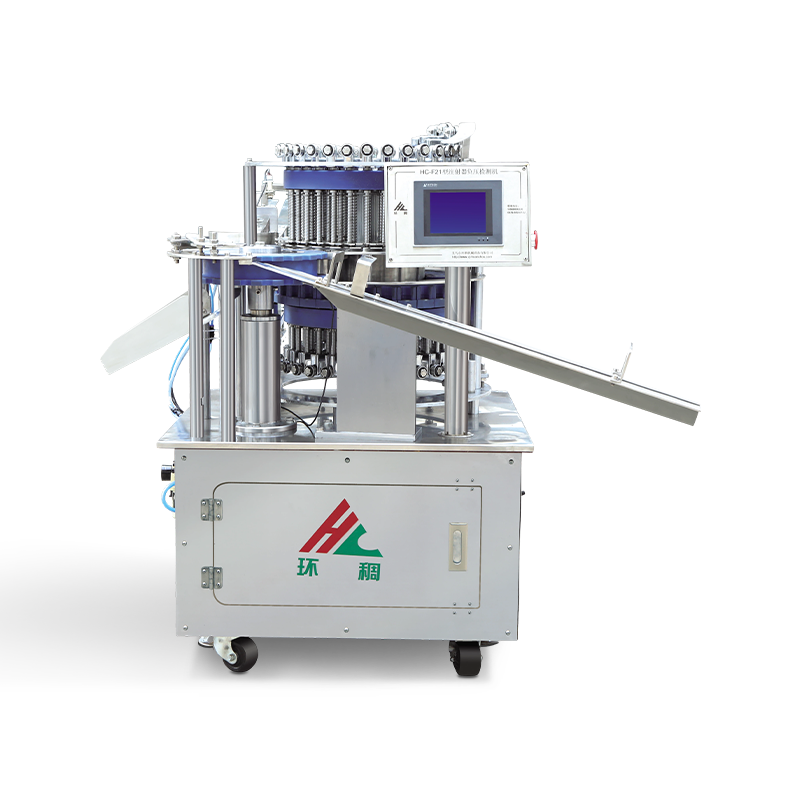
HC-F21 Syringe Negative-Pressure Airtightness Tester
Each assembled syringe is placed in a sealed chamber, a vacuum pump draws the chamber into negative pressure, and the pressure curve is monitored in real time. A PLC compares the curve against the pass threshold set for that syringe specification and rejects leaking units automatically. Luer slip, luer lock and eccentric tip bodies can all be handled, either in-line directly after the assembly machine or as a stand-alone inspection station.
Centrifuge and Stock Bin
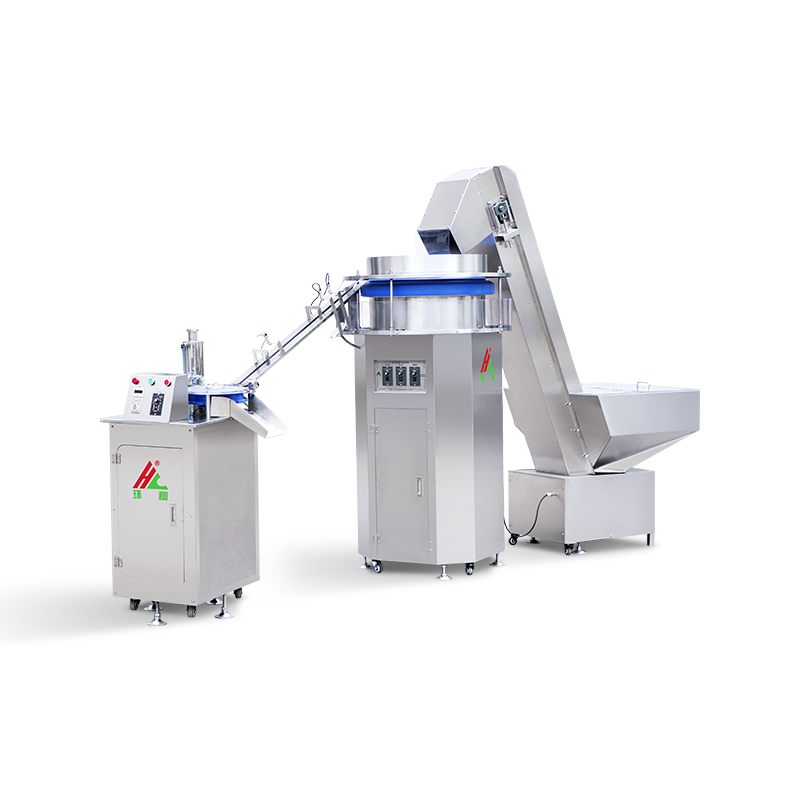
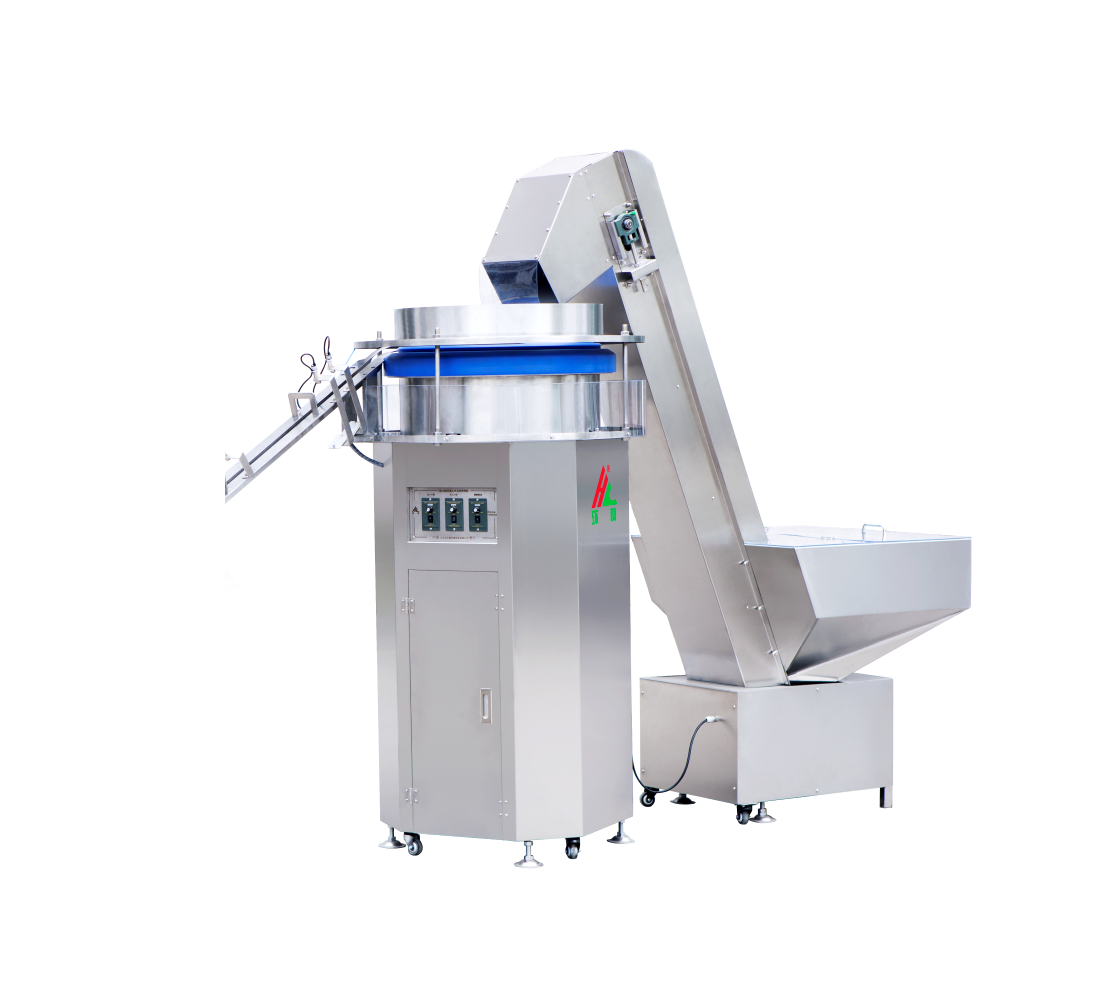
Centrifugal sorting aligns bulk components — barrels, rubber stoppers, plungers and needles — and delivers them oriented and continuously to the infeed of the main machine. A stock bin buffers the charge so that refilling does not interrupt the production rate, and manual loading of the hopper is reduced to periodic top-ups.
HSY-108 Syringe Screen Printing Machine
Where a job needs multi-colour overprinting, dense graphics or full coverage over a larger surface, screen printing is the appropriate process. Ink is forced through the open pattern of the screen plate by a squeegee, giving controllable layer thickness, sharp edges and high colour saturation — including fine graduation numbers. Variable-frequency speed control with photoelectric positioning fixes print placement, and an integrated drying unit cures the ink before downstream handling.
Printing Consumables: Stamps, Rollers, Inks and Squeegees
Embossing seals and rubber rollers are the working parts of the pad and roller printing stations, and their condition governs how cleanly a graduation line or logo lands on the barrel. Seals are cut from alloy steel for precise image positioning and stable wear resistance; rollers are produced in silicone to hold ink release and resist abrasion across long runs. Inks and squeegees are selected around the print job — legibility of small graduation numbers, adhesion after drying, and yield across the batch.
- Embossing seals for pad printing stations, alloy steel, replaceable as wear items
- Silicone rubber rollers for roll printing and pad printing equipment
- Screen plates, squeegees and printing inks matched to the marking requirement
- Nozzle and filter sets for silicone oil spraying units
Range Overview
| Item | Function in the Line | Position | Key Figures |
|---|---|---|---|
| HC-P024 oil spraying machine | Barrel and plunger lubrication | Before assembly | 1–60 ml; 140–260 pcs/min; 1 kW |
| HC-F21 airtightness tester | Seal integrity, automatic rejection | After assembly | PLC thresholds per syringe specification |
| HSY-108 screen printing machine | Multi-colour scales, logos, warning text | Before or after assembly | 50–80 pcs/min; 4 kW; 3000×650×1500 mm |
| Centrifuge and stock bin | Sorting, orientation and buffered feed | Line infeed | Barrels, stoppers, plungers, needles |
| Embossing seal | Pad printing image carrier | Pad printing station | Alloy steel, wear resistant |
| Rubber roller | Ink transfer on roller printers | Roll printing station | Silicone, abrasion resistant |
| Inks and squeegees | Print clarity and adhesion | Screen and pad printing | Matched to substrate and marking |
Capacity by Syringe Size
Rated rates are quoted per size class because the handling cycle lengthens as barrel diameter and stroke increase. The figures below are the working points we build against; actual output on your line depends on infeed stability, print content and the acceptance criteria agreed for the project.
| Size Class | HC-P024 Spraying | HSY-108 Screen Printing |
|---|---|---|
| 1–2 ml | 220 pcs/min | 50–60 pcs/min |
| 3–5 ml | 260 pcs/min | 60–80 pcs/min |
| 10–20 ml | 220 pcs/min | 60–70 pcs/min |
| 30 ml | 160 pcs/min | 50–60 pcs/min |
| 50 / 60 ml | 140 pcs/min | 50–60 pcs/min |
Controls and Line Integration
Modules are controlled by PLC or dedicated control boards rather than fixed-timing relay logic, which is what allows settings to be stored per product and recalled at changeover. Photoelectric sensing handles material presence and position, so the sprayer stops and restarts with the feed and the screen printer registers each barrel before printing. Status and reject signals are wired to the host machine so that in-line operation stays coordinated with the assembly or printing cycle.
- Touchscreen parameter entry for spray time, atomisation pressure and spray position
- Programmable test pressure and test time on the airtightness tester, stored per syringe type
- Variable-frequency drive with photoelectric positioning on the screen printer
- Adjustable positioning fixtures to switch between barrel sizes and shapes
- Stand-alone operation or in-line connection with printing, assembly and packaging equipment
Installation, Utilities and Acceptance
Units are supplied for a 220 V / 50 Hz supply, with the sprayer rated at 1 kW and the screen printing machine at 4 kW including its drying section. Footprints are 3600×1050×2150 mm for the HC-P024 and 3000×650×1500 mm for the HSY-108, so both fit a cleanroom aisle without a separate enclosure. Atomisation air for the sprayer and vacuum for the tester are the two services that must be routed before commissioning.
- Floor levelling and transfer height matched to the adjacent machine before installation
- Factory trial on production barrels, stoppers and plungers, with spray setting, print position and leak threshold fixed on real parts
- Acceptance by size class, using the rated rate and the agreed pass criteria for oil deposit, print registration and rejection rate
- Operator training on parameter entry, changeover of fixtures and screen plates, and daily checks
Maintenance, Spares and Serviceability
The wear map of this range is short and predictable, which keeps planned downtime manageable. Spray nozzles and the oil circuit need periodic checking for blockage, and the filtration system is cleaned according to how the silicone oil viscosity shifts. Screen plates must be cleaned and stored correctly so dried ink does not close the mesh, while squeegee pressure and screen tension are checked to protect plate life and print consistency.
- Replaceable embossing seals, rubber rollers and squeegees held as line spares
- Nozzle and filter sets for spraying units, replaced on condition rather than on a fixed calendar
- Remote technical assistance for parameter and fault diagnosis, with on-site support arranged for installation and commissioning
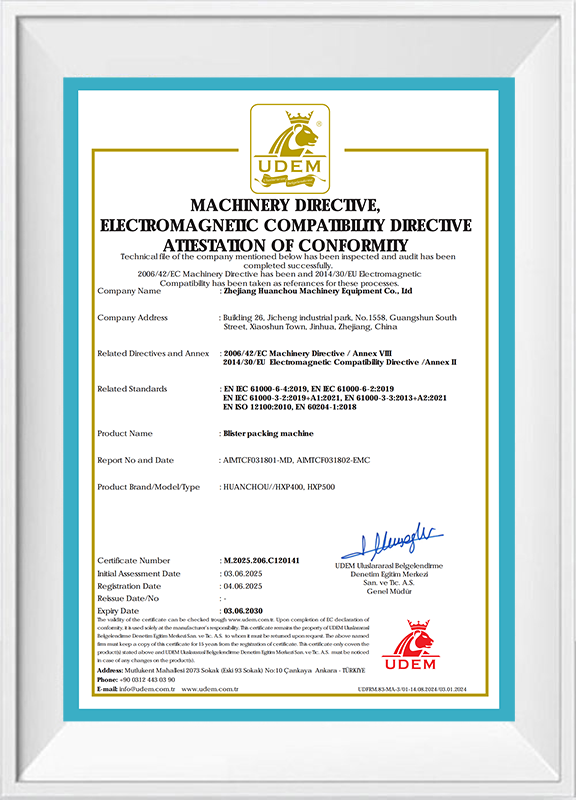
Bolun Press was founded in 2008 and operates from a production base in Jinhua, Zhejiang, with a 23-strong R&D team and 47 granted patents covering syringe printing, assembly and oil-spraying mechanisms. We work to an ISO9001 quality system, and our printing, assembly and blister packaging machines carry CE certification.
Information We Use to Configure Your Solution
A module is only as good as the fit to the line it joins. We build the proposal from the working point rather than from a catalogue number, so the inputs below are what turn a requirement into a configured unit and a fixed scope of supply.
- Syringe size class and annual or shift volume to be covered
- Barrel and stopper material, tip type (luer slip, luer lock, eccentric) and plunger specification
- Printed content: graduation lines, number of colours, logos, warning text, print area
- Whether the unit runs stand-alone or in-line, plus the model and interface details of the existing machine
- Cleanroom class, available utilities and floor plan with transfer heights
- Rejection criteria, inspection coverage and the documentation set required for your quality file
Existing lines built around other equipment can still be supported, since the modules are matched to the transfer and control interfaces of the host machine. Where a complete line is being planned, the same accessories are specified together with our Syringe Manufacturing Machine Supplier range so that infeed heights, pitch and reject handling are resolved once rather than at commissioning.
Frequently Asked Questions
Can these modules be fitted to a line that was not built by Bolun Press?
Yes. We confirm transfer height, component pitch and the control handshake from your line drawings and photographs before the unit is built, then match the infeed and outfeed accordingly. The sprayer and tester are also supplied as stand-alone stations where in-line integration is not required.
Which syringe sizes does the range cover?
The size classes we build for are 1–2 ml, 3–5 ml, 10–20 ml, 30 ml and 50/60 ml. Fixtures, spray parameters and test thresholds are set per class, so a line running several sizes is configured with changeover parts rather than a compromise setting.
How is the silicone oil quantity controlled and kept consistent?
Oil is applied through precision nozzles fed by a pressure-regulated atomising circuit, with spray time, atomisation pressure and spray position entered on the touchscreen. Fine atomisation reduces localised pooling and missed areas, which is what keeps plunger movement smooth from the first unit of a batch to the last.
What does the negative-pressure tester actually detect?
It detects leaks in the fit between barrel, rubber stopper and plunger — gaps, scratches, or a stopper that is not seated correctly. Any leak disturbs the pressure curve inside the test chamber, and the PLC judges the unit against the threshold set for that syringe specification and rejects it.
When should we choose screen printing rather than roller printing?
Screen printing is the better fit for multi-colour overprinting, complex graphics or coverage over a larger surface, and it holds fine graduation numbers clearly. Roller printing remains faster for high-volume single-colour graduation lines, which is why we supply both processes and configure the line around the printed content.
Which spare parts should be kept on site?
For a typical line: embossing seals, silicone rubber rollers, squeegees, screen plates, plus nozzle and filter sets for the spraying unit. We confirm the recommended spares list with the quotation so that wear items are held before the first production run rather than ordered after a stoppage.