

 中文简体
Walk the length of a modern syringe line and the number that decides whether the shift is profitable is rarely the headline speed printed on the datasheet. It is the number of times a person has to reach into the process. Every reach-in is a chance for a drop...
READ MORE
Centrifuge And Stock Bin
Introduction
Technical Parameters
Company
Zhejiang Huanchou Machinery Equipment Co.,Ltd.
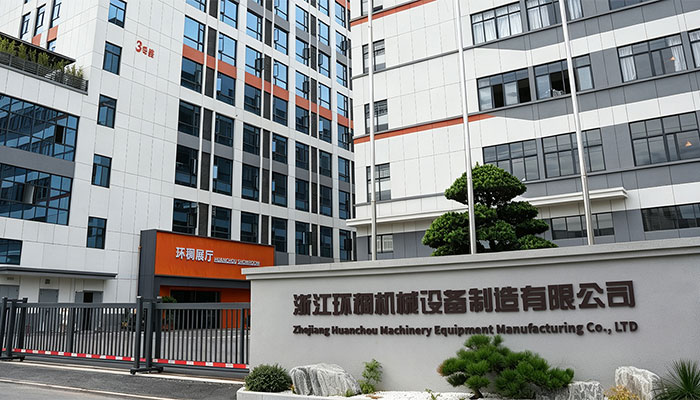
Founded in 2008 and recognized as a National High-Tech Enterprise, Zhejiang Huanchou Mechanical Equipment Manufacturing Co., Ltd. specializes in R&D and manufacturing of automation equipment for disposable medical devices. Zhejiang Huanchou Mechanical Equipment Manufacturing Co., Ltd is a China Centrifuge And Stock Bin Manufacturer and Centrifuge And Stock Bin Supplier, our core products include automatic syringe assembly machines, self-destruct syringe assembly machines, automatic pad printing machines, and automatic syringe rolling printing machines.
With a dedicated R&D team of 23 professionals—nearly 40% of our total workforce—and ISO9001 certification, Huanchou serves clients across Europe, America, the Middle East, and Southeast Asia. Our new 23-mu manufacturing facility, designed to produce 1,000 syringe assembly line machines annually, is scheduled for full operation by the end of 2026, with an estimated annual output exceeding RMB 300 million.
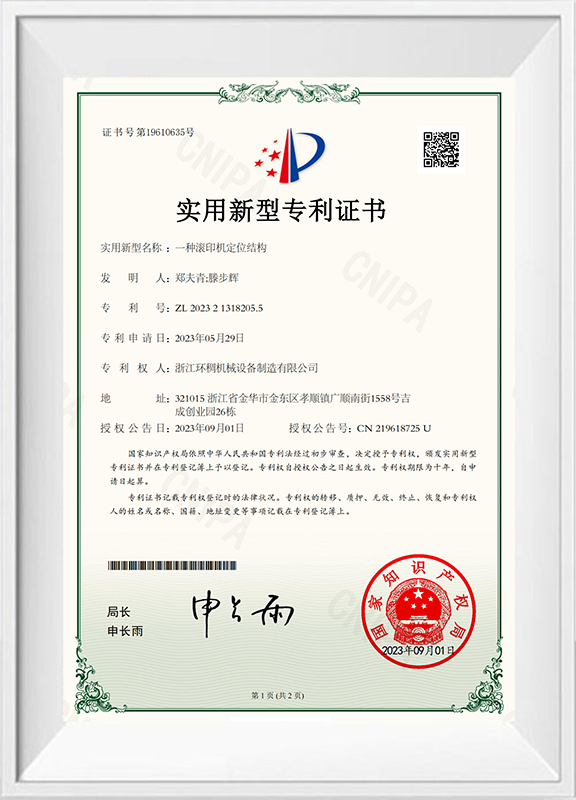
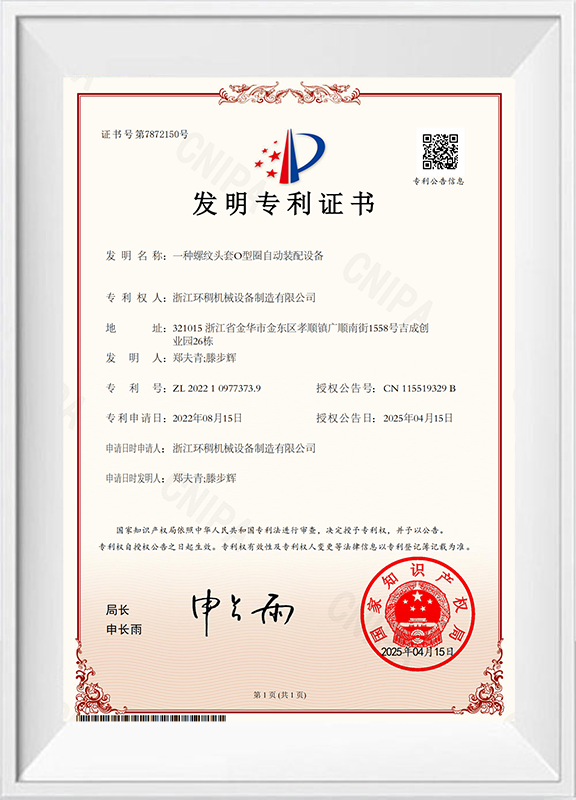
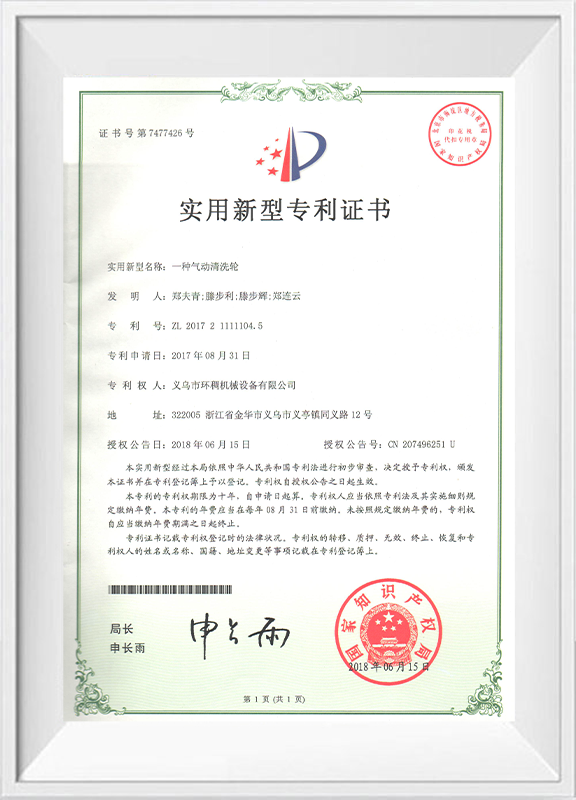
Certificate Of Honor
News
-
-
A line that runs four syringe formats will lose more time to changeover than to running. Walk the floor at shift change and the pattern is familiar: the printing station sits idle waiting for format parts, the assembly station runs one product at full speed, ...
READ MORE -
A syringe line that runs three safety-cover variants, two prefilled formats, and a printed barrel for a different customer can lose more output during changeovers than during steady running. The practical fix is not simply a faster machine. It is a custom aut...
READ MORE
Message Feedback
Centrifuge And Stock Bin Industry knowledge
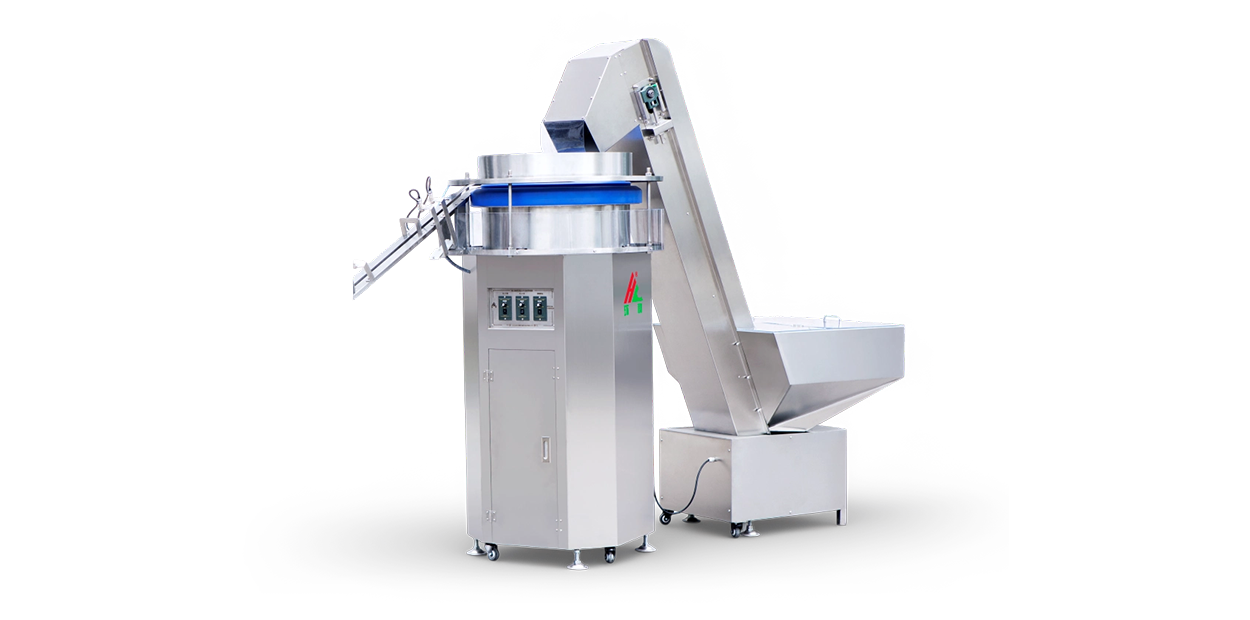
Zhejiang Huanchou Machinery Equipment Co., Ltd. has designed and built automation equipment for disposable medical devices since 2008, and our component and accessory range exists to keep those lines producing between major overhauls. The Centrifuge And Stock Bin is a line-side unit from that range: a buffered component store combined with a controlled centrifugal stage, positioned ahead of the infeed of a syringe printing or assembly machine and matched to the rate at which that machine consumes parts.
ISO 9001 quality system · CE-certified machines · National High-Tech Enterprise · 18 years of medical device automation
Two Duties in One Line-Side Unit
Barrels, plungers and needle assemblies reach the line in trays, cartons or washing cassettes, and the printing or assembly machine needs them presented one at a time, in one orientation, without interruption. The stock bin section absorbs that difference in supply rhythm; the centrifugal section handles the separation duty that the process calls for at that point in the line.
- Buffered storage. A working reserve is held above the feed track so a tray change, a wash cycle or an operator break does not starve the machine.
- Orientation at the outlet. Bin geometry, guide rails and the discharge gate are shaped to the flange and barrel diameter being handled, so parts leave in a single attitude.
- Controlled centrifugal action. Rotation speed and run time are set to the fluid or part being treated, so the separation stage is repeatable rather than operator-dependent.
- Status signals to the line. Low-level, jam and ready states are wired to the host machine so the two units behave as one station.
Where This Unit Sits in Our Range
We supply the Centrifuge And Stock Bin alongside the other line-side items in our Syringe Machine Components & Accessories range, so a line can be equipped, extended or re-tooled from a single technical source.
| Unit | Duty on the line | Typical position |
|---|---|---|
| Centrifuge And Stock Bin | Buffers components and applies controlled centrifugal separation | Ahead of printing or assembly infeed |
| Syringe Negative-Pressure Airtightness Tester | Leak and seal verification on finished syringes | End of assembly, before packing |
| Syringe Screen Printing Machine | Scale and logo printing on barrels | Between moulding and assembly |
| Embossing Seal for Pad Printing Machines | Transfers graduation and mark images to the pad | Printing station, consumable |
| Rubber Roller for Pad Printing Machines | Ink transfer and doctoring on the printing head | Printing station, wear part |
Configuration Choices We Engineer
Every unit is assembled to the part it will handle and the machine it will serve. These are the decisions we settle with your project team before drawings are released:
- Bin volume and internal geometry, set from part size and the buffer minutes you want at rated line speed.
- Outlet gate, chute and discharge height, matched to the existing feed track rather than requiring a new one.
- Drive and speed range for the centrifugal stage, with run time set per batch.
- Frame type: free-standing with castors, or bolted to the host machine frame for a fixed line layout.
- Control interface: standalone push-button panel, or signal exchange with the line PLC.
- Guarding and interlock arrangement consistent with the safety concept of the surrounding machine.
Contact Materials and Cleanability
Because the unit handles components that go on to contact a patient, the product path is treated as a hygiene boundary. Bin surfaces that touch parts are executed in stainless steel or medical-grade polymer, and guides and gate parts are removable without tools for cleaning between batches.
- Frame and enclosure in brushed stainless steel with a smooth, wipe-down finish.
- Non-shedding guide and gate materials selected for the barrel polymer being run.
- No exposed lubricant in or above the component path.
- Rounded internal corners on the bin so a wipe-down reaches every surface that parts contact.
Specifications We Fix Before Build
| Parameter | What it governs |
|---|---|
| Part family and dimensions | Bin geometry, gate opening and outlet orientation |
| Line rate and buffer target | Bin volume and refill interval at rated output |
| Rotation speed and run time | Separation result and cycle time per batch |
| Host machine interface | Signal type, connector position and handshake logic |
| Utilities | Supply voltage, compressed air demand and connection points |
| Footprint and layout | Frame size, access side and clearance for cleaning |
Integration with Printing and Assembly Machines
The unit is normally specified together with the machine it feeds. On a new line we coordinate it with our syringe printing machines or our syringe assembly machines, so the discharge height, gate timing and fault signals are engineered as part of the same station. For an existing machine, we work from its feed-track drawing and control schematic and build the interface to suit.
Where the bin feeds a printing station, it is sized so that printed barrels are not held long enough to create ink-handling problems; where it feeds an assembly station, the priority shifts to a steady, single-orientation supply of barrels, plungers or needles.
Build, Testing and Documentation
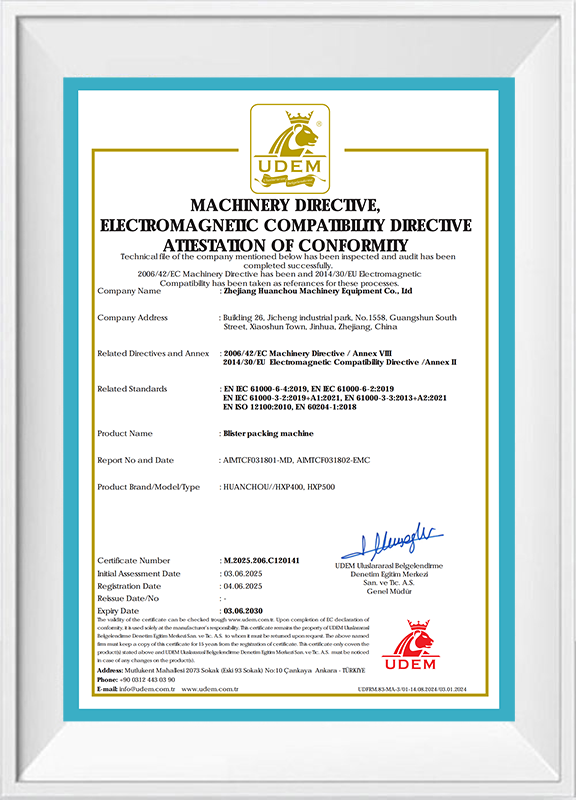
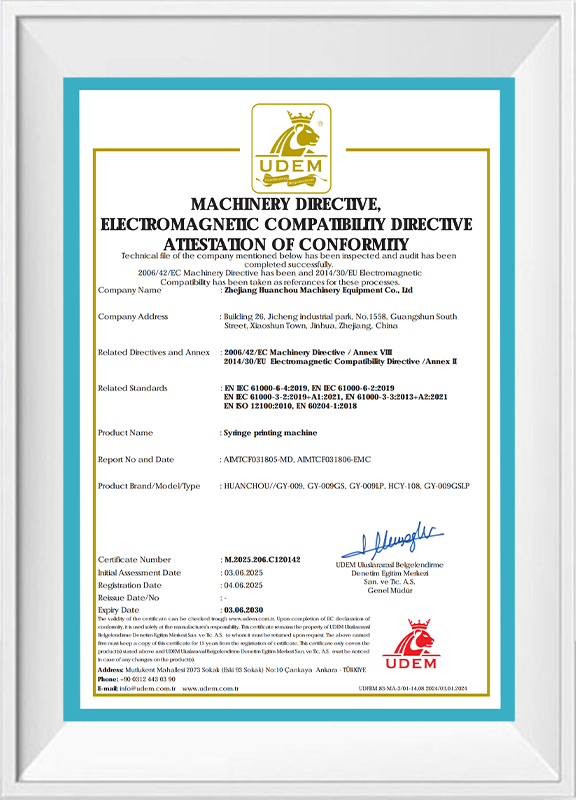
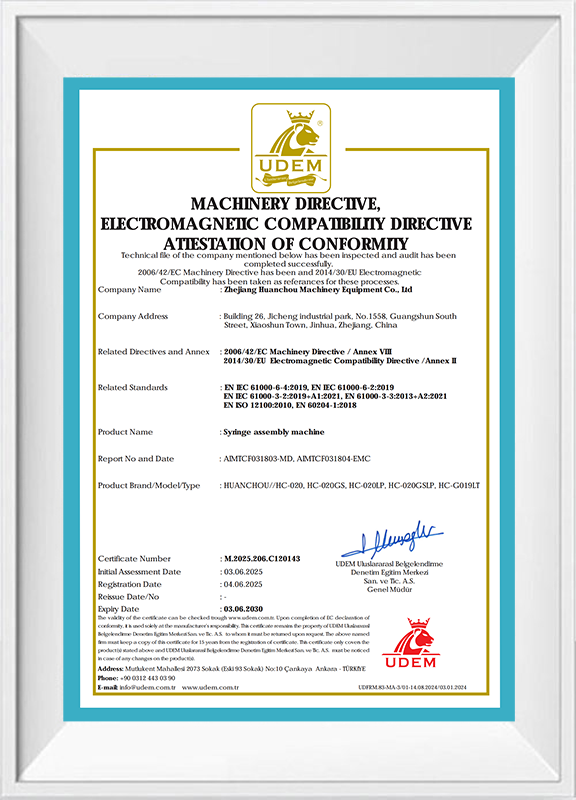
We manufacture under an ISO 9001 quality system in our own workshops, and our machines carry CE certification. Each unit is assembled, wired and run before dispatch, with the checks agreed at order stage recorded against the machine serial number.
- Incoming inspection of stainless sheet, drive components and controls before assembly.
- Run-in with your components or representative samples where supplied, so gate timing and outlet orientation are proven before packing.
- Documentation package covering layout drawing, electrical and pneumatic schematics, operating instructions and the spare-parts list.
- Pre-shipment inspection arranged with your nominated inspector when acceptance testing is part of the contract.
Maintenance, Spares and Operator Support
The consumable side of this unit is small: gate and guide parts, drive belts where fitted, and the sensors at the low-level and discharge points. All are listed with part numbers in the documentation, and we hold the drawings for every unit we build so a replacement matches the original geometry.
Installation, operator training and remote assistance are part of our after-sales support, and our engineering team can review control logic remotely when a fault is reported, which shortens the time a line spends waiting for an answer.
Information We Use to Configure Your Solution
- Component drawings or samples: barrel diameter and flange, plunger type, needle assembly if applicable.
- The machine the unit will serve, with feed-track height and control interface details.
- Rated line speed and the buffer time you want between refills.
- The separation duty at that stage and the fluid or residue involved.
- Available floor area, access side and supply voltage.
- Cleaning method used in the room, and any documentation or acceptance requirements.
Our Centrifuge And Stock Bin manufacturer team in Jinhua reviews these points and returns a configuration drawing and quotation rather than a catalogue reference.
Frequently Asked Questions
What does the Centrifuge And Stock Bin do on a syringe line?
It holds a working reserve of components above the feed track and applies controlled centrifugal action at the same station, so the printing or assembly machine receives parts in one orientation at a steady rate while the separation duty for that stage is handled in the same footprint.
Can it be fitted to a machine we already run?
Yes. We build from your feed-track drawing and control schematic, matching discharge height, gate timing and signal type. Units are supplied free-standing or bolted to the host frame, depending on the space available.
Which materials come into contact with our syringes?
Product-contact surfaces are stainless steel or medical-grade polymer, with non-shedding guides and no exposed lubricant in the component path. Bin internals are rounded and the gate parts lift out without tools for cleaning between batches.
How is bin capacity decided?
From part size, the cycle rate of the machine it feeds, and the buffer time you want between refills. Larger bins reduce refill frequency; smaller bins limit the number of parts held between cleaning cycles.
How is the unit tested before delivery?
It is assembled and run in our workshop against the parameters agreed at order stage, using your samples where supplied. Results, drawings, schematics and the spare-parts list are issued with the machine, and third-party inspection can be arranged before shipment.
What support is available after installation?
Installation guidance, operator training, remote diagnostics and replacement wear parts from the original drawings. As a China-based Centrifuge And Stock Bin supplier, we keep unit records so a spare ordered years later still matches the machine on your floor.

 OEM/DOM Centrifuge And Stock Bin Manufacturer
Copyright ©
Zhejiang Huanchou Machinery Equipment Co.,Ltd.
All Rights Reserved.