

 中文简体
Walk the length of a modern syringe line and the number that decides whether the shift is profitable is rarely the headline speed printed on the datasheet. It is the number of times a person has to reach into the process. Every reach-in is a chance for a drop...
READ MORE
Home / Product / Syringe Machine Components & Accessories / Embossing Seal for Syringe Pad Printing Machines
Embossing Seal for Syringe Pad Printing Machines
Introduction
Technical Parameters
Company
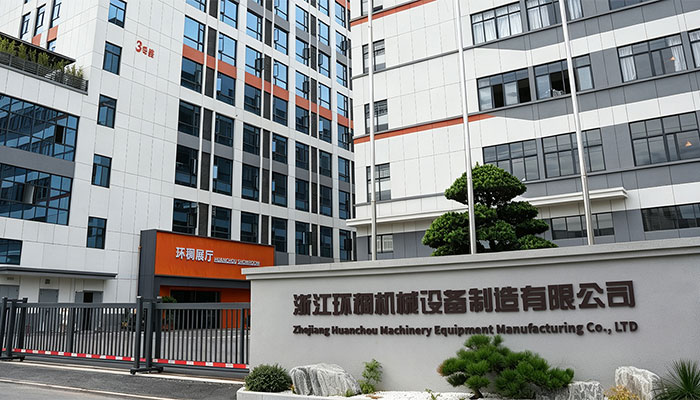
Zhejiang Huanchou Machinery Equipment Co.,Ltd.
Founded in 2008 and recognized as a National High-Tech Enterprise, Zhejiang Huanchou Mechanical Equipment Manufacturing Co., Ltd. specializes in R&D and manufacturing of automation equipment for disposable medical devices. Zhejiang Huanchou Mechanical Equipment Manufacturing Co., Ltd is a China Embossing Seal for Syringe Pad Printing Machines Manufacturer and Embossing Seal for Syringe Pad Printing Machines Supplier, our core products include automatic syringe assembly machines, self-destruct syringe assembly machines, automatic pad printing machines, and automatic syringe rolling printing machines.
With a dedicated R&D team of 23 professionals—nearly 40% of our total workforce—and ISO9001 certification, Huanchou serves clients across Europe, America, the Middle East, and Southeast Asia. Our new 23-mu manufacturing facility, designed to produce 1,000 syringe assembly line machines annually, is scheduled for full operation by the end of 2026, with an estimated annual output exceeding RMB 300 million.
Certificate Of Honor
News
-
-
A line that runs four syringe formats will lose more time to changeover than to running. Walk the floor at shift change and the pattern is familiar: the printing station sits idle waiting for format parts, the assembly station runs one product at full speed, ...
READ MORE -
A syringe line that runs three safety-cover variants, two prefilled formats, and a printed barrel for a different customer can lose more output during changeovers than during steady running. The practical fix is not simply a faster machine. It is a custom aut...
READ MORE
Message Feedback
Embossing Seal for Syringe Pad Printing Machines Industry knowledge
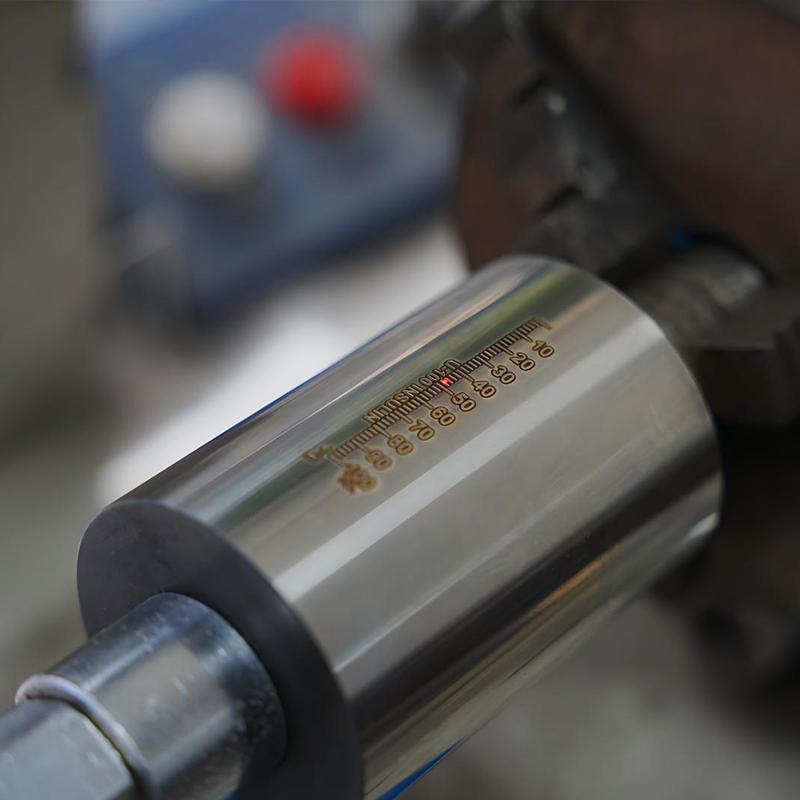
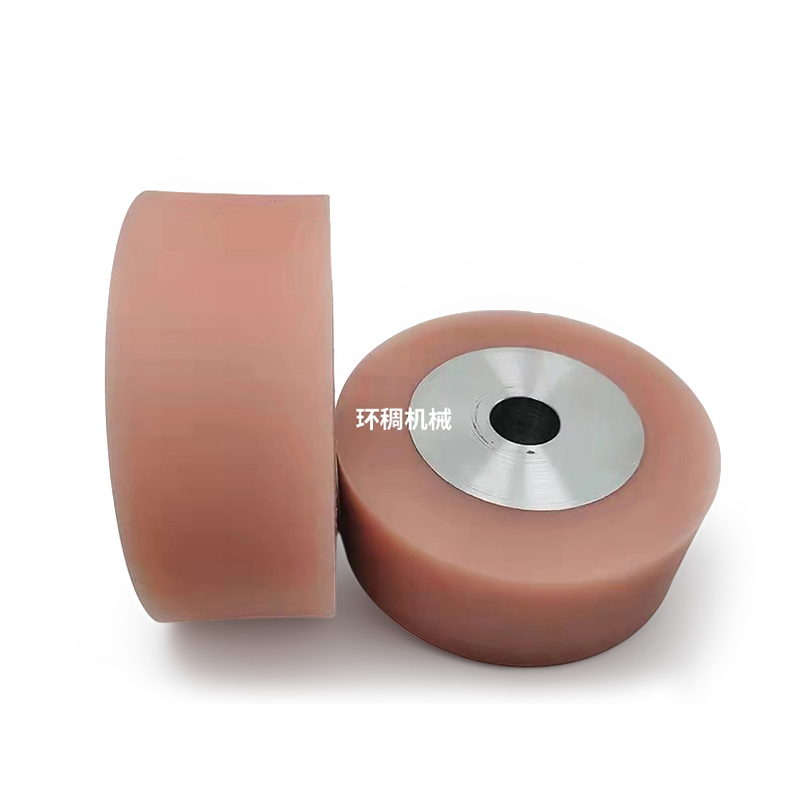
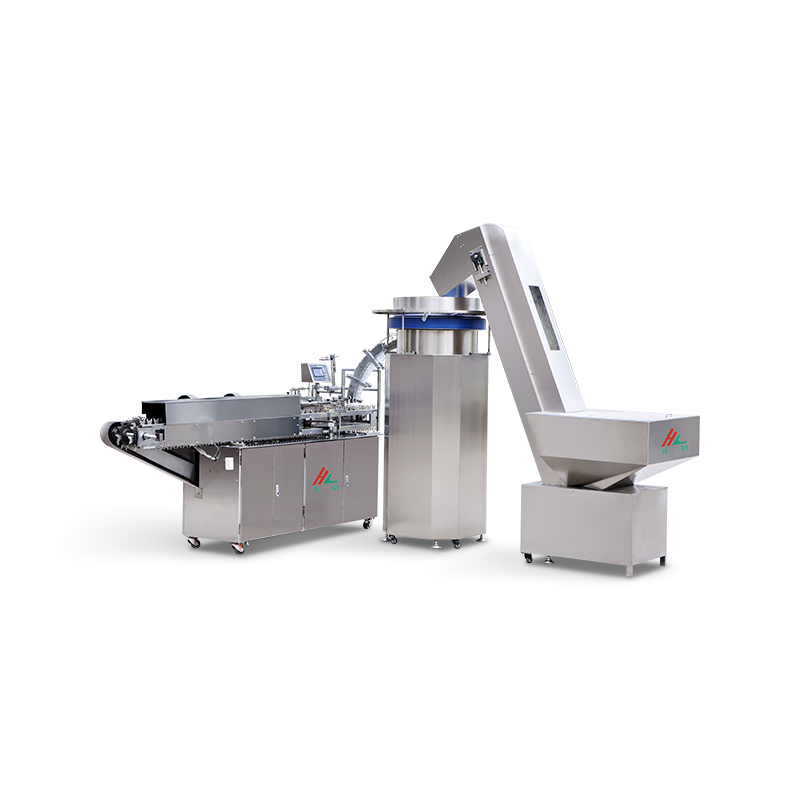
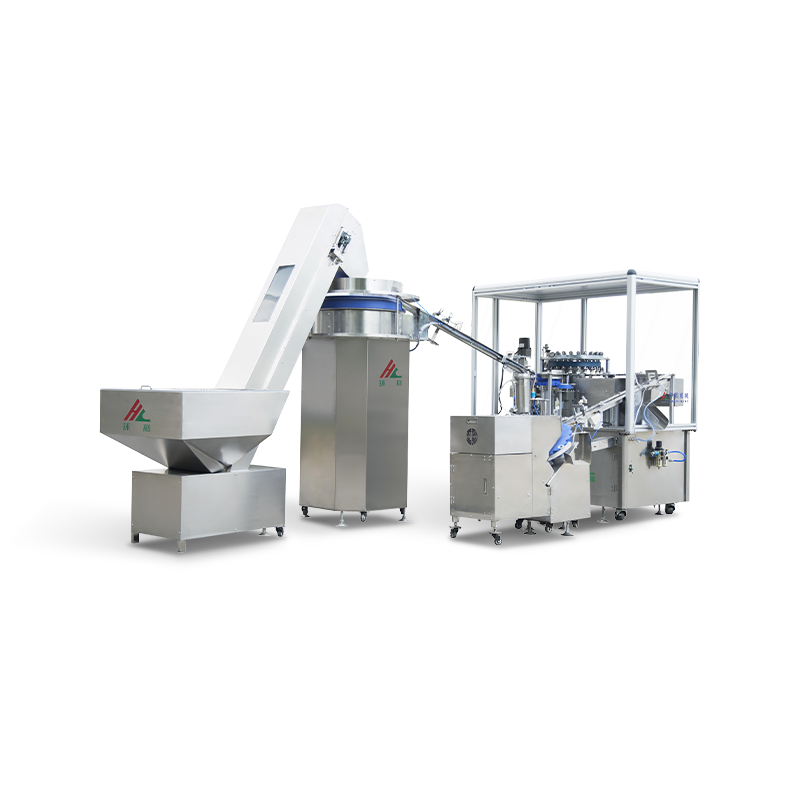
Zhejiang Huanchou Machinery Equipment Co., Ltd. has built automation for disposable medical devices since 2008: syringe printing machines, syringe assembly machines, combined printing-assembly lines, blister packaging equipment, and the wear parts that keep those lines producing. The Embossing Seal for Syringe Pad Printing Machines belongs to that last group — the contact element in the printing station that carries the graduation scale and barrel markings onto the syringe surface.
As an Embossing Seal for Syringe Pad Printing Machines manufacturer, we supply the seal as a matched component for the printing stations we build and for the same stations already in service. It sits in our syringe machine components and accessories range alongside the rubber roller, the screen printing unit and the negative-pressure airtightness tester, and it is specified against the machine drawing rather than bought as a generic moulded part.
What the Embossing Seal Controls on the Print Cycle
A graduation scale is a small, high-contrast mark on a curved, glossy barrel. The seal is the element that closes the ink film against that surface at the instant of transfer, so its working face and its seating in the print head decide three things: line-edge sharpness, ink density across the mark, and register from barrel to barrel.
Once a seal has taken a compression set, swollen in solvent or picked up dried ink, the fault appears first as a soft line edge and later as scale drift at the inspection station — long before the printer itself shows any fault code. That is why we treat the seal as a controlled print variable, not as a consumable to be improvised.
Three functions the seal has to hold through a production shift
- Uniform pressure over the crown of the barrel, where curvature is highest.
- Clean release after transfer, with no ink creep beyond the line geometry.
- Repeatable seating in the print head so changeover does not shift the mark position.
Fit Across Our Syringe Printing Machine Range
Seal geometry follows the printing process, so the machine model is the first thing we confirm. Our syringe printing machines and the printing stations inside our combined lines do not all transfer the scale the same way.
| Machine in the range | Printing method | Seal fit note |
|---|---|---|
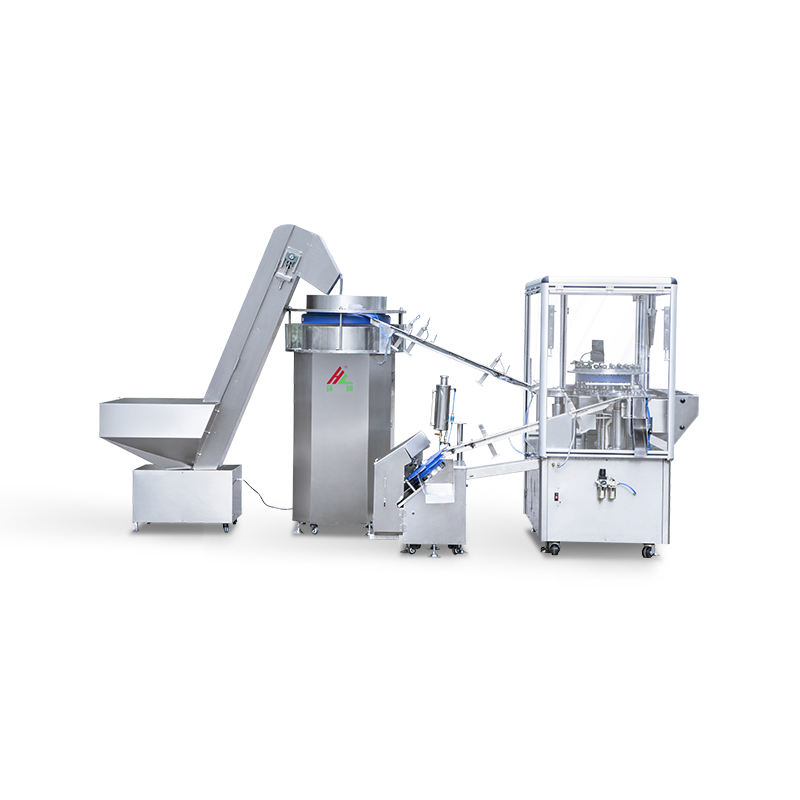
| GY-009-GSLP High Speed Syringe Printing Machine with Safety Cover | Pad printing, high output | Higher cycle frequency shortens the practical wear interval; seal matched to the high-speed head and barrel diameter. |
| GY-009-LP Syringe Printing Machine with Safety Cover | Pad printing | Standard production head; geometry set by the barrel outside diameter and scale layout on the drawing. |
| GY-009 Automatic Syringe Roller Printing Machine | Roller / rotogravure | The scale originates from the etched steel roller, so seal and rubber roller are specified together; state the process when enquiring. |
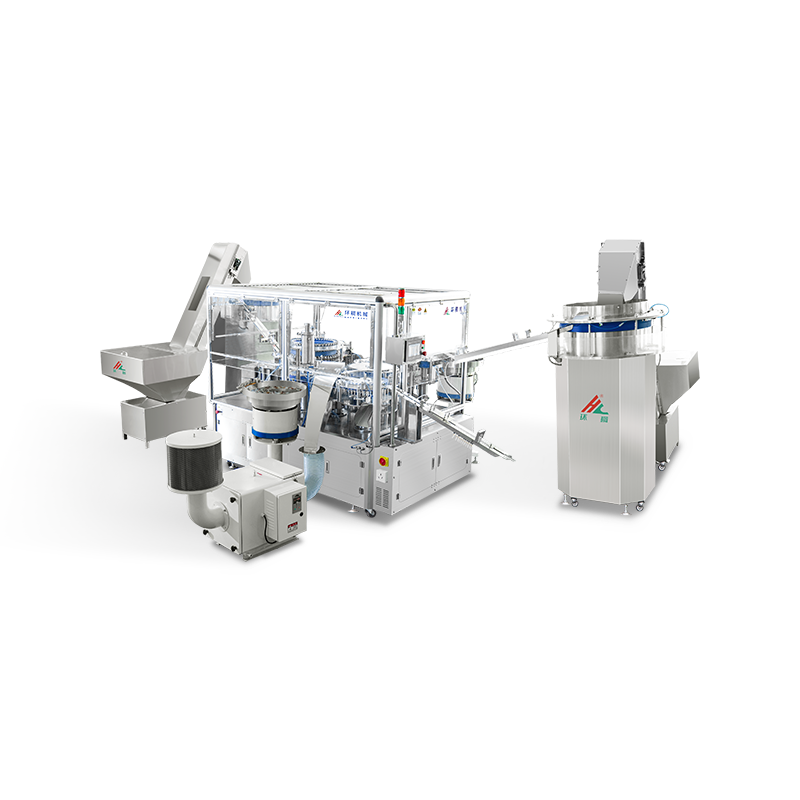
| HC-G019-LT Syringe Printing-Assembly Machine | Pad printing plus inline assembly | Seal replacement is planned into the assembly changeover window so print quality and output targets move together. |
| HC-GZ017 Syringe Printing-Assembly Integrated Machine | Integrated printing and assembly | Same print head architecture as the printing range; seals are ordered as line spare sets for scheduled shutdowns. |
| Syringe Screen Printing Machine | Screen process | Uses screen and stencil consumables rather than a pad seal; confirm the process before ordering so the correct part is despatched. |
Material Behaviour, Ink Compatibility and Wear Life
The seal works in a solvent-bearing environment. It compresses thousands of times per shift, contacts ink and cleaning agents, and has to hold a defined face geometry while doing so. Compound selection and working-face finish are therefore chosen against the ink system actually running on the line, not against a single universal specification.
In practice, four conditions account for most premature failures we see on installed machines:
- Ink build-up on the working face — dried ink alters the contact profile and dulls the line edge.
- Aggressive or incorrect cleaning solvents — swelling and surface softening follow.
- Excess print-head pressure — set to cure a transfer problem, it accelerates compression set in the seal.
- Storage under load or heat — a spare kept compressed in a warm store can arrive already deformed.
Configuration Options and Custom Geometry
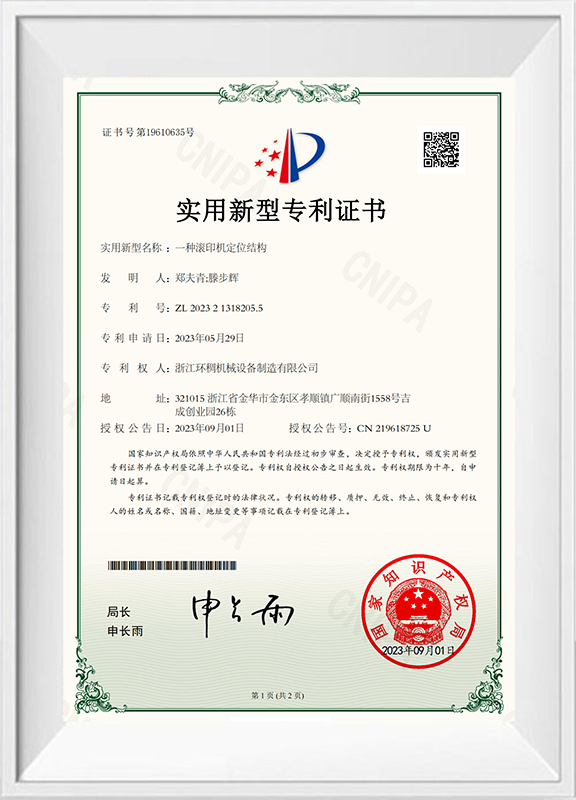
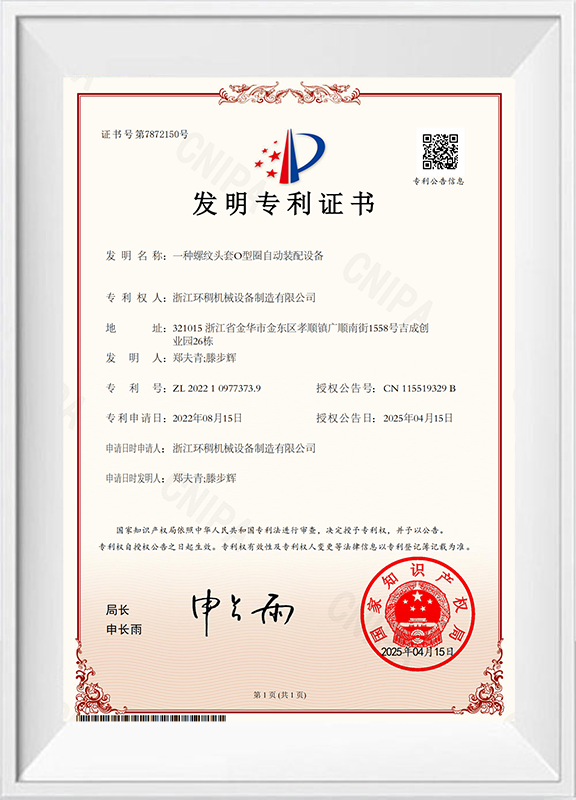
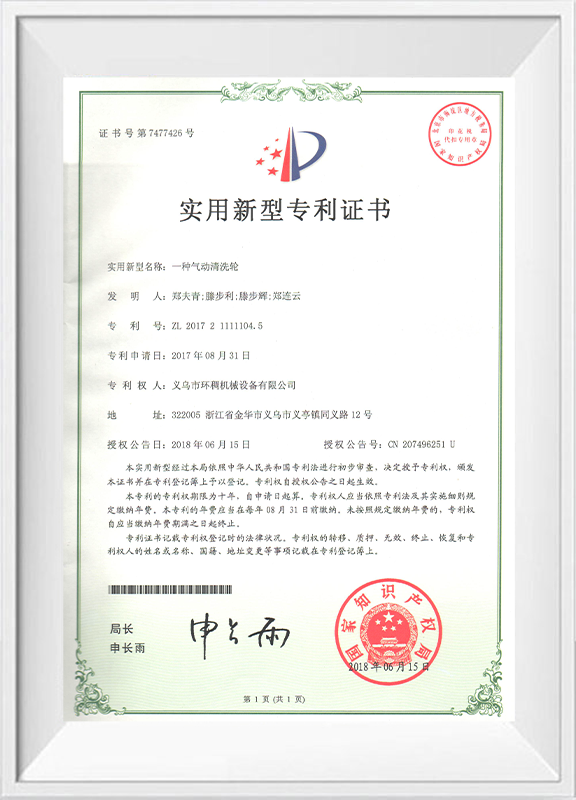
Seal geometry is tied to our printing-head drawings, so a new barrel size normally means a new seal drawing rather than an adapter. Our R&D team — 23 engineers, close to 40% of the workforce — works from the same drawing base that produced the pad printing scale-line mechanisms covered by our patents, including the pad printing machine with needle-etched scale lines and the etching wheel adjustment device.
Barrel envelope
Outside diameter and wall thickness, including the range of sizes the line must cover between changeovers.
Mark layout
Graduation count, pitch, line width and mark position on the barrel, plus any logo or batch field printed in the same pass.
Head interface
Print-head seat, retention method and the machine model or serial the seal is going onto.
Line conditions
Ink type, cleaning regime, target output and the changeover frequency the spare-parts plan has to support.
Installation, Changeover and Line Integration
The seal is a service item, so changeover has to be short and repeatable. On our printing machines and on the printing stations inside the Syringe Printing-Assembly Machine the sequence is the same.
- Stop the line at the end of a cycle and move the print head to its service position.
- Release the retention element and lift the seal squarely from its seat — never pry it out at an angle, which marks the seat.
- Clean the seat and the head face free of dried ink before fitting the replacement.
- Seat the new seal fully home, restore head pressure to the setting used for the validated print, and run two or three waste barrels.
- Check the first accepted barrel at the inspection station for line edge, density and scale position against the approved sample.
Because the seal affects print quality and nothing else mechanically, it can be changed inside a normal shift without touching the assembly stations or the safety-cover guarding on the machine.
Quality Control and Acceptance
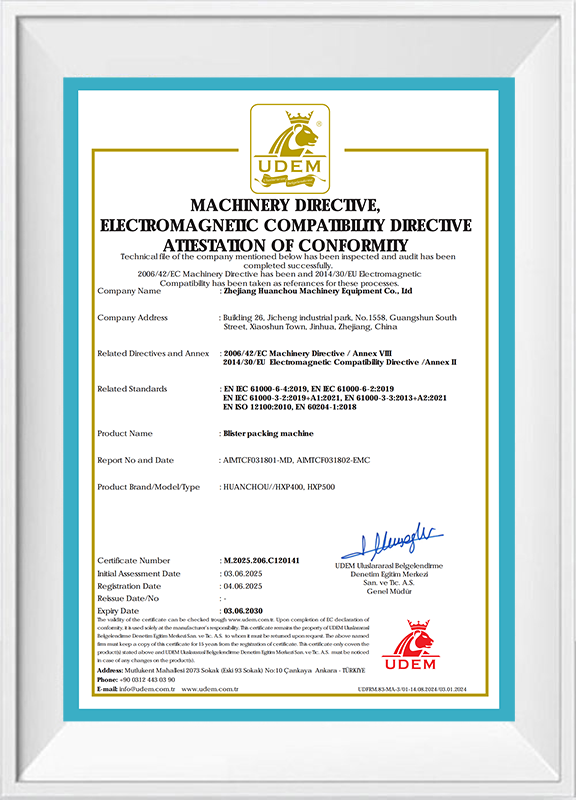
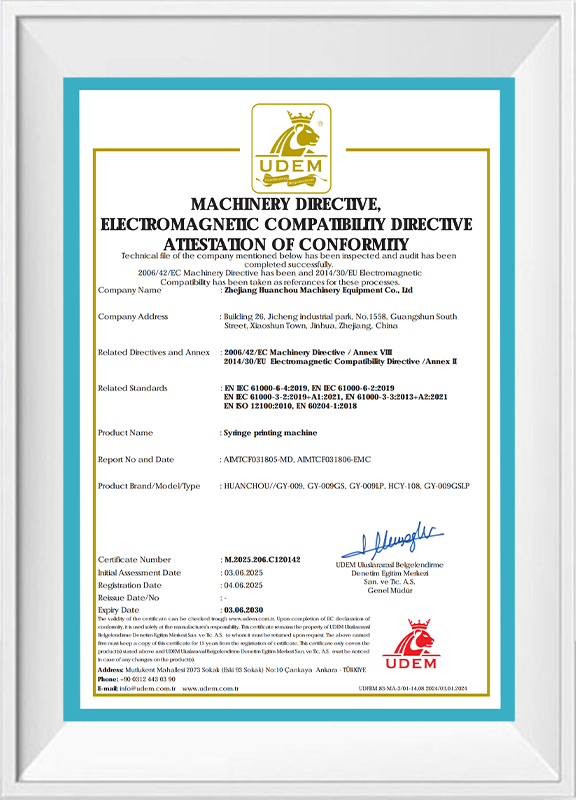
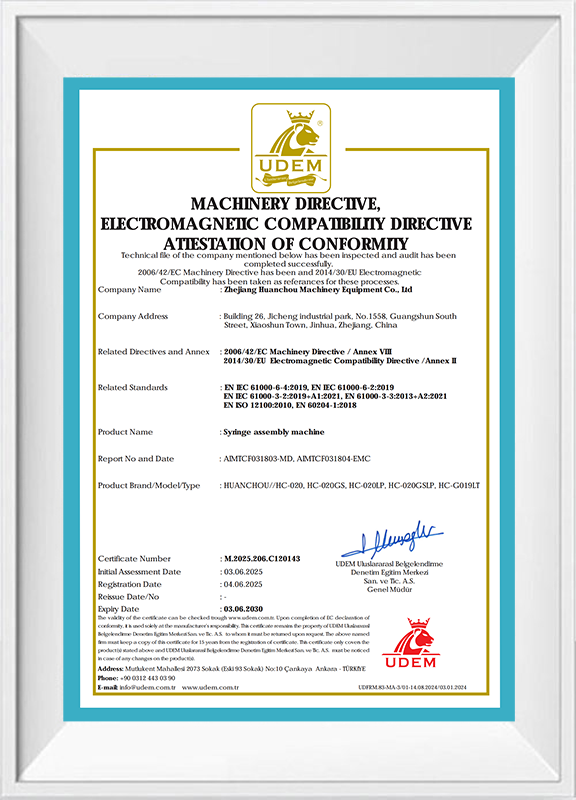
Components are produced and handled inside our ISO 9001 quality system, and the printing machines the seal serves carry CE certification. Acceptance of a seal is judged on printed output, not on a drawing alone: dimensional check of the working face, seating check in the print head, and a print result on the barrel the customer actually runs.
- Dimensional verification against the seal drawing before packing.
- Fit verification in the corresponding print-head seat.
- Print trial on the matching Huanchou printing station where barrel samples are supplied, with the printed sample returned alongside the shipment.
- Batch identification on the packing so a seal can be traced back to its production lot during a line investigation.
Maintenance, Spare Parts and Serviceability
There is no fixed calendar interval for replacement. The seal is changed on condition, and the condition is read from the printed barrel. We recommend holding at least one spare seal per print head, plus a second set where the line runs multiple barrel sizes, so a quality hold never becomes a production stop.
| Symptom on the printed barrel | Usual cause | Action |
|---|---|---|
| Soft or feathered line edges | Compression set in the seal face | Replace the seal; re-check head pressure after fitting. |
| Patchy density across the scale | Ink build-up or face contamination | Clean with the specified solvent; replace if the profile does not recover. |
| Scale position drifting between barrels | Seal not seated fully home after changeover | Reseat and re-run the print check on the first accepted barrel. |
| Swollen or sticky working face | Solvent incompatibility with the compound | Review the cleaning agent with us and re-specify the seal compound. |
Information We Use to Configure Your Solution
A seal drawing can usually be confirmed from a short set of inputs. Where the machine is a Huanchou unit, the model and serial already carry most of the head geometry, and we only need the barrel and mark details to complete the match.
| Input | Why we need it | What to send |
|---|---|---|
| Machine model and serial | Identifies the print head and seat geometry | Nameplate photo or the model designation |
| Barrel drawing | Sets the contact radius and the printable band | Dimensional drawing or measured samples |
| Scale / mark artwork | Defines line count, pitch and line width | Artwork file or an approved printed sample |
| Ink and cleaning system | Drives compound selection and expected wear life | Ink and solvent data sheets |
| Output and changeover plan | Sizes the spare-parts holding per head | Shift output, barrel sizes run, changeover frequency |
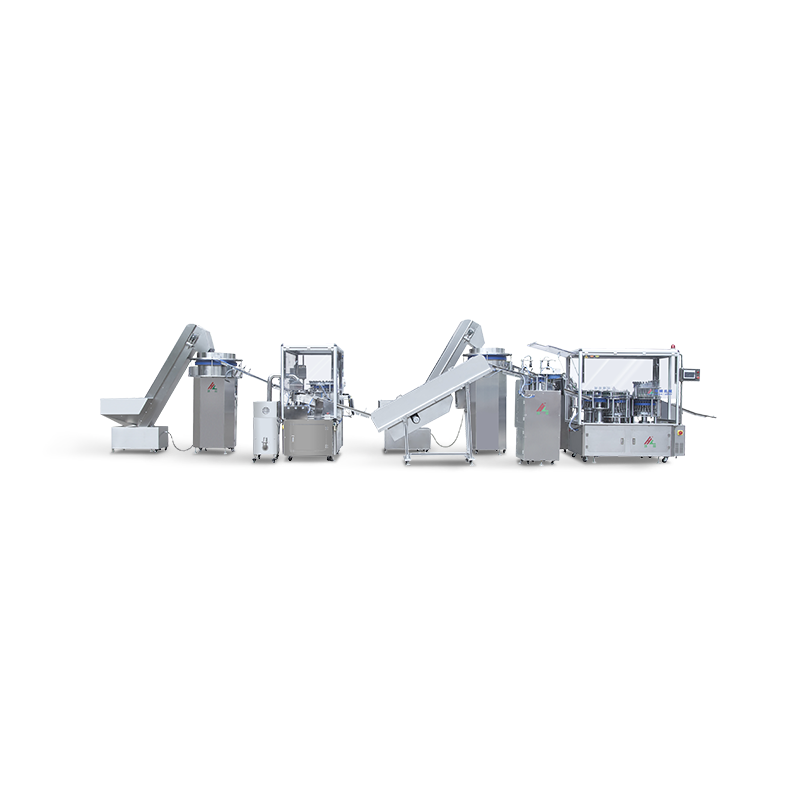
From those inputs we confirm the seal drawing, quantity per head, packing and delivery scope, and issue a configuration and quotation. Our wider syringe manufacturing machine range is configured on the same basis, which keeps spare-part drawings consistent across a line built from more than one machine.
Frequently Asked Questions
How do we confirm the correct seal for a machine already in service?
Send the machine model and serial, the barrel drawing and a photo of the print head. Where the machine is ours, the head geometry is already in our drawing records, so we only reconcile the barrel diameter and scale layout before issuing the seal specification.
Can you supply seals for a barrel size we have not run before?
Yes. A new barrel size is handled as a new seal drawing derived from the barrel contact radius and the mark layout, then verified in the corresponding print head. We do not adapt an existing seal by trimming or packing, because that changes the contact profile and the printed line quality with it.
Is the embossing seal used on roller printing machines as well?
Roller printing and pad printing generate the graduation line differently. On the GY-009 Automatic Syringe Roller Printing Machine the mark comes from the etched steel roller working against the rubber roller, so the consumable set is specified as a pair. Tell us the printing process when enquiring and we will confirm which parts apply.
How many spares should a line hold?
A practical holding is one spare seal per print head, with a second set where several barrel sizes run on the same line. Seals should be stored flat, uncompressed, away from heat and out of contact with solvents so a spare is not already deformed when it is fitted.
Do you support changeover and print acceptance after delivery?
Our support covers installation and commissioning of the machines we supply, operator training, remote assistance for print-setting questions, and replacement-part supply from our Jinhua base. Print acceptance is always judged against the approved sample on your own barrel, using the inspection station already in place on the line.

 OEM/DOM Embossing Seal for Syringe Pad Printing Machines Manufacturer
Copyright ©
Zhejiang Huanchou Machinery Equipment Co.,Ltd.
All Rights Reserved.