

 中文简体
Walk the length of a modern syringe line and the number that decides whether the shift is profitable is rarely the headline speed printed on the datasheet. It is the number of times a person has to reach into the process. Every reach-in is a chance for a drop...
READ MORE
GY-009-LP
Syringe Printing Machine with Safety Cover
Introduction
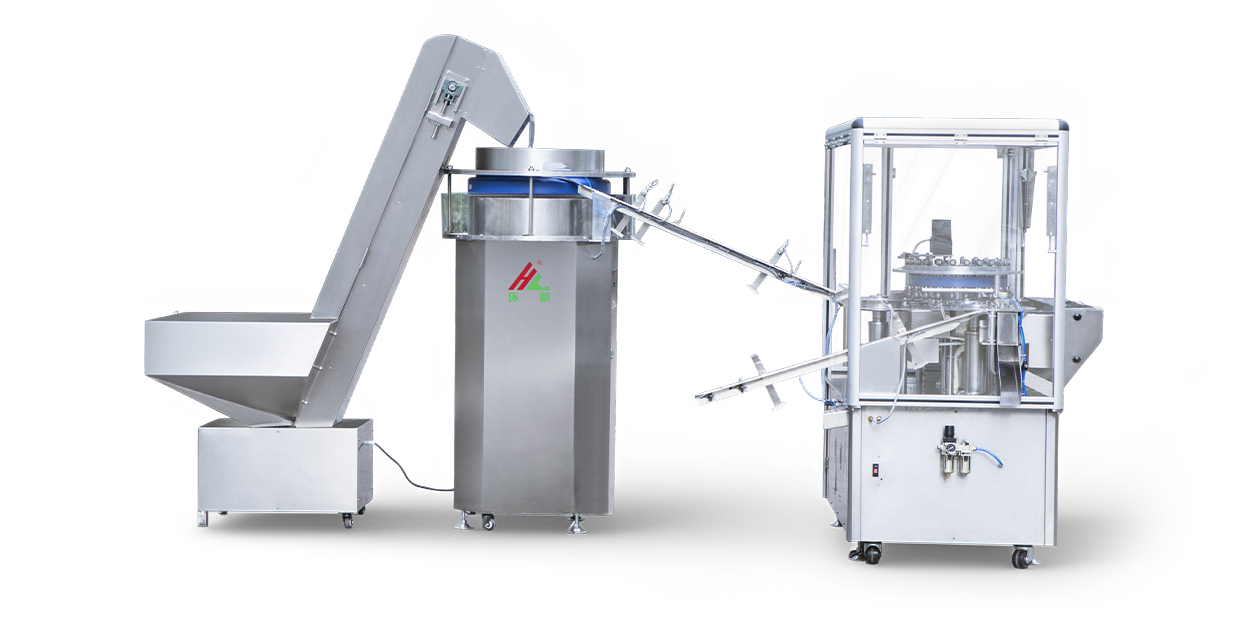
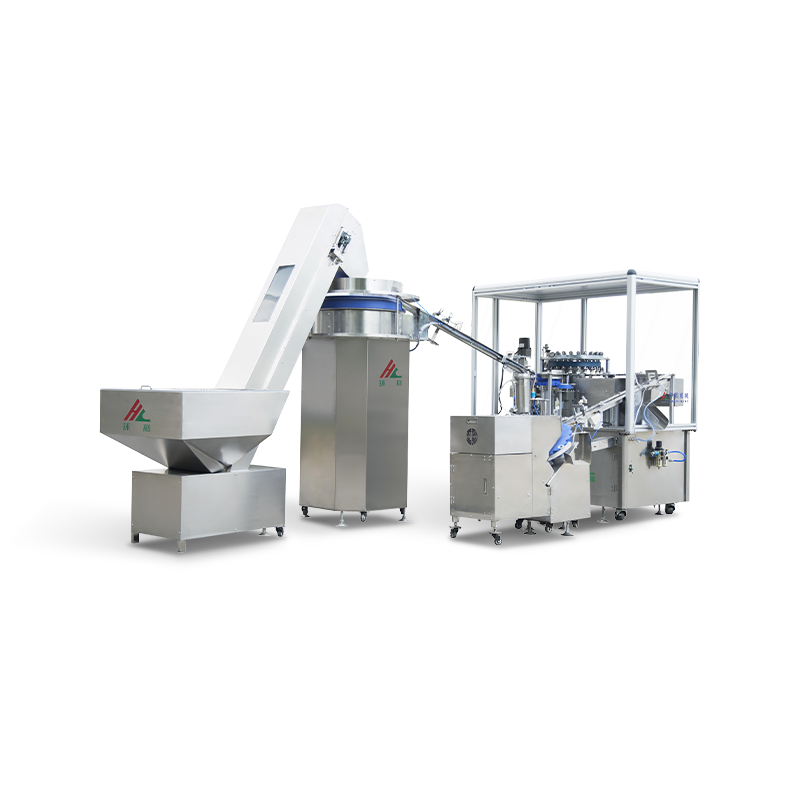
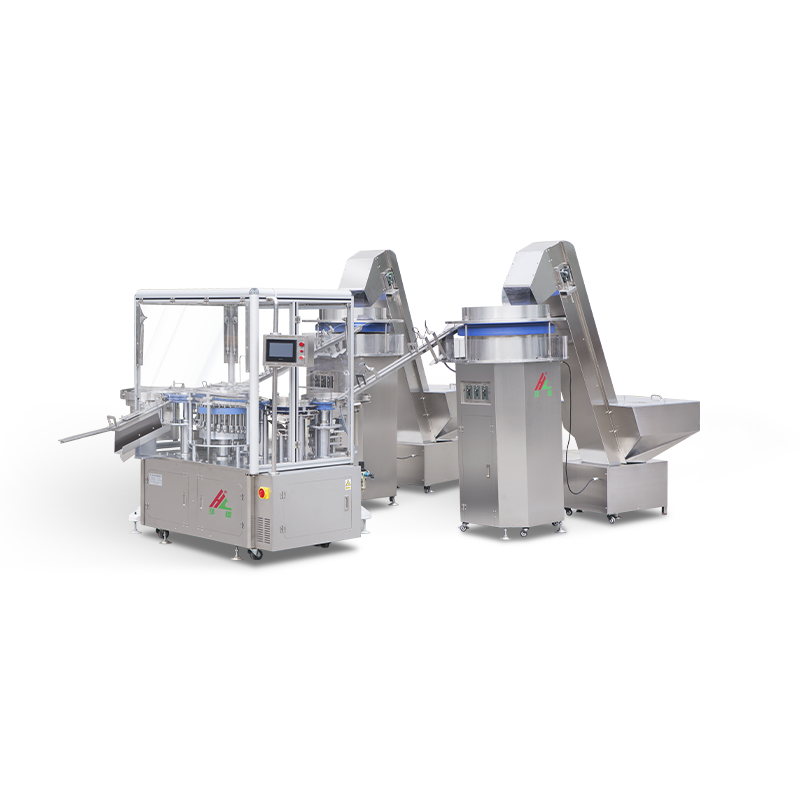
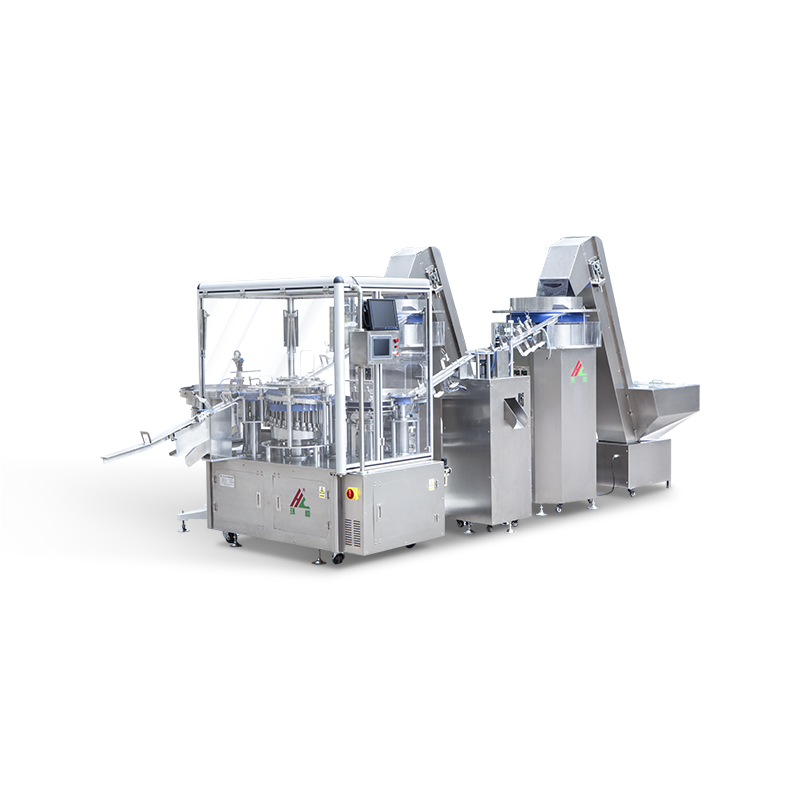
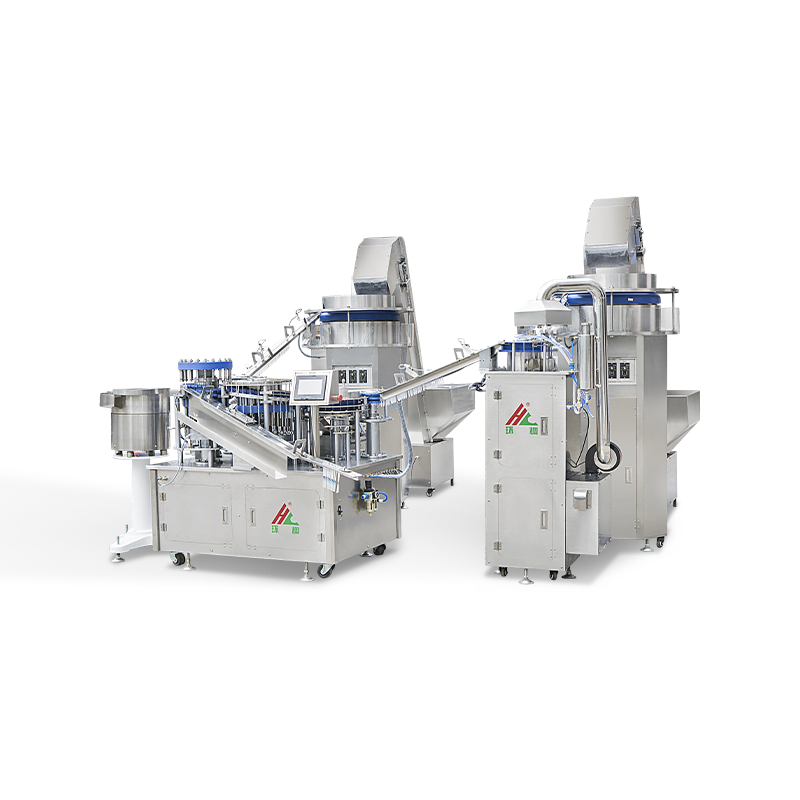
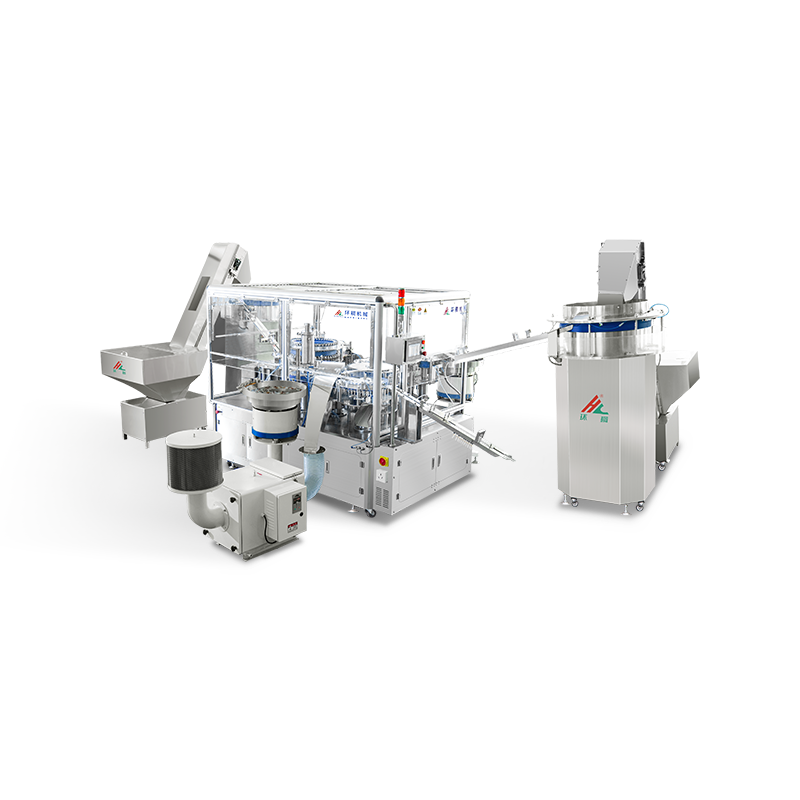
Syringe Printing Machine with Safety Cover is a fully automatic syringe roller printing machine of the GY-009-LP series. It adopts rolling transfer printing technology, combining a steel stamp and silicone roller to achieve high-precision printing of logos and graduation scales on syringe barrels. It is suitable for various syringe specifications from 1ml to 60ml, including luer slip, luer lock, and eccentric tip syringe types.
The syringe barrels are automatically sorted and fed into the machine through the automatic feeding device. They are accurately fixed at the printing station by the precision positioning system. After printing, the drying system performs surface curing treatment to ensure ink adhesion and durability. Finished products are automatically discharged and collected.
The core printing components adopt a drum-type silicone roller combined with a steel stamp structure. The contact is uniform with low wear, effectively reducing ink consumption, extending the replacement cycle of consumables, and significantly saving long-term operating costs.
Driven by a variable frequency speed controller, the machine operates smoothly with high energy efficiency. The gear transmission system is precision-machined to ensure stable operation with low noise, meeting the strict requirements for noise control in cleanroom environments.
The positioning system provides high precision with minimal printing position deviation. The product qualification rate reaches 99%, and the printing speed can reach 140–240 syringes per minute (depending on specifications), improving efficiency by more than 2.5 times compared with traditional screen printing methods.
The entire machine is equipped with a PLC control system. Operating parameters are adjustable, and the operation interface is simple and intuitive. Combined with photoelectric sensors, the machine monitors material status in real time, achieving automatic shutdown when no materials are available and automatic restart after material replenishment without manual intervention.
The entire machine is designed and manufactured according to cleanroom standards, featuring a compact structure and attractive appearance. It can operate continuously and stably for 24 hours.
Equipped with a safety protective cover, the machine triggers an automatic stop protection function immediately when the door is opened. It complies with CE safety certification standards and effectively ensures the safety of operators during maintenance operations.
Technical Parameters
| Printing Range | 1-2ml | 3-5ml | 10-20ml | 30ml | 50-60ml |
| Printing Speed | 200-220pcs/min | 220-240pcs/min | 180-200pcs/min | 160-180pcs/min | 140-160pcs/min |
| Rated Volt | 220V/50HZ | ||||
| Equipment Size | 3000x2700x2150mm | ||||
| Power | 5kw | ||||
| Weight | 1060kg | ||||
| Air Pressure | 0.4-0.6MPa | ||||
Company
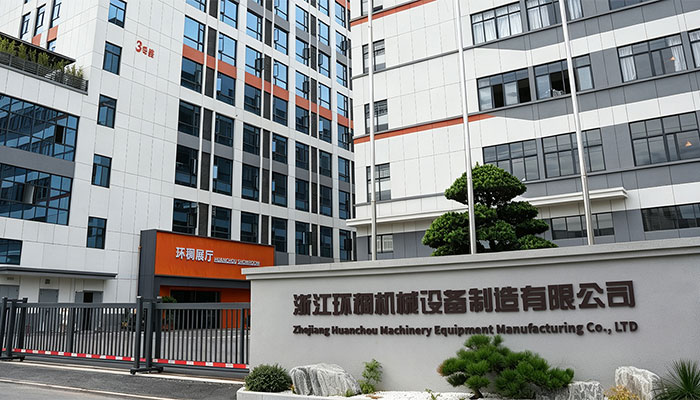
Zhejiang Huanchou Machinery Equipment Co.,Ltd.
Founded in 2008 and recognized as a National High-Tech Enterprise, Zhejiang Huanchou Mechanical Equipment Manufacturing Co., Ltd. specializes in R&D and manufacturing of automation equipment for disposable medical devices. Zhejiang Huanchou Mechanical Equipment Manufacturing Co., Ltd is a China Syringe Printing Machine with Safety Cover Manufacturer and Syringe Printing Machine with Safety Cover Supplier, our core products include automatic syringe assembly machines, self-destruct syringe assembly machines, automatic pad printing machines, and automatic syringe rolling printing machines.
With a dedicated R&D team of 23 professionals—nearly 40% of our total workforce—and ISO9001 certification, Huanchou serves clients across Europe, America, the Middle East, and Southeast Asia. Our new 23-mu manufacturing facility, designed to produce 1,000 syringe assembly line machines annually, is scheduled for full operation by the end of 2026, with an estimated annual output exceeding RMB 300 million.
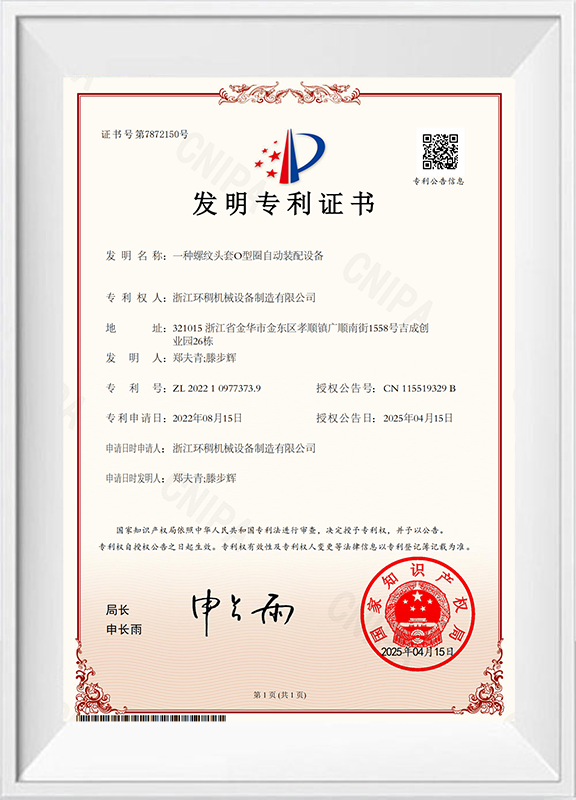
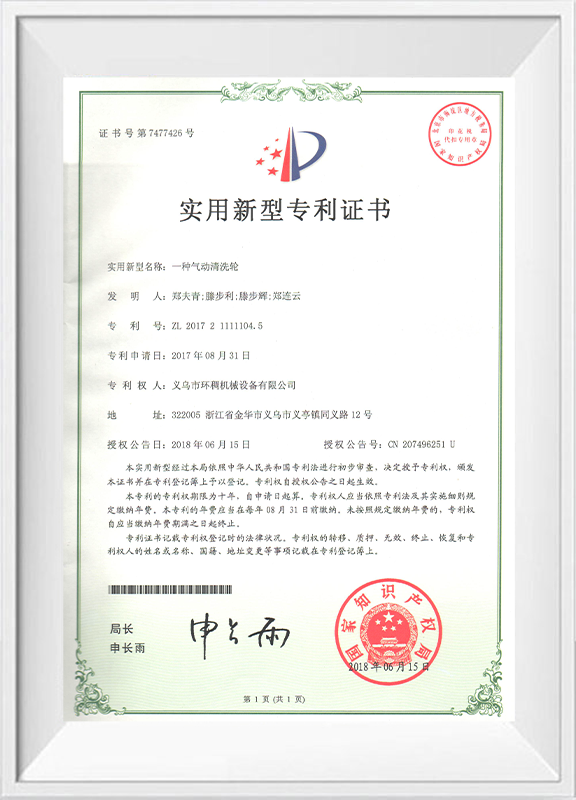
Certificate Of Honor
News
-
-
A line that runs four syringe formats will lose more time to changeover than to running. Walk the floor at shift change and the pattern is familiar: the printing station sits idle waiting for format parts, the assembly station runs one product at full speed, ...
READ MORE -
A syringe line that runs three safety-cover variants, two prefilled formats, and a printed barrel for a different customer can lose more output during changeovers than during steady running. The practical fix is not simply a faster machine. It is a custom aut...
READ MORE
Message Feedback
Syringe Printing Machine with Safety Cover Industry knowledge
As a Syringe Printing Machine with Safety Cover manufacturer, Bolun Press builds the GY-009-LP for disposable syringe lines that need a legible scale, a clean logo and an interlocked guard around the printing station. The machine uses rolling transfer printing: a steel stamp carries the image, a drum-type silicone roller transfers it to the barrel, and a drying system cures the surface before automatic discharge. It covers 1–60 ml barrels in luer slip, luer lock and eccentric tip formats.
GY-009-LP at a glance
- 140–240 syringes per minute, depending on barrel size
- 99% product qualification rate stated for the platform
- PLC control, photoelectric material sensing and automatic stop/restart
- 220 V/50 Hz, 5 kW, 0.4–0.6 MPa air supply
Related Products and Categories
Our portfolio also includes Syringe Manufacturing Machine Supplier for applications with different operating ranges, interfaces or integration requirements.
Roller Transfer Printing on Syringe Barrels
The printing station is built around a steel stamp and a drum-type silicone roller rather than a pad. Contact across the barrel is uniform, wear is concentrated on a controlled consumable surface, and ink transfer stays consistent as the roller rotates. That geometry reduces ink consumption and extends the replacement cycle compared with pad tooling that wears at the edges.
- Variable-frequency speed control for stable motion at different outputs
- Precision-machined gear transmission for low noise in cleanroom areas
- Compact frame and guarded printing zone for production-room fitting
- Built for continuous 24-hour operation
Printing Cycle and Automation Integration
Barrels enter from a bulk hopper, are automatically sorted and fed into the printing station. A precision positioning system locates each barrel at the print position; the roller applies the image; the drying system cures the ink; and finished barrels are discharged and collected.
- Automatic barrel sorting and feed into the print path
- Precision nest location at the printing station
- Steel-stamp image transfer through the silicone roller
- Surface curing to fix the ink before handling
- Automatic discharge and collection of printed barrels
A PLC manages the sequence and operating parameters through a straightforward interface. Photoelectric sensors monitor material status in real time, so the machine stops when the feed is empty and restarts after replenishment without manual intervention at the print station.
Speed and Size Coverage
Output changes with barrel diameter and artwork because the roller, nest and print length change. The figures below show the platform bands by barrel size; final speed is confirmed with the barrel drawing, print layout and ink system.
| Barrel size | Print speed | Typical barrel formats | Configuration focus |
|---|---|---|---|
| 1–2 ml | 200–220 pcs/min | Luer slip, luer lock | Small-diameter nests and fine scale detail |
| 3–5 ml | 220–240 pcs/min | High-volume standard formats | Highest output band in the range |
| 10–20 ml | 180–200 pcs/min | Luer lock, eccentric tip | Longer print area and scale layout |
| 30 ml | 160–180 pcs/min | Large barrel formats | Roller pressure, barrel support and drying |
| 50–60 ml | 140–160 pcs/min | Large barrel formats | Heavier feed handling and stable print contact |
Safety Cover and Cleanroom Operation
The safety cover is interlocked with the machine control. If the guard door is opened, the machine triggers an automatic stop; production resumes only after the guard is closed and the sequence is reset. The design follows CE safety requirements for the syringe printing machine range, and the low-noise gear drive suits cleanroom production areas.
- Guarded printing and drive zone with automatic stop on door opening
- Low-noise transmission for cleanroom noise limits
- Photoelectric material monitoring reduces unnecessary manual access
- Compact structure for cleanroom line layouts
Print Quality, Ink and Barrel Considerations
Print quality depends on barrel surface, ink, artwork, roller condition and curing. We set the printing parameters around the barrel family and the ink system supplied for the project. Moulded barrels with release residue, high static or ovality need attention at feeding and surface preparation; these points are reviewed from the barrel drawing and samples.
Positioning is designed for minimal print position deviation. Scale legibility, print alignment and ink adhesion are checked at acceptance rather than left to running adjustments on the line.
- Artwork: logo, graduation scale, print area and orientation
- Ink: type, viscosity and cure window
- Barrel: diameter, wall stiffness, surface energy and colour
- Tooling: stamp, silicone roller and feed nest for the size band
Range Position: Standard, High-Speed and Integrated Lines
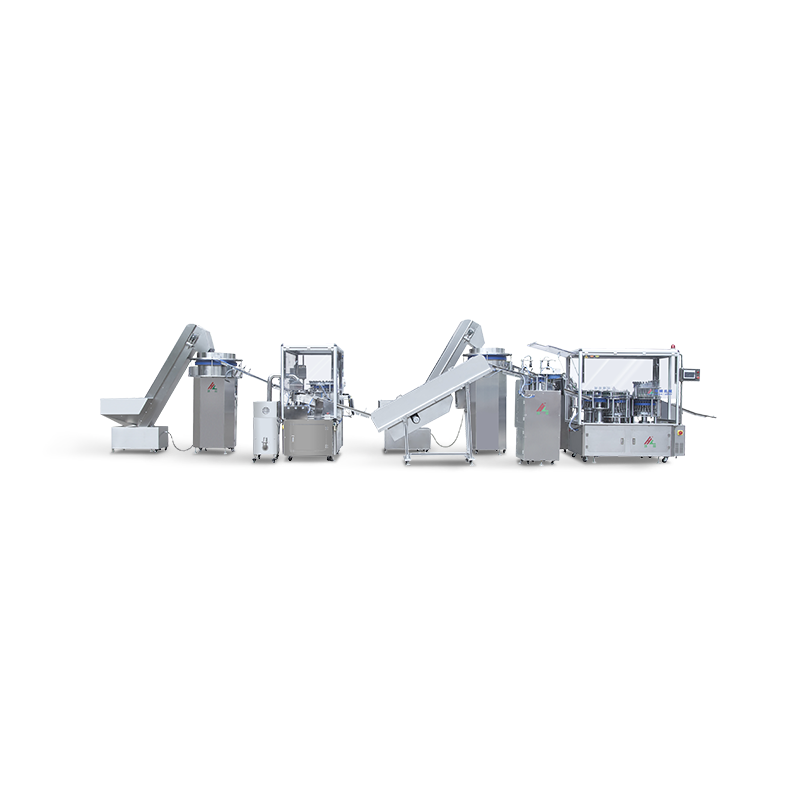
The GY-009-LP is the covered standard roller printer in our range. The High Speed Syringe Printing Machine with Safety Cover adds a higher-output configuration, while the GY-009 base roller printer serves applications where the covered format is not required. For lines that print and assemble in one flow, we supply the Syringe Printing-Assembly Integrated Machine.
GY-009-LP standard covered platform
For 1–60 ml syringe barrels where a CE interlocked guard, stable roller printing and cleanroom noise control are required.
GY-009-GSLP high-speed covered variant
For higher-output lines that need the same covered roller-printing principle with a speed-oriented configuration.
Printing and assembly integration
For projects where printed barrels move directly into assembly, reducing separate handling and line transfers.
The GY-009-LP is manufactured at our syringe printing machine with safety cover factory in China, and each machine is configured around the barrel family, artwork and downstream line interface rather than supplied as a fixed catalogue unit.
Installation, Maintenance and Spare Parts
The machine requires a level floor area of 3000 × 2700 × 2150 mm and weighs 1060 kg. Utility connections are 220 V/50 Hz, 5 kW and dry compressed air at 0.4–0.6 MPa. Cleanroom placement, ink storage and solvent ventilation are planned with the facility layout.
Maintenance focuses on the silicone roller, steel stamp, feed nests, photoelectric sensors and guard interlock. Daily cleaning of the printing components and a check of ink supply protect print consistency; weekly checks cover sensor response, guard stop function and drive condition. We support installation, operator training and remote assistance after commissioning.
- Daily: roller and stamp cleaning, ink viscosity, feed track condition
- Per size change: nests, roller, stamp and drying recipe
- Weekly: sensor response, guard interlock and drive inspection
Quality Control and Acceptance
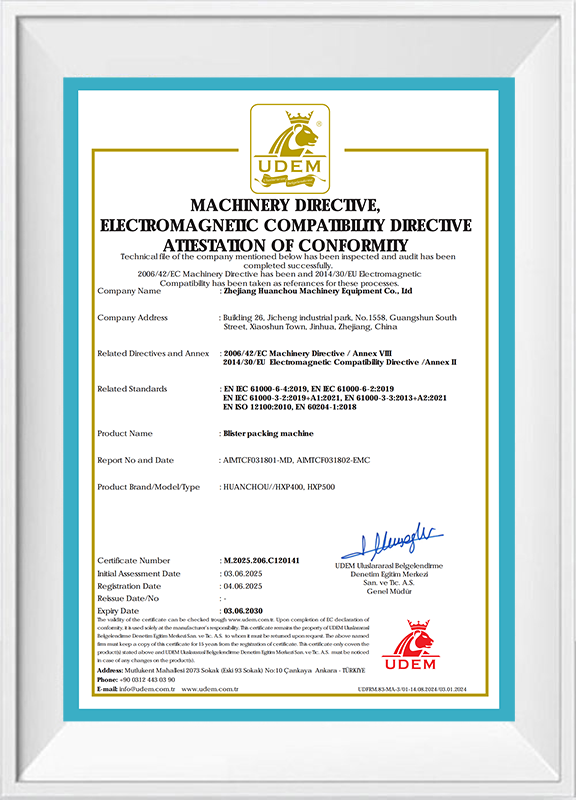
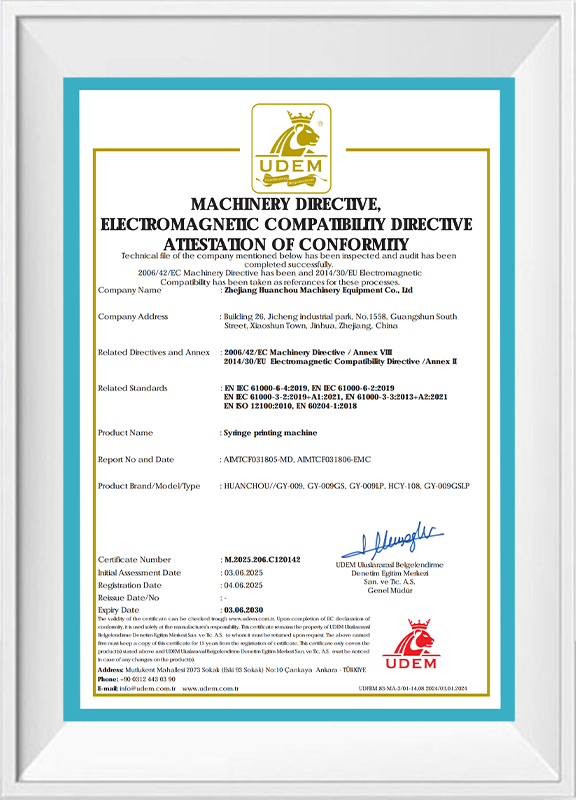
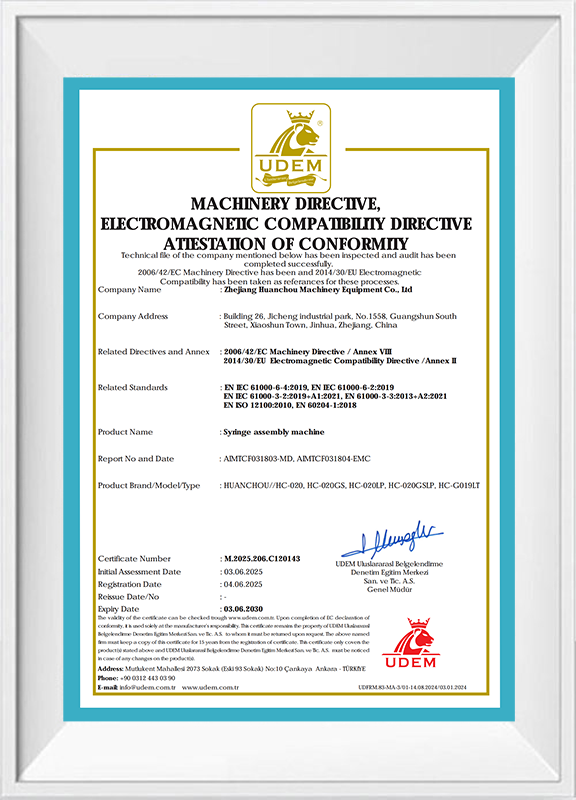
ISO9001 governs the build, and the syringe printing machine range carries CE certification. Inspection covers the frame, guard interlock, electrical panel, pneumatic circuit, PLC inputs and outputs, and print-station alignment. A factory run with your barrels and artwork records output, print position, scale legibility, ink adhesion and safety-stop response.
- Print alignment across the full barrel set
- Scale legibility and ink adhesion by an agreed rub or tape method
- Automatic stop when material runs out and restart after replenishment
- Guard-open stop and controlled restart
- Speed at the specified size band
Delivery scope follows the signed configuration: size-band tooling, safety cover, control system and the agreed line interface. Handover includes operation and maintenance training, with remote support after commissioning.
Information We Use to Configure Your Solution
Proposals are prepared from the working point, not a generic model number. We need the following inputs to fix the size band, tooling, guard configuration and line interface.
- Barrel drawing and size band, including tip style
- Barrel material, colour and surface condition
- Artwork file, print area, scale version and orientation
- Ink system and cure requirements
- Target output and shift pattern
- Upstream and downstream equipment with line layout
- Cleanroom class, power, air and ventilation arrangements
- Acceptance criteria and destination voltage and frequency
With those inputs, we confirm the model, speed band, utility requirements, tooling set and acceptance plan in the proposal.
Frequently Asked Questions
What barrel sizes can the GY-009-LP print?
The GY-009-LP prints 1–60 ml syringe barrels, including luer slip, luer lock and eccentric tip formats. Speed depends on size: 200–220 pcs/min for 1–2 ml, 220–240 pcs/min for 3–5 ml, 180–200 pcs/min for 10–20 ml, 160–180 pcs/min for 30 ml and 140–160 pcs/min for 50–60 ml.
How does the safety cover protect operators?
The guard is interlocked with the control system. Opening the door triggers an automatic stop, so the printing and drive mechanisms cannot continue while the guarded zone is open. The covered format meets the CE safety requirements applied to this syringe printing machine range.
Is this a pad printing machine or a roller printing machine?
It is a roller printing machine. A steel stamp carries the image and a drum-type silicone roller transfers it to the barrel. This avoids the edge wear pattern of pad tooling, reduces ink consumption and gives consistent contact across the print area.
Can the printing machine be integrated with assembly?
Yes. The GY-009-LP can be configured as a standalone printer or coordinated with upstream and downstream equipment. For combined printing and assembly, we supply the Syringe Printing-Assembly Integrated Machine so printed barrels move into assembly without separate batch handling.
How do you handle changeover between syringe sizes?
Changeover is handled through the size-band tooling: feed nests, stamp, silicone roller and drying settings are matched to the barrel family. We define the changeover set from the barrel drawings and production plan so that each size runs with the correct mechanical support and print geometry.
What maintenance does the machine need?
Routine care centres on the silicone roller, steel stamp, feed track, photoelectric sensors and guard interlock. Daily cleaning and ink checks protect print consistency; weekly checks confirm sensor response, safety-stop function and drive condition. Replacement wear parts are identified by size band and print configuration.

 OEM/DOM Syringe Printing Machine with Safety Cover Manufacturer
Copyright ©
Zhejiang Huanchou Machinery Equipment Co.,Ltd.
All Rights Reserved.