

 中文简体
Walk the length of a modern syringe line and the number that decides whether the shift is profitable is rarely the headline speed printed on the datasheet. It is the number of times a person has to reach into the process. Every reach-in is a chance for a drop...
READ MORE
GY-009
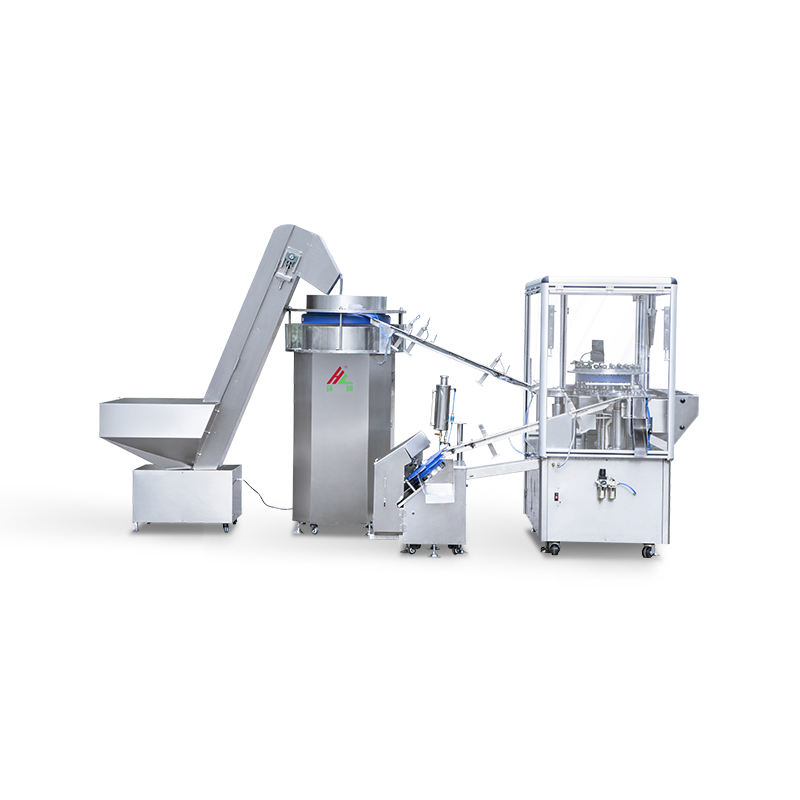
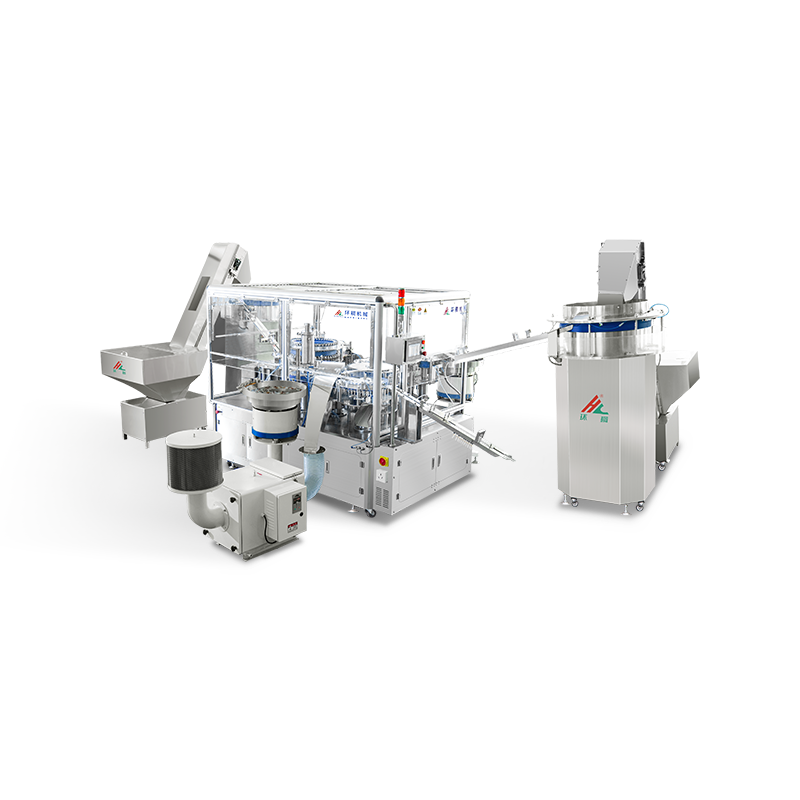
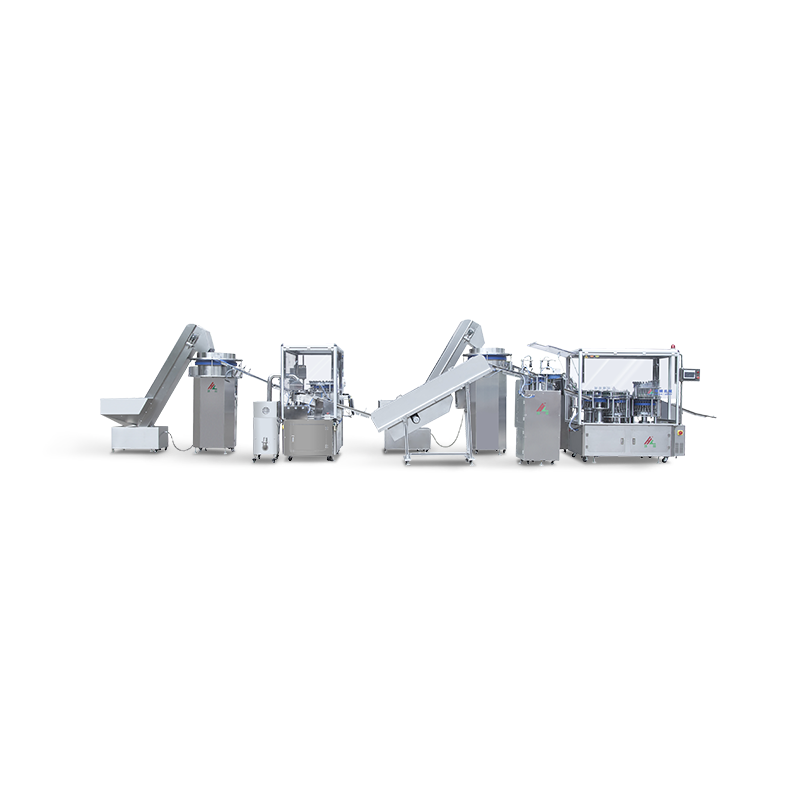
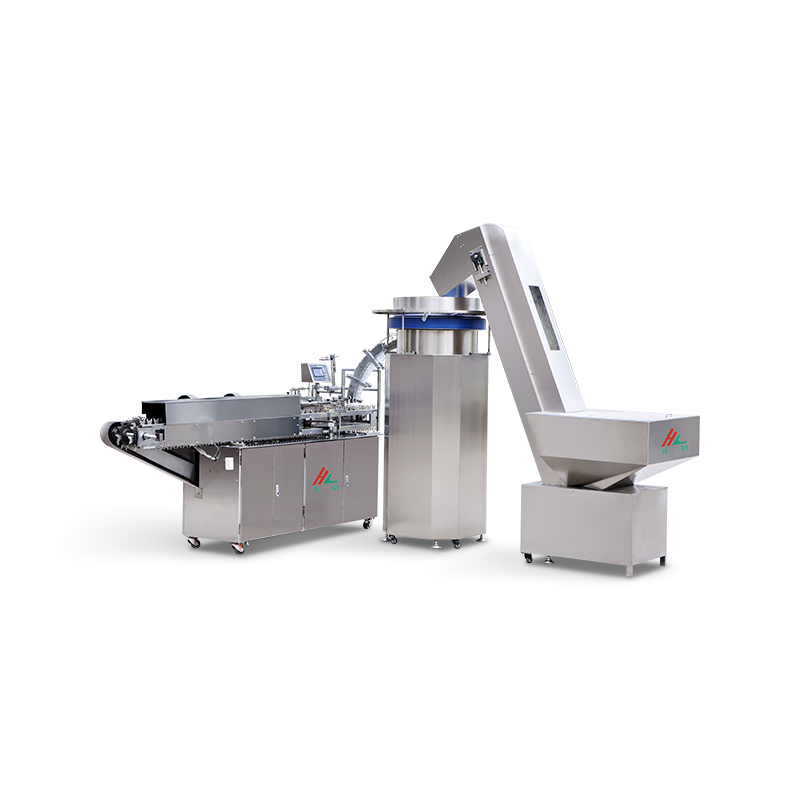
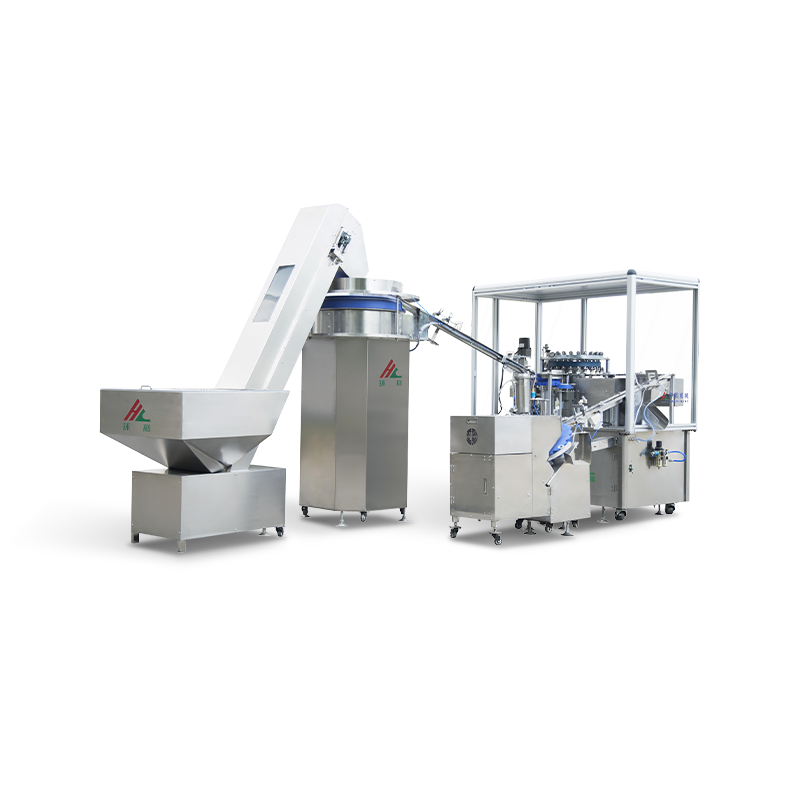
Automatic Syringe Roller Printing Machine
Introduction
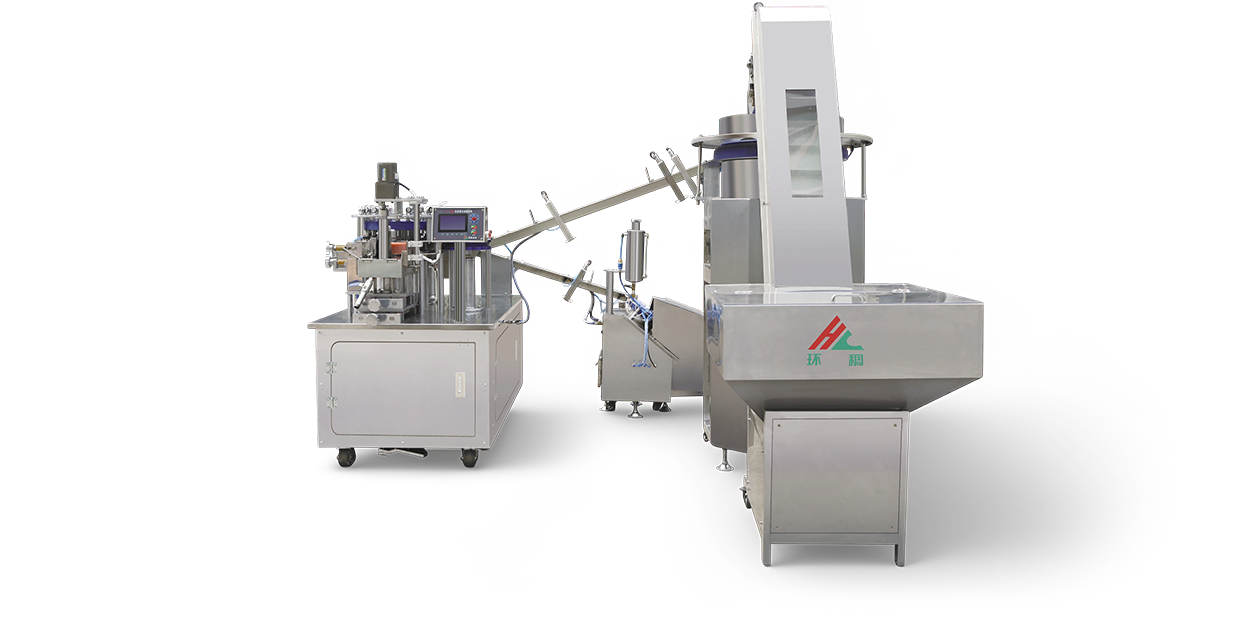
Automatic Syringe Roller Printing Machine is the fully automatic syringe roller printing machine of the GY-009 series. It adopts a variable frequency speed control drive, providing high efficiency and energy-saving operation. The printing speed can be adjusted according to syringe specifications, ranging from 140–240 syringes per minute. It is suitable for printing logos and graduation scales on syringe barrels from 1ml to 60ml, including luer slip, luer lock, and eccentric tip syringe types.
The syringe barrels are automatically sorted and fed into the machine through the automatic feeding system, then accurately fixed at the printing station by the precision positioning system. After printing, the drying system performs surface curing treatment to ensure ink adhesion and durability. Finished products are automatically discharged and collected without manual intervention throughout the entire process.
The machine integrates an automatic oil spraying system. After printing, silicone oil is automatically sprayed onto the inner wall of the syringe barrel. The spraying amount is precisely controllable with uniform atomization, allowing inner wall lubrication treatment to be completed simultaneously without the need for an independent oil spraying machine, simplifying the production line process.
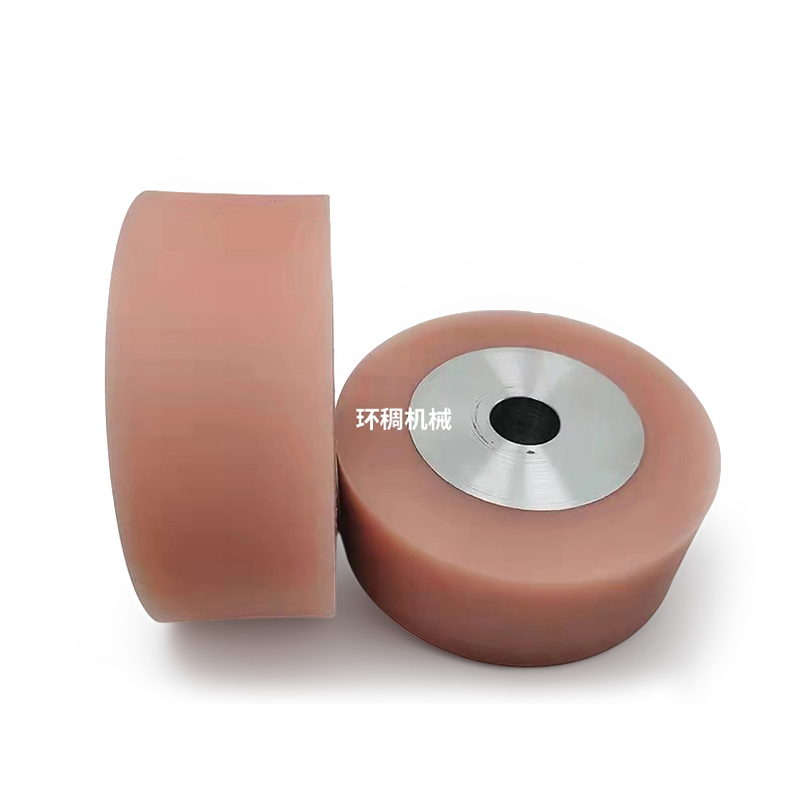
The core printing components adopt a combination structure of a drum-type silicone roller and steel stamp. With uniform contact pressure and stable wear resistance, the system effectively reduces ink consumption, extends the replacement cycle of silicone rollers, and lowers long-term consumable costs.
The gear transmission system is precision-machined to ensure smooth operation and low noise, meeting the low-noise equipment requirements of cleanroom environments. The positioning system provides high accuracy and stable printing position consistency, achieving a product qualification rate of up to 99%.
The entire machine adopts a PLC control system with a simple and intuitive operation interface and adjustable operating parameters. Combined with photoelectric sensors, it monitors material status in real time and achieves a fully automatic operation mode with automatic stop when no materials are available and automatic restart after material replenishment. The machine can operate continuously and stably for 24 hours.
This machine is configured as an economical version without a safety protective cover, suitable for production lines equipped with existing external protection systems. It reduces equipment investment costs while maintaining complete printing functions.
Technical Parameters
| Assemble Range | 1-2ml | 3-5ml | 10ml | 20ml | 30ml |
| Assemble Speed | 200-220pcs/min | 220-240pcs/min | 180-200pcs/min | 160-180pcs/min | 140-160pcs/min |
| Rated Volt | 220V/50HZ | ||||
| Equipment Size | 3000x2700x2150mm | ||||
| Power | 5kw | ||||
| Weight | 1030kg | ||||
| Air Pressure | 0.4-0.6MPa | ||||
Company
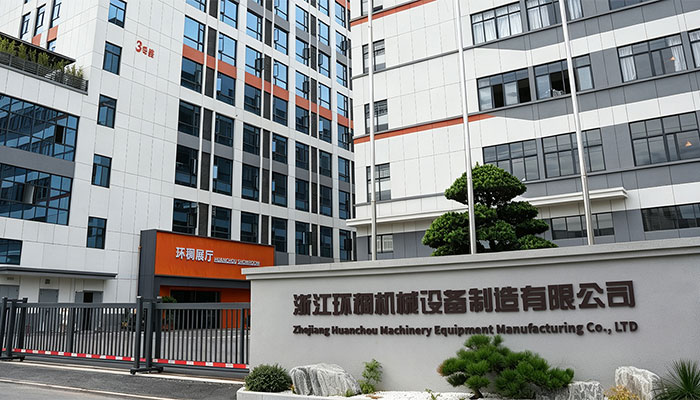
Zhejiang Huanchou Machinery Equipment Co.,Ltd.
Founded in 2008 and recognized as a National High-Tech Enterprise, Zhejiang Huanchou Mechanical Equipment Manufacturing Co., Ltd. specializes in R&D and manufacturing of automation equipment for disposable medical devices. Zhejiang Huanchou Mechanical Equipment Manufacturing Co., Ltd is a China Automatic Syringe Roller Printing Machine Manufacturer and Automatic Syringe Roller Printing Machine Supplier, our core products include automatic syringe assembly machines, self-destruct syringe assembly machines, automatic pad printing machines, and automatic syringe rolling printing machines.
With a dedicated R&D team of 23 professionals—nearly 40% of our total workforce—and ISO9001 certification, Huanchou serves clients across Europe, America, the Middle East, and Southeast Asia. Our new 23-mu manufacturing facility, designed to produce 1,000 syringe assembly line machines annually, is scheduled for full operation by the end of 2026, with an estimated annual output exceeding RMB 300 million.
Certificate Of Honor
News
-
-
A line that runs four syringe formats will lose more time to changeover than to running. Walk the floor at shift change and the pattern is familiar: the printing station sits idle waiting for format parts, the assembly station runs one product at full speed, ...
READ MORE -
A syringe line that runs three safety-cover variants, two prefilled formats, and a printed barrel for a different customer can lose more output during changeovers than during steady running. The practical fix is not simply a faster machine. It is a custom aut...
READ MORE
Message Feedback
Automatic Syringe Roller Printing Machine Industry knowledge
Zhejiang Huanchou Machinery Equipment Co., Ltd. manufactures the GY-009 Automatic Syringe Roller Printing Machine for disposable syringe lines that print graduation scales and barrel markings at production speed. Founded in 2008 and recognised as a National High-Tech Enterprise, we hold ISO9001 certification and build CE-certified syringe printing machines for customers in Europe, the Americas, the Middle East and Southeast Asia. The GY-009 is supplied as a standalone printer or as the printing stage of a combined printing and assembly line, and every unit is configured against the barrel sizes, artwork and output a plant actually runs.
As an Automatic Syringe Roller Printing Machine manufacturer in China, we build this model as the economical, uncovered version of our roller printing platform: complete printing, drying and oil-spraying functions, without an integrated safety enclosure, for lines that already provide external guarding.
GY-009 at a glance
- Working range: 1 ml to 60 ml barrels — luer slip, luer lock and eccentric tip
- Output: 140–240 syringes per minute, set by barrel size
- Drive: variable frequency speed control
- Control: PLC with photoelectric material monitoring
- Utilities: 220 V / 50 Hz, 5 kW, compressed air 0.4–0.6 MPa
- Footprint: 3000 × 2700 × 2150 mm, 1030 kg
Where the GY-009 Sits on a Syringe Line
The machine prints scale graduations, capacity figures and brand logos on the barrel wall, then discharges finished barrels for assembly, oil injection or packaging. Barrels are sorted and fed automatically, held at the printing station by a precision positioning system, printed, cured and collected without manual handling between stations. That closed loop is what makes a 24-hour continuous run practical.
- Barrel types: luer slip, luer lock and eccentric tip syringes from 1 ml to 60 ml
- Typical position in the process: after barrel forming and inspection, before assembly or filling
- Print content: graduation scales, capacity marks, logos, batch and product identification
- Material fit: rigid plastic barrels with a cylindrical print zone and sufficient wall stiffness for roller contact
Published Output by Barrel Size
Speed is set from the syringe specification rather than pushed to a single headline figure. The steps below are the published operating points for the GY-009 platform; each is trimmed at commissioning against the actual barrel, ink and print coverage.
| Barrel size | Printing output | Configuration note |
|---|---|---|
| 1–2 ml | 200–220 pcs/min | Short print length; plate and roller sized to small diameter |
| 3–5 ml | 220–240 pcs/min | Highest output band on the platform |
| 10 ml | 180–200 pcs/min | Longer scale, higher registration demand |
| 20 ml | 160–180 pcs/min | Feeder track and print station reset for larger barrel |
| 30 ml | 140–160 pcs/min | Larger diameters require correspondingly longer dwell |
Barrels up to 60 ml are supported within the machine's stated range; the working point for those sizes is confirmed during engineering from the barrel drawing and a sample run.
Printing Station: Silicone Roller, Steel Stamp and Curing
The printing station pairs a drum-type silicone roller with a steel stamp. Contact pressure stays uniform across the print area, so graduation lines and logos hold their position from the first barrel of a shift to the last, and the wear-resistant roller surface keeps its profile through long production runs. Because ink is metered onto the steel stamp before transfer, ink consumption stays lower than pad transfer on large solid characters, and silicone roller replacement intervals extend accordingly.
- Precision-machined gear transmission for smooth motion and low noise beside cleanroom workstations
- Drying system immediately after printing cures the surface so ink adhesion is set before discharge
- Positioning system specified for a product qualification rate of up to 99%
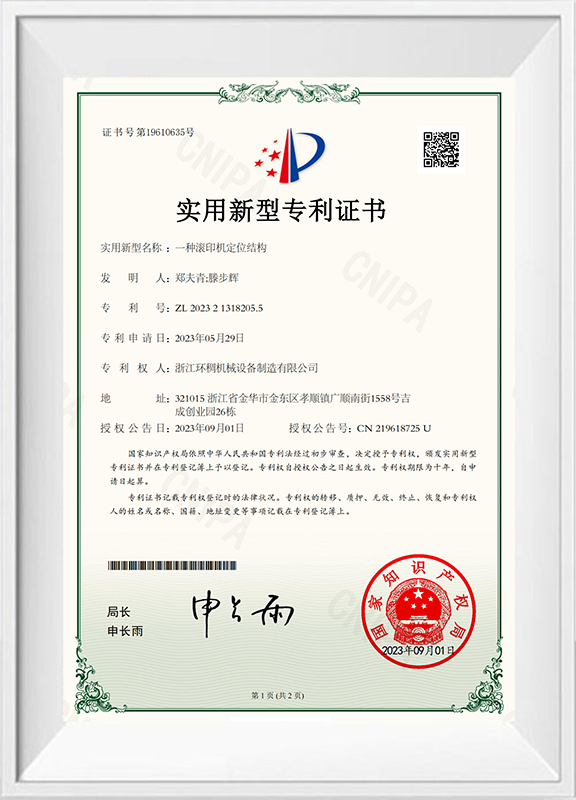
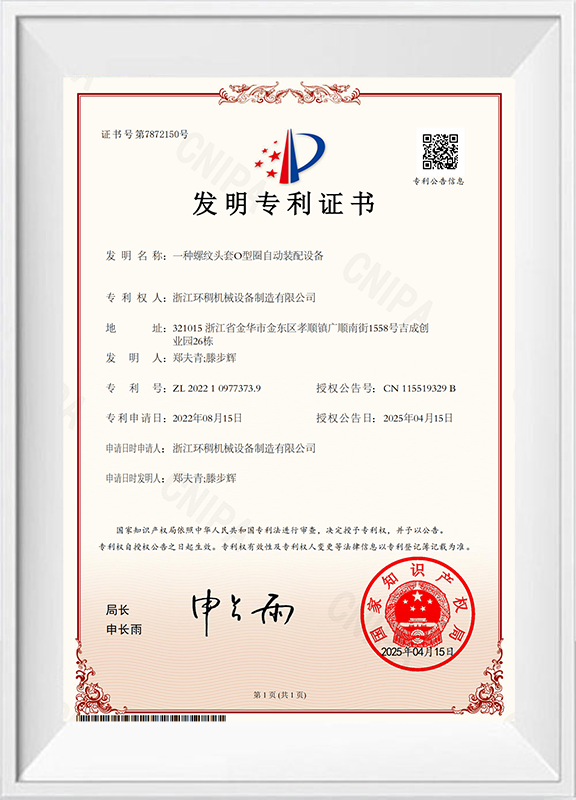
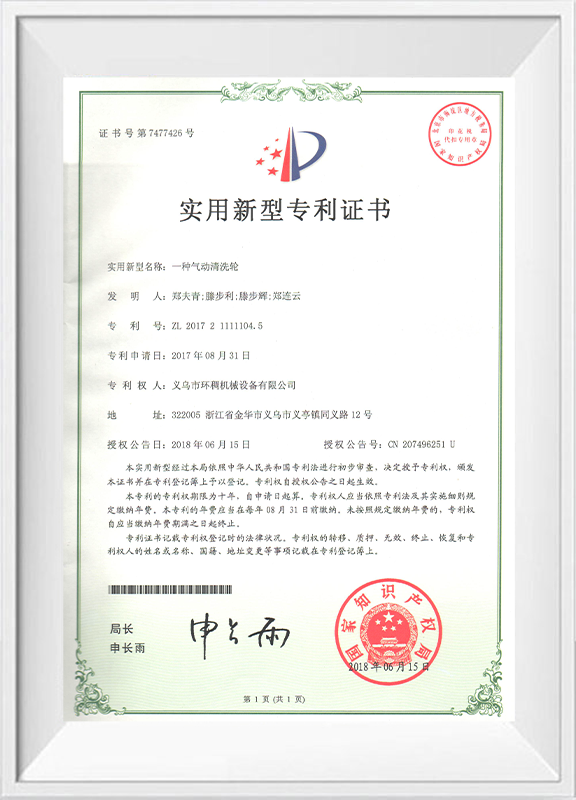
- Platform backed by our patents on automatic roller printing, steel-roller inking, rotary printing positioning, roller cleaning and barrel surface treatment
Integrated Inner-Wall Silicone Oil Spraying
The GY-009 carries an automatic oil spraying system that applies silicone oil to the inner wall of the barrel after printing, with a controllable spray quantity and uniform atomisation. Lubrication is therefore completed inside the printing cycle, and a separate oil spraying machine is no longer needed on the line. For plants moving from a three-machine layout to a two-machine layout, this shortens the handling path between printing and assembly and removes one set of transfer and buffer stations.
Control, Automation and Line Interfaces
A PLC controls the machine through an operator interface with adjustable operating parameters, and photoelectric sensors track material status in real time. When the feed runs empty the machine stops automatically and restarts once barrels are replenished, which is what allows unattended stretches on a 24-hour schedule. Variable frequency control keeps the drive efficient across the whole speed band.
- Handshake signals to the upstream feeder and to downstream assembly or packaging equipment are defined during project engineering
- Print parameters, speed and spray settings are stored per product recipe for changeover
- Fault conditions are displayed on the interface for fast operator response and remote support
Our Syringe Printing Range and Where Each Model Fits
| Model / product | Format | Best fit |
|---|---|---|
| GY-009 | Roller printing, no safety cover | Lines with existing external guarding and lower capital outlay |
| GY-009-LP | Roller printing with integrated safety cover | Standalone cells where machine-level guarding is required |
| GY-009-GSLP | High speed roller printing with safety cover | High-volume barrel ranges and dedicated printing lines |
| Printing-assembly machines | Printing linked to assembly modules | Plants consolidating printing and assembly into one flow |
| Screen printing and components | Alternative marking; rollers, seals and consumables | Specific mark formats and day-to-day spares |
The wider Syringe Printing Machines Manufacturer range covers covered and uncovered configurations on the same printing principle. Where throughput is the deciding factor, the High Speed Syringe Printing Machine with Safety Cover runs the same roller and steel-stamp logic at the top of the speed band, while the Syringe Printing-Assembly Integrated Machine combines printing, oiling and assembly in a single line for turnkey projects.
Installation, Utilities and Operating Environment
The printer installs on a level industrial floor with the 3000 × 2700 × 2150 mm footprint clear for barrel loading, discharge and maintenance access. Electrical and pneumatic connections are made to the values below; compressed air should be dry and oil-free to protect the spray nozzle and pneumatic circuits.
- Power supply: 220 V / 50 Hz, 5 kW connected load — confirm site voltage before shipment
- Compressed air: 0.4–0.6 MPa, stable flow at the spray station
- Machine weight: 1030 kg — floor loading and lifting points agreed before delivery
- Environment: stable temperature for ink viscosity, plus the noise and guarding rules of your cleanroom
- Guarding: uncovered GY-009 for guarded lines, or a covered model from the same platform
Quality Control, Acceptance and Documentation
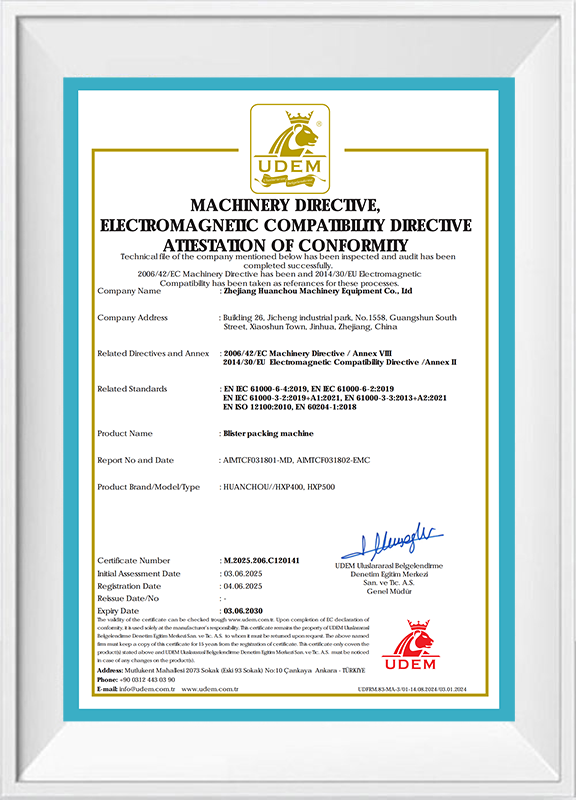
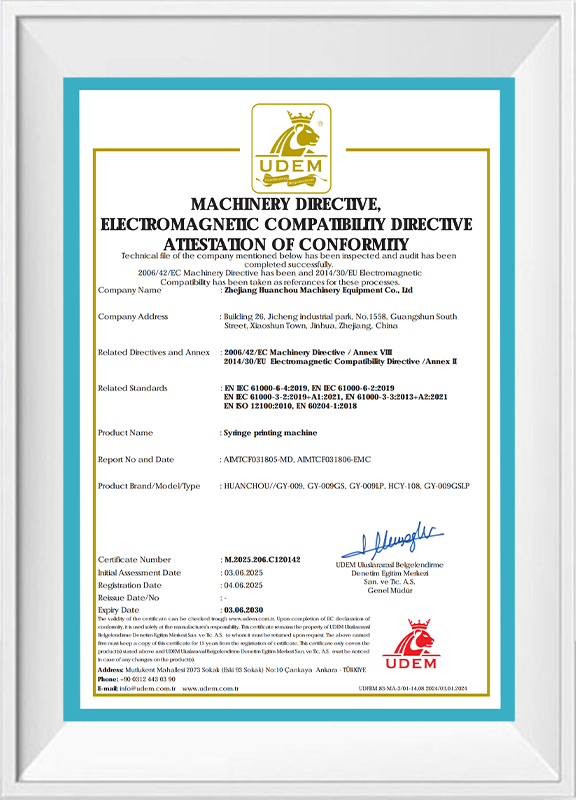
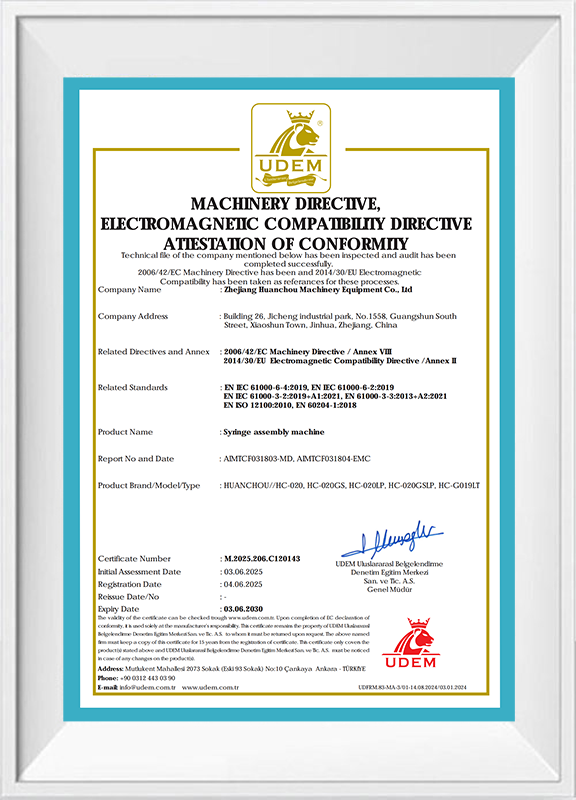
Our production is managed under ISO9001, and the syringe printing machine carries CE certification. We hold 47 patents across syringe printing, assembly, oil spraying and packaging mechanisms, and R&D is led by a 23-person team that forms close to 40% of our workforce. Acceptance is built around a sample run in our workshop before shipment.
- Print position and scale legibility checked against the approved artwork
- Ink adhesion and cure verified after the drying station
- Output confirmed at the agreed barrel size and spray quantity
- Handover package: operation and maintenance manual, electrical drawings, spare parts list and operator training
Information We Use to Configure Your Solution
A workable proposal starts from the barrel and the print, not from a catalogue number. These are the inputs that let us fix the plate, silicone roller, feeder format, spray settings and acceptance criteria.
- Barrel drawings for each size, with material, tip style and print-zone dimensions
- Artwork files, number of colours, scale range and logo placement
- Ink system and curing requirement, plus any in-house ink standard
- Target output per shift and the required annual volume
- Line layout: upstream barrel supply, downstream assembly, oiling or packaging equipment
- Site voltage, air supply, floor plan and guarding requirements
- Spare roller, stamp and nozzle quantities to be included in the first order
Frequently Asked Questions
Which syringe sizes and tip styles can the GY-009 print?
Barrels from 1 ml to 60 ml in luer slip, luer lock and eccentric tip formats. Because the plate, silicone roller and feeder format follow the barrel diameter, we build them from your drawings and samples rather than from a single universal set.
What output should we plan for a 10 ml barrel?
The published band for 10 ml is 180–200 syringes per minute, and 30 ml runs at 140–160 per minute. Final speed is set at commissioning against print coverage, ink behaviour and the stability of the upstream barrel supply.
Does the machine replace a separate silicone oil spraying station?
Yes. The integrated spraying system applies silicone oil to the inner wall after printing with a controllable, uniformly atomised quantity, so lubrication is completed inside the printing cycle and the standalone oiler is no longer part of the line.
Can we run the uncovered model in our plant?
The uncovered GY-009 is intended for lines that already provide external protection around the equipment. If your site requires machine-level guarding, the same printing platform is available with an integrated safety cover, and we confirm the correct variant during the layout review.
How is print position kept consistent over a long shift?
Precision positioning holds each barrel at the printing station while uniform roller-to-barrel pressure transfers the image, and photoelectric sensors keep the feed sequence steady. The platform is specified for a product qualification rate of up to 99% and is built for continuous 24-hour operation.
What maintenance does the printing station need?
Routine work covers roller and stamp cleaning, spray nozzle checks, pneumatic filter maintenance and normal lubrication of the gear transmission. Silicone rollers, steel stamps and seals are supplied as spares, and remote technical assistance supports changeover and fault finding between service visits.

 OEM/DOM Automatic Syringe Roller Printing Machine Manufacturer
Copyright ©
Zhejiang Huanchou Machinery Equipment Co.,Ltd.
All Rights Reserved.