

 中文简体
Walk the length of a modern syringe line and the number that decides whether the shift is profitable is rarely the headline speed printed on the datasheet. It is the number of times a person has to reach into the process. Every reach-in is a chance for a drop...
READ MORE
Home / Product / Syringe Printing & Assembly Machines / Syringe Printing-Assembly Integrated Machine
HC-GZ017
Syringe Printing-Assembly Integrated Machine

Introduction
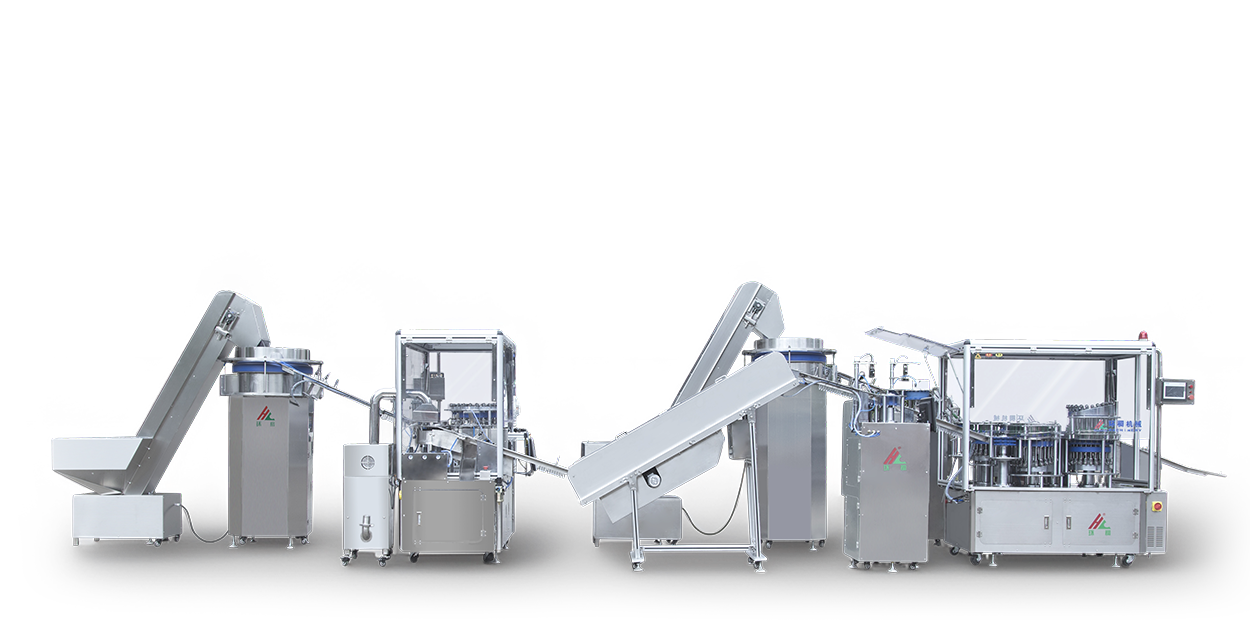
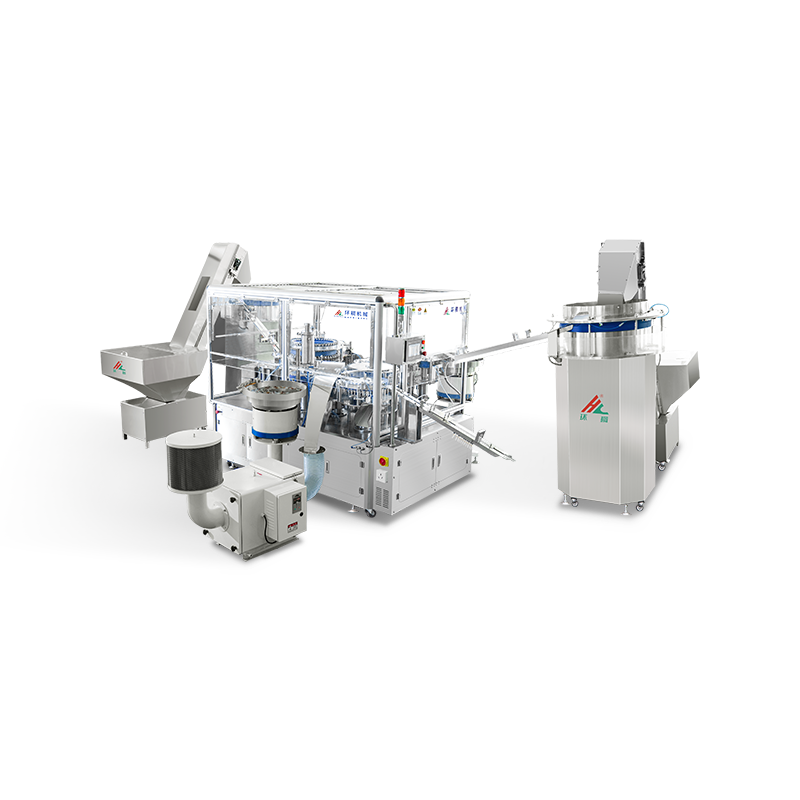
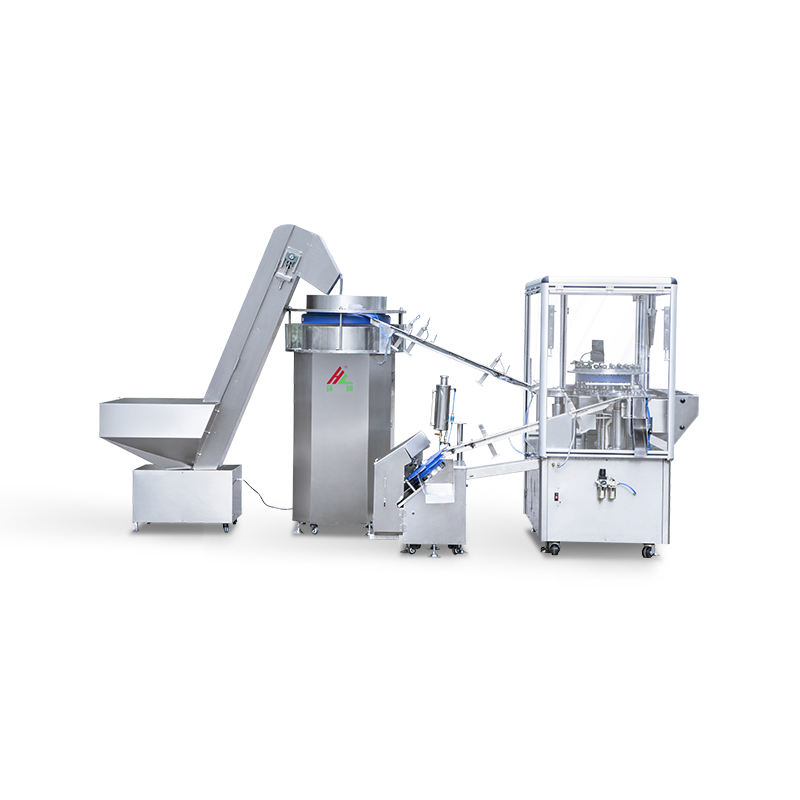
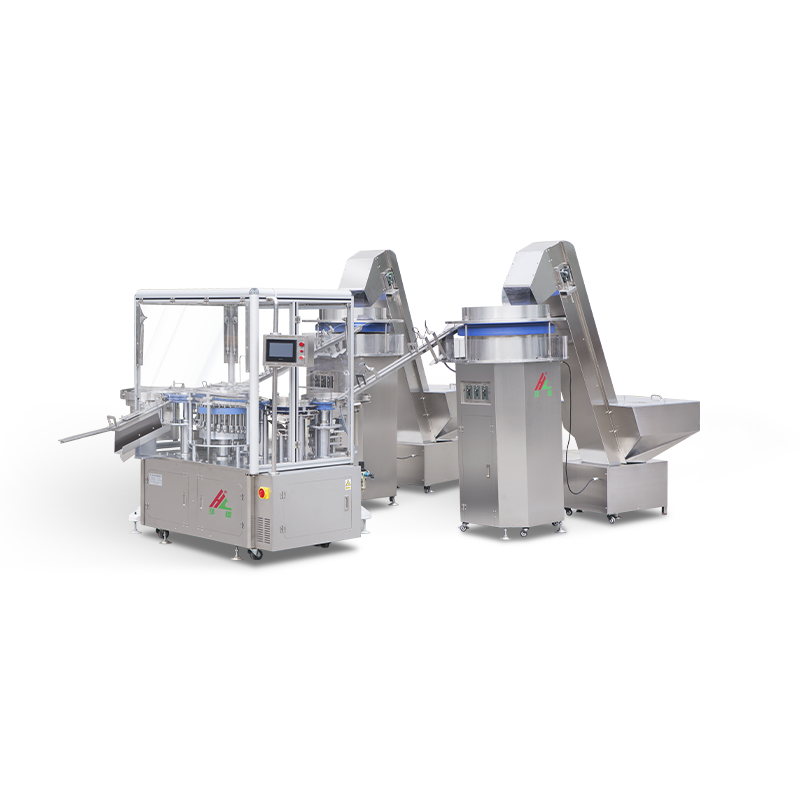
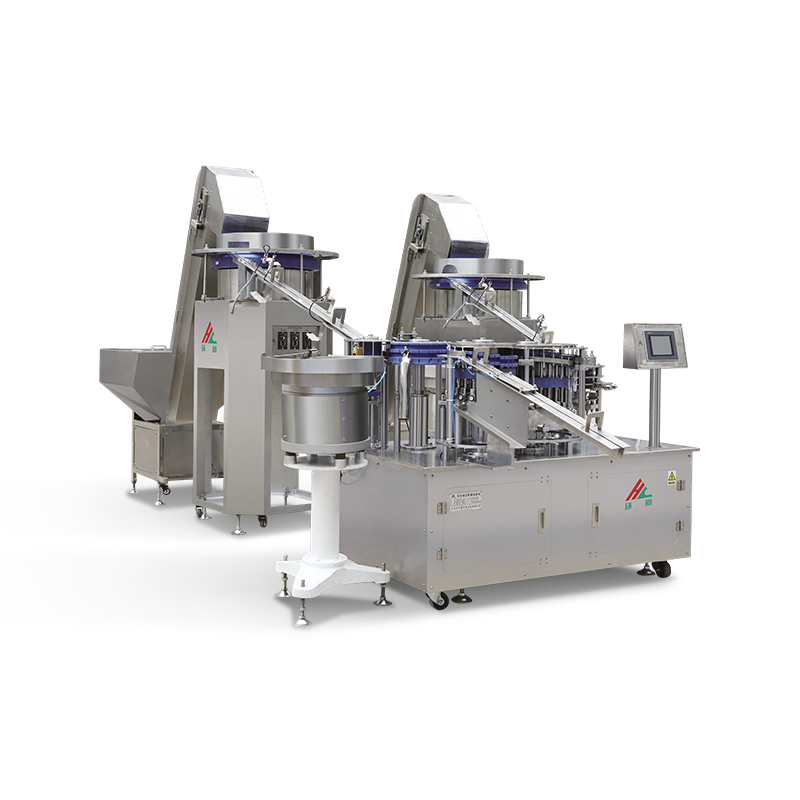
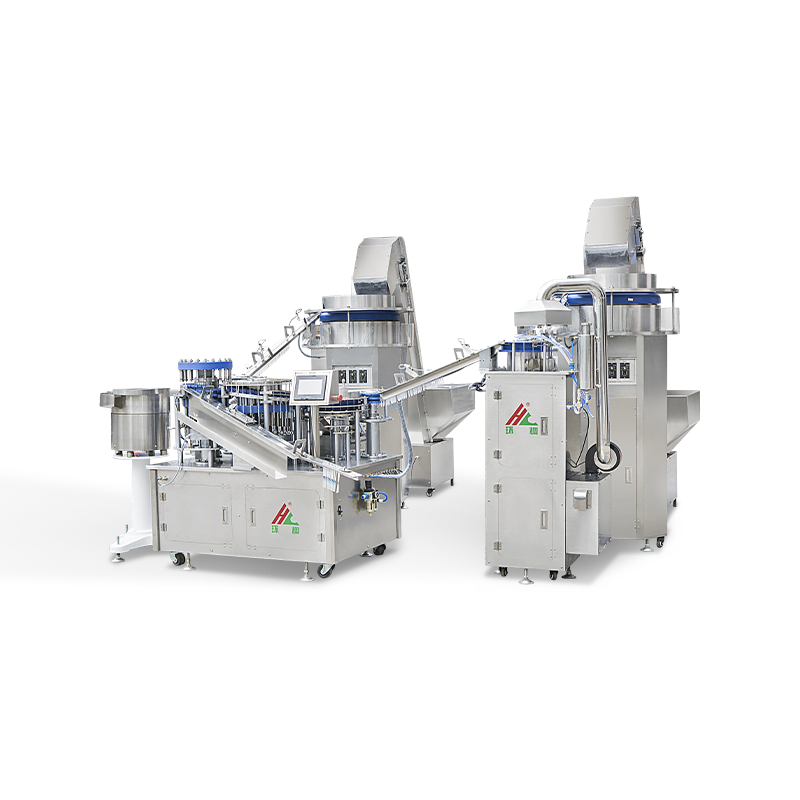
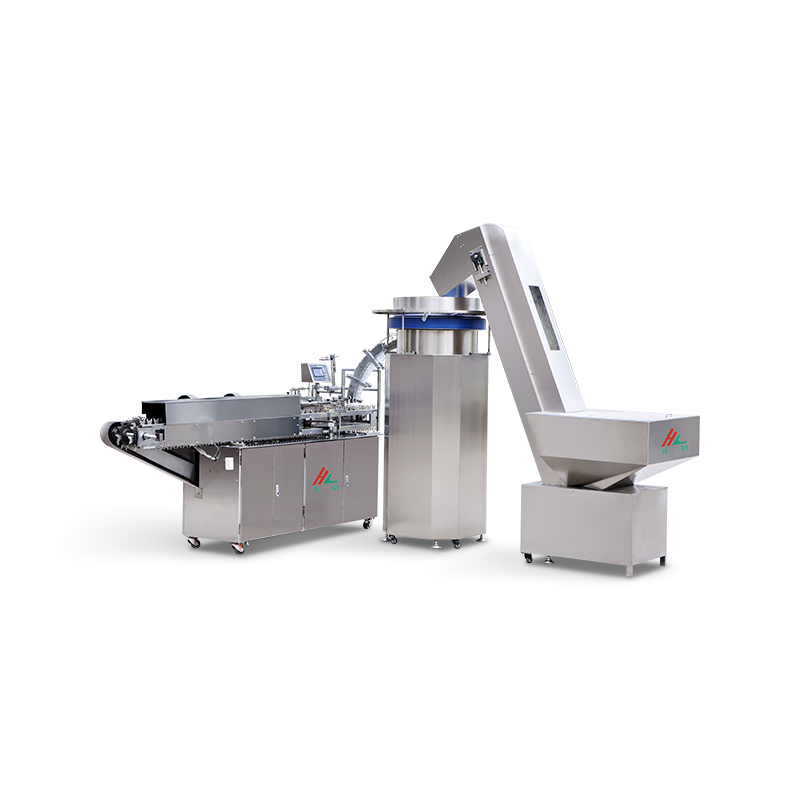
The Syringe Printing-Assembly Integrated Machine is an integrated production line combining syringe printing, inspection, and assembly processes. It adopts a modular combination design, consisting of three independent units: an automatic roller printing machine, a visual inspection system, and an automatic assembly machine. These three units are connected through photoelectric sensors to form a complete production line from syringe barrel printing to finished product assembly and discharge. It is suitable for 1ml to 50ml syringes, including luer slip, luer lock, and eccentric tip types.
Main production process:
Automatic feeding of syringe barrels and completion of Logo and graduation line printing → Visual inspection system checks the printing effect and automatically removes printing defective products → Inner wall inspection of syringe barrels, removing unqualified products with foreign materials, yellow spots, black spots, and other defects inside the barrel → Automatic silicone oil spraying for qualified products → Automatic feeding and precision assembly of syringe barrels, rubber stoppers, plungers, and needles → Assembly inspection at the outlet, automatically removing defective products without needles, rubber stoppers, or plungers → Finished product discharge can be directly connected with the packaging machine, realizing full-chain automation from printing to packaging.
The core advantage is that each of the three machines is equipped with an independent PLC control system, and the three machines are connected into one integrated system through photoelectric detection. The three machines can operate independently (when any one unit requires maintenance, the other two units can continue normal operation without affecting the output of the entire production line), while also working in coordination (when any one unit encounters a material shortage, it can send a signal to control the entire production line to stop). This design minimizes production losses caused by single-point equipment failures.
The product-contact components are made of SUS304 stainless steel and MC nylon, and the conveyor belt adopts FDA-certified food-grade materials. The entire machine is treated with anti-corrosion and rust prevention processes. All welding joints and connections are smooth and flat, preventing contamination of products and cleanroom environments.
The entire production line is designed and manufactured according to cleanroom standards, equipped with full-line safety protective covers and inspection systems. The machine automatically stops when the cover is opened and complies with CE safety certification standards, enabling continuous and stable 24-hour production. The gear transmission system operates smoothly with low noise, and each module adopts a unified operation interface for convenient management. It is suitable for the full range of 1ml to 50ml syringes and is an ideal configuration for large-volume, high-standard syringe production lines.
Technical Parameters
| Producing Range | 1ml | 2-3ml | 5ml | 10ml | 20ml | 50ml |
| Producing Speed | 300-330pcs/min | 300-330pcs/min | 300-330pcs/min | 240-260pcs/min | 220-240pcs/min | 140-160pcs/min |
| Rated Volt | 220V/50HZ | |||||
| Equipment Size | 8890x2490x2150mm | |||||
| Power | 7kw | |||||
| Weight | 2730kg | |||||
| Air Pressure | 0.4-0.6MPa | |||||
Company
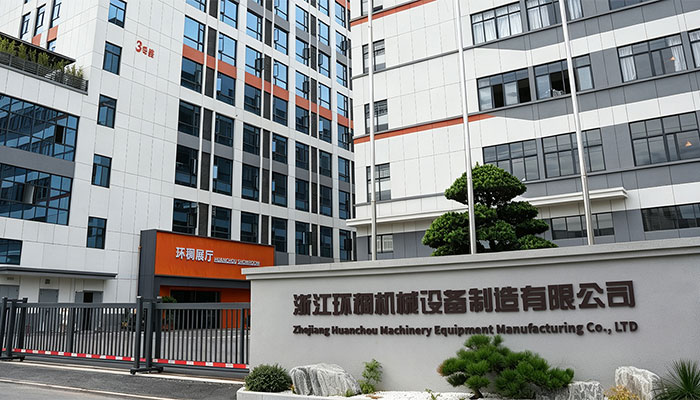
Zhejiang Huanchou Machinery Equipment Co.,Ltd.
Founded in 2008 and recognized as a National High-Tech Enterprise, Zhejiang Huanchou Mechanical Equipment Manufacturing Co., Ltd. specializes in R&D and manufacturing of automation equipment for disposable medical devices. Zhejiang Huanchou Mechanical Equipment Manufacturing Co., Ltd is a China Syringe Printing-Assembly Integrated Machine Manufacturer and Syringe Printing-Assembly Integrated Machine Supplier, our core products include automatic syringe assembly machines, self-destruct syringe assembly machines, automatic pad printing machines, and automatic syringe rolling printing machines.
With a dedicated R&D team of 23 professionals—nearly 40% of our total workforce—and ISO9001 certification, Huanchou serves clients across Europe, America, the Middle East, and Southeast Asia. Our new 23-mu manufacturing facility, designed to produce 1,000 syringe assembly line machines annually, is scheduled for full operation by the end of 2026, with an estimated annual output exceeding RMB 300 million.
Certificate Of Honor
News
-
-
A line that runs four syringe formats will lose more time to changeover than to running. Walk the floor at shift change and the pattern is familiar: the printing station sits idle waiting for format parts, the assembly station runs one product at full speed, ...
READ MORE -
A syringe line that runs three safety-cover variants, two prefilled formats, and a printed barrel for a different customer can lose more output during changeovers than during steady running. The practical fix is not simply a faster machine. It is a custom aut...
READ MORE
Message Feedback
Syringe Printing-Assembly Integrated Machine Industry knowledge
Bolun Press manufactures the HC-GZ017 Syringe Printing-Assembly Integrated Machine for syringe producers who need printing, inspection and assembly to run as one continuous flow. An automatic roller printing unit, a machine-vision inspection system and an automatic assembly unit are built as three separate modules and joined by photoelectric sensing into a single line that accepts barrels at one end and discharges assembled syringes at the other. The working range covers 1 ml to 50 ml barrels in luer slip, luer lock and eccentric tip versions, with rated output from 140 to 330 pcs/min depending on size.
From Printed Barrel to Finished Syringe
The line follows a fixed process order, so print quality and barrel cleanliness are settled before any component is assembled. Barrels are fed automatically and never leave the transport path between stations.
- Automatic barrel feeding into the roller printing unit.
- Logo and graduation line printing on the barrel surface.
- Vision check of the printed image; barrels with print defects are ejected.
- Inner-wall inspection; barrels with foreign material, yellow spots or black spots are removed.
- Silicone oil application on accepted barrels.
- Automatic feeding and precision assembly of barrel, rubber stopper, plunger and needle.
- Outlet inspection; syringes missing a needle, rubber stopper or plunger are ejected.
- Finished-product discharge, ready for direct connection to a packaging machine.
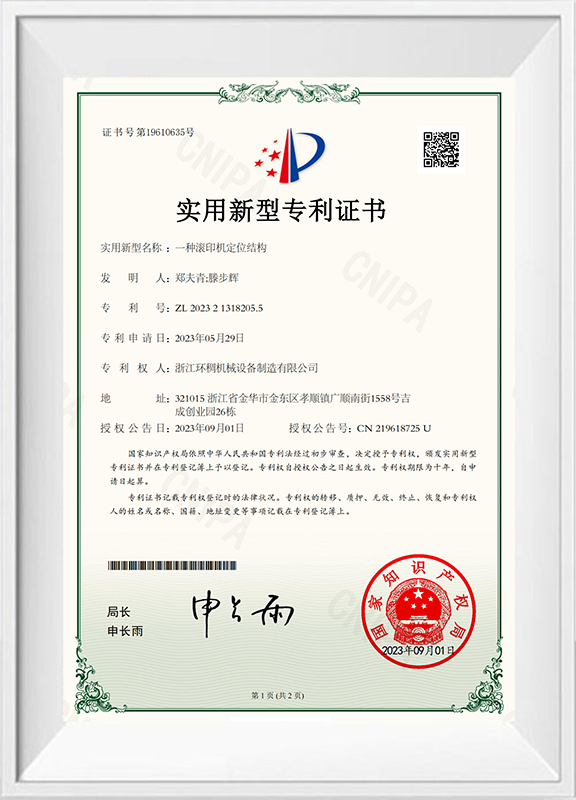
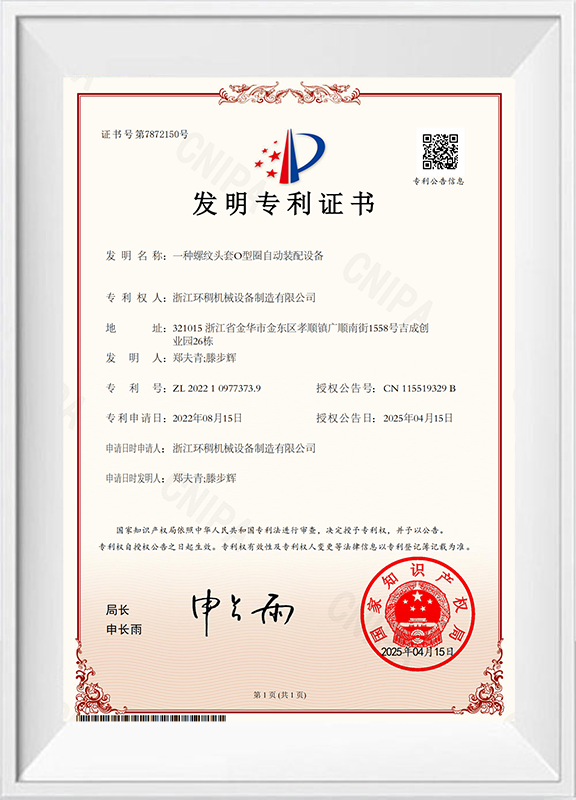
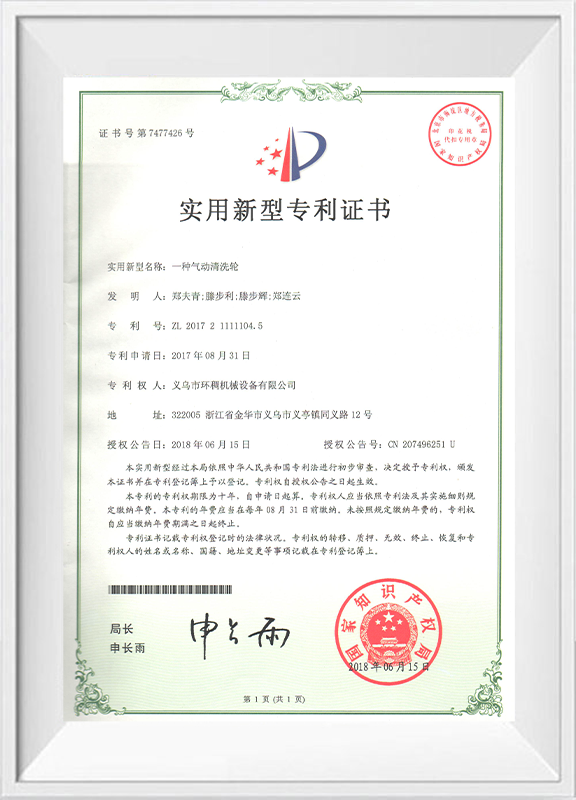
Print registration is the constraint that governs the whole chain, so we build the printing station around controlled positioning of the barrel during the print cycle. Our patent portfolio includes syringe printing positioning mechanisms, a graduation line detection and injection device and a pneumatic cleaning wheel for printing equipment, all developed in-house for this type of line.
Three Inspection Gates, One Reject Philosophy
Reject decisions are made inside the line and the defective part is removed before it can be assembled with good components. This keeps rejects identifiable and prevents a printed barrel with a damaged scale from consuming a stopper, plunger and needle.
Print verification
The vision unit evaluates the printed logo and graduation lines immediately after printing, before oil application and assembly.
Inner-wall inspection
Barrels are checked for foreign material, yellow spots, black spots and similar defects that printing inspection cannot see.
Assembly completeness
At the outlet, the line confirms the presence of needle, rubber stopper and plunger, and discharges incomplete syringes.
Rated Output by Syringe Size
Output is quoted against barrel size because transport indexing and assembly dwell time change with the format. The figures below are the rated band for the HC-GZ017 on each size.
| Syringe size | Rated output (pcs/min) |
|---|---|
| 1 ml | 300–330 |
| 2–3 ml | 300–330 |
| 5 ml | 300–330 |
| 10 ml | 240–260 |
| 20 ml | 220–240 |
| 50 ml | 140–160 |
Utilities and installed footprint
- Rated voltage 220 V / 50 Hz, installed power 7 kW.
- Compressed air 0.4–0.6 MPa.
- Line dimensions 8890 × 2490 × 2150 mm, machine weight 2730 kg.
- Layout is fixed by the three-unit configuration; approach space for maintenance access and barrel/component loading is agreed at layout stage.
Three PLCs, One Line: Availability by Design
Each of the three units carries its own PLC, and the units are synchronised through photoelectric detection rather than a single central controller. That architecture has two practical consequences on a running production floor.
- Any one unit can be isolated for maintenance while the other two keep producing, so a single-point repair does not stop the whole line.
- A material-shortage signal from any unit can stop the entire line, preventing dry running and mixed output.
- A unified operation interface across the modules keeps changeover and daily management consistent.
- Gear transmission keeps the transport smooth and low-noise during continuous operation.
Materials, Cleanroom Build and Operator Safety
Product-contact components are made of SUS304 stainless steel and MC nylon, and the conveyor belt uses FDA-certified food-grade material. The frame and guards are treated for corrosion and rust prevention, and welding joints and connections are finished smooth and flat so that residue cannot collect and contaminate the product path or the cleanroom environment.
The line is designed and built to cleanroom standards, with full-length safety covers and inspection access. Opening a cover stops the machine, and the safety design complies with CE certification requirements for syringe printing and assembly equipment. Continuous 24-hour production is within the intended duty of the line when the wear parts and consumables are managed on schedule.
Configuration and Downstream Integration
As a Syringe Printing-Assembly Integrated Machine manufacturer, we build each line around the barrel format, print content and inspection rules agreed with your production and quality teams. The finished-product discharge can be coupled directly to a packaging machine, and we coordinate that interface with the Fully Automatic Blister Packing Machine layout so that the transfer height and timing match.
| Line element | Options we confirm with you |
|---|---|
| Barrel and tip type | 1 ml to 50 ml; luer slip, luer lock or eccentric tip; change parts matched to each format |
| Print content | Logo and graduation lines, with registration verified by the vision unit before assembly |
| Inspection scope | Print verification, inner-wall inspection, outlet completeness check; reject rules set per defect class |
| Oil application | Silicone oil applied after inspection and before component assembly |
| Discharge | Free discharge or direct link to a packaging machine |
| Control architecture | Three independent PLCs with photoelectric handshake and unified operation interface |
Integrated Line or Separate Printing and Assembly Stations
The HC-GZ017 is the right configuration when printing and assembly capacity are balanced and the priority is eliminating manual transfer between the two processes. Where the production plan calls for independent capacity, we supply the same technologies as standalone machines: the Syringe Printing Machines Manufacturer range covers roller printing with and without safety cover, and the Syringe Assembly Machines Manufacturer range covers standard, high-speed, oil-injection and pre-filled versions.
- Integrated line: one material flow, one reject policy across printing and assembly, one operator interface.
- Separate stations: printing and assembly capacity can be scaled or scheduled independently, with buffer stock between processes.
- Mixed approach: a single line can also be split later, because the three units in the integrated configuration retain independent PLC control.
Quality Control, Acceptance and Documentation
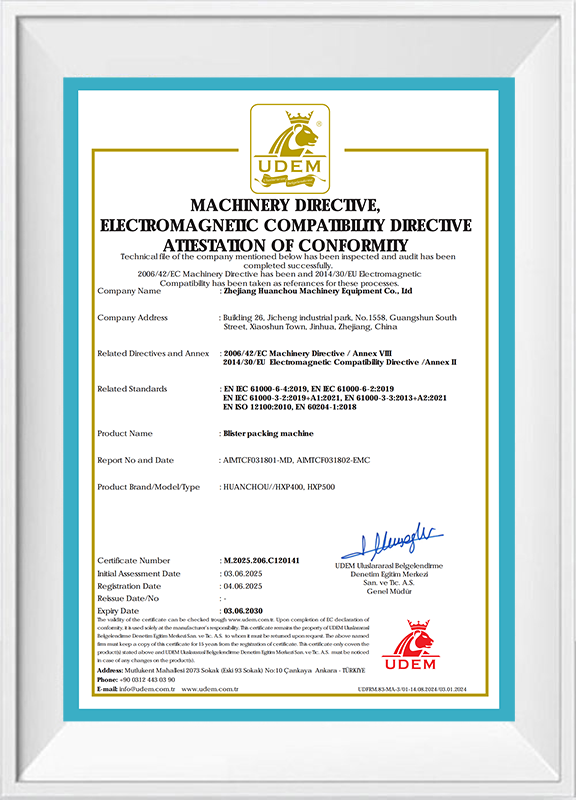
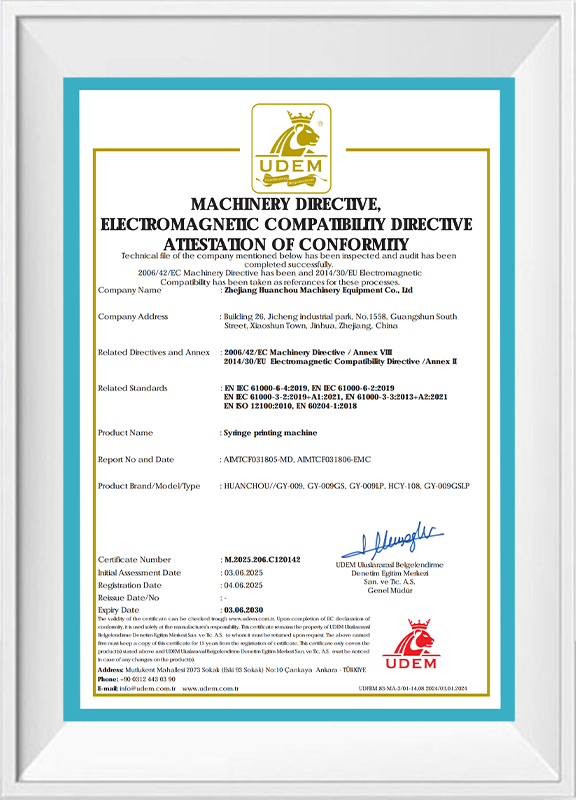
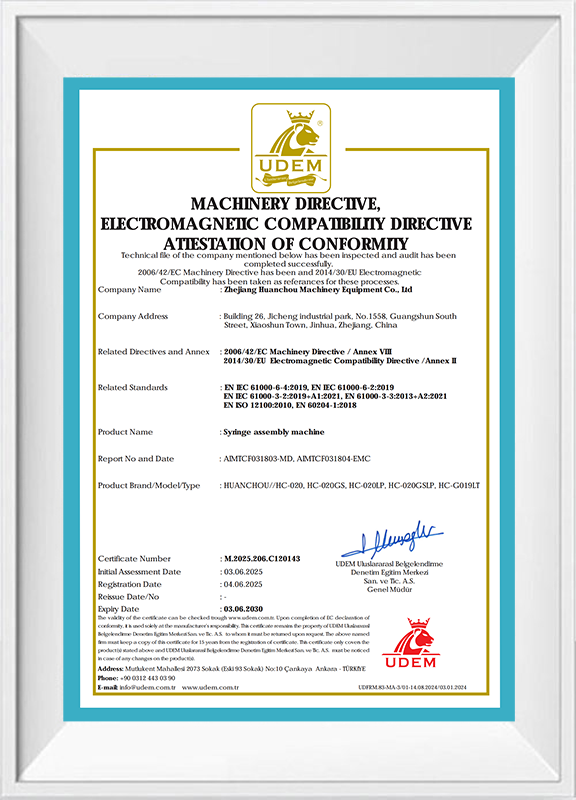
Bolun Press has operated under an ISO9001 quality system since its founding period and holds CE certification for syringe printing and assembly equipment. Our engineering team numbers 23 specialists, close to 40% of the workforce, and the company holds 47 patents across printing registration, oil spraying, barrel cleaning and assembly mechanisms — the technologies that determine line stability rather than the frame alone.
- Acceptance runs use your barrels, stoppers, plungers and needles at the rated speed for the chosen format.
- Print registration and vision reject logic are demonstrated on seeded defects before handover.
- Safety interlocks are tested with covers open and closed.
- Handover covers installation, operator training, remote technical assistance and the maintenance schedule for wear parts.
Information We Use to Configure Your Solution
- Barrel sizes, tip type and the dimensional tolerances of barrel, plunger and stopper.
- Print content, print quality criteria and the defects the vision unit must reject.
- Silicone oil requirement and the assembly sequence for needle, stopper and plunger.
- Target output per shift and the number of format changes per week.
- Downstream packaging interface, available floor length and ceiling height for the 2150 mm machine height.
- Cleanroom class, power supply, compressed air capacity and the spare parts you intend to keep on site.
Maintenance, Spare Parts and Serviceability
Because printing, inspection and assembly remain distinct modules, maintenance is scheduled unit by unit. Wear items concentrate in the printing station and the transport path: rubber rollers, embossing seals, gripper elements and belts are the parts we normally recommend holding as line spares, together with the format-specific change parts for each barrel size. Module-level isolation means a printing station service does not consume assembly capacity, and remote assistance can be used for fault diagnosis before any site visit is arranged.
Frequently Asked Questions
Which syringe formats can the HC-GZ017 run?
The line covers 1 ml, 2–3 ml, 5 ml, 10 ml, 20 ml and 50 ml syringes in luer slip, luer lock and eccentric tip versions. Change parts are matched to each format, and rated output follows the size table above.
Can production continue while one unit is being serviced?
Yes. Each of the three units has its own PLC, so the printing unit or the assembly unit can be isolated while the remaining units continue to run. The photoelectric link is restored when the serviced unit returns to the line.
What happens when a component supply runs out?
The affected unit sends a shortage signal that stops the whole line, which prevents dry cycles and mixed output. Production resumes once the supply is replenished.
Can the line discharge directly into our packaging machine?
Finished-product discharge can be connected directly to a packaging machine. We agree the transfer height, timing and buffer arrangement during layout so the two machines operate as one flow.
What utilities must be ready before installation?
The line requires a 220 V / 50 Hz supply with 7 kW installed power and compressed air at 0.4–0.6 MPa, on a floor area that accommodates the 8890 × 2490 × 2150 mm footprint plus maintenance access. Our Syringe Printing-Assembly Integrated Machine manufacturer team issues the final layout drawing with the machine order.

 OEM/DOM Syringe Printing-Assembly Integrated Machine Manufacturer
Copyright ©
Zhejiang Huanchou Machinery Equipment Co.,Ltd.
All Rights Reserved.