

 中文简体
Walk the length of a modern syringe line and the number that decides whether the shift is profitable is rarely the headline speed printed on the datasheet. It is the number of times a person has to reach into the process. Every reach-in is a chance for a drop...
READ MORE
HXP400
Fully Automatic Blister Packing Machine

Introduction
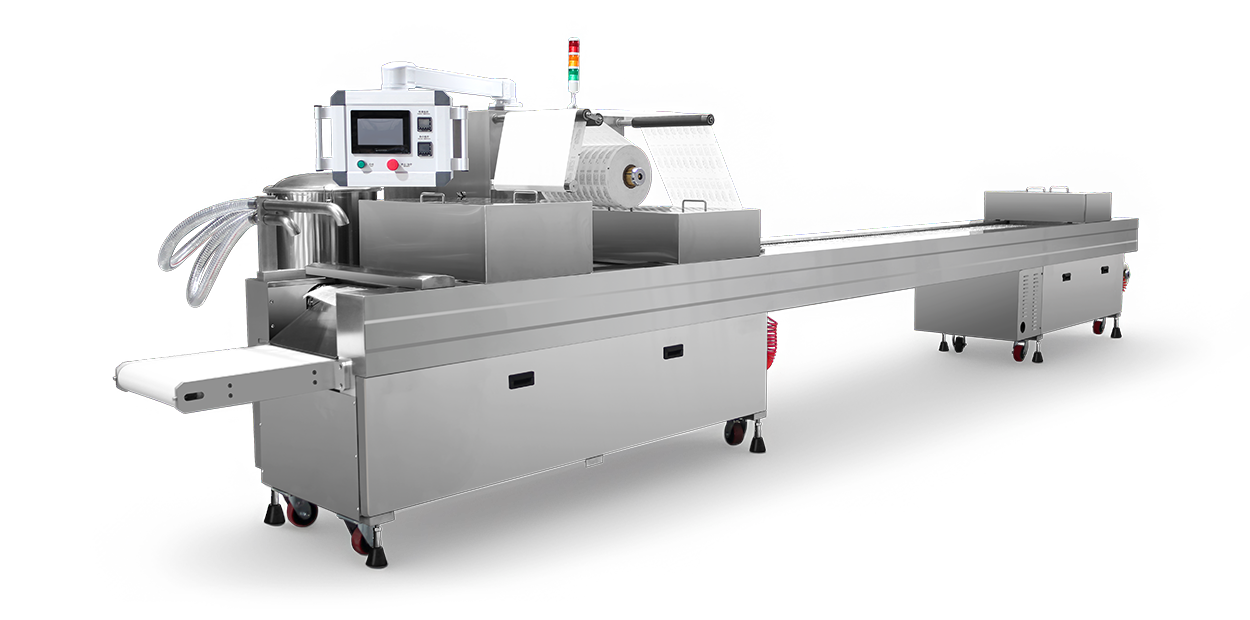
Fully Automatic Blister Packing Machine ensures high production efficiency and minimal product and material waste. It is suitable for various packaging materials, providing the fastest changeover speed and highest efficiency. Features include: simple and quick changeover, reducing material waste and downtime; simple and easy operation, reducing operator fatigue; PLC control, ensuring high stability of all parts; excellent sealing performance; precise mold cutting; high durability; and high accuracy.
The movable printing device enables clear printing on the top film. The quenched steel assembly mold (punch/matrix system) ensures cutting precision and durability. It supports various film materials, including PP+PE, PP+PVC, PET, and nylon. The maximum forming depth is 120mm, the maximum packaging width is 400mm, and the working cycle is 4–7 seconds. It is an ideal blister forming solution for manufacturing products that comply with higher-level GMP standards.
Technical Parameters
| Dimension | 7650Lx1100Wx1860H | Forming Depth | Max. 120mm | ||||
| Weight | 2.000Kg | Forming Material Width | 425mm.Thick.50-150m, pp+pe, pp+pvc. pet, nylon | ||||
| Power | 3P/380V+N+PE/50Hz, 10KW | Lidding Materials Width | ≤415mm, coated or non-coated paper | ||||
| Maximum Packing Width | 400mm | Minimum Packing Width | 19mm | ||||
| Maximum Packing Length | 400mm | Minimum Packing Length | 50mm | ||||
| Air Consumption | 6Kg/cm3,700L/Min | Working cycle | 4-7S | ||||
| Chilled Water | ≈120L/h (<25°C) | ||||||
Company
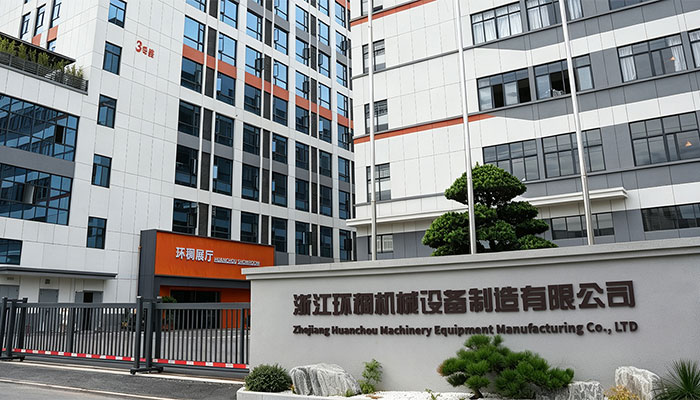
Zhejiang Huanchou Machinery Equipment Co.,Ltd.
Founded in 2008 and recognized as a National High-Tech Enterprise, Zhejiang Huanchou Mechanical Equipment Manufacturing Co., Ltd. specializes in R&D and manufacturing of automation equipment for disposable medical devices. Zhejiang Huanchou Mechanical Equipment Manufacturing Co., Ltd is a China Fully Automatic Blister Packing Machine Manufacturer and Fully Automatic Blister Packing Machine Supplier, our core products include automatic syringe assembly machines, self-destruct syringe assembly machines, automatic pad printing machines, and automatic syringe rolling printing machines.
With a dedicated R&D team of 23 professionals—nearly 40% of our total workforce—and ISO9001 certification, Huanchou serves clients across Europe, America, the Middle East, and Southeast Asia. Our new 23-mu manufacturing facility, designed to produce 1,000 syringe assembly line machines annually, is scheduled for full operation by the end of 2026, with an estimated annual output exceeding RMB 300 million.
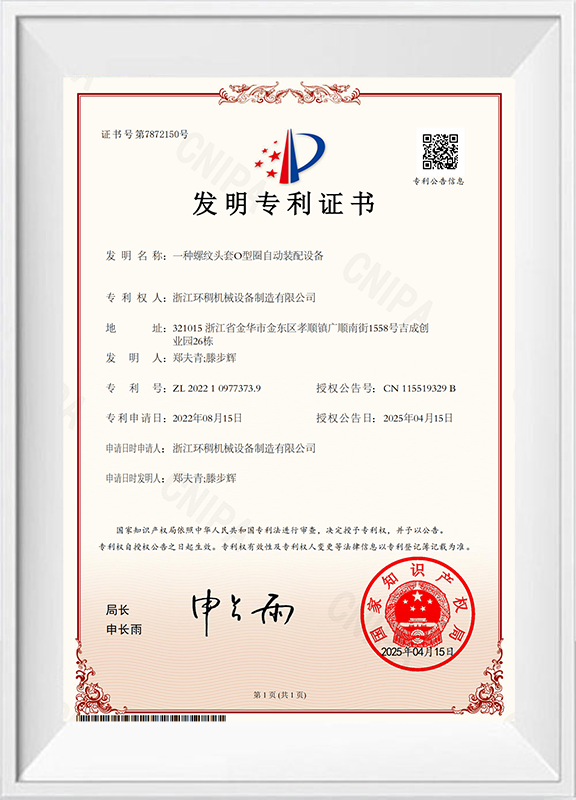
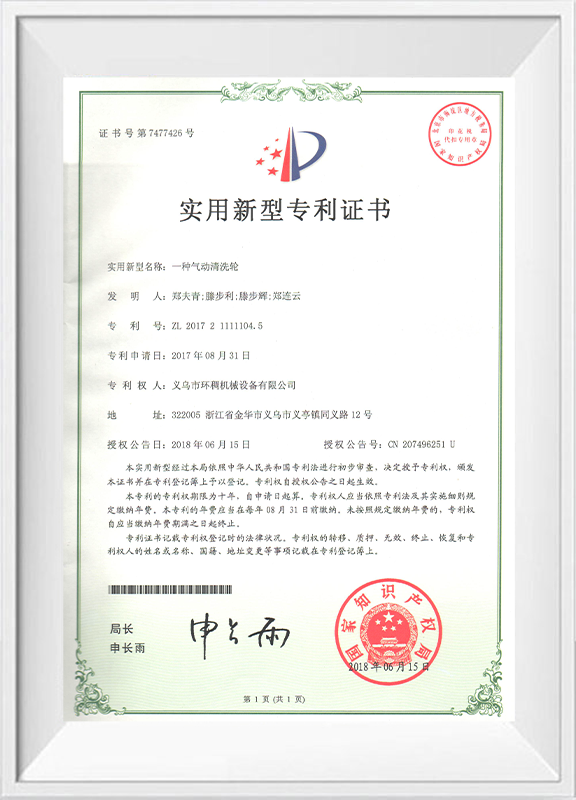
Certificate Of Honor
News
-
-
A line that runs four syringe formats will lose more time to changeover than to running. Walk the floor at shift change and the pattern is familiar: the printing station sits idle waiting for format parts, the assembly station runs one product at full speed, ...
READ MORE -
A syringe line that runs three safety-cover variants, two prefilled formats, and a printed barrel for a different customer can lose more output during changeovers than during steady running. The practical fix is not simply a faster machine. It is a custom aut...
READ MORE
Message Feedback
Recommended Products
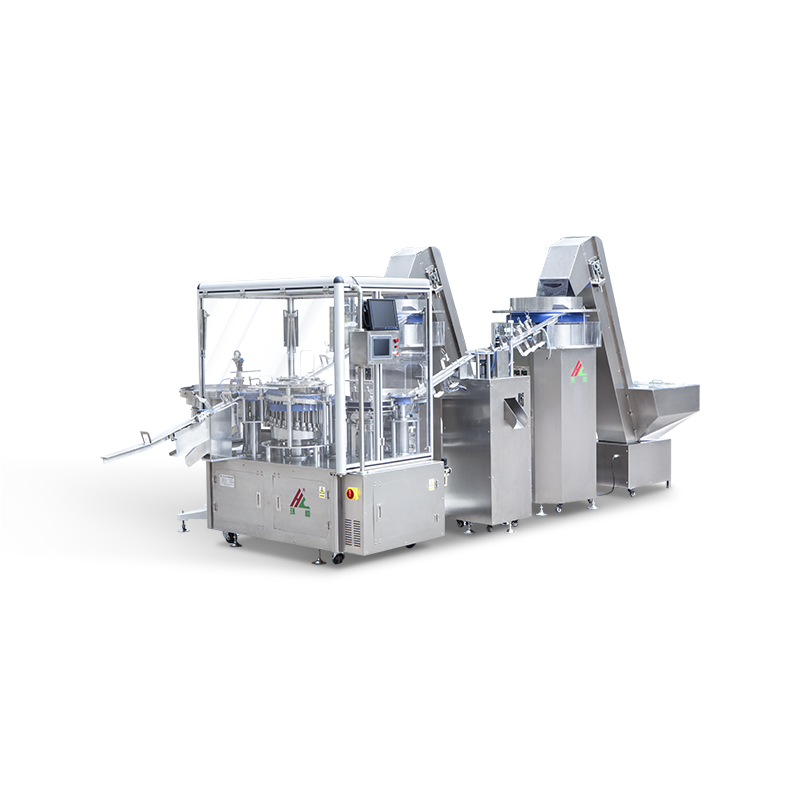
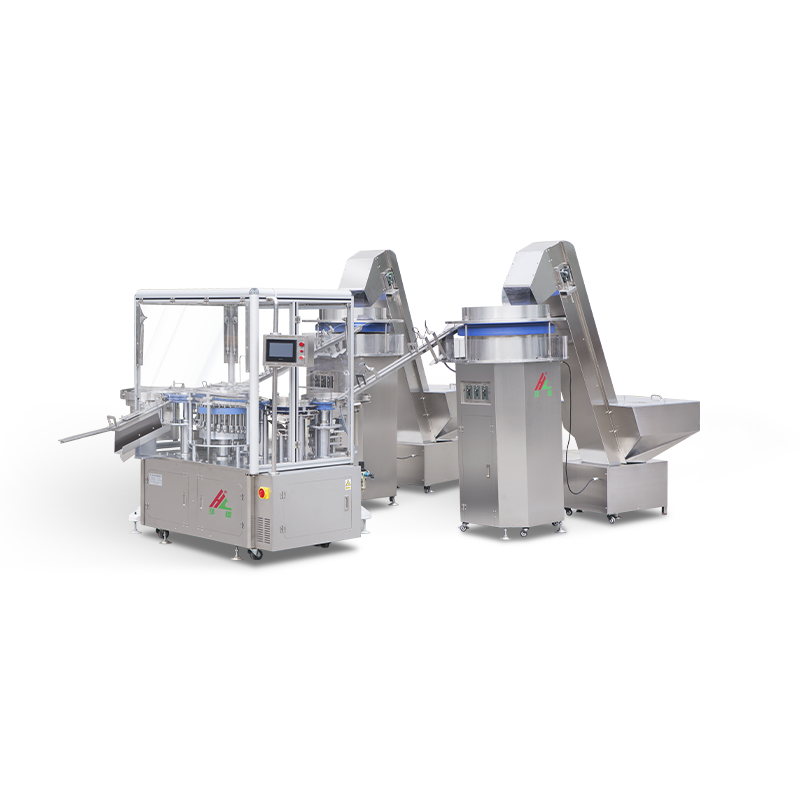
Fully Automatic Blister Packing Machine Industry knowledge
Bolun Press is a Fully Automatic Blister Packing Machine manufacturer in China, building the HXP400 at our Jinhua works in Zhejiang alongside our syringe printing and assembly machines. The machine forms, loads, seals, prints and cuts a finished medical blister in one continuous pass.
The HXP400 is specified for the deep trays that syringes, needles, catheters and procedure kits need, rather than for shallow pharmaceutical pocket packs. Forming film runs to 425 mm wide with a maximum forming depth of 120 mm, and the PLC-controlled drive keeps the four stations in register through long production shifts.
- Forming depth to 120 mm; pack width 19–400 mm and length 50–400 mm
- Movable top-film print unit for batch, date and code
- Quenched steel punch and matrix for cut register and tool life
- Working cycle 4–7 s, set by format and seal dwell
The HXP400 in Production
Every function is tied to one machine index, so pack length, cavity count and cycle time set throughput together. At a 5-second cycle a 60 mm pack runs about 720 cycles an hour; a four-cavity layout on that format therefore lands near 2,880 finished blisters an hour, while the same machine on a long multi-syringe tray produces a very different figure inside the same 4–7 second window.
Changeover is built around format sets rather than re-setting the machine from scratch. The forming mould, sealing platen and punch/matrix are exchanged as a matched set, the film path is re-threaded to the new web width, and the PLC recipe carries the temperature, dwell and index values already proven for that format.
- Recipe-driven changeover keeps start-up scrap low in multi-format plants
- Firm seal line and clean cut edge are produced in the same pass
- Machine layout is fixed, so cavity design rather than hardware sets output
Technical Parameters and What Each One Governs
| Parameter | HXP400 specification | What it governs in production |
|---|---|---|
| Packing width | 19–400 mm | Cavity layout across the web |
| Packing length | 50–400 mm | Index per cycle and blisters per stroke |
| Forming depth | Maximum 120 mm | Product height, tray depth and retention ribs |
| Forming film | Width 425 mm; PP+PE, PP+PVC, PET, nylon | Barrier, stiffness and peel behaviour |
| Lidding | Width ≤415 mm; coated or non-coated paper | Seal window and print surface |
| Working cycle | 4–7 s | Output at a given cavity count |
| Control | PLC with format recipes | Repeatability and changeover speed |
| Power | 3-phase 380 V + N + PE, 50 Hz, 10 kW | Supply arrangement and cable sizing |
| Air | 6 kg/cm², 700 L/min | Forming and cylinder response |
| Chilled water | ≈120 L/h, below 25 °C | Seal set and cycle stability |
| Dimensions / weight | 7,650 × 1,100 × 1,860 mm; 2,000 kg | Footprint, rigging and access route |
Forming and Product Loading
The forming station heats the film and draws the cavity to the depth the device needs, up to 120 mm. Because the same platform accepts PET, nylon, PP+PE and PP+PVC structures, a rigid clear tray and a soft peelable pack can both be produced without a second machine.
Product loading follows the format: operator-loaded trays for kits and lower-volume devices, or an inline transfer from our syringe printing and assembly machines where the blister line closes a syringe cell.
Sealing, Printing and Die-Cutting
Lidding runs to 415 mm wide in coated or non-coated paper and is sealed to the formed web by a heated platen. The movable print unit places batch, date and code on the top film at a position that stays legible after sealing and cutting.
The punch and matrix are machined from quenched steel, so cut register holds through long runs and the tooling survives repeated format changes. Finished cards and trim scrap separate at the discharge end for take-off or transfer to downstream handling.
Pack Formats and Material Fit
Film choice decides how the pack performs in transit and how it opens in the clinic. We work from your device drawing and the barrier or presentation requirement, then confirm the sealing window on the actual film and lidding combination before the format is frozen.
- PET — stiffness and clarity where the device should stay visible to the user
- PP+PE and PP+PVC — softer webs for peel-friendly packs with paper lidding
- Nylon — puncture resistance around needles and sharp moulded edges
- Coated paper lidding — seals across the above webs and carries the print
Cavity design carries as much of the outcome as the machine. Ribs, radii and retainers decide whether a syringe stays seated through sealing and cutting, and whether the tray still releases cleanly from the mould at 120 mm depth.
Configuration Choices on the HXP400
| Configuration area | What we set | Effect on the project |
|---|---|---|
| Cavity layout | Single or multi-cavity within 19–400 mm width | Output per hour and film utilisation |
| Forming mould | Depth and ribbing to the device drawing | Product seating and tray strength |
| Top-film print unit | Batch, date and code position | Traceability and label-free packs |
| Punch and matrix | Quenched steel set matched to the format | Cut quality and tool life |
| Loading arrangement | Trays, feeder or inline transfer | Labour content and line coupling |
| Discharge | Take-off table, conveyor or buffer | Flow into secondary packing |
| Control | PLC recipes per pack format | Changeover time and repeatability |
Line Integration, Utilities and Installation
The HXP400 arrives as a 7,650 × 1,100 × 1,860 mm machine weighing about 2,000 kg, so the access route, floor loading and clearance for film reels and tray loading are settled before shipment rather than on the day of delivery.
- Power — 3-phase 380 V + N + PE, 50 Hz, 10 kW; destination supply confirmed at order stage
- Air — 6 kg/cm² at 700 L/min, dry and filtered
- Chilled water — approximately 120 L/h below 25 °C
- Interface — PLC handshake and volt-free signals for upstream printing/assembly and downstream handling
Where the blister machine closes a syringe line, we agree the handoff at quotation stage: buffer capacity, transfer height, reject handling and the signals the two PLCs exchange. Installation, operator training and remote assistance are part of the handover.
Quality Control, Acceptance and Compliance
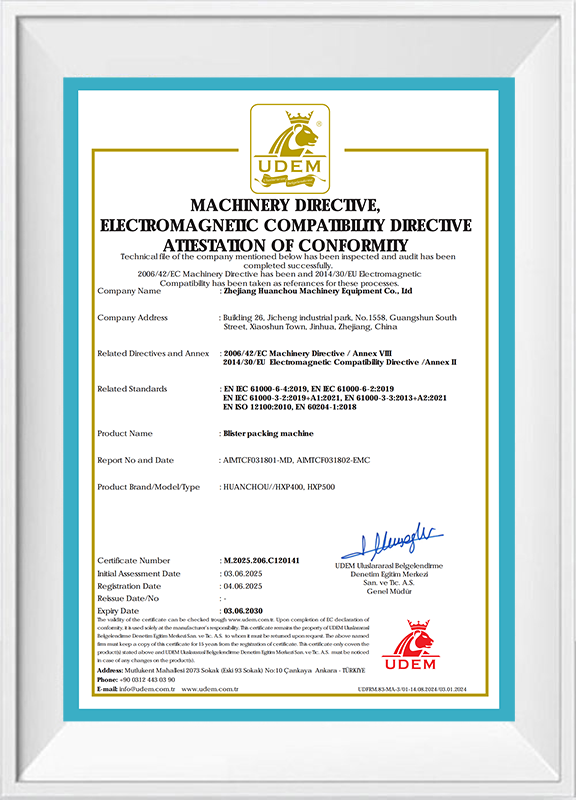
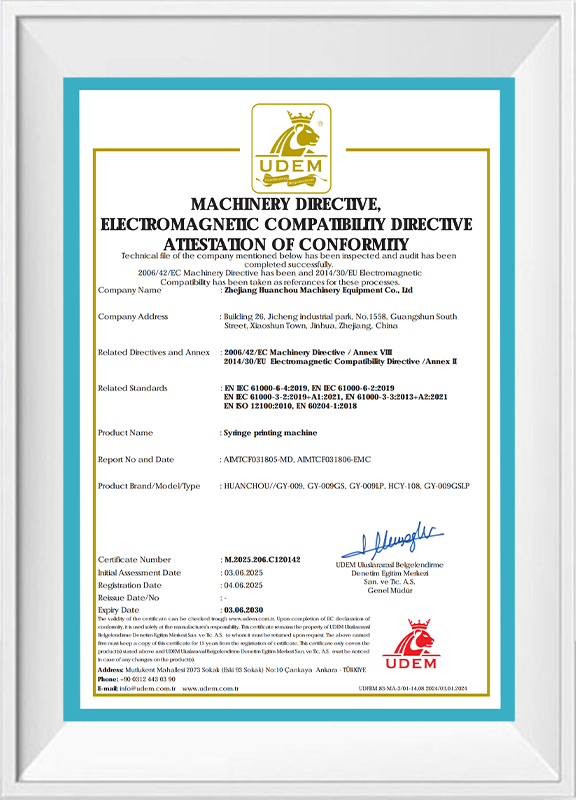
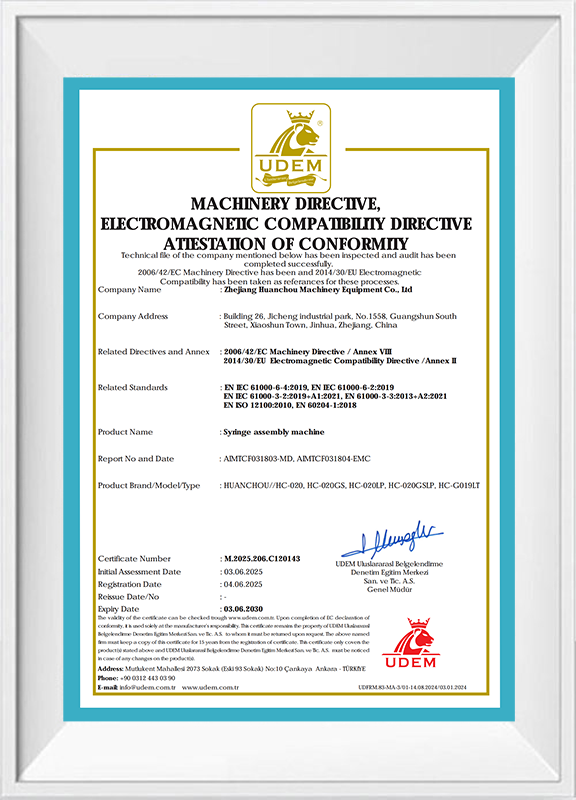
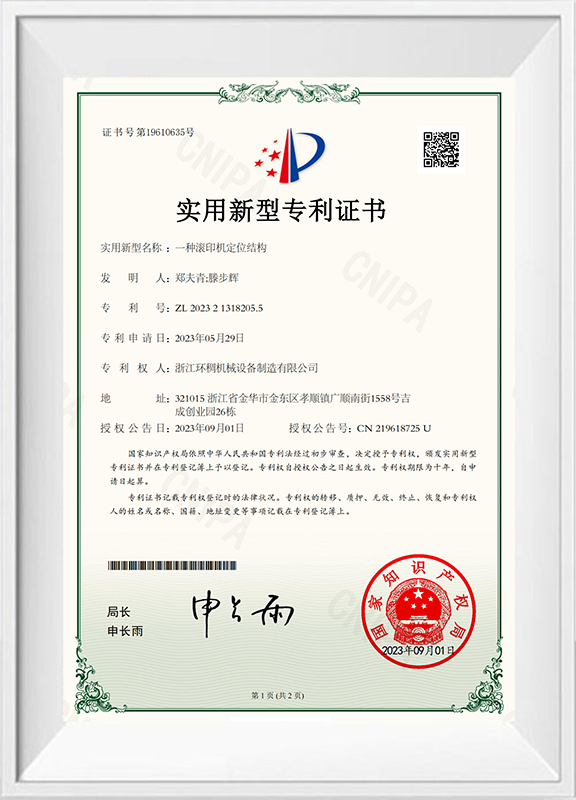
Blister packing machines leave our works under the ISO 9001 quality system, and CE certification is held for the blister packing machine. Our patent portfolio includes an unwinding mechanism for a thermoforming packaging machine — the film-tension detail that keeps forming depth consistent as the reel diameter falls through a run.
Acceptance is agreed per project and recorded before dispatch. A typical protocol covers cavity dimensions against the drawing, seal appearance and strength on your film and lidding, print legibility, cut register, trim removal and a sustained run at the target cycle time.
- Guarding arranged for operator protection at forming, sealing and cutting points
- Surfaces and the changeover route laid out for cleaning access in GMP-oriented packaging areas
- Documentation pack issued with the machine for validation and maintenance records
Maintenance, Spares and Format Tooling
The wearing parts on a blister line are predictable: sealing platen and profiles, heaters and thermocouples, film rollers, print type and the punch/matrix set. Keeping a second format tooling set on the shelf is what makes fast changeover real rather than theoretical.
- Recommended spares list issued with the machine, priced at order stage
- Scheduled checks on film tension, forming depth, seal temperature profile and cut register
- Remote diagnostics for PLC and drive faults, with on-site support where needed
Information We Use to Configure Your Solution
- Device drawing with orientation, retention points and maximum height
- Pack format: cavity layout, pack width and length, blisters per card
- Forming film structure and gauge, plus lidding grade and coating
- Target output and shift pattern, so cavity count can be matched to the cycle band
- Print content and position for batch, date and code
- Plant utilities, destination voltage and available floor space
- Upstream and downstream interfaces, including buffer and transfer height
- Validation documentation, FAT expectations and delivery window
Our Range Around the Blister Line
Medical Blister Packaging Machines
The thermoform-fill-seal range the HXP400 belongs to, for device and diagnostic packs built around formed trays. Medical Blister Packaging Machines Manufacturer
Syringe Assembly Machines
Assembly platforms that feed a blister cell directly, so loading is handled by transfer rather than by hand. Syringe Assembly Machines Manufacturer
Syringe Printing Machines
Scale and barrel printing upstream of packaging, matched to the same device handling and output target. Syringe Printing Machines Manufacturer
Frequently Asked Questions
What pack sizes can the HXP400 handle?
Pack width runs from 19 mm to 400 mm and pack length from 50 mm to 400 mm, with a maximum forming depth of 120 mm. Within those limits the cavity layout is built to your device, from a single small component to a multi-cavity syringe tray, and the PLC recipe stores the settings for each format.
Which films and lidding materials can be run?
Forming film to 425 mm wide in PP+PE, PP+PVC, PET and nylon structures, sealed with coated or non-coated paper lidding up to 415 mm wide. We set the sealing temperature, pressure and dwell against the exact film and lidding combination you specify.
How is output calculated for my format?
Output is the working cycle divided into the shift, multiplied by blisters per stroke. At a 5-second cycle the machine completes about 720 cycles an hour, so a four-cavity 60 mm format yields roughly 2,880 packs an hour while a longer multi-syringe tray yields fewer packs from the same cycle band.
What utilities must be in place before installation?
A 3-phase 380 V + N + PE, 50 Hz supply rated at 10 kW, compressed air at 6 kg/cm² and 700 L/min dry and filtered, and chilled water at roughly 120 L/h below 25 °C. The machine measures 7,650 × 1,100 × 1,860 mm and weighs about 2,000 kg, so the access route and floor loading are confirmed in advance.
Can the blister machine be linked to our syringe assembly and printing line?
Yes. We define the handoff during configuration: transfer height, buffer capacity, reject handling and the PLC signals exchanged between the blister machine and the upstream printing or assembly equipment, plus the take-off arrangement into secondary packing.
What information do you need to prepare a proposal?
The device drawing and orientation, pack format, film and lidding structures, target output and shift pattern, print content, plant utilities, line interfaces and any validation documentation you need with the machine. From those inputs we return a cavity layout, utility schedule, tooling list, acceptance protocol and delivery scope.

 OEM/DOM Fully Automatic Blister Packing Machine Manufacturer
Copyright ©
Zhejiang Huanchou Machinery Equipment Co.,Ltd.
All Rights Reserved.