

 English
 中文简体

Syringe Assembly Machine Guide for Medical Device Automation Buyers
Date:11 05, 2026
Content
- 1 Where a Syringe Assembly Machine Sits in Medical Device Automation Equipment Planning
- 2 What an Automatic Syringe Assembly Machine Does, Module by Module
- 3 Disposable Syringe Assembly Machine Choices by Syringe Type
- 4 Manual, Semi-Automatic and Automatic Syringe Assembly Compared
- 5 Laying Out a Syringe Manufacturing Machine Line From Feeding to Packing
- 6 Pad Printing and Rolling Printing on Syringe Barrels
- 7 Quality Control Points on a Syringe Assembly Machine
- 8 Self-Destruct Syringe Assembly Machine Considerations
- 9 How to Evaluate a Syringe Assembly Machine Manufacturer and Supplier
- 10 Procurement Risks and Acceptance Testing for Syringe Assembly Lines
- 11 Planning Capacity, Workforce and Floor Space for a Syringe Assembly Line
- 12 Working With a China Medical Device Automation Equipment Manufacturer
- 13 About Zhejiang Huanchou Mechanical Equipment Manufacturing
- 14 Explore Huanchou Equipment
- 15 Frequently Asked Questions About Syringe Assembly Machines
- 15.1 Q1. What should I confirm first when choosing a syringe assembly machine?
- 15.2 Q2. Can one disposable syringe assembly machine handle several syringe sizes?
- 15.3 Q3. How is a self-destruct syringe assembly machine different from a standard one?
- 15.4 Q4. What support should I expect from a medical device automation equipment supplier?
A syringe assembly machine earns its place on the factory floor when it keeps barrels, pistons, needles and printed scales in tight agreement, shift after shift, without depending on how experienced the operator on duty happens to be. That is the short answer for any buyer comparing medical device automation equipment for disposable syringe production: choose the machine whose stations match your syringe design, your target output and your inspection requirements, and give the supplier's process knowledge the same weight as the machine's headline speed.
This guide is written for factory owners, project engineers and sourcing teams who are planning a new line or replacing a manual workshop. It explains what an automatic syringe assembly machine actually does, how a disposable syringe assembly machine changes with the syringe type, where a syringe manufacturing machine line needs inspection, and what to ask a syringe assembly machine manufacturer before an order is placed. Where we refer to published references, such as ISO standards, we name them. Where we use ratings to make a comparison easier to read, we label them as illustrative planning ratings and not as survey results.
Where a Syringe Assembly Machine Sits in Medical Device Automation Equipment Planning
Most syringe projects start with molding. Barrels and plunger rods come out of injection molding machines, rubber pistons arrive from a molding or sourcing partner, and needles come in as a separate component. The assembly machine is where these loose parts become a single functional device. It is also the step where small dimensional drift in any upstream part becomes visible, because a piston that is slightly oversize or a barrel that is slightly out of round will show up as assembly force variation or a rejected unit.
In a typical disposable syringe plant, the sequence runs from component feeding to assembly, then to printing, inspection, packing and sterilization. Medical device automation equipment covers every one of those steps, but the assembly stage is usually the one that decides how stable the rest of the line will be. If assembly is inconsistent, the printing station inherits misaligned barrels, the inspection station rejects more units, and the packing station sees uneven product flow.
The usual stages in order
- Component preparation: barrels, plunger rods, pistons, needles and caps are sorted and loaded into feeding systems.
- Piston assembly: the rubber piston is fitted onto the plunger rod head.
- Plunger insertion: the piston and rod assembly is inserted into the barrel.
- Marking: graduations, volume marks and batch information are printed on the barrel.
- Needle or cap fitting: depending on the design, a needle hub or a tip cap is added.
- Inspection and packing: vision checks, counting and primary packaging prepare the product for sterilization.
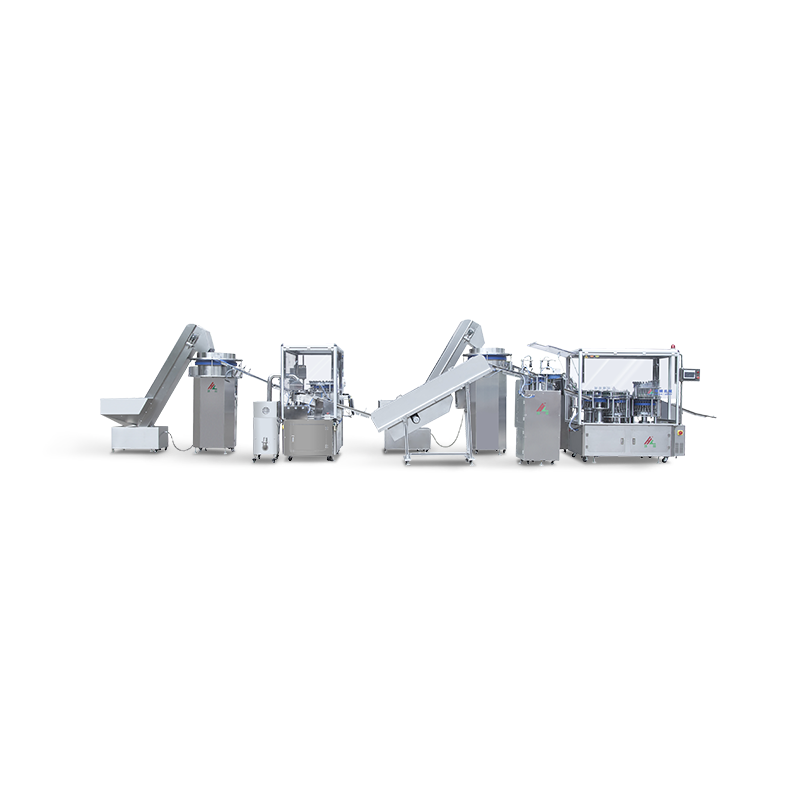
Buyers who are new to this field sometimes treat the assembly machine as a stand-alone purchase. In practice it behaves more like the center of a small system. The feeding method, the printing method and the packing method all have to agree on how a barrel is held, oriented and moved. A supplier who has built complete lines, and not only single machines, will usually raise these interface questions early, which is a useful signal when you are comparing quotations.
Plan the assembly machine together with feeding, printing and packing, because the stations share the same barrel handling logic.
What an Automatic Syringe Assembly Machine Does, Module by Module
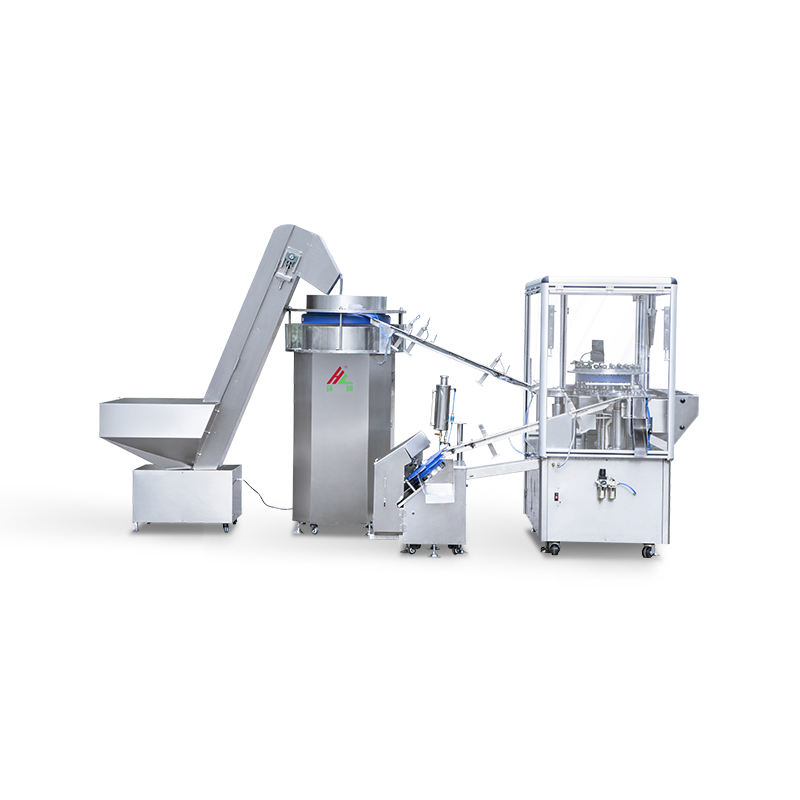
An automatic syringe assembly machine is easier to evaluate when you stop looking at it as one block and read it as a set of modules. Each module has one job, one typical failure pattern and one thing you can check during a factory visit. Below is a practical breakdown that works for most disposable syringe designs.
| Typical modules of an automatic syringe assembly machine and what to check in each. | ||
| Module | Main job | What to check at a visit |
| Barrel feeding | Orients and delivers barrels to the line | Jam frequency with your own barrels, not demo samples |
| Piston feeding and fitting | Places the piston on the plunger rod head | Handling of tacky or lubricated pistons |
| Plunger insertion | Pushes the assembled plunger into the barrel | Alignment guides and insertion force monitoring |
| Printing interface | Holds the barrel steady for marking | Rotation control and scale position repeatability |
| Needle and cap station | Fits needle hubs and protective caps | Seating consistency and cap retention |
| Control and rejection | Detects faults and removes rejected units | Reject logic, counters and alarm records |
Two points deserve extra attention. The first is piston handling. Rubber pistons are soft, can carry a thin layer of lubricant and can stick to feeder surfaces, so a machine that performs well on dry plastic parts may behave differently on real pistons. Always ask for a trial run with the exact components you plan to use in production.
The second is the control system. A modern machine should log rejects, stoppages and counts in a way your quality team can read. If your customers audit your production records, a line that cannot produce a simple shift report adds manual work later. A reliable syringe assembly machine manufacturer will explain how the control system records events and how that data can be exported.
Test every module with your own components, especially the piston station, before you judge the machine as a whole.
Disposable Syringe Assembly Machine Choices by Syringe Type
A disposable syringe assembly machine is not a universal tool. Two-piece syringes, three-piece syringes with a Luer slip tip, Luer lock versions, auto-disable designs and insulin syringes each load the machine in a different way. Sterile single-use hypodermic syringes are covered by ISO 7886-1, auto-disable syringes for fixed-dose immunization by ISO 7886-3, and syringes with a re-use prevention feature by ISO 7886-4, so your target product often determines which design rules apply before you talk to any supplier.
The Luer connector itself is another useful reference point. The Luer taper is a 6 percent taper, and the connector family used on modern syringes is described in the ISO 80369 series. Tip geometry matters to the assembly machine because it affects how barrels are held, how needles are seated and how cap stations apply force.
Before reading the next chart, keep in mind that it is a planning aid and not measured data. The ratings reflect how much demand each syringe type typically places on four parts of the assembly process, based on general design differences.
The chart shows that demand rises as syringe designs become more specialized. Standard two-piece and three-piece designs sit in the middle of the range, while auto-disable and insulin designs concentrate higher demand on piston handling and inspection. This matches what engineers see in practice: auto-disable designs carry a mechanism that must function reliably, and insulin syringes combine a fine scale with a fixed needle.
For a buyer, the practical reading is simple. If you plan to start with a standard three-piece syringe and add other designs later, ask the supplier which stations can be changed over and which need a dedicated machine. A syringe assembly machine factory with experience across several syringe types can usually tell you early where a later design will need new tooling and where it will not.
It also helps to separate what your customer base expects today from what it may expect in three to five years. Wholesalers and distributors who are moving into local production often begin with a standard syringe, then expand to safety designs as tender requirements change. Choosing a machine platform that can follow that path avoids a second round of line planning.
Define your first syringe type and your likely second one before requesting a quotation, so the machine platform can be matched to both.
Manual, Semi-Automatic and Automatic Syringe Assembly Compared
Plenty of small workshops still assemble syringes by hand or with semi-automatic fixtures, and that is a reasonable starting point for pilot batches. The question for most growing factories is when to move to an automatic syringe assembly machine. The answer depends on how much variation your customers will accept and how much manual handling you can accept near a medical product.
The radar chart below compares three working modes across five factors that buyers raise most often. The ratings are illustrative planning ratings from 1 to 5 and not measured values, so use them to structure an internal discussion, not as evidence of performance.
The shape of each polygon tells the story. Manual assembly stretches toward small-batch flexibility but stays close to the center on traceability, labor efficiency and scalability. Semi-automatic fixtures form a balanced middle shape, which is why they suit pilot production or a first product launch.
An automatic line reaches outward on four factors and gives up some small-batch flexibility, because changeovers take planned effort. For a syringe manufacturing machine investment, that trade is usually acceptable once monthly volumes are stable and the product range is defined. If your order pattern includes many short runs of different designs, discuss quick-change tooling with the supplier before choosing a fully automatic configuration.
Traceability deserves a separate comment. When a customer asks which shift or which batch a specific unit came from, an automatic line with counters, timestamps and reject logs can answer that question with records. A manual process answers it with paper and memory, and that gap tends to grow as customers and audits grow.
| A practical comparison of manual, semi-automatic and automatic syringe assembly approaches. | |||
| Factor | Manual | Semi-automatic | Automatic |
| Best fit | Samples and trials | Pilot or early production | Stable, continuous production |
| Operator dependence | High | Moderate | Lower, mainly supervision |
| Record keeping | Manual records | Partial records | Machine-generated records |
| Changeover | Fast | Moderate | Planned, tooling based |
Move to an automatic line when volumes and product range are stable enough to justify planned changeovers in exchange for consistency and records.
Laying Out a Syringe Manufacturing Machine Line From Feeding to Packing
A syringe manufacturing machine line is a chain, and its output follows the slowest or least stable link. When planning a layout, start from the end of the line and work backward. Decide what the packing step needs, then ask what the printing and assembly stations must deliver to keep it supplied.
Buffering between stations
Short buffers between stations absorb brief stoppages so one jam does not stop the whole line. Too little buffering makes the line fragile, while too much makes it harder to trace a defect back to its source. A sensible supplier will propose buffer lengths based on your layout and explain the reasoning.
Operator access and cleaning
Operators need to reach feeders and rejection bins without climbing over guards. Surfaces that touch medical components should be easy to wipe down, and enclosed guarding helps keep dust away from open components. If the line will run in a controlled environment, the cleanroom classification defined under the ISO 14644 series is usually set by your sterilization and packaging plan, so share that plan with the supplier at the start.
Utilities and space
Compressed air, electrical supply and floor loading are simple items that cause avoidable delays when they are discovered late. Ask for a utilities sheet with the quotation, and compare it with what your building can provide. Include maintenance clearance around each module in your floor plan, since a machine that fits the drawing but not the service routine causes slow repairs.
- Confirm the flow direction of the line against your warehouse and sterilization route.
- Leave space for a rework or reject inspection table near the end of the line.
- Plan storage for pistons, caps and needles close to their feeders to shorten loading time.
- Reserve a location for spare tooling so changeover parts do not sit on the production floor.
Design the line backward from packing, and give buffers, access and utilities as much attention as the machine itself.
Pad Printing and Rolling Printing on Syringe Barrels
Printing looks like a cosmetic step, but on a syringe it carries functional information. The graduation scale lets a nurse or patient read the dose, so a scale that drifts, smudges or sits off-center is a quality concern and not only a cosmetic one. Two methods dominate in syringe production: pad printing and rolling printing.
Pad printing transfers ink from an etched plate to the barrel through a soft silicone pad. It handles fine lines and small text well, which is useful for scales with tight spacing. Rolling printing turns the barrel against a print element so the image wraps around the surface, and it suits continuous, repeated marking at steady line speed.
| General differences between pad printing and rolling printing for syringe barrels. | ||
| Aspect | Pad printing | Rolling printing |
| Typical strength | Fine detail and small text | Continuous wrap-around marking |
| Barrel handling | Barrel held while the pad transfers the image | Barrel rotates against the print element |
| Changeover | Plate and pad changes | Print element and fixture changes |
| Main control point | Ink consistency and pad wear | Rotation accuracy and contact pressure |
Your choice depends on the barrel diameter range, the scale layout and the line speed you plan to run. Many factories use an automatic pad printing machine for scales and a separate rolling printing step for continuous text or batch information. Ask your supplier to print on your own barrels and check the result under magnification, including how the scale sits relative to the barrel seam and the finger flange.
Ink adhesion needs its own check. Ink should stay on the barrel through handling, packing and sterilization, so request a rub test and a sterilization trial on printed samples before approving the printing method. Your local regulator or notified body may have views on ink type, so confirm requirements early.
Pick the printing method from your scale layout and barrel range, then verify adhesion on your own barrels after sterilization.
Quality Control Points on a Syringe Assembly Machine
Quality is built into a syringe assembly machine through a handful of well-chosen checkpoints, not through a single inspection at the end. The machine cannot replace your quality system, which is usually organized around ISO 13485 for medical devices, but it can supply timely evidence that each unit passed through the intended steps.
Presence and position checks
Sensors verify that every component is present before the next step. A missing piston, a skipped cap or a barrel placed backward is cheap to catch at its own station and expensive to find after packing. Ask the supplier to list every presence check and what the machine does when one fails.
Force and displacement monitoring
When the plunger is inserted, the force profile can reveal a damaged piston, a dry insertion or a barrel with an unusual inner surface. Not every machine includes this check, and its value depends on how well the thresholds are set. Discuss how thresholds are defined and who can change them.
Vision inspection
Cameras can check printing completeness, cap presence and gross visual defects. They work best when lighting and orientation are stable, so confirm that the camera station is built for your barrel material and color. Clear barrels, tinted barrels and different print colors can each change what the camera sees.
Rejection and segregation
A rejection system should separate failed units clearly and count them. Mixed reject bins create confusion during investigations. A simple design with separate chutes for different failure types helps your team see which station is producing problems.
- Ask for a written list of all sensors and checks on the machine.
- Request a trial run with deliberately defective components to see whether the machine catches them.
- Confirm how alarms, counts and rejects are stored and exported.
Verify the checks with deliberately defective parts during trials, so you see how the machine behaves when something goes wrong.
Self-Destruct Syringe Assembly Machine Considerations
Self-destruct syringes, also called auto-disable syringes, are designed so the plunger locks after a single injection and cannot be pulled back for reuse. They are widely associated with immunization programs, and international health bodies have promoted them for fixed-dose vaccination for many years. ISO 7886-3 sets requirements for this category, which means the assembly machine must support the specific mechanism of your design.
The mechanism is what changes the assembly task. Depending on the design, there may be a locking feature on the plunger rod, a special piston, or an internal element that engages at the end of the stroke. A self-destruct syringe assembly machine must handle these parts without triggering the locking function during assembly, so insertion speed, force and alignment need careful setting.
Functional testing is more important here than on standard syringes. A sampling plan that includes testing the lock function after assembly is common, and some factories add an in-line function check. Discuss with your supplier whether an in-line check is feasible for your design and how a failed unit is removed.
Because auto-disable designs vary between manufacturers, it is risky to buy a machine based only on a general description. Provide drawings or sample components at the start, and ask the supplier to confirm the assembly sequence in writing. A syringe assembly machine supplier that has already built self-destruct syringe equipment can usually discuss these steps in concrete terms, which saves time during commissioning.
Share your auto-disable design drawings early and agree on the assembly sequence and function check in writing.
How to Evaluate a Syringe Assembly Machine Manufacturer and Supplier
Choosing a syringe assembly machine manufacturer is less about the brochure and more about evidence that the supplier has solved problems like yours before. A short, structured evaluation helps your team compare quotations on equal terms and reduces the chance of a decision based on a single impressive demonstration.
The chart below shows an illustrative weighting that a sourcing team might use when scoring suppliers. These are planning weights and not survey data, and you should adjust them to match your own priorities, for example by raising the weight of after-sales support if your plant is far from the supplier.
Process know-how and reference installations carry the largest weight in this example because they are the hardest criteria to fake and the most useful predictor of a smooth project. A supplier that can describe the problems it solved on earlier syringe lines, and let you speak with an existing customer, gives you more information than a feature list.
Accuracy and repeatability come next, followed by three equally weighted criteria: documentation, after-sales support and changeover flexibility. Delivery schedule is weighted lower here because a fast but unstable machine rarely helps, though your own project calendar may change that balance. For a medical device automation equipment supplier, documentation also deserves attention, since your regulator and customers may ask for manuals, drawings and validation support.
Use the weights as a scoring tool, not as a verdict. Score each supplier from 1 to 5 on every row, multiply by the weight, and compare totals, then discuss any large differences with your team. The exercise often reveals that two suppliers who look similar on price-neutral features differ clearly in support structure or process experience.
Questions worth asking every supplier
- Which syringe designs has your team already built lines for, and can you describe a typical commissioning schedule?
- How many people work in design and engineering, and who handles installation abroad?
- Which quality system certifications does your factory hold, and can we audit your production site?
- What spare parts do you recommend we keep on site, and how quickly can others be shipped?
Score suppliers on process experience, repeatability, documentation and support, and adjust the weights to your own project risks.
Procurement Risks and Acceptance Testing for Syringe Assembly Lines
Most problems with new syringe assembly lines trace back to a small number of procurement gaps. The machine usually runs in the supplier's factory, but the same machine can behave differently in your plant, with your components and your operators. A clear acceptance plan closes this gap before the equipment ships.
Component mismatch
If the demonstration uses different barrels, pistons or caps than your production parts, the demonstration tells you little. Send real components to the supplier early, and write the component specification into the contract. Include dimensional drawings and tolerance ranges for each part.
Unclear acceptance criteria
Terms such as "stable operation" mean different things to different teams. Define the test in measurable terms: the running duration, the number of units, the allowed stoppages and the rejection rate that counts as acceptable. Agree on these before the factory acceptance test and record the results in a signed report.
Training and handover gaps
A machine is only as stable as the team that runs it. Agree on training for operators and maintenance staff, and ask for manuals in a language your team reads. Where the supplier sends engineers for installation, set expectations for how long they stay and what the handover includes.
| Common procurement risks and a practical way to reduce each one. | ||
| Risk | Typical cause | Practical response |
| Unstable trial run | Demo parts differ from production parts | Test with your own components |
| Disputed acceptance | Vague success criteria | Written, measurable test plan |
| Slow repairs | Missing spare parts on site | Agreed spare parts list at order |
| Operator errors | Limited training | Structured training and clear manuals |
Write measurable acceptance criteria and component specifications into the contract before the factory acceptance test.
Planning Capacity, Workforce and Floor Space for a Syringe Assembly Line
Capacity planning begins with demand, not with machine speed. Estimate the annual number of syringes you expect to sell, split it by type, and then work out how many production hours per year you can realistically allocate. Always keep a margin for changeovers, maintenance, cleaning and quality holds, because real production hours are lower than the calendar suggests.
Workforce planning follows. An automatic line reduces the number of people who handle each unit, but it does not remove the need for skilled staff. You still need operators to load components and clear minor stoppages, technicians for maintenance and setup, and quality staff to run inspections and records. Training one or two technicians deeply is often more useful than training many operators lightly.
Floor space deserves a cautious estimate. The assembly machine is only part of the footprint. Add the printing station, packing area, component storage, a reject table and walking space. If your plan includes future expansion, mark the area where another line could be added so utilities and floor layout do not block it later.
Timing matters too. From the order to stable production, the schedule includes manufacturing, factory acceptance, shipping, installation, commissioning and operator training. Delays often happen at the edges, such as import paperwork or building preparation, so build in a margin and assign one person on your side to coordinate with the supplier.
- Estimate annual demand by syringe type and size.
- Convert demand to required production hours with a realistic availability margin.
- Define staffing for operation, maintenance and quality.
- Draw a floor plan that includes storage, rejects and expansion space.
- Assign a single coordinator for supplier communication and installation.
Plan from annual demand and realistic production hours, then size staff and floor space around the whole line.
Working With a China Medical Device Automation Equipment Manufacturer
Many syringe makers in Europe, the Americas, the Middle East and Southeast Asia source assembly equipment from China. A China medical device automation equipment manufacturer can offer engineering depth in a focused field, and the practical questions are the same as with any overseas supplier: communication, documentation, installation support and spare parts.
Communication is the first item. Agree on a project contact, a reporting rhythm and a way to share drawings and photos during manufacturing. Weekly updates with photos of the machine's progress help you catch misunderstandings early.
Regional compliance is the second. If the machine is destined for Europe, discuss CE conformity and the supporting technical file. For other regions, ask which electrical standards and safety guarding practices the supplier can meet. Making this a written part of the quotation avoids surprises at customs or during plant audits.
Support after installation is the third. Remote diagnosis helps with simple problems, but some issues need an engineer on site. Ask how overseas service visits are arranged and what the typical response process looks like. Distributors and wholesalers who plan to resell syringes under their own label should also ask whether the supplier can assist with line planning, so the equipment fits the product range they intend to build.
Treat communication, regional compliance and overseas service as written parts of the project plan, not as assumptions.
About Zhejiang Huanchou Mechanical Equipment Manufacturing
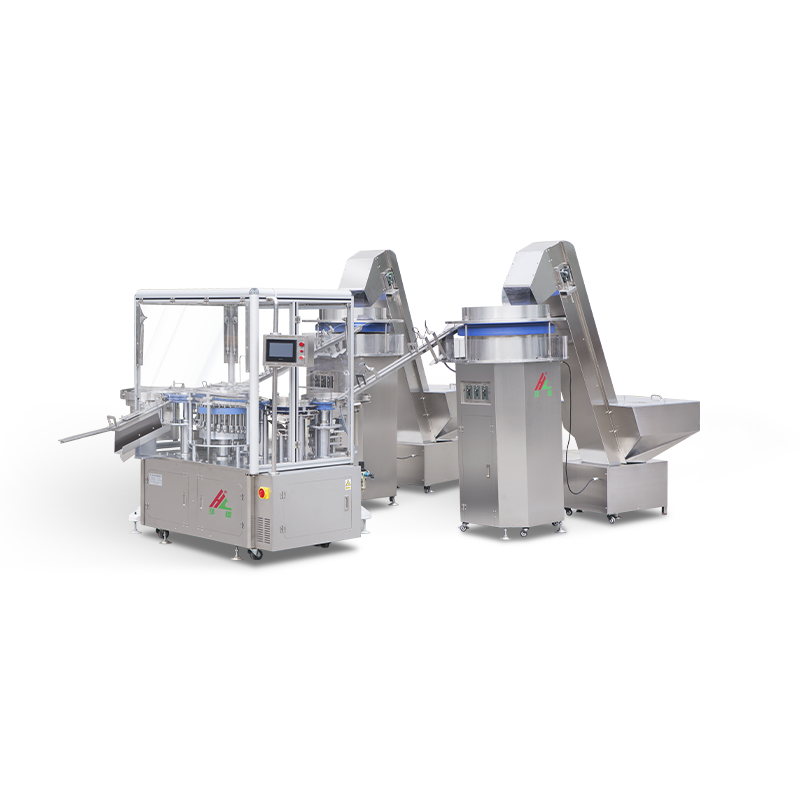
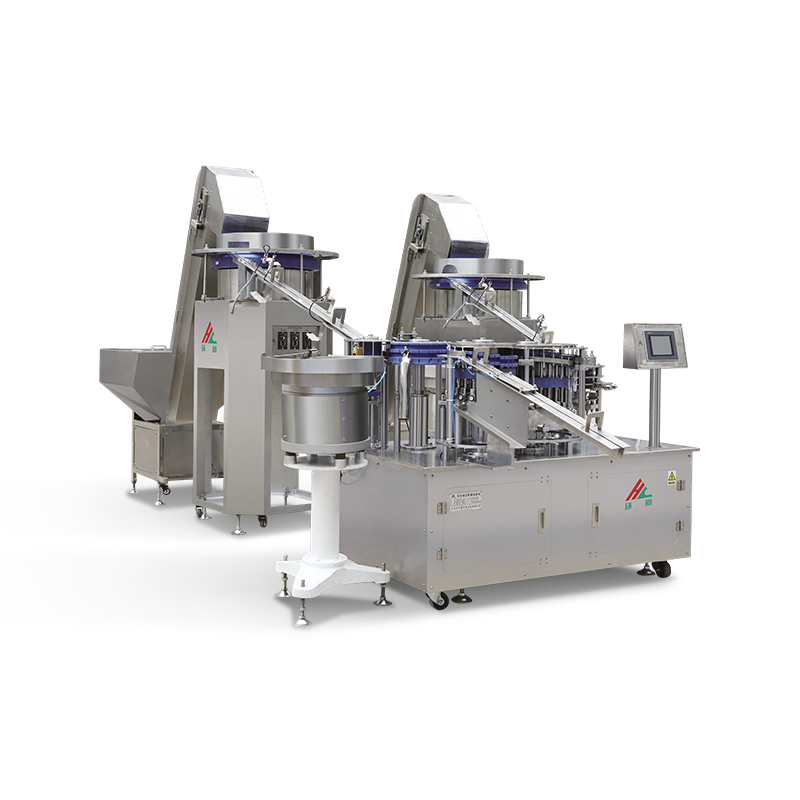
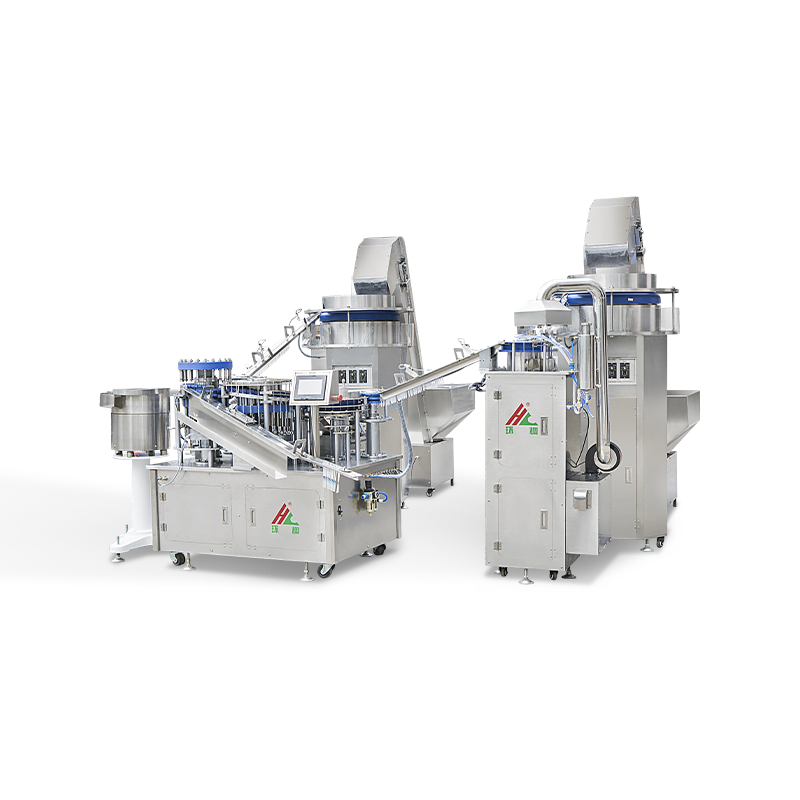
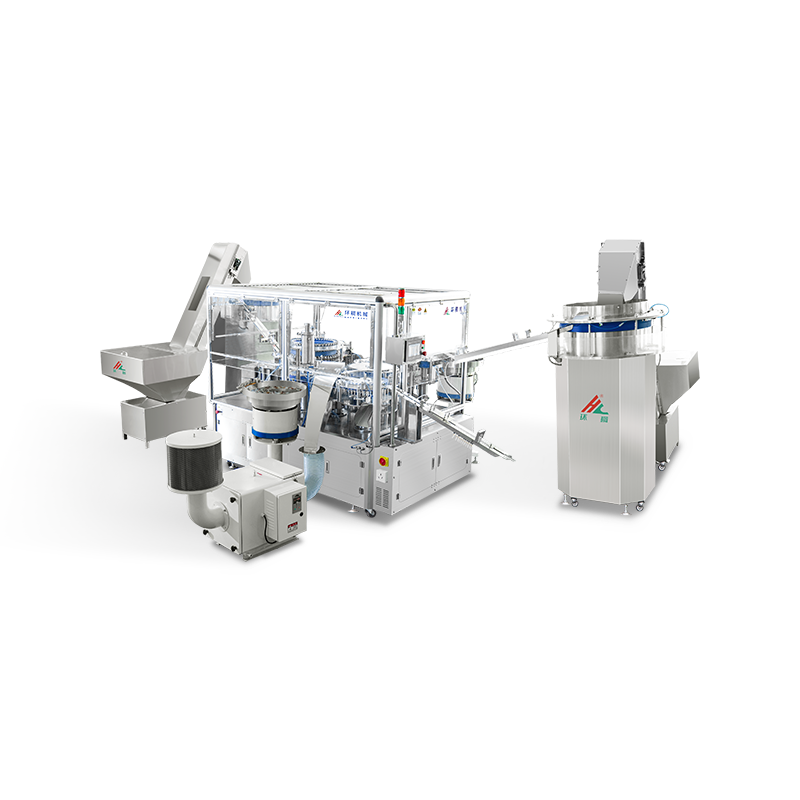
Founded in 2008 and recognized as a National High-Tech Enterprise, Zhejiang Huanchou Mechanical Equipment Manufacturing Co., Ltd. specializes in R&D and manufacturing of automation equipment for disposable medical devices. As a China medical device automation equipment manufacturer and syringe assembly machine factory, its core products include automatic syringe assembly machines, self-destruct syringe assembly machines, automatic pad printing machines, and automatic syringe rolling printing machines.
With a dedicated R&D team of 23 professionals, nearly 40% of the total workforce, and ISO9001 certification, Huanchou serves clients across Europe, America, the Middle East, and Southeast Asia. Its new 23-mu manufacturing facility, designed to produce 1,000 syringe assembly line machines annually, is scheduled for full operation by the end of 2026, with an estimated annual output exceeding RMB 300 million.
The next chart shows the company's reported team structure. The figures come from the company profile, so they reflect company-reported information and not an independent survey.
The chart shows a team where engineering holds a large share of the workforce, which is unusual in equipment manufacturing and relevant for buyers who need customization. A strong R&D share can support tooling design, process adjustment for different syringe types and software updates for control systems.
For a buyer evaluating a syringe assembly machine supplier, this structure suggests that project questions can be handled by engineers who understand the machine design. It does not replace your own evaluation, so still ask for references, a factory visit and a trial with your components. The new facility also indicates planned capacity growth, which can matter when you need several lines delivered over a period of time.
Use the company profile as a starting point, then confirm engineering depth through a factory visit and a trial with your own components.
Explore Huanchou Equipment
If you are comparing equipment for a new line, these topics connect directly to the discussion above. Replace the link addresses below with your website pages before publishing.
Frequently Asked Questions About Syringe Assembly Machines
Q1. What should I confirm first when choosing a syringe assembly machine?
Confirm your syringe design, target output and printing requirements first, because these three items decide the station layout. Then ask the syringe assembly machine manufacturer to run a trial with your own barrels, pistons and caps so you can judge stability with real components.
Q2. Can one disposable syringe assembly machine handle several syringe sizes?
Many machines support a range of sizes through changeover tooling, but the range depends on the design. Ask the supplier which sizes share tooling, which need new parts and how long a changeover takes, and compare that with your planned product mix.
Q3. How is a self-destruct syringe assembly machine different from a standard one?
The main difference is the locking mechanism, which must not trigger during assembly. The machine needs careful control of insertion force and alignment, and a function check after assembly is common. Share your drawings early so the assembly sequence can be agreed in writing.
Q4. What support should I expect from a medical device automation equipment supplier?
Expect documentation, installation and commissioning support, operator training and a spare parts plan. Ask how overseas service is handled and how quickly technical questions are answered, and put these points in writing before placing an order.

 Medical Device Automation Equipment Manufacturer
Syringe Assembly Machine Factory
Copyright ©
Zhejiang Huanchou Machinery Equipment Co.,Ltd.
All Rights Reserved.