

 中文简体

How are hypodermic needles made: Applications, Selection Criteria, and Practical Guidance
Date:11 14, 2026
Content
- 1 How Are Hypodermic Needles Made: The Short Answer
- 2 What a Hypodermic Needle Is Actually Made Of
- 3 From Steel Strip to Needle Tubing
- 4 Cutting, Grinding and Needle Tip Geometry
- 5 Hub Moulding, Bonding and the Luer Taper
- 6 Cleaning, Siliconisation and Sterilisation
- 7 Process Control Points and Typical Tolerances
- 8 Needle Gauge, Outer Diameter and What It Changes
- 9 Why Needle Production Ends Up on a Syringe Assembly Line
- 10 What Buyers Get Wrong When Sourcing Needles or Equipment
- 11 Where Huanchou Machinery Sits in the Syringe Supply Chain
- 12 Frequently Asked Questions About Hypodermic Needle Manufacturing
- 12.1 How are hypodermic needles made from stainless steel strip?
- 12.2 Which stainless steel grade is used for hypodermic needles?
- 12.3 Why does wall thickness matter if the outside diameter is correct?
- 12.4 How many bevels does a needle tip have?
- 12.5 Why are needles siliconised?
- 12.6 Is ethylene oxide always used for sterilisation?
- 12.7 What is the difference between a needle manufacturer and a needle supplier?
- 12.8 Can one syringe assembly machine handle several needle gauges?
- 12.9 How does airtightness testing fit into needle and syringe production?
A syringe factory that has just failed a leak test on a finished batch does not usually trace the problem back to the needle. It traces it back to the hub bonding station, or to a burr left on a cannula cut three weeks earlier, or to a steel strip supplier that changed its edge condition without telling anyone. That is the practical reality behind the question of how are hypodermic needles made: it is not one process but a chain of quite different processes, and each link leaves a mark that only shows up much further downstream.
The short answer is that a hypodermic needle is formed from medical-grade stainless steel strip, rolled into a tube, welded, drawn down to a specified wall thickness, cut to length, ground into a multi-bevel tip, inserted into an injection-moulded hub and bonded with epoxy, then cleaned, siliconised, inspected, packed and sterilised. The longer answer, which is the one that actually matters to a medical device manufacturer, a supplier or a wholesaler buying equipment, is about where each step can go wrong and what that costs.
This article walks the full route from steel coil to sterile needle, and then explains where automation takes over and why assembly equipment decides whether a needle plant can scale.
How Are Hypodermic Needles Made: The Short Answer
If you need one paragraph to hand to a colleague, use this: the tube comes first and the tip comes last. A flat strip of stainless steel is progressively rolled into a seam-welded tube, then cold drawn through dies until the outside diameter and the inside diameter are both within the tolerances defined by ISO 9626. That tube is annealed, straightened, cut to length and ground into a sharp point on a multi-station grinding machine. The finished cannula is then bonded into a plastic hub, cleaned, siliconised, checked for flow and patency, and sterilised.
What surprises most buyers is the ratio. Grinding and bonding take seconds per needle, but the tube drawing that makes those seconds possible can take days of continuous processing across a dozen or more passes, with annealing cycles in between. A cannula that ends up with an outside diameter of 0.5 mm may have started life as strip several millimetres wide and gone through more than ten reduction steps.
That asymmetry is why a needle manufacturer's real capability sits in the tubing line, not in the assembly hall. And it is also why a syringe producer who buys finished needles rather than making them has to be very clear about what they are actually buying.
What a Hypodermic Needle Is Actually Made Of
"Stainless steel" is not a specification. Three material families dominate, and the choice has downstream consequences for sterilisation, corrosion resistance and cost.
Cannula steel
- AISI 304 grade stainless is the lower-cost option, used where corrosion resistance requirements are moderate and the needle is not intended for prolonged contact.
- AISI 316L adds molybdenum and is the mainstream choice for medical cannula because it resists pitting and handles repeated sterilisation better.
- 316LVM is vacuum melted, which lowers inclusion content and gives a cleaner grain structure. It is used where the needle must combine thin walls with high strength, or where contact time is longer.
ISO 9626 is the standard that governs dimensions, wall thickness and mechanical properties for stainless steel needle tubing. A serious supplier should be able to show you a mill test certificate that ties a finished lot back to a heat number, not just a generic material declaration.
Hub material
Polypropylene is the default because it moulds cleanly, bonds predictably to epoxy and tolerates ethylene oxide sterilisation. Polycarbonate appears where higher rigidity or transparency is required, for instance in some safety-engineered designs. What matters from a buyer's perspective is dimensional stability of the luer taper after moulding, because that is what determines whether the needle locks onto a syringe without leaking.
Adhesive
Most cannula-to-hub bonds use a single- or two-part epoxy. The requirements are unglamorous but strict: it must cure to a defined strength within a defined time and temperature window, must not flow into the lumen, and must remain biocompatible after sterilisation. Adhesive selection is often the least documented and most consequential decision in the whole bill of materials.
One more material detail that is easy to miss: ISO 80369 has largely replaced the older ISO 594 series for luer connections. If a supplier quotes "ISO 594" without qualification, ask which year and which part, because the taper requirements have moved.
From Steel Strip to Needle Tubing
This is the half of hypodermic needle manufacturing that almost never gets explained, and it is where most of the process control sits.
The starting point is a coil of stainless strip, typically a fraction of a millimetre thick and a few millimetres wide. It is slit to a precise width, because the strip width determines the circumference of the finished tube and therefore its diameter. Edges are deburred, since a burr on the strip edge becomes a defect on the weld seam.
Forming and welding
The strip passes through a series of forming rolls that bend it progressively: first into a shallow U, then a deeper U, then a nearly closed O with a small gap at the seam. The seam is then welded, usually by tungsten inert gas or laser, in a continuous pass. The weld must be fully penetrating; a cold lap that looks acceptable on the outside will open up during the first drawing pass.
Drawing
After welding, the tube is drawn. There are two common approaches. In sinking, the tube is pulled through a die without an internal support, which reduces the outside diameter while the wall thickens slightly. In plug or mandrel drawing, a fixed or floating plug controls the inside diameter at the same time. Most needle tubing relies on a combination, sequenced so that the wall thickness ends up where the standard requires.
Reduction per pass matters. Pulling more than roughly 10 to 20 percent of the cross-section in a single draw raises the risk of cracking or of surface tearing on the bore. The bore is the face the drug actually touches, so any longitudinal scratch there is a permanent defect.
Annealing and final sizing
Cold drawing work-hardens the steel. Between draws, the tube is annealed under a protective atmosphere to restore ductility. The temperature profile and the atmosphere are process secrets in most plants for good reason: get the atmosphere wrong and you get decarburisation or oxidation on the bore, which no amount of downstream polishing will fully remove.
After the final draw, the tube is straightened, cleaned to remove drawing lubricant, and cut to transport lengths. Some producers add an electropolishing step here to improve bore finish before the tube ever reaches the grinding room.
Cutting, Grinding and Needle Tip Geometry
Once tubing is available, the needle itself appears. Cutting is the easy part. Grinding is where the craft is.
Cutting to length
Tubing is cut on rotary or laser cutting equipment to the finished cannula length, typically with a tolerance around plus or minus 0.1 mm. Both ends are deburred. If the cut face is not square, the grinding operation that follows will produce an asymmetric bevel, and an asymmetric bevel is a needle that deflects on entry.
Multi-bevel grinding
Almost all hypodermic needles use a three-bevel geometry. The primary bevel creates the main cutting face, the secondary bevel reduces the entry force, and a small third bevel at the very tip improves sharpness and reduces tissue coring. The primary angle usually sits in the range of 12 to 15 degrees, though this varies with intended use; some specialty needles use five bevels for very fine gauges.
Grinding happens on multi-station rotary machines. Each cannula is held, indexed and presented to a sequence of abrasive wheels. Wheel grit, feed rate, coolant flow and wheel dressing frequency all influence the result. Dressing frequency in particular is a maintenance detail that separates consistent producers from inconsistent ones, because a glazed wheel produces heat, and heat produces a rolled edge rather than a cut edge.
Post-grinding treatment
After grinding, cannulas are cleaned ultrasonically to remove abrasive particles and metal fines, then typically electropolished or passivated to remove micro-burrs and restore the passive oxide layer on the steel. Electropolishing is not cosmetic; a smoother surface reduces friction on entry and gives the siliconisation step something uniform to coat.
Tip inspection
The defects that matter at this stage are hard to see. A hook, a burr on the heel, a flat tip, an off-angle bevel or a partially blocked lumen will all pass a casual visual check on a bench. Automated tip inspection using vision systems and, in some lines, puncture force measurement on a sample basis, is the only reliable defence. Manual sampling catches trends, not individual defects.
Hub Moulding, Bonding and the Luer Taper
The joint between cannula and hub is the quietest failure point in the whole needle. A badly bonded needle looks perfect, fits a syringe, and still comes apart under load.
Injection moulding the hub
Hubs are moulded in multi-cavity tools, usually from polypropylene. The critical dimensions are the luer taper, the cannula bore that receives the tube, and the flange geometry. Tool wear shows up first on the taper, so taper measurement should be part of routine tool maintenance rather than an annual audit item.
Bonding
The cannula is inserted to a controlled depth and fixed with epoxy. Three variables decide whether the bond holds: adhesive volume, insertion depth and the cure profile. Too much adhesive wicks into the lumen and restricts flow. Too little and the pull strength falls below specification. Cure temperature and time must be matched to the adhesive datasheet; a shortened cycle to gain throughput is one of the most common causes of field failures in low-cost production.
Pull testing is the standard verification, with acceptance criteria set by the manufacturer's own specification or by the applicable standard. Testing is normally by AQL sampling rather than 100 percent, which means the bonding process itself has to be capable, not just inspectable.
The luer taper
The 6 percent luer taper defined in ISO 80369-7 is what makes a needle interchangeable with a syringe. If the taper is undersized, the connection leaks. If it is oversized, the needle may not seat fully or may crack the syringe tip. Both failures tend to appear at the point of use rather than in the factory, which is exactly the wrong place to find them.
Cleaning, Siliconisation and Sterilisation
By this point the needle is geometrically complete. What remains decides whether it is clean, comfortable and sterile.
Cleaning
Multi-stage ultrasonic cleaning in purified water removes grinding debris, drawing lubricant residue and adhesive overflow. Conductivity of the final rinse water is a practical indicator of cleaning performance and is far more informative than a visual check under magnification.
Siliconisation
A very thin silicone film is applied to the cannula exterior to reduce penetration force. The film thickness is measured in fractions of a micrometre. Too thin and the needle drags; too thick and the silicone can interact with the drug product or interfere with subsequent bonding and printing operations. For prefilled applications, silicone oil compatibility with the formulation is a genuine development question, not a formality.
Sterilisation
Ethylene oxide remains the most common sterilisation route for needles and syringes because it is gentle on plastics and adhesives. It requires a controlled cycle followed by aeration to drive residual EO and ethylene chlorohydrin down to permitted limits. Gamma irradiation is used where the material set tolerates it. Either way, sterilisation is a validated process, and the validation package is part of what a buyer should be asking to see.
Cleanroom classification matters here too. Moulding and assembly typically run in ISO 8 environments, with bonding and any open-product handling in ISO 7. The classification is easy to claim and easy to verify, so ask for the last environmental monitoring report rather than the certificate on the wall.
Process Control Points and Typical Tolerances
The table below summarises where control is normally applied across the needle manufacturing route. The tolerance figures are indicative rather than universal, because the governing values come from the applicable standard and from the manufacturer's own validated specification. What does not vary is the relationship between each control point and the failure it prevents.
| Process step | Key control parameter | Indicative tolerance or requirement | Failure if missed |
|---|---|---|---|
| Strip slitting | Width and edge burr | Width to plus or minus 0.02 mm | Weld seam misalignment |
| Tube forming and welding | Weld continuity | Full penetration, no cold lap | Tube splits during drawing |
| Cold drawing | Reduction per pass, bore finish | 10 to 20 percent per pass | Bore scratching, flow deviation |
| Annealing | Temperature profile and atmosphere | Per steel grade specification | Brittle tip, grinding chipping |
| Cutting | Length and cut-face squareness | Length to plus or minus 0.1 mm | Asymmetric bevel |
| Tip grinding | Bevel angle and burr | Three bevel, 12 to 15 degrees primary | Higher penetration force |
| Electropolishing | Surface roughness | Removal of grinding marks | Uneven silicone coating |
| Hub bonding | Adhesive volume and pull strength | Verified by AQL sampling | Cannula separation |
| Luer taper | 6 percent taper dimensions | ISO 80369-7 | Leakage at the syringe joint |
| Siliconisation | Film thickness | Sub-micrometre range | Drug compatibility failure |
| Sterilisation | EO residue, sterility assurance level | Per validated cycle | Release hold or recall |
The pattern worth noticing is that the tightest tolerances sit at the front of the process, in tubing, while the most visible failures appear at the back, in bonding and siliconisation. That is why a needle plant that only audits its assembly hall is auditing the wrong end of its own operation.
 HC-F21 Syringe Negative-Pressure Airtightness TesterAutomated negative-pressure tester for assembled syringes; monitors chamber pressure changes to reject leaks and support post-assembly sealing checks.View Product →
Airtightness verification is the practical bridge between needle quality and syringe quality. A negative pressure tester applied at the assembled syringe stage will expose bonding gaps and taper mismatches that no dimensional inspection would ever catch, which makes it a useful incoming and outgoing check for any producer assembling needles into syringes rather than moulding them in-house.
Needle Gauge, Outer Diameter and What It Changes
Gauge is the number most buyers quote and the number most misunderstood. A change of two gauges is a change of roughly a fifth of a millimetre in outside diameter, and that small figure drives flow rate, penetration feel, patient comfort and the mechanical handling requirements on the assembly line. The chart below sets out the common ISO 9626 sizes and their nominal outer diameters.
Nominal cannula outer diameter by gauge (common ISO 9626 sizes)
The bar lengths show how gently the gauge scale compresses in physical terms. Moving from 22G to 30G removes only 0.40 mm from the outside diameter, yet it changes the flow characteristics and the pressure needed to deliver a given volume dramatically. Thin-wall and ultra-thin-wall tubing exist precisely to recover some of that flow without increasing the outside diameter.
For a producer running automated assembly, gauge matters in a second, less obvious way. Feeding, orienting and gripping cannulas at 30G demands tighter mechanical tolerances, gentler tooling contact and more stable vacuum handling than at 22G. A line specified and proven on one gauge does not automatically transfer to another without change parts and revalidation.
That is a practical procurement point for anyone specifying assembly equipment: fix the gauge range and the cannula source before the machine specification is frozen, not after. Retrofitting handling tooling is inexpensive; revalidating the whole line is not.
Why Needle Production Ends Up on a Syringe Assembly Line
Very few organisations control the full chain from steel coil to sterile syringe. In practice the market splits: some producers draw their own tubing, many more buy finished or semi-finished cannulas and focus on the assembly, printing, packaging and sterilisation stages. Once that split happens, the constraint on output moves from the tubing line to the assembly line.
Consider what happens between a box of cannulas and a box of finished syringes. The needle has to be picked from bulk, oriented, inserted into the barrel or hub, bonded or mechanically locked, checked for patency, the barrel has to be printed with graduations if required, the plunger and gasket have to be assembled, and the whole item has to be packed and sterilised. Each of those is a station, and each station is a chance for a defect that has nothing to do with the needle itself.
Where safety-engineered designs change the calculus
Safety syringes add mechanisms on top of the basic assembly: hinged shields, retraction springs, locking collars or sliding sleeves. The assembly sequence grows, the part count grows, and the tolerance stack-up grows with it. A shielded design that works by hand in a laboratory fixture can behave very differently when cycled at production speed with cannula position variation of a few tenths of a millimetre.
HC-020-GSLP High-Speed Syringe Assembly Machine with Safety CoverAutomatic syringe assembly system supports Luer slip, Luer lock and safety types, with missing-component inspection and an interlocked safety cover for production.View Product →
This is the stage where equipment capability decides yield. High-speed assembly equipment with an integrated safety cover configuration is built around the assumption that cannula position, hub concentricity and barrel bore vary within a defined window, and the tooling is designed to correct small deviations rather than reject them. For a manufacturer or supplier ramping a safety syringe range, the practical question is not whether the machine can run the part but whether it can hold the pull strength and airtightness window across a full shift.
Buyers evaluating that equipment often find that the specification documents say less than a run of samples does. A structured evaluation of station sequence, changeover time, reject handling and validation support tends to be more informative than a brochure figure for throughput.
What Buyers Get Wrong When Sourcing Needles or Equipment
Most sourcing problems in this product category come from asking the wrong questions at the wrong stage. A few patterns repeat.
Confusing a trading company with a manufacturer
The distinction between a manufacturer, a supplier and a wholesaler is not cosmetic. A trading company can quote a competitive price and still be unable to tell you which drawing pass the tubing came from, because it has no line. When a defect appears, the response is a reshipment, not a root cause. Asking for the process route, the annealing atmosphere specification and the incoming tubing certificate separates the two quickly.
Accepting a sample instead of a capability study
Fifty good needles in a bag prove that the process can produce fifty good needles. They say nothing about the distribution. A capability study on the critical dimensions, plus bond pull strength data over several lots, is what actually indicates whether the process holds.
Ignoring the incoming tube
If you buy finished cannulas rather than tubing, ask for the tube specification anyway. Bore roughness, concentricity and wall thickness variation propagate straight into flow performance and tip geometry. A grinder cannot fix a tube that was drawn with an off-centre bore.
Underestimating changeover and format parts
For equipment buyers, changeover time and the cost of format parts are often larger operational factors than headline cycle rate. A machine that runs slightly slower but changes over in twenty minutes will outproduce a faster machine that takes half a shift to convert, particularly where a range of gauges and barrel sizes is required.
Skipping the validation conversation
Installation, operational and performance qualification takes time. A supplier who cannot describe how their equipment is documented, what test protocols are provided and what support is available during qualification is a supplier who will leave that work entirely with you.
Where Huanchou Machinery Sits in the Syringe Supply Chain
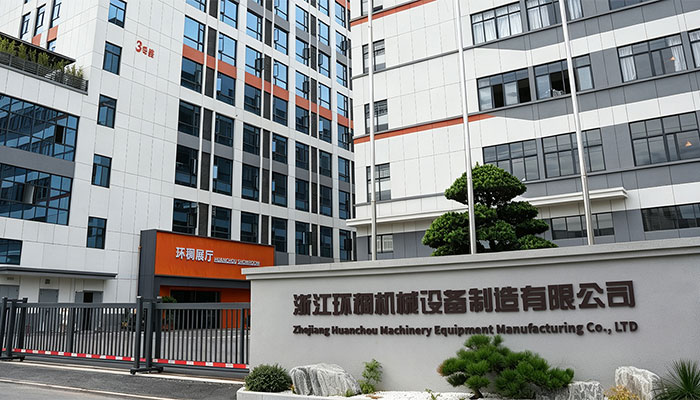
Zhejiang Huanchou Machinery Equipment Co., Ltd. does not draw needle tubing. What the company does is the segment immediately after cannula production: the automated equipment that turns loose components into a finished, printed, packed syringe.
The company began in 2008 in Yuhuan, Taizhou, working on automation for single-use medical devices, and relocated to the Huanglinshan Industrial Park in Yiting Town, Yiwu in 2011 as the core technical team pushed through a series of development steps. Today the operation runs from a 15,000 square metre production base, holds CE and ISO 9001 certification, and carries high-tech enterprise status along with a Zhejiang high-growth technology SME certificate. Products are exported to more than 50 countries, with partners across most Chinese provinces and customers in Europe, the Americas, Russia, Southeast Asia and Belt and Road markets.
The product range follows the syringe production sequence fairly directly.
- Syringe printing machines, including automatic roller printing equipment and high-speed variants with safety covers, for scale and barrel markings.
- Syringe assembly machines, covering standard assembly, high-speed assembly with safety covers, prefilled syringe assembly, and assembly with an oil injection stage.
- Printing and assembly combined machines, for producers who want printing and assembly in a single continuous flow rather than two disconnected stations.
- Blister packaging machines, for the final pack format.
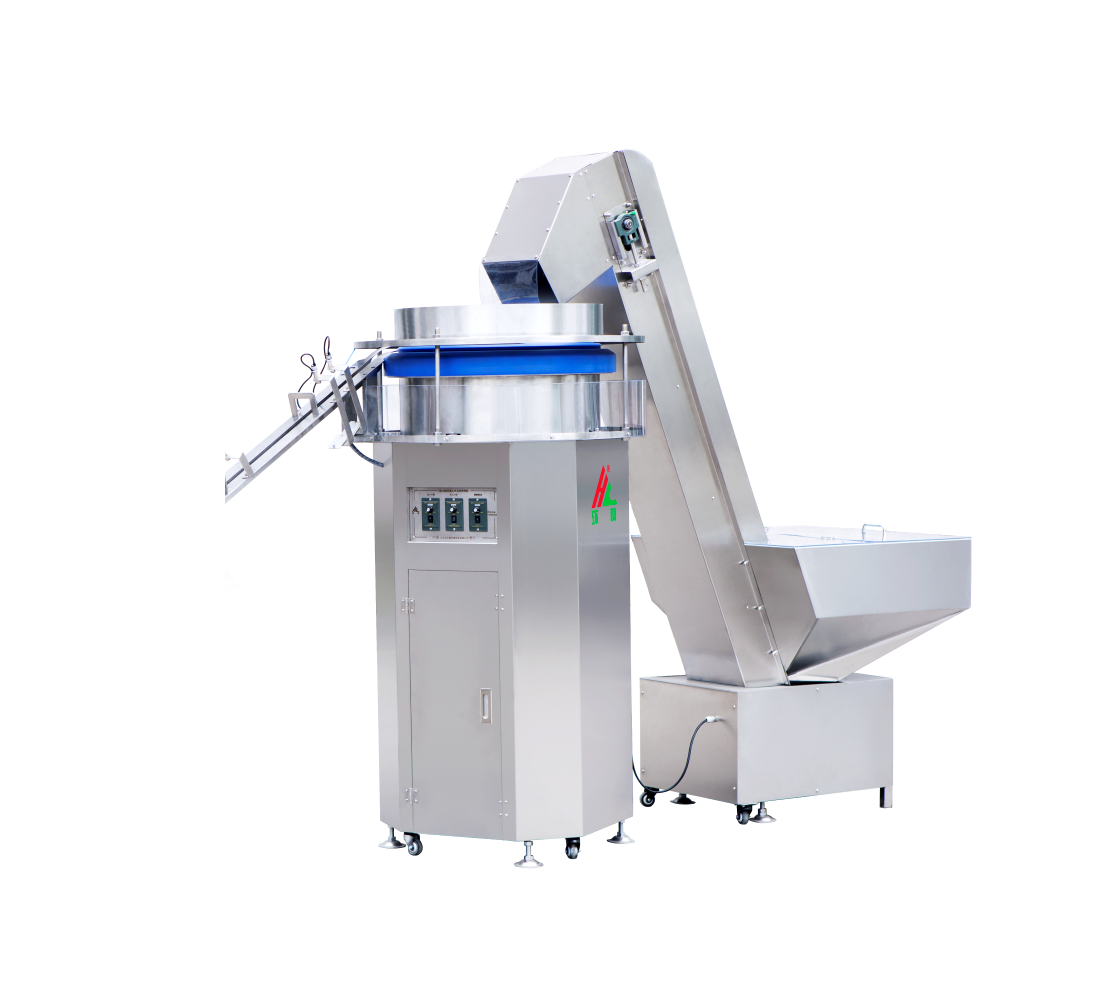
- Machine components and accessories, including centrifuges and stock bins, embossing seals and rubber rollers for pad printing, screen printing machines, spray testing equipment and negative pressure airtightness testers.
That last category is worth dwelling on. A syringe producer running automated assembly needs consumable tooling and verification instruments that match the machine, and sourcing them from a different supplier than the machine builder introduces a compatibility risk that shows up as inconsistent print quality or unexplained leak rejects. Having the accessories in the same catalogue as the equipment removes a class of variables.
HXP400 Fully Automatic Blister Packing MachineThermoform-fill-seal blister packer for deep syringe trays, combining forming, loading, sealing, printing and die-cutting in one continuous pass.View Product →
Packaging is the final link in that chain. Fully automatic blister packing equipment closes the loop between an assembled, tested syringe and a shippable unit, and the interface between the assembly line's output format and the packer's infeed is one of the details that determines whether a plant reaches its nameplate output.
For buyers who want to see how the equipment is built rather than how it is described, the company's production facilities and process documentation are the more informative visit. Details on the manufacturing base and capability are set out on the factory page, and the practical questions to bring along are usually about format parts, changeover and validation support rather than headline speed.
Frequently Asked Questions About Hypodermic Needle Manufacturing
How are hypodermic needles made from stainless steel strip?
The strip is slit to width, rolled progressively into a tube, seam welded, then cold drawn through dies until the outside and inside diameters meet ISO 9626. Between draws the tube is annealed to restore ductility. After final drawing and straightening, it is cut to length and the tip is ground.
Which stainless steel grade is used for hypodermic needles?
304 is the lower-cost option. 316L is the mainstream medical choice. 316LVM, which is vacuum melted and has lower inclusion content, is used where thin walls must combine with high strength or where contact time is longer.
Why does wall thickness matter if the outside diameter is correct?
Wall thickness determines the internal bore and therefore the flow rate at a given pressure, along with the cannula's bending stiffness. Thin-wall and ultra-thin-wall tubing allow a smaller outside diameter without sacrificing flow, which is why gauge alone does not describe a needle's performance.
How many bevels does a needle tip have?
Most hypodermic needles use three bevels. The primary bevel forms the cutting face, the secondary reduces entry force and the third refines sharpness at the tip. Some specialty needles use five. The primary angle typically falls between 12 and 15 degrees.
Why are needles siliconised?
A sub-micrometre silicone film on the cannula exterior lowers penetration force. The film has to be thin and uniform; excessive silicone can affect drug compatibility or interfere with bonding and subsequent handling.
Is ethylene oxide always used for sterilisation?
No. EO is common because it is gentle on plastics and adhesives, but gamma irradiation is used where the material set allows it. EO requires a validated aeration cycle to bring residual EO and ethylene chlorohydrate within permitted limits.
What is the difference between a needle manufacturer and a needle supplier?
A manufacturer controls the process route and can trace a finished lot back to tube drawing parameters and a steel heat number. A supplier or wholesaler typically resells and may not have visibility into the process. For regulated products, that difference shows up in how quickly and how completely a deviation can be investigated.
Can one syringe assembly machine handle several needle gauges?
Usually yes, with change parts and revalidation. Handling and gripping at 30G is mechanically more demanding than at 22G, so the gauge range should be defined before the equipment specification is fixed rather than after. Changeover time and format part cost are as important as cycle rate in that decision.
How does airtightness testing fit into needle and syringe production?
Negative pressure airtightness testing at the assembled stage exposes bonding gaps, taper mismatches and seal defects that dimensional inspection will not detect. It is a practical final gate before packaging, and it is useful as an incoming check as well when cannulas are purchased rather than produced in-house.
For anyone specifying a syringe line, the useful takeaway is a question of sequence. Fix the cannula source and gauge range, confirm the bonding and taper specifications, and then specify assembly, printing, airtightness testing and packaging around those decisions. Doing it the other way round, choosing equipment first and fitting the needle to it, is the most common route to a line that runs but does not hold its yield.
The needle itself is a small, well-understood piece of stainless steel. The difficulty has never been in the concept. It sits in the drawing passes, the wheel dressing, the adhesive volume and the aeration cycle, and those are the details that a capable manufacturer can describe without looking them up.

 Medical Device Automation Equipment Manufacturer
Syringe Assembly Machine Factory
Copyright ©
Zhejiang Huanchou Machinery Equipment Co.,Ltd.
All Rights Reserved.